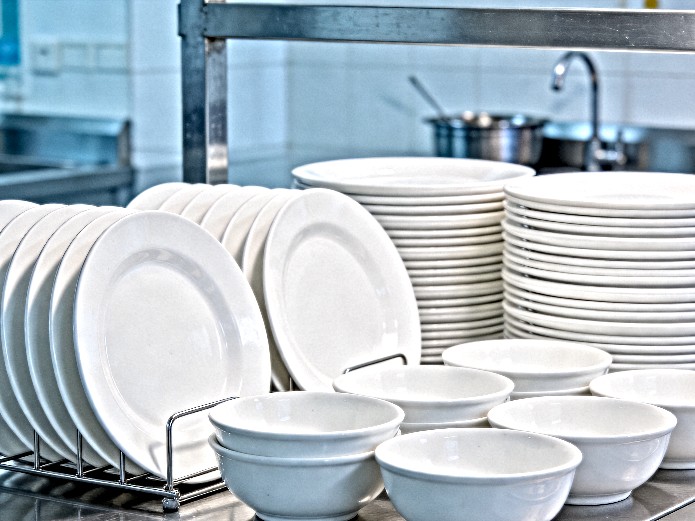
Ceramic microwave dishwasher safety is a fundamental requirement for any business that supplies tableware to restaurants, hotels, catering companies, or retail consumers. When sourcing ceramic tableware in bulk, B2B buyers must ensure that every piece meets rigorous safety standards for both microwave heating and dishwasher cleaning — two of the most common daily-use scenarios in commercial and residential kitchens worldwide.
Failing to verify ceramic microwave dishwasher safety before placing large orders can lead to product recalls, customer complaints, safety liabilities, and significant financial losses. This comprehensive guide walks you through the testing protocols, international standards, material science principles, and practical sourcing strategies that every B2B tableware buyer needs to know.
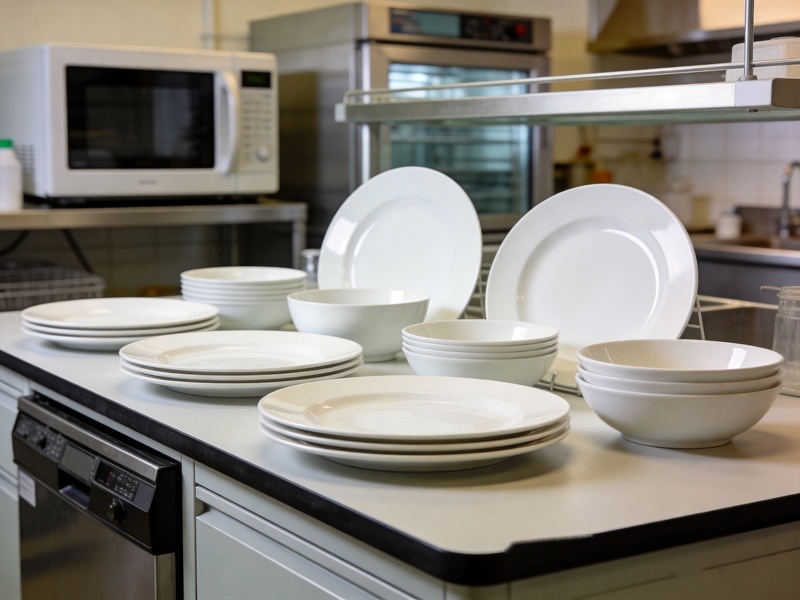
Why Ceramic Microwave Dishwasher Safety Matters for B2B Buyers
The commercial foodservice industry relies heavily on microwave ovens and commercial dishwashers to maintain efficiency and hygiene. Ceramic tableware that fails under these conditions creates serious operational and safety risks:
- Thermal shock failure: Plates and bowls that crack or shatter when moved from a microwave to a cold surface pose direct injury risks to restaurant staff and customers.
- Glaze degradation in dishwashers: Repeated exposure to high-temperature water (typically 65–85°C) and aggressive detergents can cause glaze crazing, discoloration, and lead/cadmium leaching over time.
- Metallic decoration hazards: Gold or platinum rims, metallic paints, and certain overglaze decorations can arc, spark, or release toxic compounds when microwaved.
- Commercial liability exposure: A single incident of tableware failure in a restaurant can result in lawsuits, regulatory action, and brand reputation damage worth far more than the original order value.
For B2B buyers importing from China’s ceramic production regions, understanding ceramic microwave dishwasher safety standards is especially critical because testing protocols vary significantly across export markets. A product that passes Chinese domestic standards (GB) may not meet EU, US, or Middle Eastern requirements.
Ceramic Microwave Safety: Testing Protocols and Standards
Microwave safety for ceramic tableware is evaluated through a combination of thermal performance testing, material composition analysis, and structural integrity assessment. The key international standards include:
Key Microwave Safety Standards
- US FDA 21 CFR 175.300: Regulates the migration of substances from food-contact surfaces. While not microwave-specific, it sets the baseline for food-safe ceramic glazes that must remain stable under heating conditions.
- EN 1388-1/2 (European Standard): Specifies testing methods for the release of lead and cadmium from ceramic articles in contact with food, including conditions that simulate microwave heating.
- BS EN 15284: A European standard specifically addressing the microwave suitability of materials and articles in contact with foodstuffs, including thermal cycling protocols.
- GB 4806.4 (China National Standard): China’s food-contact ceramic safety standard, which includes heavy metal migration limits but has limited microwave-specific provisions.
- ASTM C1436: Standard specification for ceramic glazed tableware, covering thermal shock resistance requirements relevant to microwave use.
Microwave Safety Testing Process
A standard ceramic microwave safety test follows these steps:
- Baseline temperature measurement: The empty ceramic piece is measured at room temperature (20–25°C).
- Microwave exposure: The piece is filled with water and heated in a standard microwave (700–1000W) for a specified duration (typically 2–5 minutes).
- Surface temperature check: After heating, the ceramic body temperature is measured. Safe tableware should not exceed 60°C on non-contact surfaces.
- Thermal shock test: The heated piece is immediately placed on a cold surface or immersed in cold water (4°C) to simulate real-world temperature transitions.
- Structural inspection: The piece is examined for cracks, crazing, glaze damage, or any visible defects.
- Heavy metal migration re-test: Post-microwave samples are tested for any increase in lead/cadmium migration compared to pre-test levels.
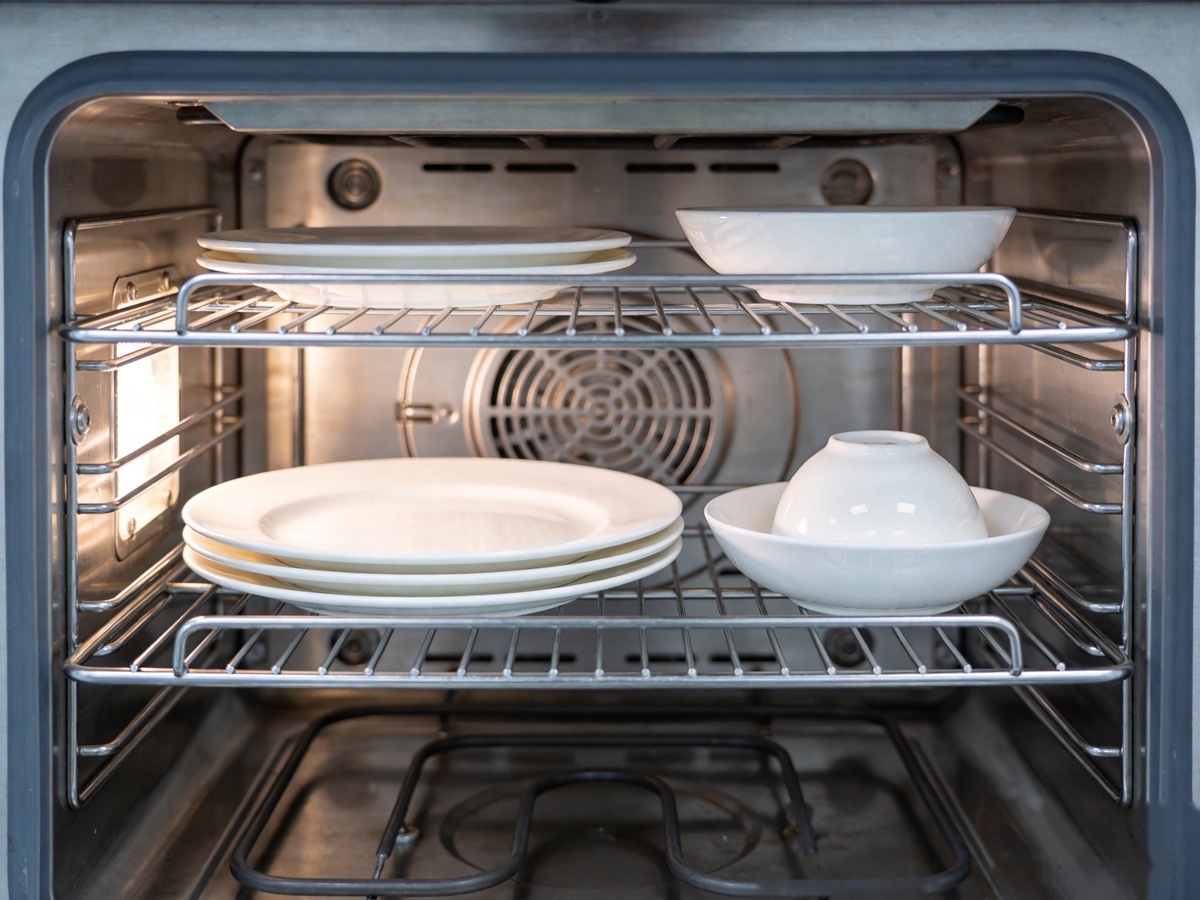
Ceramic Dishwasher Safety: Durability Testing and Compliance
Commercial dishwashers operate under far harsher conditions than residential units. Water temperatures reach 65–85°C, detergent concentrations are significantly higher, and wash cycles are more frequent — restaurant tableware may go through 3–10 dishwasher cycles per day. Ceramic microwave dishwasher safety testing must account for this accelerated wear.
Dishwasher Safety Testing Parameters
- Cycle count simulation: Standard testing exposes ceramic pieces to 100–500 simulated commercial dishwasher cycles to assess long-term durability.
- Glaze integrity assessment: After testing, surfaces are inspected under magnification for crazing (fine cracks), pinholes, glaze flaking, and color fading.
- Heavy metal migration tracking: Lead and cadmium release levels are measured after every 50 cycles to detect progressive degradation of the food-contact surface.
- Colorfastness evaluation: Decorated pieces are assessed for color fading, pattern wear, and decal peeling after repeated dishwasher exposure.
- Edge and rim durability: The rim area is the most vulnerable point in dishwasher conditions — chipping, glaze loss, and staining are carefully monitored.
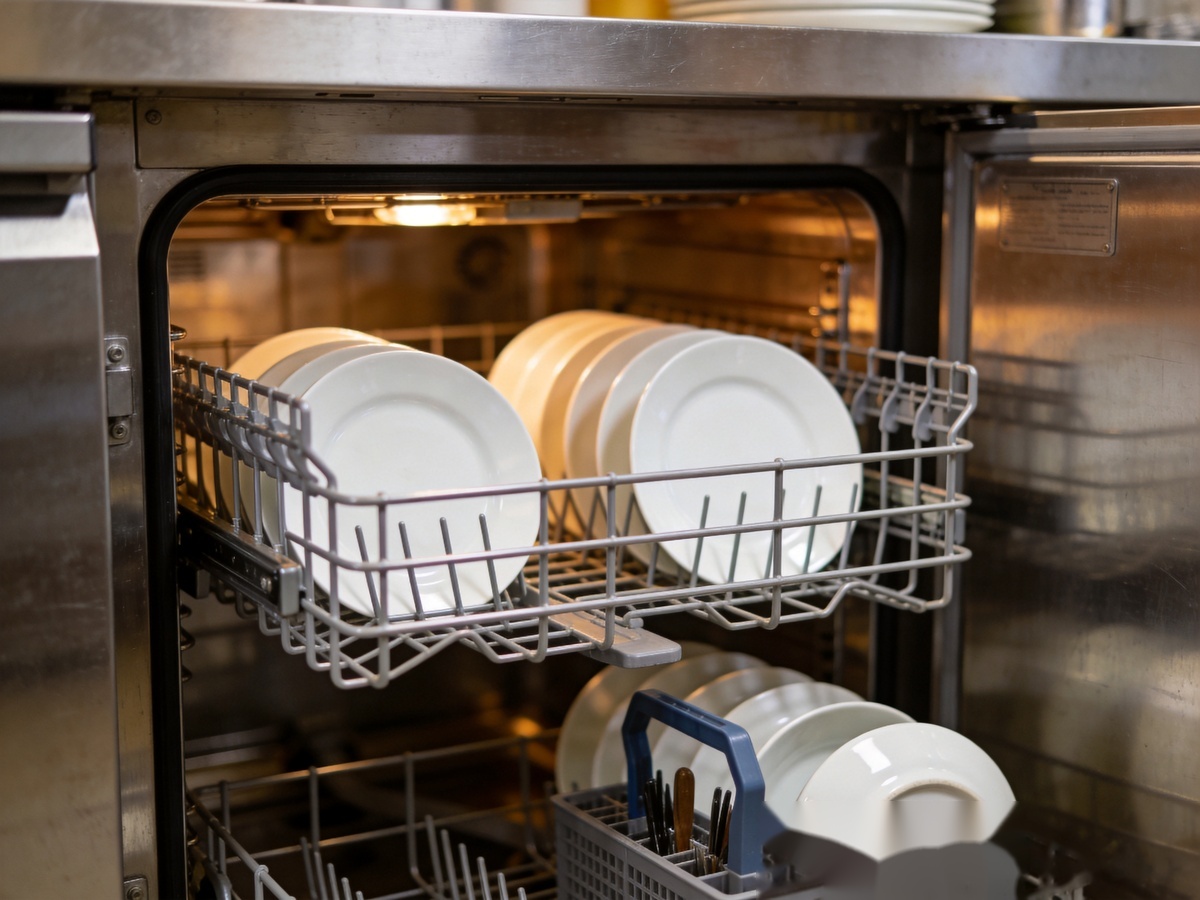
Commercial vs. Residential Dishwasher Standards
B2B buyers must specify which dishwasher environment their tableware is designed for:
- Residential dishwashers: Operate at 50–65°C with milder detergents. Standard ceramic tableware is generally safe for 500+ cycles.
- Commercial undercounter dishwashers: Operate at 65–75°C with stronger alkaline detergents. Tableware should withstand 1,000+ cycles for commercial-grade certification.
- Conveyor/rack dishwashers: Used in large hotels and hospitals, operating at 75–85°C with the most aggressive chemicals. Only premium-grade ceramics with robust glaze systems should be specified.
Key Factors That Affect Ceramic Microwave Dishwasher Safety
Understanding the material science behind ceramic microwave dishwasher safety helps buyers make informed sourcing decisions. The following factors directly influence a ceramic product’s performance under microwave and dishwasher conditions:
1. Clay Body Composition
The type of clay body determines the ceramic’s thermal stability and porosity:
- Porcelain: Fired at 1280–1400°C, fully vitrified (water absorption <0.5%). Excellent microwave and dishwasher safety due to low porosity and high structural integrity. The gold standard for commercial tableware.
- Stoneware: Fired at 1200–1280°C, semi-vitrified (water absorption 0.5–3%). Good safety performance, though slightly higher porosity makes glaze integrity more critical. Popular for casual dining and retail.
- Earthenware: Fired at 900–1100°C, porous (water absorption >3%). Poor microwave safety — trapped moisture can cause cracking during heating. Not recommended for commercial dishwasher use without exceptional glaze systems.
- Bone China: Fired at 1200–1300°C, fully vitrified with bone ash content. Excellent microwave safety and good dishwasher resistance, though the translucent body is more susceptible to chipping.
2. Glaze System and Firing Temperature
The glaze is the primary barrier between food and the ceramic body. For ceramic microwave dishwasher safety, glazes must be:
- Fully matured: Underfired glazes are softer, more porous, and more prone to chemical attack from dishwasher detergents.
- Thermally matched: The glaze’s coefficient of thermal expansion (CTE) must closely match the clay body to prevent crazing during microwave thermal cycling.
- Lead-free and cadmium-free: Especially critical for microwave use, where heating can accelerate heavy metal migration from traditional lead-based glazes.
- Chemically resistant: Must withstand alkaline dishwasher detergents (pH 11–13) without degradation over hundreds of cycles.
3. Decoration Method
The decoration technique used on ceramic tableware significantly affects microwave and dishwasher safety:
- Underglaze decoration: Colors are applied before the final transparent glaze firing. Best microwave and dishwasher safety — the design is sealed beneath the glaze layer.
- In-glaze decoration: Colors fuse into the glaze during firing. Good safety performance, though the design is more exposed than underglaze.
- Overglaze/on-glaze decoration: Colors are applied on top of the fired glaze and fired at a lower temperature (700–850°C). More vulnerable to dishwasher wear and may contain higher heavy metal levels.
- Metallic decorations: Gold, platinum, or silver rims are incompatible with microwave use — they cause electrical arcing. Must be clearly labeled “Not Microwave Safe.”
Ceramic Microwave Dishwasher Safety Compliance by Market
Different export markets have varying requirements for ceramic microwave dishwasher safety. B2B buyers must ensure their tableware meets the specific standards of their target market:
United States Market
The FDA’s Compliance Policy Guide 7117.06 and 7117.07 set leachable lead and cadmium limits for ceramic tableware. California’s Proposition 65 imposes additional requirements. While microwave-specific testing is not mandated, the FDA expects food-contact surfaces to remain stable under normal use conditions, including microwave heating. Dishwasher safety is typically verified through ASTM C1436 and industry testing protocols.
European Union Market
The EU’s Ceramic Directive 84/500/EEC (amended by 2005/31/EC) establishes strict lead and cadmium migration limits. EN 1388-1/2 provides the testing methodology. For microwave suitability, BS EN 15284 is the reference standard. The EU’s Food Contact Materials Regulation (EC) No 1935/2004 provides the overarching legal framework. B2B buyers targeting the EU must also comply with REACH regulations for any chemical substances in glazes and decorations.
Middle East and GCC Markets
Gulf Standardization Organization (GSO) standards, particularly GSO 1863 for materials in contact with food, are mandatory for ceramic tableware imports into Saudi Arabia, UAE, and other GCC countries. These standards reference international norms but may have additional requirements for halal compliance of glaze materials. SASO certification is required for Saudi Arabia.
Australian and Japanese Markets
Australia follows Food Standards Australia New Zealand (FSANZ) guidelines, which reference international ceramic safety norms. Japan’s Food Sanitation Act sets specific standards for ceramic tableware, including JIS S 2020 for heat resistance testing. Japanese buyers are particularly demanding about ceramic microwave dishwasher safety and often require factory-level quality assurance documentation.
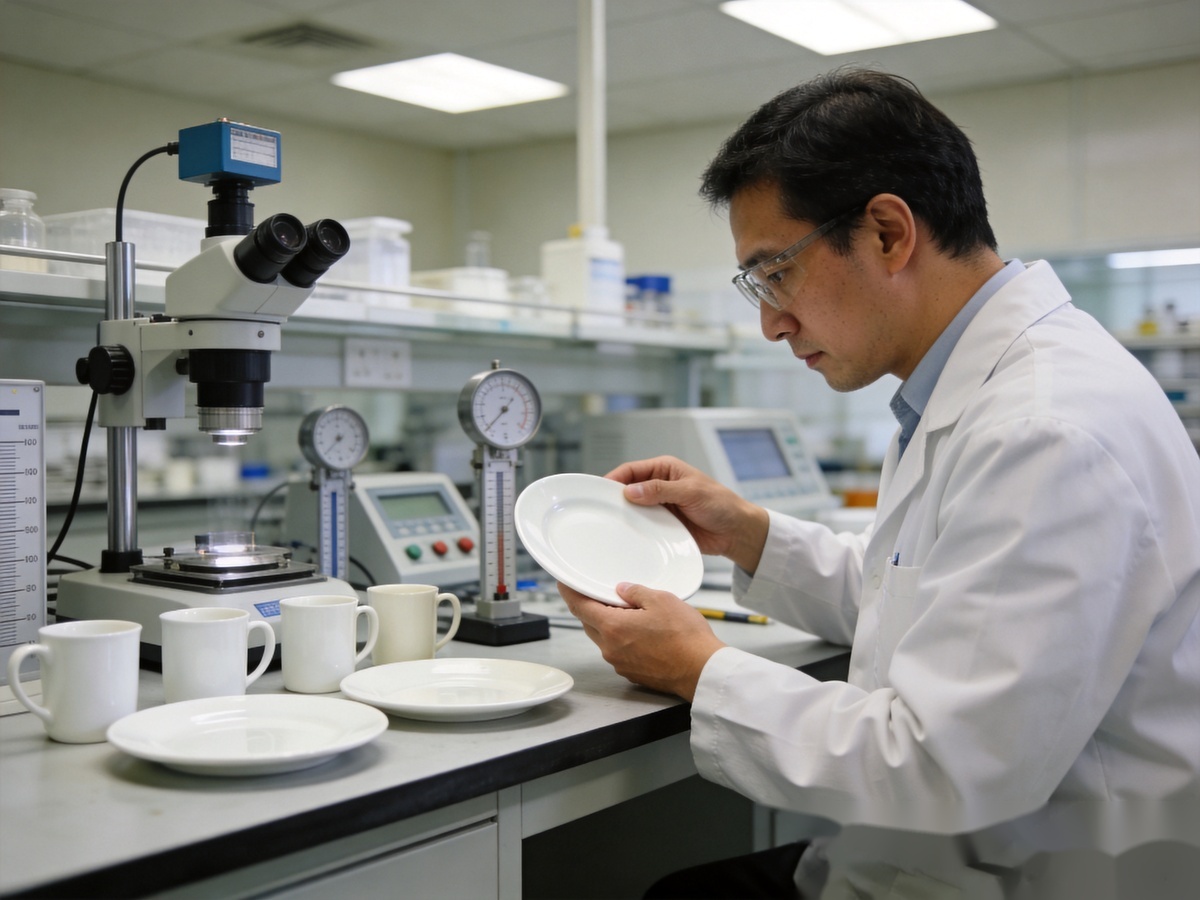
How to Verify Ceramic Microwave Dishwasher Safety When Sourcing from China
When importing ceramic tableware from Chinese manufacturers, follow this verification checklist to ensure ceramic microwave dishwasher safety compliance:
- Request third-party test reports: Require SGS, Intertek, Bureau Veritas, or TÜV test reports that specifically cover microwave and dishwasher testing — not just basic food-contact compliance. Reports should be no more than 12 months old.
- Specify your target market standards: Clearly communicate whether you need FDA, EU, or other market-specific compliance. Different markets have different testing protocols and acceptable limits.
- Conduct pre-shipment sample testing: Before the full order ships, test samples independently in your target market’s conditions. Run microwave heating cycles and commercial dishwasher cycles on at least 10 representative pieces.
- Audit the factory’s testing capabilities: During factory audits, verify that the manufacturer has in-house microwave and dishwasher testing equipment and performs routine quality checks during production.
- Include safety clauses in contracts: Specify ceramic microwave dishwasher safety requirements in your purchase agreement, including acceptable failure rates and remediation procedures.
- Verify decoration method compatibility: Confirm that any metallic or overglaze decorations are properly identified and labeled, and that microwave-safe pieces use only underglaze or in-glaze decoration methods.
- Establish ongoing quality monitoring: Implement a sampling plan for each production batch to ensure consistent safety performance across shipments.
Common Ceramic Microwave Dishwasher Safety Failures and How to Prevent Them
Understanding common failure modes helps buyers identify potential issues during sample evaluation and factory inspections:
- Crazing (fine surface cracks): Caused by CTE mismatch between glaze and body. Prevent by specifying CTE-matched glaze systems and requiring thermal cycling test results.
- Glaze flaking: Results from underfired glazes or poor body-glaze adhesion. Verify firing temperatures and request cross-section analysis of glaze thickness.
- Color bleeding in dishwasher: Indicates unstable overglaze colors. Switch to underglaze or in-glaze decoration for commercial-grade tableware.
- Body cracking during microwave use: Caused by trapped moisture in porous clay bodies. Specify low-absorption ceramics (porcelain or high-fired stoneware) for microwave applications.
- Metallic arc in microwave: Metallic decorations (gold, silver, platinum) conduct electricity and cause sparking. Ensure all microwave-designated pieces are free of metallic elements.
- Edge chipping after dishwasher cycles: Weak edge design or insufficient glaze coverage at rims. Request reinforced rim profiles and full glaze coverage specifications.
Frequently Asked Questions About Ceramic Microwave Dishwasher Safety
Q1: How can I quickly test if a ceramic plate is microwave safe?
Place the ceramic piece in a microwave alongside a cup of water. Heat on high for one minute. If the ceramic remains cool while the water heats up, it is microwave safe. If the ceramic becomes hot, it contains moisture-trapping pores or metallic components and should not be used in microwaves. However, this quick test is not a substitute for formal laboratory testing for B2B compliance.
Q2: Can all glazed ceramics go in the dishwasher?
No. While most modern glazed ceramics are dishwasher safe for residential use, commercial dishwasher environments (higher temperatures, stronger detergents, more frequent cycles) require ceramics with fully matured, chemically resistant glazes. Earthenware, hand-painted pieces, and ceramics with overglaze decorations are particularly vulnerable to dishwasher damage. Always verify dishwasher safety through cycle testing before specifying tableware for commercial use.
Q3: What certifications should I look for when sourcing microwave-safe and dishwasher-safe ceramic tableware?
Key certifications include FDA compliance (US market), EU Ceramic Directive 84/500/EEC (European market), LFGB certification (German market), and SGS or Intertek test reports covering both microwave and dishwasher testing. For Middle East markets, GSO 1863 and SASO certifications are required. Always verify that the certification specifically addresses the target market’s requirements — a generic “food safe” certificate may not cover microwave or dishwasher conditions.
Q4: Does the color of ceramic glaze affect microwave and dishwasher safety?
Yes, indirectly. Dark-colored glazes (especially reds, oranges, and yellows) historically used higher concentrations of cadmium-based pigments, which may increase heavy metal migration during microwave heating and dishwasher cycles. Modern lead-free and cadmium-free pigment systems have largely eliminated this risk, but buyers should still verify heavy metal migration test results for intensely colored tableware, especially when sourcing from manufacturers with limited quality control systems.
Q5: How many dishwasher cycles should commercial-grade ceramic tableware withstand?
Commercial-grade ceramic tableware should withstand a minimum of 1,000 industrial dishwasher cycles without significant degradation. Premium-grade hospitality tableware often targets 2,000–3,000 cycles. When sourcing, request accelerated cycle testing data from the manufacturer and verify it with independent testing of pre-shipment samples. The acceptable lifespan depends on usage frequency — a restaurant using tableware three times daily needs ceramics rated for at least 3–5 years of continuous use.
Ready to Source Safe, High-Quality Ceramic Tableware?
Ceramic microwave dishwasher safety is not optional — it’s a critical compliance requirement that protects your business, your customers, and your brand reputation. Whether you’re sourcing porcelain for a hotel chain, stoneware for a restaurant group, or bone china for retail distribution, ensuring your tableware meets international microwave and dishwasher safety standards is the foundation of a successful bulk purchase.
At CeraSupply, we manufacture and supply ceramic tableware that meets the highest microwave and dishwasher safety standards across all major export markets. Our products undergo rigorous third-party testing and come with full compliance documentation.
Get a free quote and test report — let us show you what fully compliant, commercially tested ceramic tableware looks like.