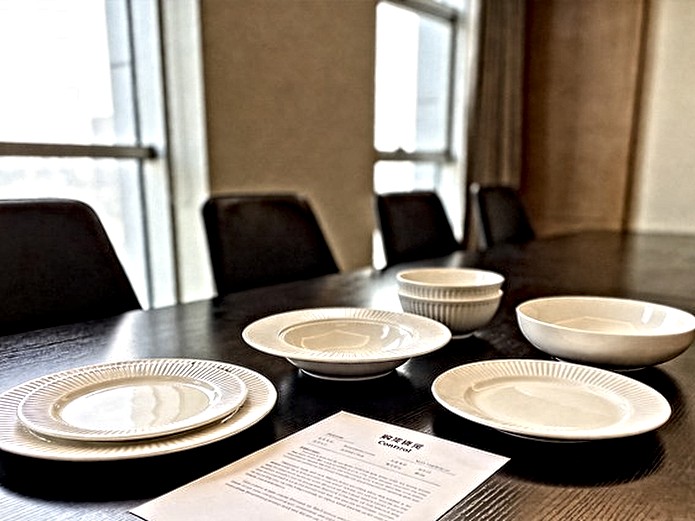
A ceramic supplier audit checklist helps you evaluate a new factory in one week, not one month. After ten years of sourcing ceramic tableware from factories across Chaozhou, Dehua, and Jingdezhen, I have learned that most buyers either skip the audit entirely or stretch it across three months of email ping-pong. Both approaches cost money. The seven-day program below compresses every critical check into a focused sequence: document screening, sample testing, floor inspection, and reference verification. By the end of day seven, you will have a quantified score that tells you whether this factory deserves a trial order or a polite pass.
This article is written for buyers who have already narrowed their search to two or three candidates and need a structured way to separate real manufacturers from polished websites. You do not need to be on the factory floor every day. Days one through four can be done remotely. Days five through seven require a site visit or a trusted local agent.
What a 7-Day Audit Actually Covers
A thorough ceramic supplier audit checks four pillars: legitimacy, capability, quality consistency, and commercial terms. Most buyers over-index on price and under-index on capability. A factory that quotes 20% below market may be cutting corners on kiln calibration, glaze sourcing, or QC staffing. The checklist below weights each pillar so you cannot be swayed by a low quote alone.
| Audit Pillar | What You Are Checking | Weight in Final Score |
|---|---|---|
| Legitimacy | Business license, export license, tax records, ownership structure | 15% |
| Capability | Equipment age, kiln capacity, decoration lines, mold shop | 25% |
| Quality Consistency | QC process, defect rate trend, testing equipment, sample-to-sample variance | 35% |
| Commercial Terms | MOQ, lead time, payment terms, warranty, defect claim process | 25% |
The 35% weight on quality consistency reflects a hard truth from the field: even a well-equipped factory can ship inconsistent batches if their QC process is weak. A factory with older machines but rigorous inline inspection often outperforms a glossy facility that only checks finished goods at the end of the line.
Day 1-2: Document Review and Initial Screening
The first 48 hours are desk work. Request the following documents from the factory and cross-check them against public databases where possible:
- Business license with scope including “ceramic manufacturing” or “ceramic production”
- Export license or a valid customs registration code
- ISO 9001 certificate — verify the certificate number on the issuing body’s website [VERIFY BEFORE PUBLISHING]
- Social compliance audit (BSCI, Sedex, or SA8000) if you serve European or North American retail chains [VERIFY BEFORE PUBLISHING]
- Product test reports for FDA, LFGB, or CA Prop 65 compliance, dated within the last 24 months
- Factory layout diagram showing production flow from clay prep to packing
Red flag: if a factory cannot produce a current test report within 48 hours, they either do not test regularly or they are a trading company posing as a manufacturer. Real factories keep test reports on file because buyers request them weekly.
During this phase, also run a reverse image search on the factory photos on their website. Trading companies often steal photos from legitimate manufacturers. If the same workshop appears on three different company websites, you are looking at a broker, not a maker.
Day 3-4: Sample Evaluation and Material Testing
By day three, you should have received pre-production samples or existing product samples. Do not evaluate them on a desk. Test them the way your end customer will use them.
Sample Testing Protocol:
- Thermal shock test: Move samples from freezer to boiling water three times. Hairline cracks after the second cycle indicate glaze-body mismatch or insufficient firing temperature.
- Dishwasher durability: Run samples through 50 commercial dishwasher cycles. Check for glaze dulling, edge chipping, and decal fading.
- Stacking test: Stack plates and bowls to the height they will sit in your warehouse. Any sticking, scratching, or wobbling is a rejection.
- Weight consistency: Weigh ten pieces from the same SKU. A variance over 5% suggests poor clay consistency or uneven firing.
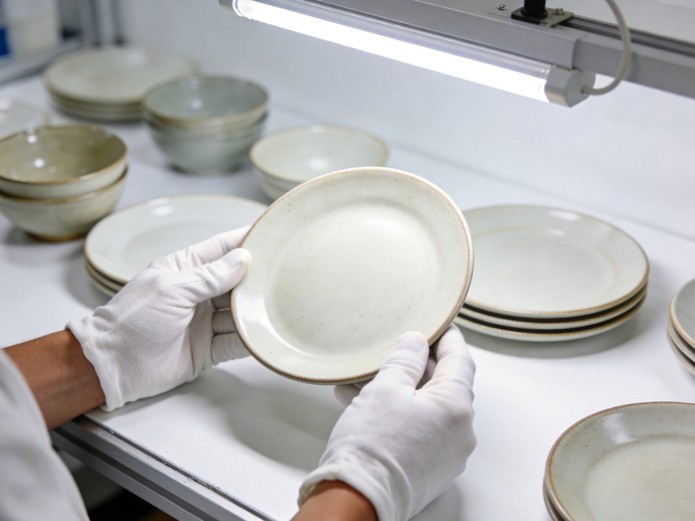
If the factory claims their product is microwave-safe or oven-safe, ask for the specific temperature rating and the test method they used. A responsible factory will name the ASTM or ISO test standard. [VERIFY BEFORE PUBLISHING] Vague answers like “yes, it is safe” without a temperature limit are a warning sign.
At this stage, also request the clay and glaze composition sheets. You do not need to be a chemist. You need to see that the factory has them and that they match the test report claims. If a factory refuses to share material compositions for proprietary reasons, that is acceptable only if they provide a signed guarantee that all materials meet your target market’s food-contact regulations.
Day 5-6: Factory Floor Assessment
This is the only phase that requires a physical visit or a trusted third-party inspector. If you cannot travel, hire an inspection agency based in the factory’s city. A four-hour floor walk costs less than a single defective batch.
Floor Assessment Checklist:
- Kiln area: Check kiln age, brand, and temperature logging system. Digital controllers with data export are preferable to manual dial controls. Ask for the last three months of firing curves.
- Glaze kitchen: Look for labeled glaze buckets, mixing records, and sieve maintenance logs. Cross-contamination between leaded and lead-free glazes is a serious risk if the same equipment is used without cleaning.
- QC stations: Count how many QC staff are on the line versus at the final packing area. Inline inspection catches defects before value is added. End-of-line inspection only catches what has already been made wrong.
- Warehousing: Check if finished goods are stored on racks (good) or directly on concrete floors (bad, absorbs moisture and causes box damage). Look for climate control in the glaze storage area.
- Workshop cleanliness: Dust, broken greenware, and clay slurry on the floor are normal in ceramics. What is not normal is finished goods stored next to raw clay piles or glaze dust settling on packed cartons.
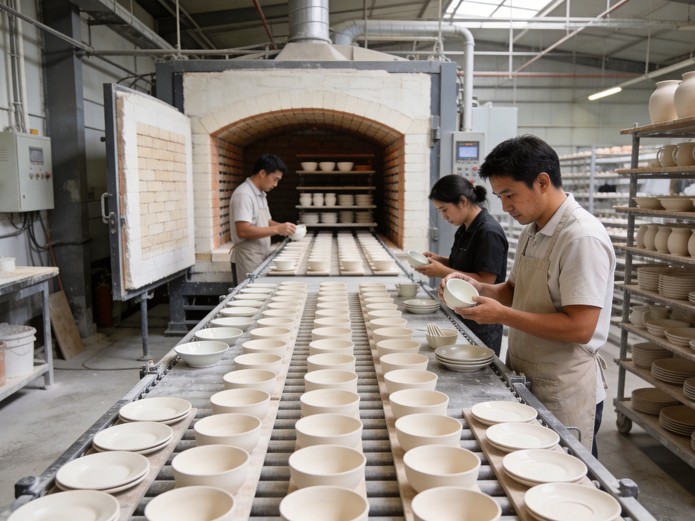
Ask to see the defect log from the last 30 days. A factory that tracks defect types, quantities, and root causes is a factory that improves. A factory that says “we do not have many defects” without documentation is either lying or not paying attention. [FACTORY DATA REQUIRED]
During the walk, take timestamped photos of the production line, QC stations, and packing area. These photos become your evidence if a later shipment does not match what you saw on the floor.
Day 7: Reference Checks and Negotiation Prep
The final day is about validation and positioning. Ask the factory for two to three current customer references. Contact them directly. Do not accept LinkedIn messages or email introductions arranged by the factory. Call the reference company’s main line and ask for the procurement contact.
Questions to ask references:
- How long have you worked with this factory?
- What is their typical lead time for a new mold versus a repeat order?
- Have you ever had a quality claim? How was it resolved?
- Would you place a larger order with them today than you did last year?
Then prepare your negotiation position. By now you know the factory’s real capabilities, their weak points, and their current customer base. Use that knowledge to negotiate payment terms (30/70 is standard for new relationships, but 20/80 is achievable if your audit score is strong), defect allowances (aim for AQL 2.5 or better on critical defects), and sample-to-bulk consistency guarantees (a written commitment that the bulk shipment will match the approved pre-production sample within defined tolerances for weight, dimensions, and color).
Supplier Scoring Matrix: How to Quantify Your Findings
Qualitative impressions fade. Numbers do not. Use the scoring matrix below to convert your seven-day findings into a single score out of 100.
| Score Range | Rating | What It Means for Your Order |
|---|---|---|
| 90-100 | Excellent | Proceed with first order. Consider exclusive or preferred supplier terms. |
| 75-89 | Good | Proceed with a trial order (small MOQ). Require pre-shipment inspection for first three batches. |
| 60-74 | Acceptable with Conditions | Negotiate stricter terms: higher deposit, third-party inspection, or phased delivery. Do not place large initial orders. |
| Below 60 | Not Recommended | Walk away. The risk of defects, delays, or disputes exceeds the benefit of their price. |
The matrix forces a discipline that many buyers skip: writing down the score before emotions or pricing pressure take over. A factory that scores 68 may quote 15% below the factory that scores 82. The scoring matrix makes the trade-off visible.
5 Red Flags That Should Disqualify a Factory Immediately
Some findings are not negotiable. If you encounter any of the following during your seven-day audit, end the evaluation:
- No valid export license or business scope mismatch. A factory legally restricted to domestic sales cannot export directly. You would be forced to use a trading company as an intermediary, adding cost and opacity.
- Test reports older than 24 months or from unverifiable labs. Ceramic formulations change. A two-year-old test report from a lab you cannot verify online is worth nothing.
- Refusal to provide a factory visit or live video walkthrough. In the post-2020 sourcing environment, any factory that will not show you their floor either has something to hide or is not a factory at all.
- Glaze kitchen with no separation between leaded and lead-free production. Cross-contamination risk in this area is a food safety liability that no insurance policy fully covers.
- No written defect claim process. A factory that handles quality complaints verbally will handle your complaint the same way: slowly, inconsistently, and to their advantage.
What to Do After the Audit: Next Steps
A completed audit is only useful if it drives action. Within 48 hours of finishing day seven, do the following:
- Write a one-page audit summary with the score, red flags, and recommended next step. Share it with your finance and logistics teams so they understand the risk level.
- Request a formal quotation based on the specific SKU, volume, and customization you discussed during the audit. Do not accept a generic price list.
- Confirm MOQ and lead time in writing. MOQ for standard ceramic tableware typically ranges from 500 to 3,000 pieces per SKU depending on decoration complexity. New mold development adds 14 to 21 days. [INTERNAL DATA REQUIRED]
- Schedule a pre-shipment inspection for the first order, even if the factory scored above 80. First orders reveal gaps that no audit can predict.
If you are evaluating multiple factories, run the same checklist on each candidate and compare scores side by side. The matrix makes the comparison objective rather than impression-based.
FAQ
Can I complete this audit without visiting China?
Days one through four can be done entirely remotely. For days five and six, hire a local third-party inspector from a firm such as SGS, Bureau Veritas, or a reputable local agency. The cost is typically $300 to $500 per man-day, which is far less than a flight and hotel. [VERIFY BEFORE PUBLISHING]
How much should I budget for sample testing?
Sample testing costs depend on the tests you run. A basic thermal shock and dishwasher cycle test using your own equipment costs nothing beyond your time. Sending samples to a certified lab for lead and cadmium testing costs roughly $80 to $150 per sample depending on the lab and region. [VERIFY BEFORE PUBLISHING]
What if the factory refuses to share their firing curves or defect logs?
Refusal to share production data is a yellow flag, not necessarily a red flag. Some factories treat process data as proprietary. If they refuse, ask instead for a live demonstration of their QC process and permission to photograph the QC station. Transparency in action can substitute for transparency in documents.
Should I audit a trading company the same way?
No. A trading company does not own production equipment, so the floor assessment checklist does not apply. Instead, audit their supplier network: how many factories they work with, how they select and monitor those factories, and whether they conduct their own pre-shipment inspections. The sample testing and reference check phases still apply.
How often should I re-audit an existing supplier?
Re-audit every 18 to 24 months, or immediately after any of the following: a change in ownership, a move to a new facility, the introduction of a new product line, or two consecutive shipments with defect rates above your agreed AQL.
—
Need help running this audit on a specific factory? Contact our sourcing team for factory audit support and pre-shipment inspection services.