

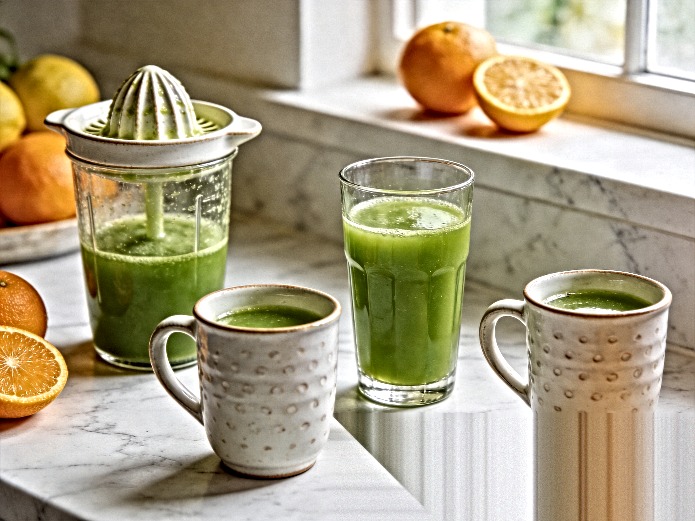
Ceramic tableware for juice bars needs to handle cold temperatures, acidic beverages, and daily commercial washing without chipping, staining, or cracking. Most juice bar owners start with glass or disposable cups, then switch to ceramic once daily volume crosses 150-200 servings and breakage costs outweigh the upfront investment. The right ceramic serveware also becomes a branding tool—customers photograph their drinks, and a distinctive cup shape or glaze color shows up in social media posts that drive repeat visits.
This guide walks through the specific cup styles, sizes, glaze types, and sourcing decisions that matter for juice and smoothie service. You will find a side-by-side cost comparison, a production timeline with typical MOQs, a downloadable sourcing checklist, and the five mistakes I see most often when juice bar owners place their first ceramic order from China.
Why Standard Restaurant Ceramic Doesn’t Always Work for Juice Bars
Restaurant ceramic plates and bowls are designed for hot food service. Juice bars face a different set of demands:
- Cold thermal shock: Cups go from room temperature to refrigerator-cold juice (2-4°C) within seconds. Low-quality stoneware can micro-crack when temperature drops rapidly.
- Acidic exposure: Citrus, pineapple, and kombucha have pH levels between 2.5 and 4.0. Porous or improperly glazed ceramic absorbs acids, leading to staining and odor retention.
- High turnover: A busy juice bar may wash the same cup four to six times per day. The glaze must withstand commercial dishwasher cycles with alkaline detergents.
- Brand visibility: Unlike restaurant plates that sit on a table, juice cups are held in hand and photographed. Shape, texture, and color become part of the brand identity.
These differences mean the cup you choose for a smoothie bowl is not the same cup you would choose for a steakhouse entrée plate.
Cup Styles and Sizes That Sell More Cold Drinks
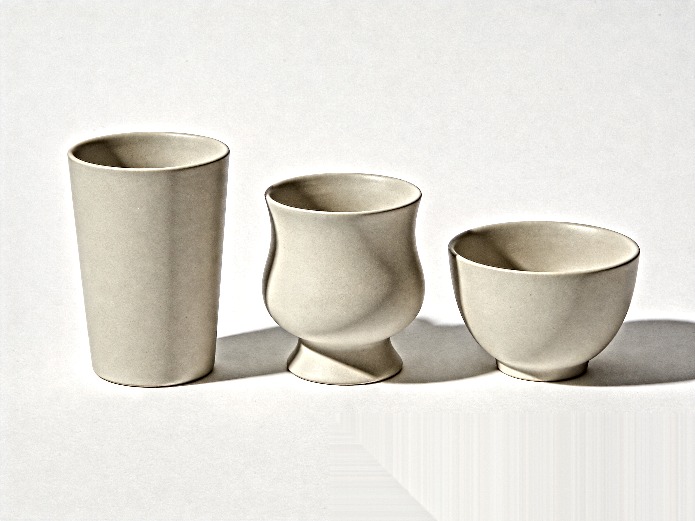
Juice bar ceramic falls into four main cup styles. The right choice depends on your menu, price point, and whether customers drink in-house or take drinks to-go.
| Cup Style | Typical Capacity | Best For | MOQ Range | Unit FOB Price |
|---|---|---|---|---|
| Classic Tumbler (straight wall) | 300-400 ml | Green juices, citrus blends | 500-1,000 pcs | $1.80 – $3.20 |
| Belly Cup (curved silhouette) | 350-450 ml | Smoothies, açaí blends | 800-1,500 pcs | $2.50 – $4.50 |
| Stackable Bowl Cup | 450-600 ml | Smoothie bowls, parfaits | 500-1,000 pcs | $2.80 – $5.00 |
| Double-Wall Insulated | 350-500 ml | Premium cold-pressed, matcha | 1,000-2,000 pcs | $4.50 – $8.00 |
Practical advice: Start with one tumbler style in two sizes (12 oz and 16 oz). This keeps your first order under 1,500 total pieces, which most mid-sized factories accept without surcharges. Once you confirm sales velocity and dishwasher durability, add a belly cup or bowl cup as a second SKU.
Material and Glaze: What Stands Up to Acidic Juices
The material and glaze you choose determines whether your cups last two years or two months in a commercial juice bar.
Material Choice
- High-fired stoneware (1,200-1,280°C): Best balance of durability and cost. Porosity drops below 3% at these temperatures, making the body resistant to acid absorption. This is the standard recommendation for juice bar tumblers.
- Porcelain (1,300-1,400°C): Lower porosity and a finer surface, but more brittle. Suitable for premium double-wall cups where the customer experience justifies higher breakage risk.
- Bone china: Avoid for juice bars. High translucency is irrelevant for opaque smoothies, and the lower alumina content makes it prone to chipping in high-turnover environments.
Glaze Safety and Performance
All glazes in contact with food must meet FDA 21 CFR 175.300 or EU 1935/2004 for food contact materials [VERIFY BEFORE PUBLISHING]. Lead and cadmium migration limits are especially critical for acidic beverages because acids accelerate metal leaching from improperly formulated glazes.
Ask your supplier for:
- Third-party test reports for lead and cadmium migration (SGS, Intertek, or equivalent), tested with 4% acetic acid solution to simulate acidic beverage contact
- Glaze composition disclosure: avoid glazes containing lead oxide (PbO) or cadmium pigments for red/orange colors
- Dishwasher cycle testing data: request minimum 500-cycle test results with no visible glaze degradation
Source: U.S. Food and Drug Administration, “Indirect Food Additives: Adhesives and Components of Coatings,” 21 CFR 175.300. https://www.ecfr.gov/current/title-21/chapter-I/subchapter-B/part-175/subpart-C/section-175.300
Branding Your Ceramic Serveware Without Breaking the Budget
Custom branding on ceramic juice cups typically adds 15-35% to the unit price, depending on the decoration method. Here is how the four main options compare:

- Underglaze logo (screen print before glazing): Most durable. The logo is fired under the glaze surface, so it will not fade in commercial dishwashers. Setup cost: $150-300 per color. Best for logos with 1-2 colors.
- Decal transfer (post-glaze): Lower setup cost ($80-150), but the decal sits on the glaze surface. Expect 1-2 years of daily dishwasher use before edge lifting. Good for seasonal or limited-edition designs.
- Embossed or debossed logo (in mold): No color, but zero ongoing cost per piece and permanent durability. Requires a custom mold fee of $800-2,000. Economical only at MOQs above 3,000 pieces.
- Reactive or custom glaze color: Instead of a a logo, choose a signature glaze color. Factories often accept custom glaze colors at 1,000-piece MOQs with a color-matching fee of $200-400.
Budget tip: If your first order is under 1,000 pieces, skip custom molds. Use underglaze screen printing for your logo and a standard glaze color. You can upgrade to embossed logos or custom glaze in your second reorder once sales data justifies the investment.
Cost Per Use: Ceramic vs Glass vs Plastic Tumblers
Juice bar owners often ask whether ceramic is worth the premium over glass or reusable plastic. Here is a realistic cost-per-use comparison based on 500 uses over two years:
| Material | Unit Cost | Expected Lifespan | Breakage/Wear Rate | Cost Per Use | Branding Quality |
|---|---|---|---|---|---|
| Ceramic (stoneware) | $2.50 | 2-3 years | 5-8% per year | $0.015 – $0.025 | Excellent |
| Borosilicate glass | $3.50 | 1-2 years | 12-18% per year | $0.035 – $0.055 | Good (laser etch) |
| Tritan plastic (BPA-free) | $1.80 | 1-2 years | Surface scratches, clouding | $0.018 – $0.030 | Moderate |
| Disposable paper cup | $0.12 | 1 use | 100% | $0.120 | Logo print only |
Key insight: Ceramic has the lowest cost per use of any reusable option, and it creates the strongest brand impression. The upfront investment pays back within 3-4 months for a juice bar serving 150+ drinks daily.
5 Sourcing Mistakes Juice Bar Owners Make
After reviewing hundreds of ceramic sourcing projects for beverage businesses, these are the errors that cost buyers the most time and money:
Mistake 1: Ordering the Same Size for Every Menu Item
A 16-ounce tumbler works for a green juice but looks half-empty with a 12-ounce smoothie bowl. Mismatch between cup capacity and serving size makes portions look small and disappoints customers. Order at least two sizes: one for standard juices (300-350 ml) and one for smoothies or bowls (450-550 ml).
Mistake 2: Ignoring Thermal Shock Ratings
Some factories glaze stoneware at 1,100°C to save fuel costs. The resulting body has higher porosity and poor thermal shock resistance. When you pour 2°C juice into a 25°C cup, micro-cracks form within weeks. Always request thermal shock test data: a proper high-fired stoneware cup should survive a 150°C temperature difference without cracking (ASTM C1525 standard) [VERIFY BEFORE PUBLISHING].
Mistake 3: Choosing Decorative Glazes Without Food-Safety Testing
Metallic, iridescent, and deep-red glazes often contain heavy metal pigments. A glaze that is safe for dry food may fail acid-leaching tests. Insist on test reports specific to acidic food contact, not just general food-grade certification.
Mistake 4: Underestimating Lead Time
First-time buyers often assume a 4-week turnaround. In reality, custom ceramic for juice bars typically requires 8-12 weeks: 1-2 weeks for sample approval, 3-4 weeks for mold preparation (if custom shape), 2-3 weeks for production, and 2-3 weeks for sea freight. Plan your opening or rebrand at least three months ahead.
Mistake 5: Skipping the Sample Wash Test
Before approving bulk production, run samples through your actual commercial dishwasher for 50 cycles. Check for glaze dulling, color fading, and edge chipping. This simple test has saved more buyers from defective batches than any factory audit.
Production Timeline and MOQ: What to Expect from China
Most juice bar ceramic is produced in Dehua or Chaozhou, where factories specialize in small-to-medium ceramic drinkware runs. Here are realistic numbers for planning:
- Standard cup (no custom mold): MOQ 500-1,000 pieces per style. Production lead time 25-35 days after sample approval.
- Custom shape (new mold required): MOQ 2,000-3,000 pieces. Mold fee $800-2,000. Add 10-15 days for mold making.
- Custom glaze color: MOQ 1,000 pieces. Color-matching fee $200-400. Add 5-7 days for glaze testing.
- Underglaze logo printing: Setup fee $150-300 per color. No MOQ increase for standard cup shapes.
- Sea freight (FCL 20-foot container): 18-25 days to U.S. West Coast, 28-35 days to Europe. A 20-foot container holds approximately 8,000-12,000 ceramic tumblers depending on size and packaging.
Packaging note: Request individual poly-bag wrapping and corrugated dividers. Juice bar cups have thin walls compared to dinner plates, and nested stacking without protection causes rim chipping during transit. Standard export packaging cost adds $0.15-0.25 per piece.
Your Juice Bar Ceramic Sourcing Checklist
Use this checklist before signing a purchase order. Copy it into your procurement notes or share it with your team.
- ☐ Defined cup style and two size options based on menu serving sizes
- ☐ Confirmed material: high-fired stoneware (1,200°C+) or porcelain (if premium line)
- ☐ Received lead and cadmium migration test reports for acidic food contact
- ☐ Verified thermal shock resistance: 150°C minimum temperature differential
- ☐ Requested dishwasher cycle test data (500+ cycles, no glaze degradation)
- ☐ Approved physical samples and ran 50-cycle wash test in-house
- ☐ Confirmed glaze composition contains no lead oxide or cadmium pigments
- ☐ Agreed on decoration method, setup fees, and color matching costs
- ☐ Confirmed MOQ, unit price, and total order value including packaging
- ☐ Verified production timeline: sample approval → bulk production → shipping
- ☐ Confirmed Incoterm (FOB, CIF, or DDP) and total landed cost estimate
- ☐ Reviewed factory quality control process and acceptance criteria (AQL 2.5 recommended)
- ☐ Confirmed packaging: individual poly-bag + corrugated dividers for rim protection
Pro tip: Save this checklist in your procurement folder and reuse it for every ceramic reorder. The questions stay the same even as your volume grows.
Frequently Asked Questions
What is the minimum order for custom ceramic juice cups?
Standard cup shapes start at 500-1,000 pieces. Custom molds require 2,000-3,000 pieces. Underglaze logo printing adds a one-time setup fee but does not raise the MOQ.
How long does production take from sample approval?
Standard cups: 25-35 days. Custom shapes: 35-50 days including mold making. Add 18-35 days for sea freight depending on destination.
Are ceramic juice cups dishwasher safe?
High-fired stoneware and porcelain cups with commercial-grade glaze are dishwasher safe. Request 500-cycle dishwasher test data from your supplier to confirm the specific glaze formulation will not dull or craze.
Can I get ceramic cups in custom colors?
Yes. Most factories accept custom glaze colors at 1,000-piece MOQs with a $200-400 color-matching fee. Provide a Pantone or physical color sample for matching.
Is ceramic cheaper than glass for juice bars?
Over a two-year lifespan, ceramic stoneware has a lower cost per use than borosilicate glass because it breaks less frequently and lasts longer in commercial dishwashers.
What packaging prevents chipping during shipping?
Request individual poly-bag wrapping plus corrugated cardboard dividers between nested cups. Avoid bulk packing without separators—rim contact causes micro-chips that grow into visible cracks.
Ready to source ceramic tableware built for juice and smoothie service? Request the juice bar ceramic tableware sample kit and we will send cup styles, glaze options, and customization samples tailored to your menu and volume.


