Farm to table ceramic tableware is not the same as standard commercial dinnerware. Restaurants that build their brand around local, seasonal ingredients need plates and bowls that tell the same story — earthy tones, organic shapes, and surfaces that feel handmade rather than mass-produced. This guide shows you exactly what to look for when sourcing rustic ceramic tableware that holds up to daily commercial use without losing the aesthetic your guests expect.
By the end of this article, you will know which clay bodies and glazes work best for farm-to-table concepts, what MOQ and lead time to expect from manufacturers, how to avoid the three most common sourcing mistakes, and how to build a collection that stays consistent across reorders.
What Makes Farm-to-Table Ceramic Different from Standard Commercial Tableware
Standard commercial tableware is designed for uniformity, stackability, and high-volume dishwashing. Farm-to-table ceramic flips some of those priorities. Slight variations in glaze, intentional imperfections, and heavier, more tactile surfaces are part of the appeal — not defects.
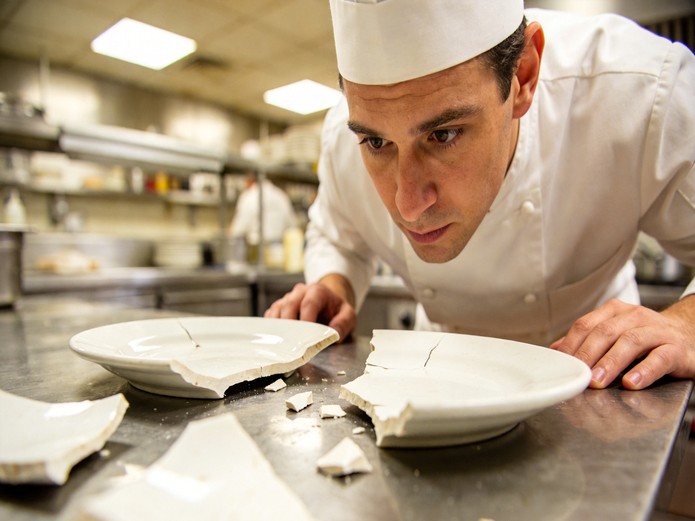
That does not mean you sacrifice durability. A well-made stoneware plate with a food-safe matte glaze can survive thousands of commercial dishwasher cycles. The difference is in the visual language: your guests should feel like they are eating off something crafted, not something stamped out by the thousand.
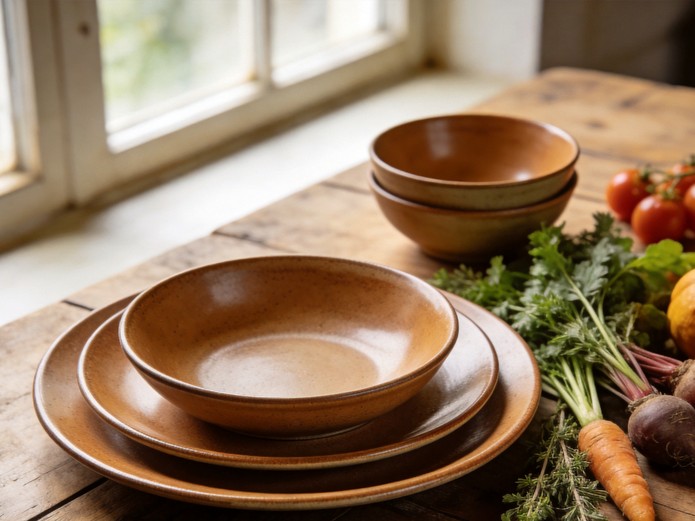
Most farm-to-table restaurants we work with start with a base of stoneware dinner plates in earth tones — terracotta, sage, cream, and charcoal — then layer in accent pieces like shallow pasta bowls and irregular rimmed platters. The key is curation, not randomness. Every piece should feel like it belongs to the same collection even if no two plates are identical.
Key Design Features Buyers Should Prioritize
When you request samples from a manufacturer, evaluate these five attributes before placing a bulk order. They determine whether your tableware will look right on opening day and still look right after six months of heavy service.
- Clay body weight: Farm-to-table stoneware typically runs 15–25% heavier than standard porcelain. That weight signals quality to guests but increases shipping costs. Ask your supplier for the gram weight of each piece and factor it into your landed cost calculation.
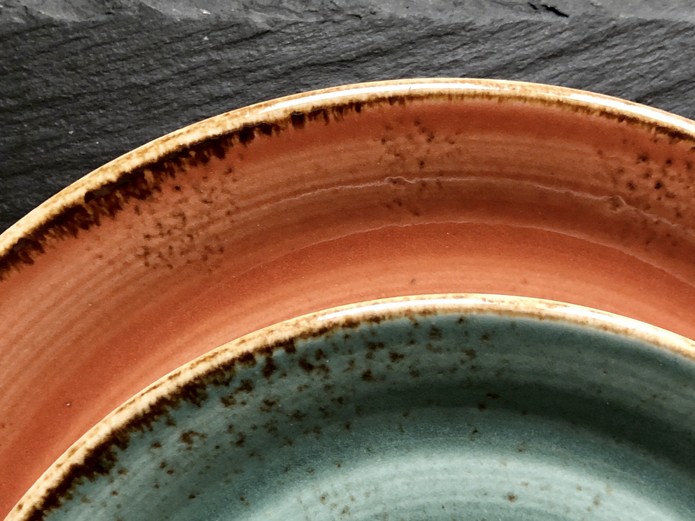
- Glaze finish: Matte and satin-matte glazes dominate rustic dining concepts. They photograph well under warm lighting and hide minor wear better than high-gloss finishes. Confirm the glaze is food-safe and tested for lead and cadmium migration.
- Organic rim profiles: Slightly uneven or hand-finished rims differentiate farm-to-table pieces from factory-line plates. These are usually created by hand-trimming greenware or by using specialized molds. Request both machine-formed and hand-finished samples to compare unit cost.
- Color consistency across batches: Slight variation is desirable, but wild swings between orders will make your table look mismatched. Ask suppliers for their delta-E tolerance between production runs. [VERIFY BEFORE PUBLISHING: Typical acceptable range is delta-E 2–4 for earth-tone glazes.]
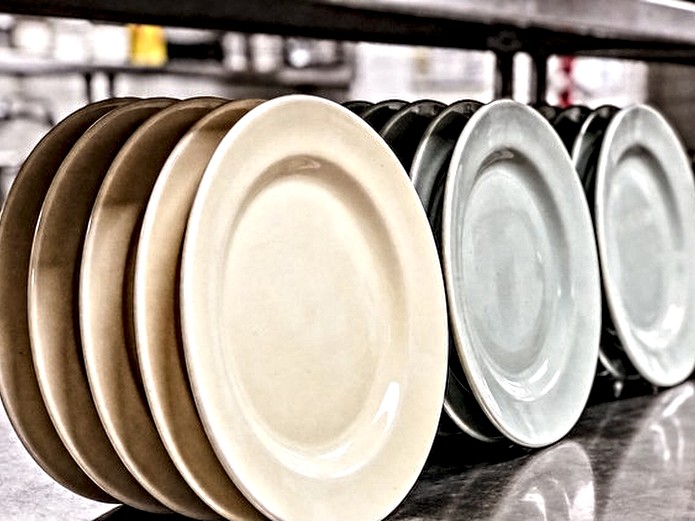
- Stacking and storage: Irregular shapes stack less efficiently. Before you commit to a full collection, mock up a storage rack with samples to confirm your dish room can handle the geometry.
Glaze and Color Strategies for Rustic Dining Concepts
Color choice in farm-to-table dining is not decorative — it is part of the menu presentation. A deep charcoal plate makes braised short ribs and root vegetables pop. A cream glaze softens the visual impact of raw salads and crudos. The wrong color can make fresh food look dull.
Here is a practical framework for choosing your collection palette:
| Concept Style | Base Glaze | Accent Glaze | Best For |
|---|---|---|---|
| Modern rustic | Matte cream or soft gray | Reactive copper or iron | Brunch, all-day dining |
| Earthy farmhouse | Terracotta or warm sand | Speckled white or sage | Dinner service, shared plates |
| Minimalist natural | Charcoal or slate | Unglazed rim or raw clay | Fine-casual, tasting menus |
| Coastal farm-to-table | Seafoam or pale blue | Driftwood brown | Seafood-focused concepts |
Reactive glazes — where metallic oxides create unpredictable color patterns during firing — are popular in this segment. They give each plate a unique surface. The trade-off is higher defect rates (5–12% vs. 2–3% for solid glazes) and longer lead times because suppliers often need to run smaller kiln loads for quality control. [INTERNAL DATA REQUIRED: Confirm typical defect rates with production team.]
Sourcing: MOQ, Lead Time, and Customization Options
Farm-to-table collections are rarely off-the-shelf catalog orders. Most buyers want some level of customization — a specific Pantone-matched glaze, a logo stamp on the foot, or a proprietary shape developed from a sketch. Here is what realistic sourcing looks like.
MOQ by Order Type
- Stock shapes, custom glaze: 500–1,000 pieces per SKU. Lead time 45–60 days.
- Custom shape, existing mold adapted: 1,000–2,000 pieces per SKU. Lead time 60–75 days plus 2–3 weeks for mold development.
- Fully custom shape from drawing: 2,000+ pieces per SKU. Lead time 90–120 days including sample approval.
- Mixed container (multiple SKUs, smaller quantities each): 3,000–5,000 total pieces to fill a 20-foot container. This is the most common approach for independent restaurants opening a second or third location.
Packaging for Irregular Shapes
Irregular rims and foot rings do not nest as tightly as standard plates. That increases the carton volume per piece by 20–35%. When you request a quote, ask for packaging specs based on your actual shapes, not standard catalog assumptions. A quote based on round plates will underestimate your freight cost.
We recommend corrugated dividers with 3-ply construction for mixed SKUs and molded pulp trays for single-SKU bulk packs. [FACTORY PHOTO REQUIRED: Add image of rustic ceramic packaging setup.]
Three Common Mistakes When Sourcing Farm-to-Table Ceramic
After working with dozens of farm-to-table restaurants, we see the same errors repeat. Avoiding them will save you reorders, storage headaches, and guest complaints.
Mistake 1: Ordering Reactive Glaze Without Understanding Defect Tolerance
Reactive glazes are beautiful but inconsistent. If your brand depends on every plate looking nearly identical, reactive glaze is the wrong choice. Define your acceptable range in writing — with reference photos — before production starts. Otherwise you will receive a batch where half the plates look perfect and half look like a different collection entirely.
Mistake 2: Ignoring Thermal Shock in Oven-to-Table Service
Many farm-to-table kitchens serve dishes straight from the oven or salamander. Standard stoneware handles this poorly. If your menu includes baked items, confirm with your supplier that the clay body is rated for thermal shock resistance or specify a high-fire stoneware / porcelain blend. [VERIFY BEFORE PUBLISHING: Reference ASTM C1525 or equivalent standard.]
Mistake 3: Buying Based on Instagram Photos Instead of Physical Samples
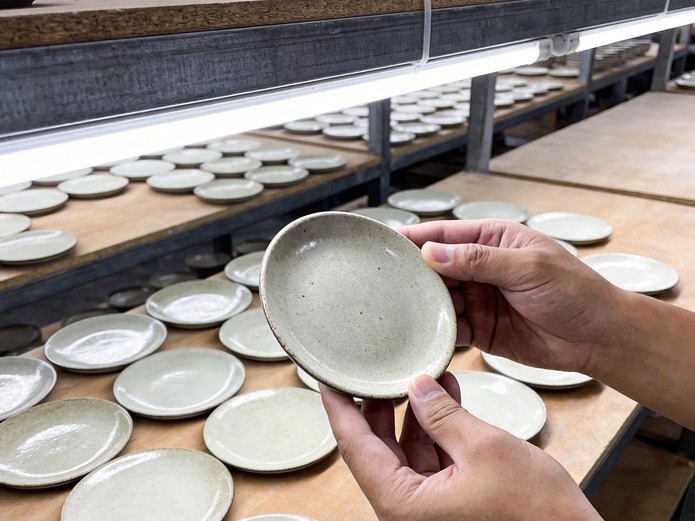
A plate that looks stunning in a professionally lit photo may look flat and lifeless under your restaurant’s pendant lighting. Always request physical samples and test them under your actual service conditions — same bulbs, same table surfaces, same food presentation — before committing to a full order.
A Practical Checklist for Your First Farm-to-Table Ceramic Order
Use this checklist to evaluate suppliers and confirm your order spec before signing a purchase agreement. Save it or print it for your team.
| Check | Status | Notes |
|---|---|---|
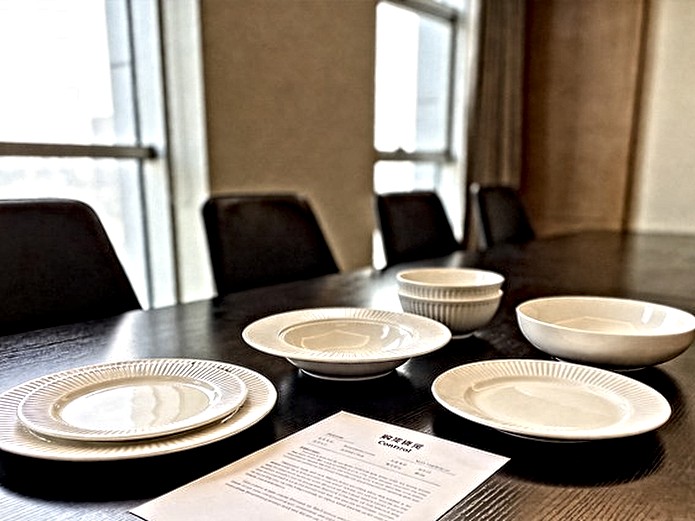
| Physical samples received and evaluated under actual restaurant lighting | □ | |
| Glaze tested for lead/cadmium migration (FDA or LFGB compliant) | □ | Request test report |
| Thermal shock requirements confirmed with supplier | □ | If serving oven-to-table |
| MOQ and lead time confirmed in writing | □ | Include penalty clauses |
| Packaging spec based on actual shapes, not catalog defaults | □ | Confirm carton dimensions |
| Color tolerance (delta-E range) agreed between batches | □ | Request batch-to-batch record |
| Dishwasher durability confirmed or tested | □ | 500+ cycle minimum |
| Storage rack mock-up completed with sample stacks | □ | Measure dish room space |
| Reorder pricing and timeline agreed upfront | □ | Avoid price shock later |
| Logo or foot stamp artwork approved by both parties | □ | If customizing |
Cost, Quality, and Lead Time Trade-offs
No supplier offers all three. Understanding the trade-offs helps you negotiate from a position of knowledge rather than hope.
Low cost + fast lead time = limited customization. You will get stock shapes in standard glazes. This works for a first opening where speed matters more than uniqueness. Plan to refresh the collection in year two if you want proprietary pieces.
High customization + low cost = long lead time. Developing custom molds and testing glazes takes time. If you have six months before opening, this is viable. If you need plates in eight weeks, it is not. Be honest about your timeline with your supplier early.
Fast lead time + high customization = higher unit cost. Some suppliers offer rush mold development or small-batch kiln runs for a premium. Expect 20–40% above standard pricing. Only choose this route if the unique design is core to your brand identity.
Our recommendation for most farm-to-table restaurants: start with a semi-custom order — stock shapes in a custom glaze — for your opening. Use the revenue from your first six months to fund a fully custom second collection. This balances speed, cost, and brand differentiation.
FAQ
What is the most durable clay body for farm-to-table restaurants?
High-fire stoneware (fired at 1,200–1,280°C) offers the best balance of durability and rustic aesthetics. It is denser than earthenware, less brittle than porcelain, and holds matte glazes well. For oven-to-table service, specify a clay body with added grog or a porcelain-stoneware blend for thermal shock resistance.
How much does farm-to-table ceramic tableware cost per piece?
FOB pricing typically ranges from $1.80–$4.50 per piece for stock shapes in custom glazes at MOQ 1,000+. Fully custom shapes run $3.50–$7.00. Reactive glazes add 10–20% due to higher defect rates. Your landed cost depends on freight, duties, and inland transport.
Can I mix different glaze colors in one order?
Yes, most suppliers allow color mixing within a SKU as long as each color hits the minimum per-glaze MOQ, usually 300–500 pieces. Mixed-color orders extend lead time by 1–2 weeks because the factory must switch glaze batches between kiln loads.
How do I maintain color consistency across reorders?
Keep a physical master sample from your first approved batch. Share it with the factory before each reorder. Request that they fire a small test batch and send you photos before running the full order. This prevents the common problem of batch-to-batch color drift.
Are matte glazes safe for commercial dishwashers?
Food-safe matte glazes are generally dishwasher-safe, but they can show wear faster than glossy finishes in high-alkaline commercial detergents. Specify a glaze hardness of Mohs 5+ and request dishwasher cycle testing data from your supplier. [VERIFY BEFORE PUBLISHING: Confirm typical glaze hardness standards.]
Should I source farm-to-table ceramic from Jingdezhen or Chaozhou?
Jingdezhen specializes in artistic and hand-finished pieces with higher per-unit costs. Chaozhou focuses on production-scale stoneware and porcelain with better MOQ flexibility and pricing. For most farm-to-table restaurants, Chaozhou offers the right balance of rustic aesthetics and commercial viability. Read our China ceramic regions guide for a full comparison.
Ready to source farm-to-table ceramic tableware for your restaurant? Request a rustic ceramic tableware sample set and evaluate clay body, glaze, and weight under your actual service conditions before committing to a bulk order.