Ceramic tableware customization is one of the most effective ways for bulk buyers to differentiate their brand, meet specific market demands, and build lasting customer loyalty. Whether you operate a restaurant chain, hotel group, catering company, or retail brand, the ability to create bespoke ceramic pieces — from custom logos and colors to unique shapes and packaging — gives you a competitive edge that off-the-shelf products simply cannot match.
In this comprehensive guide, we walk you through every stage of the ceramic tableware customization process, from initial design brief to final delivery. By the end, you’ll know exactly how to communicate your vision to manufacturers, what options are available at different order volumes, and how to avoid common pitfalls that cost importers time and money.
Why Ceramic Tableware Customization Matters for B2B Buyers
The global ceramic tableware market continues to grow, with increasing demand for personalized dining experiences across hospitality and retail sectors. Here’s why bulk buyers are investing in custom ceramic solutions:
- Brand Identity: Custom tableware reinforces your brand at every touchpoint — from the plate on the table to the mug in the gift shop
- Market Differentiation: Unique designs and shapes help your business stand out in crowded markets
- Customer Loyalty: Branded tableware creates a cohesive experience that guests remember and share
- Premium Pricing: Custom pieces justify higher price points and improve margins
- Exclusivity: Proprietary designs cannot be copied by competitors using the same suppliers
For restaurants, hotels, and retailers, ceramic tableware customization transforms a functional item into a strategic brand asset. The investment pays dividends through enhanced brand recognition and customer recall.
Types of Ceramic Tableware Customization Available
When working with a reliable ceramic manufacturer, customization options span several dimensions. Understanding what’s possible helps you make informed decisions during the design phase.
Logo and Decal Printing
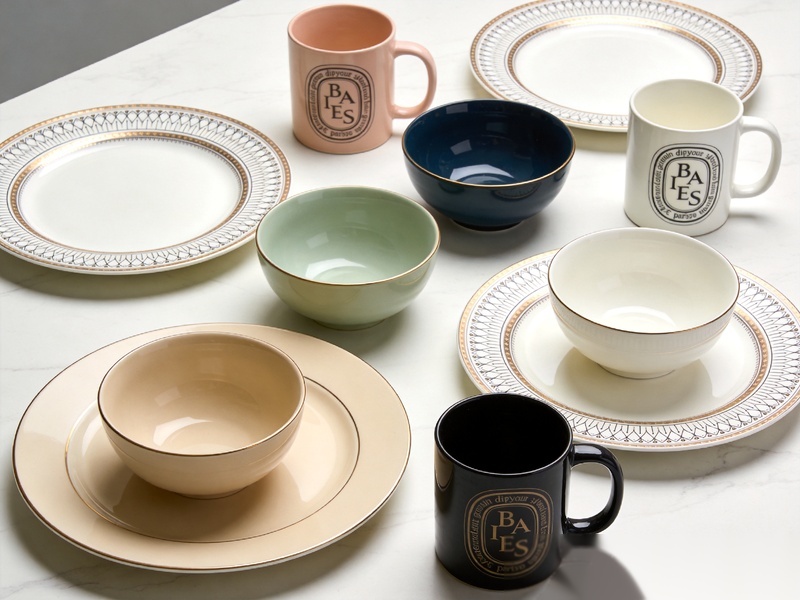
Logo application is the most common form of ceramic tableware customization. Techniques include:
- Underglaze Printing: Logo is applied before glazing, making it dishwasher-safe and permanent — ideal for hospitality use
- Overglaze Decals: Applied after glazing and fired at lower temperatures — offers more color vibrancy but less durability
- Screen Printing: Cost-effective for simple one or two-color logos at high volumes
- Digital Printing: Enables photorealistic designs and complex multi-color patterns without screen setup costs
Custom Colors and Glazes
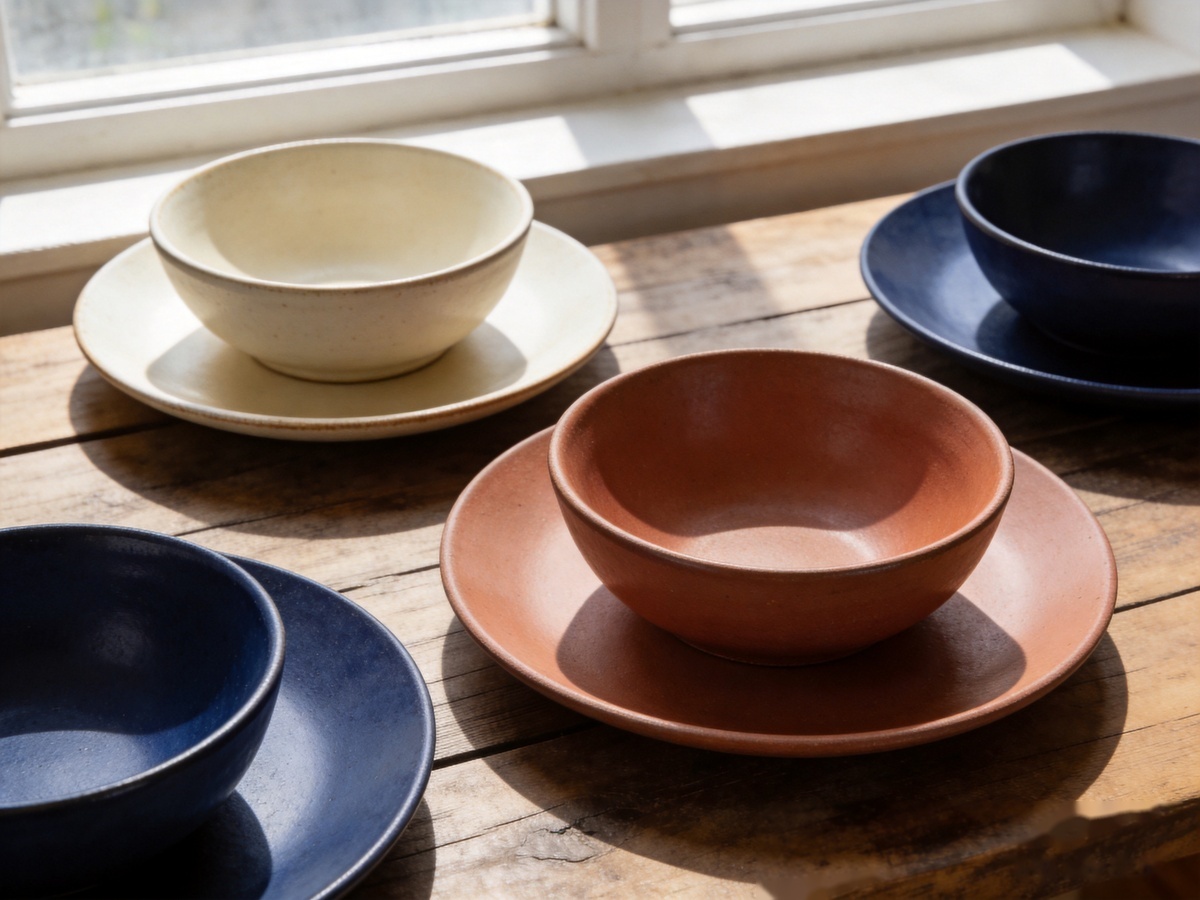
Color matching is a powerful aspect of ceramic tableware customization. Most manufacturers can:
- Match Pantone or RAL color codes for glazes
- Create gradient and ombre effects
- Offer matte, glossy, satin, or textured finishes
- Produce reactive glazes with unique crystalline or pooling effects
Custom glaze development typically requires a minimum order of 500–1,000 pieces per color, depending on the complexity of the formulation.
Custom Shapes and Molds
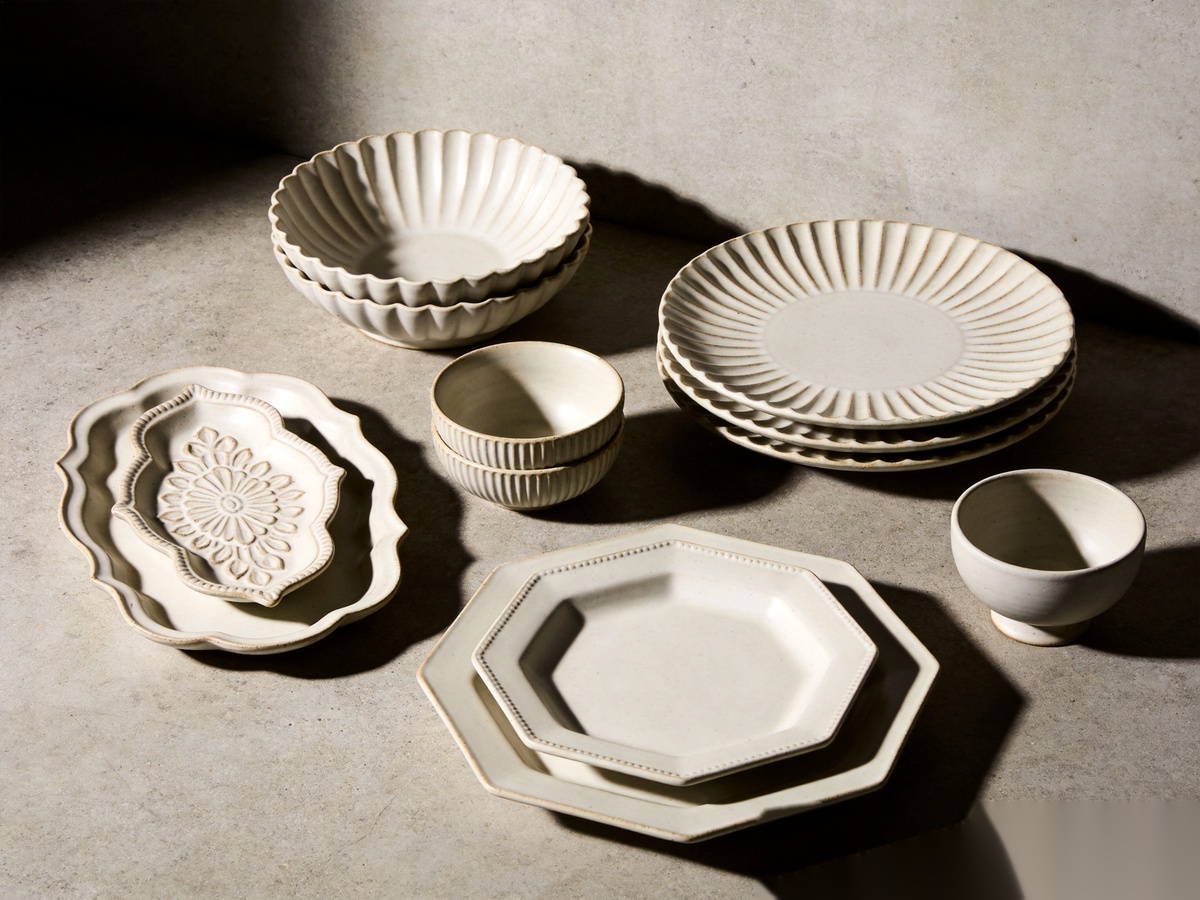
For buyers seeking truly unique ceramic tableware, custom mold development opens up unlimited possibilities:
- Asymmetric plates and bowls
- Branded shapes (e.g., plates shaped like your logo or regional landmarks)
- Functional innovations (built-in sauce wells, stacking features, portion-control designs)
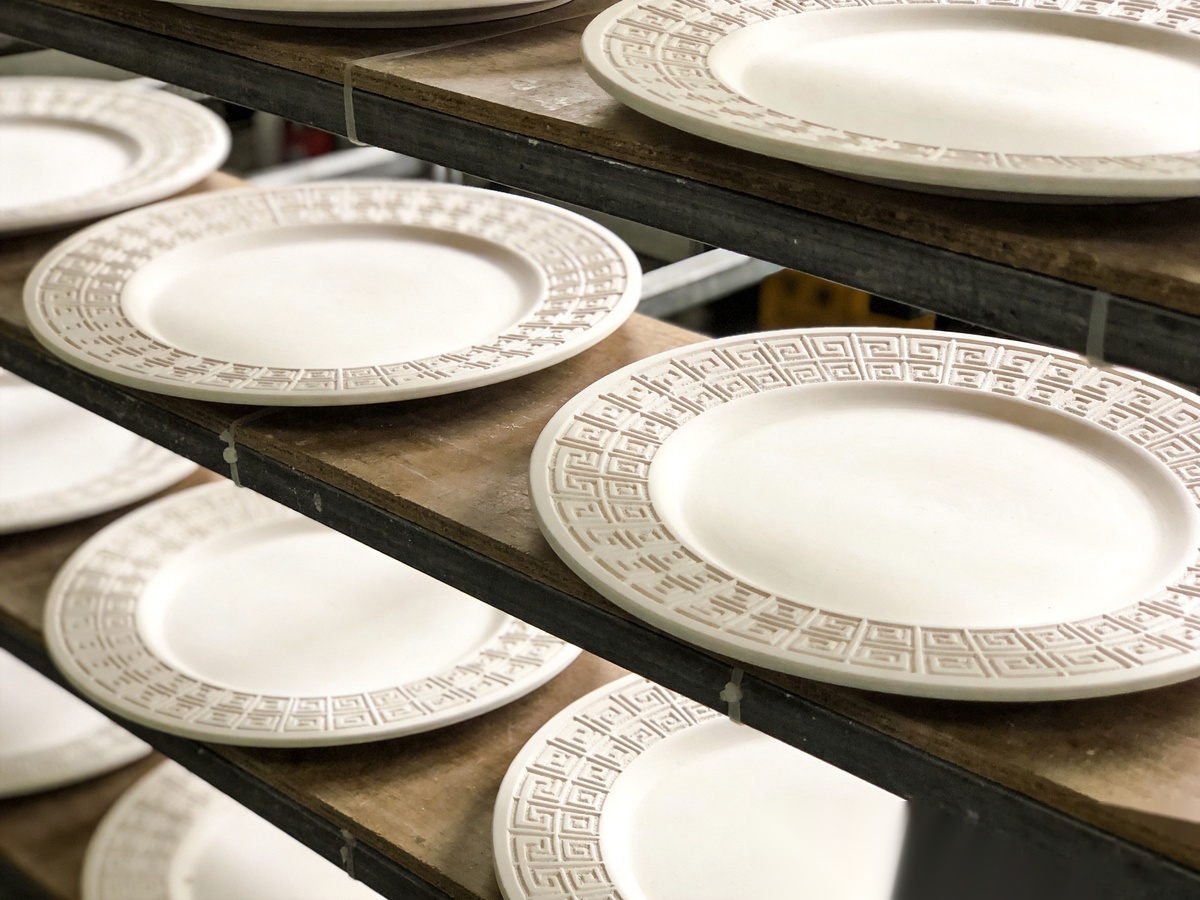
- Decorative rims, fluting, and embossed patterns
Mold development costs range from $200–$800 per piece depending on complexity, with a typical lead time of 15–25 days for mold creation alone.
The Ceramic Tableware Customization Process: Step by Step
A structured approach to ceramic tableware customization ensures your vision translates accurately from concept to finished product. Here’s the typical OEM/ODM workflow:
Step 1: Design Brief and Consultation
Start by preparing a detailed design brief that includes:
- Target product types (plates, bowls, mugs, serving dishes, etc.)
- Dimensions and capacity requirements
- Color preferences (with Pantone references if possible)
- Logo files in vector format (AI, EPS, or SVG)
- Reference images or mood boards
- Intended use environment (commercial dishwasher, microwave, oven)
- Target price range and order quantity
Step 2: Sampling and Approval
Once the manufacturer reviews your brief, they produce samples — usually within 7–15 days. During sampling:
- Request 2–3 samples per item to check consistency
- Test for food safety compliance (lead and cadmium levels)
- Run dishwasher and microwave tests if applicable
- Verify logo placement, color accuracy, and dimensional tolerances
- Document any adjustments needed before mass production
Step 3: Mass Production
After sample approval, mass production typically takes 30–45 days depending on order size and customization complexity. Key milestones include:
- Mold creation (if custom shapes are involved)
- Body forming and bisque firing
- Glaze application and logo printing
- Final firing and quality inspection
- Packaging according to your specifications
Step 4: Quality Control and Shipping
Before shipment, a thorough QC inspection ensures every piece meets your standards. Most reputable suppliers provide inspection reports with photos. For international orders, ceramic tableware customization buyers should also arrange third-party inspection (e.g., SGS, Bureau Veritas) for orders exceeding $10,000.
Ceramic Tableware Customization: MOQ and Cost Breakdown
Understanding the cost structure of ceramic tableware customization helps you budget accurately and negotiate effectively:
- Standard Logo Printing: MOQ 500–1,000 pieces per design; adds $0.10–$0.30 per piece
- Custom Colors: MOQ 1,000–2,000 pieces per color; adds $0.20–$0.50 per piece
- Custom Shapes: MOQ 2,000–5,000 pieces; mold cost $200–$800 per item plus $0.30–$1.00 per piece
- Custom Packaging: MOQ 1,000+ sets; adds $0.50–$2.00 per set depending on materials
Volume discounts typically kick in at 5,000+ pieces, reducing per-unit customization costs by 20–40%. For a detailed look at how to evaluate suppliers, see our sourcing guides.
Ceramic Tableware Customization for Different Industries
Different sectors have unique requirements when it comes to ceramic tableware customization:
Hotels and Restaurants
Hospitality buyers prioritize durability, dishwasher safety, and stackability. Underglaze logos and reinforced rims are standard requirements. Most hotels order 3–5x their seating capacity to account for breakage and rotation.
Retail and E-Commerce Brands
Retail brands focus on visual appeal, unique shapes, and gift-ready packaging. Custom ceramic tableware for retail often features seasonal collections, limited editions, and coordinated sets that encourage repeat purchases.
Catering and Event Companies
Event companies need versatile, stackable pieces in neutral palettes with subtle branding. Ceramic tableware customization for this sector emphasizes multi-purpose designs that work across different event themes.
Ceramic Tableware Customization: Common Mistakes to Avoid
Even experienced importers make mistakes when managing ceramic tableware customization projects. Avoid these common pitfalls:
- Skipping Samples: Never approve mass production without physical samples. Photos and videos are not sufficient for color and texture evaluation.
- Ignoring Compliance: Ensure custom designs meet food safety regulations in your target market (FDA for the US, LFGB for Europe, etc.).
- Vague Specifications: “Make it blue” leads to disappointment. Provide Pantone codes, dimensional drawings, and written specifications.
- Underestimating Lead Times: Custom molds and glazes add 2–4 weeks to production. Plan accordingly, especially before peak seasons.
- Not Testing Functionality: A beautiful plate that chips easily or won’t stack is a liability. Always test real-world performance.
FAQ: Ceramic Tableware Customization
What is the minimum order quantity for custom ceramic tableware?
MOQ varies by customization level. Simple logo printing starts at 500 pieces, while fully custom shapes require 2,000–5,000 pieces per design. Many manufacturers offer lower MOQs for first-time buyers to test the market.
How long does ceramic tableware customization take from design to delivery?
The typical timeline is 45–70 days: 7–15 days for sampling, 30–45 days for mass production, and 7–10 days for shipping preparation. Custom molds add an additional 15–25 days.
Can I get custom ceramic tableware that is dishwasher and microwave safe?
Yes. Underglaze printing and properly formulated glazes produce pieces that are fully dishwasher-safe, microwave-safe, and even oven-safe. Specify these requirements in your design brief to ensure the manufacturer selects appropriate materials and firing temperatures.
What file formats do I need to provide for custom logos?
Vector files (AI, EPS, SVG) are preferred for logo printing. High-resolution PNG (300 DPI minimum) is acceptable for digital printing. Avoid JPEG files as compression artifacts can affect print quality.
Is it possible to combine multiple customization options in one order?
Absolutely. Most bulk buyers combine custom shapes, colors, and logos in a single order. The key is to work with a manufacturer who can coordinate all customization elements under one quality control system. Contact us to discuss your custom ceramic tableware project.
Start Your Ceramic Tableware Customization Project with CeraSupply
Whether you need 500 branded mugs or 50,000 custom-shaped plates, CeraSupply has the manufacturing network and quality systems to deliver exactly what you envision. Our team guides you through every step — from design brief to doorstep delivery — ensuring your ceramic tableware customization project meets your quality, timeline, and budget requirements.
Explore our ceramic sourcing guides for more expert insights, or browse our product catalog to see what’s possible. Ready to start? Get a free quote today and let’s bring your custom ceramic vision to life.