Ceramic production lead time is one of the most critical variables in B2B tableware sourcing — yet it remains one of the least understood. Whether you are a distributor preparing for holiday season demand, a restaurant chain expanding to new locations, or an e-commerce brand scaling your product line, accurate ceramic production lead time planning directly impacts your inventory costs, customer satisfaction, and bottom line.
In this comprehensive guide, we break down the complete ceramic production lead time framework: from raw material procurement to finished goods shipment. You will learn typical timelines for each production phase, the key factors that cause delays, and proven strategies to compress lead time without sacrificing quality. Whether you are a first-time importer or an experienced procurement manager, this guide will help you build more reliable supply chain plans for ceramic tableware orders from China.
What Is the Typical Ceramic Production Lead Time?
The ceramic production lead time for bulk tableware orders typically ranges from 30 to 90 days, depending on product complexity, order volume, customization requirements, and factory capacity. Understanding each phase of the production cycle is essential for accurate planning and realistic delivery commitments.
Here is a breakdown of each production stage and its typical duration:
Raw Material Procurement (7–21 Days)
Before production begins, the factory must source and prepare raw materials — primarily clay bodies (kaolin, ball clay, feldspar), glaze chemicals, and packaging materials. For standard white body formulations, most established factories maintain stock, keeping this phase to 7–10 days. However, specialty clay bodies or imported glaze materials can extend procurement to 15–21 days.
Forming and Molding (5–15 Days)
The forming stage shapes raw clay into the desired product form. The timeline depends heavily on the production method: jiggering and jollying for standard round items takes 5–7 days, slip casting for complex shapes requires 7–10 days, while RAM pressing for flat items can be completed in 5–8 days. For custom ceramic tableware with new mold development, add 10–15 additional days for mold design and fabrication.
Bisque Firing (2–4 Days)
After forming and drying, products undergo a first firing (bisque firing) at approximately 900–1000°C. This step typically takes 2–4 days including kiln loading, firing cycle, and cooling. Modern tunnel kilns can process continuous batches, reducing this to 1–2 days for high-volume standard items.
Glazing and Decoration (5–15 Days)
Glazing involves applying the glass-like surface coating, followed by decoration (printing, hand-painting, decal application). Simple single-color glaze applications take 3–5 days, while multi-color hand-painted designs or complex decal transfers can extend to 10–15 days. For orders requiring food-safe certified glazes, additional testing time should be factored in.
Glost Firing (2–4 Days)
The final high-temperature firing (glost firing) at 1200–1350°C vitrifies the body and matures the glaze. This phase takes 2–4 days. High-fire porcelain requires longer firing cycles than mid-fire stoneware, adding approximately one day to the timeline.
Quality Inspection and Sorting (3–7 Days)
After firing, every piece undergoes visual inspection, dimensional checking, and functional testing (microwave safety, dishwasher safety, thermal shock resistance). For bulk orders of 10,000+ pieces, thorough quality control typically requires 5–7 days. Expedited inspection for smaller orders can be completed in 3 days. A comprehensive quality inspection checklist helps ensure no critical tests are skipped.
Packaging (3–7 Days)
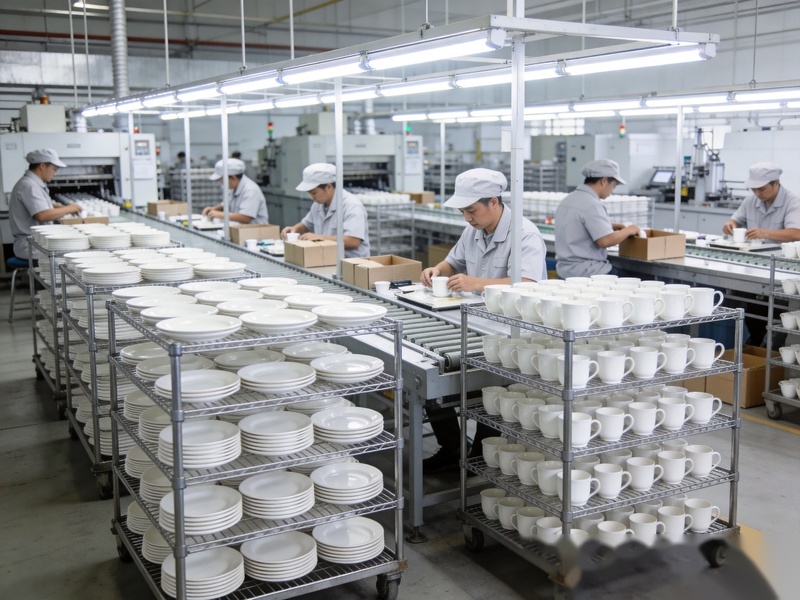
The final stage involves sorting, wrapping, boxing, and palletizing. Standard export packaging (individual bubble wrap, corrugated inner boxes, outer cartons with dividers) takes 3–5 days. Custom branded packaging with gift-box quality requirements may take 5–7 days, especially if packaging materials need to be sourced separately.
Total ceramic production lead time: For standard orders (existing molds, standard glazes), expect 45–60 days from order confirmation to shipment readiness. For customized or complex orders, plan for 60–90 days.

Key Factors That Affect Ceramic Production Lead Time
While the typical ceramic production lead time provides a baseline, several variables can significantly shorten or extend your timeline. Understanding these factors is essential for accurate planning and effective risk management in ceramic tableware sourcing.
1. Order Volume
Larger orders naturally require more production time, but the relationship is not always linear. A well-organized factory can process 50,000 pieces in roughly 1.5x the time needed for 10,000 pieces by running parallel production lines.
- Small orders (1,000–5,000 pcs): 30–45 days
- Medium orders (5,000–20,000 pcs): 45–60 days
- Large orders (20,000–100,000 pcs): 60–90 days
- Very large orders (100,000+ pcs): 90–120 days
2. Customization Level
The degree of customization is perhaps the single biggest variable in ceramic production lead time:
- Stock items (no customization): 15–30 days
- Standard items with logo printing: 30–45 days
- Custom colors and glazes: 45–60 days
- Full OEM (custom shape, glaze, decoration, packaging): 60–90 days
- Complex ODM (new product development): 75–120 days
3. Seasonal Demand Peaks
Chinese ceramic factories experience significant capacity fluctuations throughout the year:
- Q1 (Jan–Mar): Reduced capacity due to Chinese New Year (2–4 week shutdown). Post-CNY ramp-up takes 2–3 weeks as workers return gradually.
- Q2 (Apr–Jun): Peak production capacity. Ideal window for placing orders with fastest ceramic production lead time.
- Q3 (Jul–Sep): High demand as buyers prepare for Q4 holiday season. Lead times extend 15–25% due to production queue.
- Q4 (Oct–Dec): National Day holiday (Oct 1–7) causes a brief pause. Factories rush to complete year-end orders.
4. Factory Capacity and Workforce
Not all ceramic factories operate at the same efficiency level. A factory with 500+ workers, automated production lines, and multiple kilns can process orders 30–40% faster than a small workshop with 50 workers. During your factory evaluation process, assess kiln capacity, production line count, and workforce size to gauge realistic lead times.
5. Raw Material Availability
Specialty materials can create unexpected delays. Bone ash for bone china production, imported colorants for specific Pantone matches, and rare clay types may require 2–4 weeks additional procurement time if not in stock. Always confirm raw material availability before finalizing your production schedule.
6. Shipping and Logistics
While not technically part of ceramic production lead time, the logistics phase adds 7–14 days from factory gate to port departure. Container booking, customs clearance, and port congestion can each add 3–5 days during peak shipping seasons. Factor this into your total delivery timeline.

How to Reduce Ceramic Production Lead Time Without Sacrificing Quality
Compressing ceramic production lead time is possible — but only if you approach it strategically. Rushing production without a plan leads to quality defects, higher costs, and strained supplier relationships. Here are proven strategies that work:
Strategy 1: Place Consolidated Orders
Combining multiple SKUs into a single production run reduces setup time and allows the factory to optimize kiln loading schedules. Instead of placing five separate orders for 5,000 pieces each, consolidate into one order of 25,000 pieces with staggered delivery dates. The factory benefits from longer production runs, and you benefit from shorter overall ceramic production lead time per SKU.
Strategy 2: Build a Long-Term Supplier Partnership
Factories prioritize repeat customers. A reliable, long-term partnership means your orders get scheduled first during peak seasons, receive priority access to raw materials, and benefit from the factory’s investment in understanding your specific requirements. This alone can reduce ceramic production lead time by 10–15 days compared to one-time buyers.
Strategy 3: Pre-Approve Samples Before Production
One of the most common causes of production delay is sample approval bottleneck. Buyers often request samples, take 2–3 weeks to review, then request modifications. By approving samples before placing the main production order — or by using a structured sample evaluation process — you eliminate this delay entirely.
Strategy 4: Standardize Components
Where possible, standardize elements across your product line: use the same base shape with different glaze colors, maintain consistent packaging formats, and specify standard sizes. Standardized components allow factories to pre-produce semi-finished inventory, dramatically reducing ceramic production lead time for repeat orders.
Strategy 5: Invest in Dedicated Molds
For custom-shaped products, investing in dedicated molds (rather than sharing factory molds) gives you priority access and eliminates scheduling conflicts. The mold investment ($500–$3,000 per mold set) typically pays for itself within 2–3 orders through reduced lead time and guaranteed production slots.
Strategy 6: Maintain Regular Communication
Weekly production updates, milestone photos, and proactive issue escalation keep your order on track. A factory that knows you are actively monitoring progress will naturally prioritize your production. Use a structured communication protocol with clear escalation paths for any deviations from the agreed timeline.
Ceramic Production Lead Time Planning Framework
Effective ceramic production lead time planning requires a backward-scheduling approach: start from your target delivery date and work backward to determine when you need to place your order.
Step-by-Step Planning Calendar
- Identify target delivery date: When do products need to arrive at your warehouse or distribution center?
- Subtract ocean freight time: 25–40 days for sea freight from China to most destinations (plus 7 days for customs clearance at destination).
- Subtract ceramic production lead time: 45–90 days depending on your order specifications (see factors above).
- Subtract sample development time: 15–30 days for initial samples, plus 7–14 days for revisions if needed.
- Subtract supplier selection time: 14–30 days for sourcing, evaluation, and negotiation.
- Add safety buffer: 10–15 days for unexpected delays (weather, equipment issues, material shortages).
Example: If you need products by November 1 for the holiday season, work backward: October (customs clearance), September (shipping), July–August (production), June (sample approval), May (supplier selection). Your order should be placed by early May at the latest.
Chinese Holiday Impact Calendar
These holidays significantly impact ceramic production lead time and must be factored into every sourcing plan:
- Chinese New Year (late January–mid February): 3–4 weeks of reduced or zero production. Workers return gradually over 2–3 weeks after the holiday.
- National Day (October 1–7): 7-day shutdown. Production resumes immediately after.
- Labor Day (May 1–5): 5-day break. Minimal impact on overall lead time.
- Mid-Autumn Festival (September, date varies): 1–3 day break. Negligible impact.
Pro tip: Place orders at least 60 days before Chinese New Year to ensure shipment before the holiday shutdown. Orders placed within 30 days of CNY will likely not ship until late February or early March.
Risk Management for Ceramic Production Lead Time
Even the best-planned ceramic production lead time can be disrupted by unforeseen events. Here are the most common risks and how to mitigate them:
Risk 1: Power Rationing (June–September)
Some Chinese provinces implement electricity rationing during summer months, forcing factories to reduce kiln operating hours. This can extend ceramic production lead time by 15–25%. Mitigation: Diversify your supplier base across different provinces, and front-load production before the summer rationing period.
Risk 2: Equipment Breakdown
Kiln failures, mold damage, or ball mill breakdowns can halt production for 5–15 days. Mitigation: During factory audits, check equipment maintenance records and ask about backup kiln capacity. Having a secondary factory relationship provides insurance against extended downtime.
Risk 3: Quality Rejection During Production
If in-line quality inspection reveals defects (cracking, glaze pinholes, color inconsistency), the factory must re-fire or reproduce affected batches, adding 7–14 days. Mitigation: Invest in pre-production sample approval and mid-production inspections to catch issues early, when correction is faster and less costly.
Risk 4: Raw Material Price Volatility
Sudden increases in clay, glaze chemical, or energy costs can cause factories to delay production while renegotiating prices. Mitigation: Lock in pricing with a 30–50% deposit at order placement, and include price validity clauses in your purchase agreements.
Communication Tools for Monitoring Ceramic Production Lead Time
Effective ceramic production lead time management requires transparent, real-time communication between buyer and factory. Here are the essential tools and protocols:
- Production milestone reports: Request photo updates at each major stage (forming complete, bisque fired, glazed, glost fired, packaged). This provides visual confirmation of progress without requiring on-site visits.
- Weekly status calls: A 15-minute weekly call with your factory contact keeps both parties aligned and surfaces potential delays early enough to take corrective action.
- Digital production tracking: Some advanced factories offer portal access to real-time production schedules. If available, this is the gold standard for ceramic production lead time monitoring.
- Third-party inspection coordination: If you use third-party QC services (SGS, Bureau Veritas, Intertek), coordinate inspection dates with the factory at least 10 days in advance to avoid scheduling conflicts.
Common Mistakes That Extend Ceramic Production Lead Time
Avoid these frequent errors that B2B buyers make when planning ceramic tableware production:
- Assuming quoted lead time includes holidays: Factory quotations typically state production days, not calendar days. Always confirm whether holidays and weekends are included.
- Changing specifications mid-production: Even minor changes (glaze color adjustment, packaging modification) can restart parts of the production process. Finalize all specifications before production begins.
- Neglecting sample approval timelines: Sample development is part of your total lead time, not separate from it. Budget 20–30 days for the complete sample cycle.
- Underestimating packaging complexity: Custom packaging (branded boxes, inserts, tissue paper) adds 5–10 days to ceramic production lead time and requires separate material sourcing.
- Ordering during peak season without advance booking: Q3 is the busiest production period. Factories book 4–6 weeks in advance — placing an order in August for September production will likely result in a 2–3 week queue delay.
Frequently Asked Questions About Ceramic Production Lead Time
Q1: What is the average ceramic production lead time for standard tableware orders?
The average ceramic production lead time for standard tableware (existing molds, standard glazes, no custom packaging) is 35–50 days. For semi-customized orders with logo printing, expect 45–60 days. Full OEM orders with custom shapes and designs typically require 60–90 days of ceramic production lead time.
Q2: What causes the most delays in ceramic production lead time?
The top causes of ceramic production lead time delays are: slow sample approval (adds 14–30 days), Chinese New Year shutdown (adds 21–30 days), raw material shortages (adds 7–14 days), quality rejections requiring rework (adds 7–14 days), and peak season production queues (adds 10–20 days). Proactive planning and clear communication can mitigate most of these delays.
Q3: Can I rush a ceramic production order?
Yes, but with limitations. Rush production typically reduces ceramic production lead time by 20–30% at the cost of 15–25% higher pricing (overtime labor, priority kiln scheduling). However, rushing certain stages — particularly kiln firing — is not advisable as it can cause quality defects. Discuss rush options with your factory and understand which stages can be safely accelerated.
Q4: How do I plan ceramic production lead time around Chinese holidays?
Chinese New Year is the most significant holiday impact on ceramic production lead time, causing 3–4 weeks of lost production. Plan orders to ship at least 2 weeks before CNY (typically late January to mid-February). For Q4 holiday season delivery, place orders by June at the latest. National Day (October 1–7) adds approximately one week to lead time.
Q5: Should I build buffer time into my ceramic production lead time plan?
Absolutely. Industry best practice is to add a 10–15% buffer to the quoted ceramic production lead time. For a 60-day production cycle, plan for 66–69 days. This buffer accounts for minor delays in material procurement, equipment maintenance, or quality rework without impacting your overall supply chain schedule.
Conclusion: Master Your Ceramic Production Lead Time for Better Sourcing Results
Accurate ceramic production lead time planning is not just a logistics exercise — it is a competitive advantage. B2B buyers who understand the full production cycle, anticipate delays, and build strategic supplier relationships consistently receive better pricing, higher quality, and more reliable delivery than those who treat lead time as an afterthought.
By applying the framework in this guide — understanding typical timelines, managing key risk factors, and implementing proactive communication protocols — you can reduce your total sourcing cycle by 15–25% while maintaining the quality standards your customers expect.
Ready to optimize your ceramic tableware sourcing with transparent lead times and reliable delivery? Contact CeraSupply today for a free production timeline estimate and competitive quotation. Our team will help you plan the optimal ceramic production lead time for your next bulk order.