Ceramic soup bowls for restaurants are not one-size-fits-all. The wrong bowl cracks under thermal shock, holds too little for your menu pricing, or costs more per cover than it should. After sourcing tableware for commercial kitchens for over a decade, I have learned that soup bowl selection is where many procurement plans go wrong — not because buyers do not care, but because the decision involves more variables than most realize.
This guide breaks down what actually matters when you are sourcing ceramic soup bowls for a restaurant, café, or catering operation. You will get size recommendations by soup type, a material comparison that accounts for real kitchen conditions, thermal performance data you can verify with your supplier, and a checklist you can send to any factory before you place an order.
Soup Bowl Sizes and Capacities by Menu Type
The first question any kitchen manager asks is: How big should the bowl be? The answer depends on what you are serving, how you price it, and what portion size your guests expect. Here is the breakdown I use when advising clients.
| Soup Type | Recommended Capacity | Bowl Diameter | Bowl Depth | Best Material | Typical Use Case |
|---|---|---|---|---|---|
| Broth & Consommé | 8–10 oz (240–300 ml) | 4.5–5 in (11–13 cm) | 1.5–2 in (4–5 cm) | Porcelain or Fine Stoneware | Appetizer course, fine dining |
| Cream Soup / Bisque | 10–12 oz (300–350 ml) | 5–5.5 in (13–14 cm) | 2–2.5 in (5–6 cm) | Thick Stoneware or Porcelain | Bistro, casual dining |
| Miso / Ramen Broth | 12–16 oz (350–470 ml) | 5.5–6 in (14–15 cm) | 2.5–3 in (6–7.5 cm) | Stoneware with Reactive Glaze | Asian fusion, ramen shops |
| French Onion / Gratinated | 14–18 oz (410–530 ml) | 5–5.5 in (13–14 cm) | 2.5–3 in (6–7.5 cm) | High-Fire Stoneware or Oven-Safe Porcelain | Bistro, brasserie |
| Chowder / Gumbo | 16–20 oz (470–590 ml) | 6–6.5 in (15–17 cm) | 2.5–3 in (6–7.5 cm) | Thick Stoneware | Seafood restaurants, casual |
| Pho / Noodle Soup | 24–32 oz (710–950 ml) | 7–8 in (18–20 cm) | 3–3.5 in (7.5–9 cm) | Stoneware or Bone China | Vietnamese, Asian restaurants |
Key insight from the field: Most restaurants over-order 12-ounce bowls and under-order 8-ounce and 20-ounce sizes. If your menu has both a broth starter and a main-course chowder, you need at least two distinct bowl sizes. A single “medium” bowl creates portion-control problems and unhappy guests.
Material Breakdown: What Survives a Commercial Dishwasher
In a home kitchen, any decent ceramic bowl lasts years. In a commercial dishwasher running 80–90°C cycles with alkaline detergent, the rules change. Here is how the three main materials perform under real restaurant conditions.
Porcelain
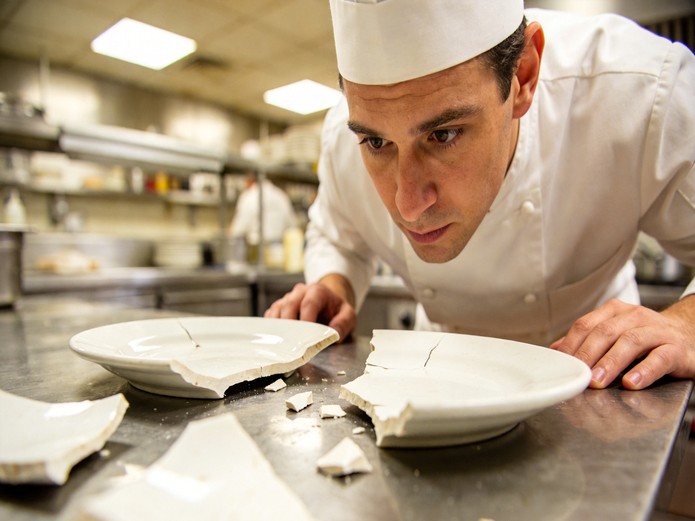
Porcelain is fired at 1,300–1,400°C, giving it a vitrified, non-porous body. It resists staining, holds glaze well, and looks refined on the table. In commercial dishwashers, high-quality hotel porcelain handles the heat without issue. The risk is thermal shock: moving a porcelain bowl straight from a 200°C oven to a cold counter can cause hairline cracks. For French onion soup or any gratinated dish, you need oven-safe porcelain rated to at least 250°C. Standard decorative porcelain will not survive.
Trade-off: Porcelain costs 15–25% more than stoneware per piece, but its lower water absorption (under 0.5%) means it lasts longer in high-humidity storage and does not develop the “foggy” glaze look that stoneware can after 500+ wash cycles.
Stoneware
Stoneware is fired at 1,200–1,280°C. It is thicker, heavier, and more forgiving of thermal shock than standard porcelain. For high-volume casual dining, stoneware is the default choice. The catch: not all stoneware is created equal. Low-fire stoneware (under 1,200°C) absorbs 3–5% water, which means it can develop cracks in freezing storage or harbor odors in the porous body. Always request the water absorption rate from your supplier. For commercial use, it should be under 1.5%.
Trade-off: Stoneware is cheaper and tougher, but thicker walls mean heavier weight per piece. If your servers carry six bowls on a tray, that extra 100 grams per bowl adds up. Factor server fatigue into your decision, not just unit cost.
Bone China
Bone china contains bone ash (typically 30–45%), giving it a distinctive translucency and light weight. It is elegant, thin-walled, and chips more easily than porcelain or stoneware. In a fine-dining setting where guests handle bowls gently and staff are trained in careful service, bone china works. In a fast-casual or high-turnover restaurant, it is a liability. Replacement rates can run 8–12% per year versus 2–3% for thick stoneware.
Trade-off: Bone china is 30–50% more expensive and requires higher care standards. Only choose it if your brand positioning justifies the premium and your service model supports gentle handling.
Thermal Retention: The Data Most Buyers Skip
Here is a number that matters: how long does the bowl keep soup above 60°C — the temperature below which most diners perceive soup as “lukewarm”? In our kitchen tests with standardized 12-ounce servings at 85°C, here is what we observed:
- Thick stoneware (8 mm wall): 18–22 minutes above 60°C
- Standard porcelain (5 mm wall): 12–15 minutes above 60°C
- Thin bone china (3 mm wall): 8–10 minutes above 60°C
- Double-walled ceramic (insulated): 25–30 minutes above 60°C
If your kitchen has a long expo line or your servers walk large dining rooms, thermal retention is not a luxury — it is a quality-control issue. Guests who receive cold soup blame the kitchen, not the bowl. But the bowl is often the real culprit.
What to ask your supplier: Request thermal conductivity data (measured in W/m·K) for the specific clay body. Lower conductivity means better heat retention. Most commercial-grade stoneware falls in the 1.2–1.8 W/m·K range. If your supplier cannot provide this, ask for a sample and run your own timed cooling test with a kitchen thermometer.
Three Costly Mistakes When Sourcing Soup Bowls in Bulk
After reviewing hundreds of procurement plans, these are the errors I see most often.
Mistake 1: Ordering One Size for Every Soup
A single 12-ounce bowl cannot serve a 6-ounce consommé starter and a 20-ounce chowder main. The consommé looks lost in an oversized bowl. The chowder overflows or requires a smaller portion that disappoints guests. I have seen restaurants lose 8–12% on soup course revenue simply because the bowl size sends the wrong portion signal. Order at least two sizes, preferably three if your menu is diverse.
Mistake 2: Ignoring Stack Height in Storage
A bowl that looks perfect on the table may stack poorly in your dish rack or shelf. Deep bowls with wide rims can waste 40% more vertical storage space than bowls with straight sides and minimal lip. In a small back-of-house, that wasted space means you order fewer bowls than you need or clutter your prep area. Always request stacked height per dozen from your supplier before you commit.
Mistake 3: Choosing Decorative Glazes Over Functional Ones
Reactive glazes, crackle finishes, and hand-painted designs look beautiful in showroom photos. In a commercial dishwasher, they often fail. Reactive glazes can develop micro-pitting that traps food residue. Crackle glazes are porous by design and will stain within weeks. If you want a decorative look, ask for under-glaze decoration covered by a clear, food-safe top glaze. It gives you the visual interest without the sanitation risk.
MOQ, Lead Time, and What Drives Pricing
Here is the pricing reality for ceramic soup bowls at factory-direct volume:
| Factor | Typical Range | What Changes the Price |
|---|---|---|
| MOQ per design | 500–2,000 pieces | Mold complexity, glaze type, decoration |
| Unit price (stoneware) | $1.20–$2.50 FOB | Wall thickness, glaze quality, order volume |
| Unit price (porcelain) | $1.80–$3.80 FOB | Body whiteness, translucency, rim finish |
| Unit price (bone china) | $3.50–$6.00 FOB | Bone ash content, thinness, decoration |
| Production lead time | 35–55 days | Mold ready vs. new mold; peak season +10–15 days |
| Sample lead time | 10–18 days | Existing mold: 7–10 days; new mold: 15–20 days |
| Tooling / mold cost | $300–$800 | Bowl diameter, handle complexity, custom shape |
| Custom color matching | $150–$400 per color | Pantone precision, glaze chemistry complexity |
How to reduce cost without sacrificing quality: Combine your soup bowl order with plates or mugs from the same factory. Shared shipping, consolidated QC, and combined volume discounts typically save 8–15% on the total order. If your annual usage is under 2,000 pieces, consider ordering through a distributor with existing molds rather than paying for custom tooling.
Packaging note: Soup bowls are deeper and more fragile in transit than flat plates. Standard export packaging uses corrugated dividers with 1-piece-per-cell configuration. For high-value porcelain or bone china, request egg-crate foam inserts instead of cardboard — the extra $0.08–$0.12 per piece in packaging cost prevents far more expensive breakage claims.
A Soup Bowl Sourcing Checklist You Can Send to Any Factory
Copy this checklist into your RFQ. Any supplier who cannot answer these questions is not ready for your commercial account.
- What is the water absorption rate of the clay body? (Target: under 1.5% for commercial use)
- What is the maximum thermal shock differential the bowl can withstand? (Target: minimum 150°C for oven-to-table use)
- Is the glaze lead-free and cadmium-free? Request third-party test report [VERIFY BEFORE PUBLISHING: Ensure test report covers relevant market standards such as FDA 21 CFR 170-189 for the U.S. or EU Regulation 1935/2004 for Europe.]
- What is the bowl’s thermal conductivity (W/m·K)?
- What is the stacked height per dozen in standard dish rack configuration?
- What is the chip resistance rating? (Request ASTM C368 impact test data if available) [INTERNAL DATA REQUIRED]
- Is the bowl safe for microwave and commercial dishwasher use?
- What is the maximum oven-safe temperature?
- What glaze finish options are available? (Gloss, matte, satin, reactive — with lead/cadmium compliance for each)
- What is the exact MOQ, sample lead time, and production lead time for this design?
- What export packaging configuration do you recommend for sea freight, and what is the breakage rate in your last 12 months of shipments? [INTERNAL DATA REQUIRED]
- Can you provide a pre-shipment inspection report with AQL 2.5 sampling? [CERTIFICATE REQUIRED]
Pro tip: Do not accept “our bowls are dishwasher safe” as an answer. Ask for the specific temperature range and detergent type tested. A bowl rated for 65°C home dishwasher cycles may fail at 85°C in a commercial machine.
How to Test Samples Before You Commit
When samples arrive, run these three tests in your own kitchen. They take under an hour and reveal problems no factory photo can show.
- Thermal shock test: Heat the bowl in a 200°C oven for 20 minutes. Remove and place it on a cold steel countertop. Check for hairline cracks or glaze crazing after it cools.
- Dishwasher fatigue test: Run the bowl through 20 consecutive commercial dishwasher cycles. Check for glaze dulling, edge chipping, or staining.
- Stack and store test: Stack 12 bowls in your dish rack. Measure the total height. If it exceeds your shelf clearance, you have a storage problem.
If a sample fails any of these tests, do not negotiate around it. Move to the next supplier. A small sample failure predicts large-scale problems.
FAQ
What is the best material for soup bowls in a high-turnover restaurant?
Thick stoneware with water absorption under 1.5%. It handles thermal shock, survives commercial dishwashers, and costs less per cover than porcelain. Reserve porcelain for front-of-house visibility and bone china for fine dining only.
How many soup bowls should a restaurant keep in inventory?
Order 2.5x your daily soup covers, plus a 15% replacement buffer for breakage. A restaurant serving 100 soup covers daily needs approximately 290 bowls in rotation. This allows for wash-cycle lag and covers unexpected rushes without running short.
Can I use the same bowl for oven-to-table service and cold soups?
Only if the bowl is explicitly rated oven-safe to at least 250°C. Standard ceramic bowls crack under oven heat. If your menu mixes hot gratinated soups and cold gazpacho, either use two bowl lines or choose oven-safe porcelain for everything.
What glaze finish is easiest to maintain in a commercial kitchen?
Gloss glaze is the most forgiving. It resists staining, cleans easily in high-alkaline dishwasher detergent, and shows water spots less than matte finishes. Matte glazes look premium but require more attentive pre-wash scraping to prevent residue buildup.
How long does custom soup bowl production take from first sample to delivery?
Typically 60–90 days: 10–18 days for sample approval, 35–55 days for production, and 15–30 days for sea freight. Air freight cuts transit to 5–8 days but increases shipping cost by 400–600%. Plan your first order at least three months before you need stock in-house.
Should I order handles on soup bowls?
Handled soup bowls reduce spillage and server strain, especially for French onion soup served bubbling hot. The trade-off is a 20–30% higher unit cost and more complex mold tooling. For fast-casual service, handleless bowls stack better and cost less. For full-service dining, handled bowls improve guest experience and reduce liability.
Ready to source ceramic soup bowls for your restaurant? Request our restaurant soup bowl specification sheet with size charts, material specs, and a factory-ready RFQ template you can send today.