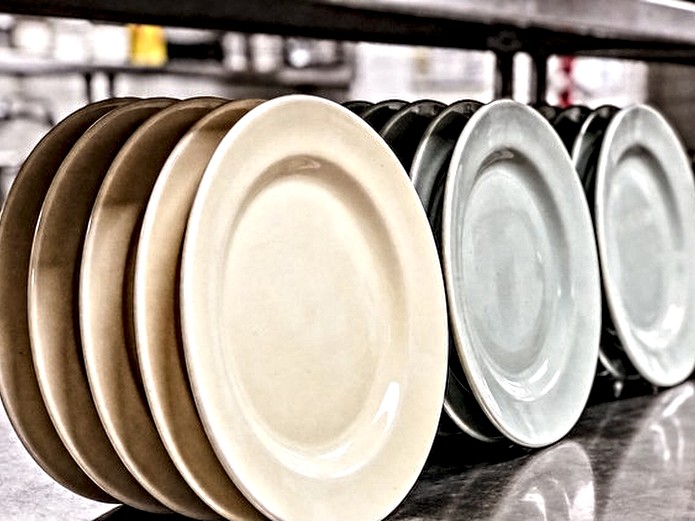
Ceramic color consistency is the single biggest frustration for restaurant chains reordering tableware in bulk. After three to four production cycles, the warm ivory plates that matched your brand palette start drifting toward cooler white or picking up unexpected pink undertones. Guests notice. Staff notice. And your procurement team spends weeks negotiating replacements instead of focusing on menu expansion.
This article shows you how to set color standards that suppliers can actually reproduce, how to vet factories for color stability, and how to build a reorder verification process that catches drift before crates reach your warehouse. You will also get a downloadable color specification template you can send directly to manufacturers.
Why Color Consistency Breaks Down in Repeat Orders
Chain restaurants operate on thin margins and thinner patience for visual inconsistency. When a guest at your downtown location sees bone-white plates while the uptown location serves on cream, the mismatch undermines the brand experience you paid to build. The problem is not that ceramics are unpredictable. The problem is that most buyers treat color as an afterthought in the procurement process.
Color consistency matters for three operational reasons:
- Brand cohesion: Multi-location chains need identical table settings. A visible color shift between locations signals poor quality control to guests.
- Inventory flexibility: When colors match across batches, you can rotate stock between locations or replace broken pieces without creating mismatched sets.
- Replacement economics: Mismatched plates force either full-set replacement (expensive) or acceptance of visible inconsistency (brand risk).
Most procurement teams discover the color drift problem only after the second or third reorder, when the new shipment sits next to existing stock in the dish room. By then, the factory has already adjusted glaze recipes, raw material sources, or firing curves. Reversing those changes is costly and often impossible.
What Causes Glaze Color Variations Between Batches
Glaze color is not a fixed value. It is the result of chemistry, temperature, and time interacting under specific factory conditions. When any of those variables shift, the color shifts with them. Understanding the causes helps you ask suppliers the right questions before placing reorders.
Raw Material Lot Variations
Feldspar, silica, and clay come from quarries where mineral composition varies by extraction depth and season. A factory switching from one feldspar lot to another can shift glaze color by one to two Pantone shades without changing the recipe at all. Reputable suppliers track lot numbers and blend materials to reduce variance. Low-cost suppliers do not.
Firing Temperature and Kiln Atmosphere
A reduction-fired glaze at 1,280 degrees Celsius produces different colors than the same glaze oxidized at 1,250 degrees. Kiln positioning matters too. Pieces loaded near flame ports experience different heat profiles than pieces in the center. Factories with computerized kiln controllers and periodic thermocouple calibration maintain tighter temperature windows. Manual kiln operations cannot.
Glaze Application Thickness
Spray-applied glaze with inconsistent pressure or dipping times that vary by even two seconds changes how light refracts through the fired surface. Thicker glaze layers darken the color. Thinner layers lighten it or reveal the body color underneath. Automated spray lines with pressure monitoring reduce this risk. Hand-dipping operations increase it.
Recipe Substitution Without Notification
When a colorant becomes expensive or unavailable, some factories substitute a chemically similar alternative without telling the buyer. The substitution may look identical under fluorescent warehouse lighting but reveal a different undertone under warm restaurant lighting. This is the hardest variation to catch because the supplier may not document the change.
How to Set a Color Standard Your Supplier Can Hit
A verbal description like “warm white” or “slate gray” is not a color standard. It is a starting point for miscommunication. You need a specification document that removes ambiguity. Here is what to include.
The Physical Reference Sample
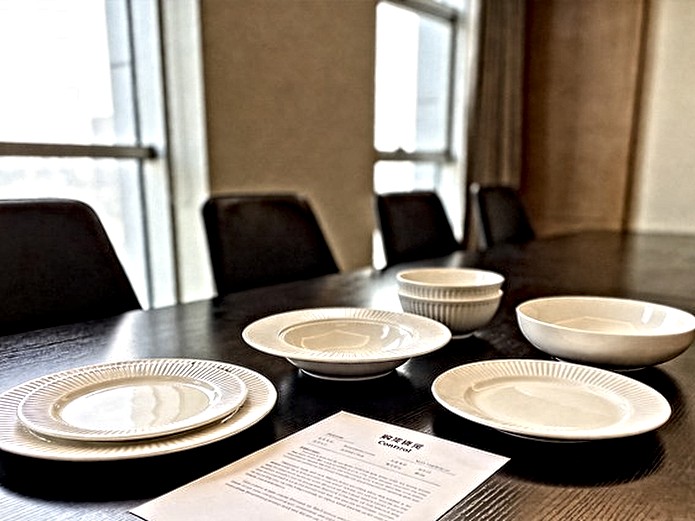
Send your supplier a fired ceramic piece that represents the exact color you want. Label it as the master reference and keep a duplicate in your own files. The physical sample eliminates interpretation errors that occur with digital color files. Request that the supplier keep the same piece in their quality control lab and use it for batch-to-batch comparison.
Pantone or RAL Cross-Reference
Supplement the physical sample with a Pantone solid coated reference or RAL classic number. Note that Pantone on paper and Pantone on ceramic will never match exactly because substrate and gloss level differ. The value of the cross-reference is directional. It tells the supplier whether you want a bluer white (Pantone Cool Gray 1 C) or a warmer white (Pantone Warm Gray 1 C).
Acceptable Delta E Tolerance
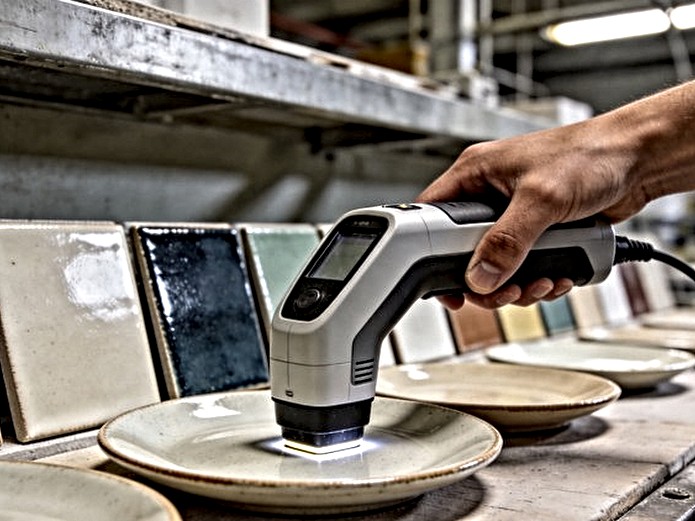
Delta E measures color difference on a standardized scale. For restaurant tableware where guests view plates under warm ambient light, a Delta E of 2.0 or less is generally imperceptible to the untrained eye. A Delta E of 3.0 to 4.0 is visible when old and new pieces sit side by side. Specify your tolerance in writing: “Batch color must match master reference within Delta E ≤ 2.5 as measured by spectrophotometer under D65 illuminant.” [VERIFY BEFORE PUBLISHING: Confirm Delta E standards for ceramic tableware with your QC lab.]
Lighting Condition Specification
Color appearance changes dramatically under different light sources. Specify the lighting condition for color evaluation: “Evaluate under 4,000K LED or natural north daylight. Avoid evaluation under sodium vapor or warm incandescent light.” This prevents arguments when your warehouse lighting makes the plates look different than the supplier’s fluorescent QC room.
Supplier Vetting: Who Can Actually Deliver Consistent Color?
Not every ceramic factory is equipped to maintain color consistency across multiple production runs. The table below shows the capabilities that separate reliable color-stable suppliers from those that will deliver drift over time.
| Capability | High-Consistency Supplier | Low-Consistency Supplier |
|---|---|---|
| Raw material tracking | Lot-numbered feldspar and clay with blending records | Buys cheapest available batch; no lot tracking |
| Kiln control | Computerized controllers with temperature logging | Manual firing with visual judgment |
| Glaze application | Automated spray lines with pressure monitoring | Hand-dipping with time variation |
| Color measurement | Spectrophotometer with Delta E reporting | Visual comparison only |
| Sample retention | Keeps master reference and test tiles from every batch | Discards samples after shipment |
| Recipe documentation | Locked glaze recipes with change-control procedure | Adjusts recipes informally based on available materials |
| Typical MOQ for color-stable runs | 3,000 to 5,000 pieces per color | 500 to 1,000 pieces (but higher drift risk) |
| Lead time for matched reorder | 45 to 60 days (allows material prep and test firing) | 25 to 35 days (rushes through without test firing) |
The cost difference between high-consistency and low-consistency suppliers is typically 8 to 15 percent per piece. For a chain ordering 10,000 plates, that is a real budget impact. But the cost of a full color-mismatch replacement usually exceeds the initial premium within one reorder cycle. Factor replacement risk into your total cost calculation.
Actionable recommendation: During factory audits, ask to see the test tiles from the last three production runs of your target color. If the factory cannot produce them, they are not tracking color consistency. Walk away.
The Reorder Checklist: Verifying Color Before Each Shipment
Color drift is reversible only before shipment. Once crates are on the water, your leverage disappears. Use this checklist for every reorder to catch problems at the factory, not in your dish room.
- Pre-production sample: Request a pre-production sample fired from the current batch glaze before mass production begins. Compare it side by side with your master reference under the specified lighting condition.
- Test tile retention: Require the supplier to fire and retain test tiles from the beginning, middle, and end of the production run. Randomly select one tile from each set for your own review.
- Spectrophotometer report: If available, request a Delta E measurement report comparing the current batch to the master reference. [INTERNAL DATA REQUIRED: Add supplier-specific spectrophotometer model and calibration schedule.]
- Batch photo documentation: Ask for high-resolution photos of sample pieces from the current batch placed next to the master reference. Photos under multiple light angles reduce the risk of lighting-based misjudgment.
- Third-party inspection: For orders above your risk threshold, send an inspector to the factory for pre-shipment color verification. Budget $300 to $500 per inspection depending on location.
- Hold shipment clause: Include contract language allowing you to hold shipment if color deviation exceeds the agreed Delta E tolerance. Specify that the supplier bears rework or replacement cost.
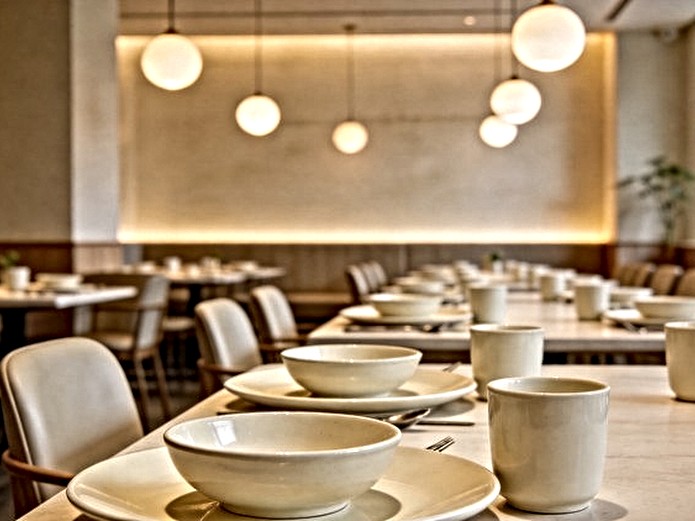
Cost-quality-lead time trade-off: Adding a pre-production sample and spectrophotometer report adds 7 to 10 days to lead time and $150 to $300 in testing cost per reorder. Skipping these steps saves time and money upfront but exposes you to the full replacement cost of a mismatched batch. For chains with 20 or more locations, the testing investment pays for itself if it prevents even one color-mismatch event per year.
Three Mistakes That Guarantee Mismatched Tableware
After auditing dozens of ceramic supply chains for restaurant groups, I see the same three errors repeatedly. Each one is preventable with a small process change.
Mistake 1: Approving Samples Under Warehouse Fluorescent Light
Restaurant dining rooms use warm LED or incandescent light, typically 2,700K to 3,000K. Warehouse QC rooms use 5,000K to 6,500K fluorescent tubes. A glaze that looks neutral under warehouse light can appear yellow or pink under restaurant light. Always evaluate color samples under lighting that matches your actual service environment. If necessary, ship the sample to one of your locations for in-situ evaluation before approval.
Mistake 2: Ordering from Multiple Suppliers for the Same Color
Splitting a large order between two factories to meet a tight deadline seems efficient. It is not. Each factory uses different raw material sources, kiln equipment, and glaze recipes. Even with identical Pantone references, the fired results will differ. For color-critical items, commit to one supplier per color and build the relationship over time. The long-term consistency gain outweighs the short-term scheduling convenience.
Mistake 3: Skipping the First-Article Inspection on Reorders
Buyers often skip first-article inspection on the second or third reorder, assuming the supplier “already knows the color.” This assumption is dangerous. Raw material lots change. Kiln thermocouples drift. Glaze operators rotate shifts. The first-article inspection is your only reliable checkpoint for batch-specific drift. Never skip it, even for reorders from a proven supplier.
Cost, Lead Time, and MOQ Trade-offs in Color-Matched Orders
Maintaining ceramic color consistency is not free. It requires investment in testing, tighter supplier requirements, and sometimes higher piece prices. The table below shows how the three main cost drivers interact.
| Factor | Low-Cost Option | Consistency-Optimized Option | Trade-off |
|---|---|---|---|
| MOQ per color | 1,000 to 2,000 pieces | 3,000 to 5,000 pieces | Higher MOQ locks in color for longer but ties up capital |
| Lead time | 30 to 40 days | 50 to 70 days | Longer lead time allows test firing and material blending |
| Pre-shipment testing | Visual check only | Spectrophotometer + third-party inspection | Testing adds $300 to $800 per order but prevents replacements |
| Unit price premium | Baseline | +8% to +15% | Premium pays for better material control and kiln monitoring |
| Replacement risk | High (color drift common) | Low (documented process) | One replacement event typically costs more than the consistency premium |
Practical recommendation for chains: Start with a consistency-optimized supplier for your core dinnerware colors (the plates and bowls guests see on every table). Use lower-cost options for secondary items like serving platters or specialty pieces where color matching is less critical. This hybrid approach balances budget control with brand protection.
Packaging note for color-critical orders: Request that the supplier pack each color in separately labeled cartons with batch numbers visible on the outside. If you receive a mixed shipment, you can isolate the questionable batch without unboxing every crate. Standard export cartons with 48 pieces per master carton, 52 by 38 by 35 centimeters outer dimension, are typical for restaurant plate orders. [FACTORY PHOTO REQUIRED: Add photo of color-coded batch packaging.]
FAQ
How much does a spectrophotometer test cost per batch?
Factory-side spectrophotometer measurement is typically included at no extra charge by suppliers that own the equipment. Third-party inspection with color verification runs $300 to $500 per visit, depending on factory location and inspector travel distance. For orders above $15,000, the third-party cost is usually justified.
Can I fix a color mismatch after shipment?
No. Ceramic glaze color is fired at over 1,200 degrees Celsius. It cannot be adjusted post-firing. Your options are limited to accepting the mismatch, returning the shipment (expensive and slow), or negotiating a partial credit while using the pieces in non-guest-facing applications like staff cafeterias.
What is the minimum reorder interval to maintain color stability?
There is no fixed interval. Color stability depends on whether the supplier is still using the same raw material lots and glaze recipe. A reorder placed six months after the initial order may match perfectly if the supplier has maintained identical processes. A reorder placed three months later may drift if the factory changed feldspar sources. Always request a pre-production sample regardless of interval.
Should I specify glaze recipe lock-in my contract?
Yes, but with realistic expectations. Specify that the supplier must notify you before changing raw material lots, colorant sources, or firing parameters. Include the right to reject the first article if the change causes visible deviation. Most suppliers will accept this clause for orders above 5,000 pieces per color. [VERIFY BEFORE PUBLISHING: Confirm enforceability of recipe lock-in clauses under Chinese contract law.]
How do I handle color matching for custom glazes?
Custom glazes require a development phase of four to eight weeks including multiple test firings. Once the approved sample is locked, apply the same color standard documentation (Pantone reference, Delta E tolerance, lighting condition) to every production batch. Custom glazes are actually easier to control long-term than standard catalog colors because the recipe is developed specifically for your specification rather than pulled from a general catalog.
Can automated visual inspection systems detect color drift?
Some high-volume factories use camera-based inline color inspection, but these systems are calibrated for major defects rather than subtle shade variations. For Delta E differences below 3.0, human visual comparison under controlled lighting remains more reliable than current inline systems. Spectrophotometer spot-checking is the gold standard for precision.
Need help setting up a color specification for your next tableware order? Submit your color reference for matching review and our team will evaluate feasibility, recommend tolerances, and provide a production timeline based on your target shade and volume.
For related reading, see our guides on ceramic sample evaluation, quality control checklists, and custom ceramic tableware customization.
—