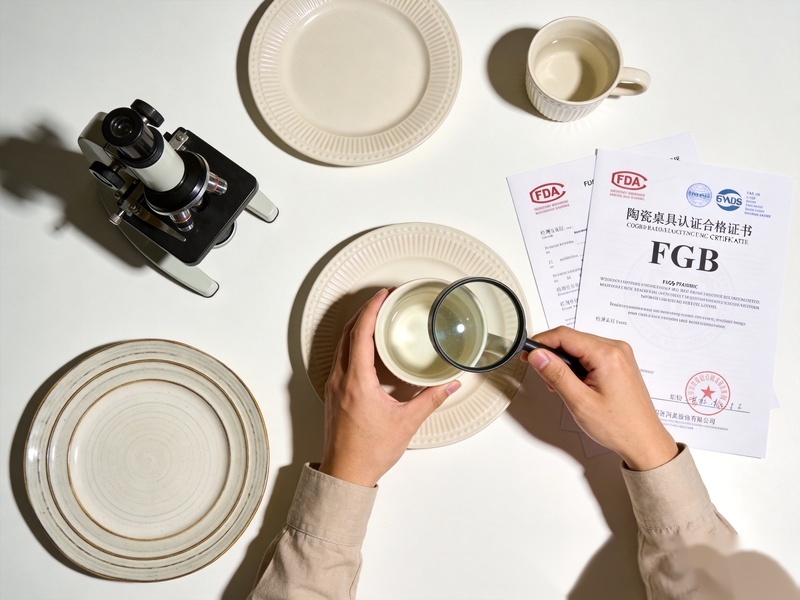
When importing ceramic tableware into international markets, understanding ceramic certification standards is not optional — it’s a legal and commercial necessity. From FDA compliance in the United States to LFGB requirements in the European Union, each market has its own set of food-contact safety regulations that ceramic products must meet before they can be sold to consumers.
For B2B buyers and importers, navigating this complex landscape of ceramic certification standards can be overwhelming. Different countries require different testing protocols, acceptable lead and cadmium limits vary by region, and the documentation requirements can differ significantly between markets. This guide breaks down every major certification you need to know about, helping you make informed sourcing decisions and avoid costly compliance failures.
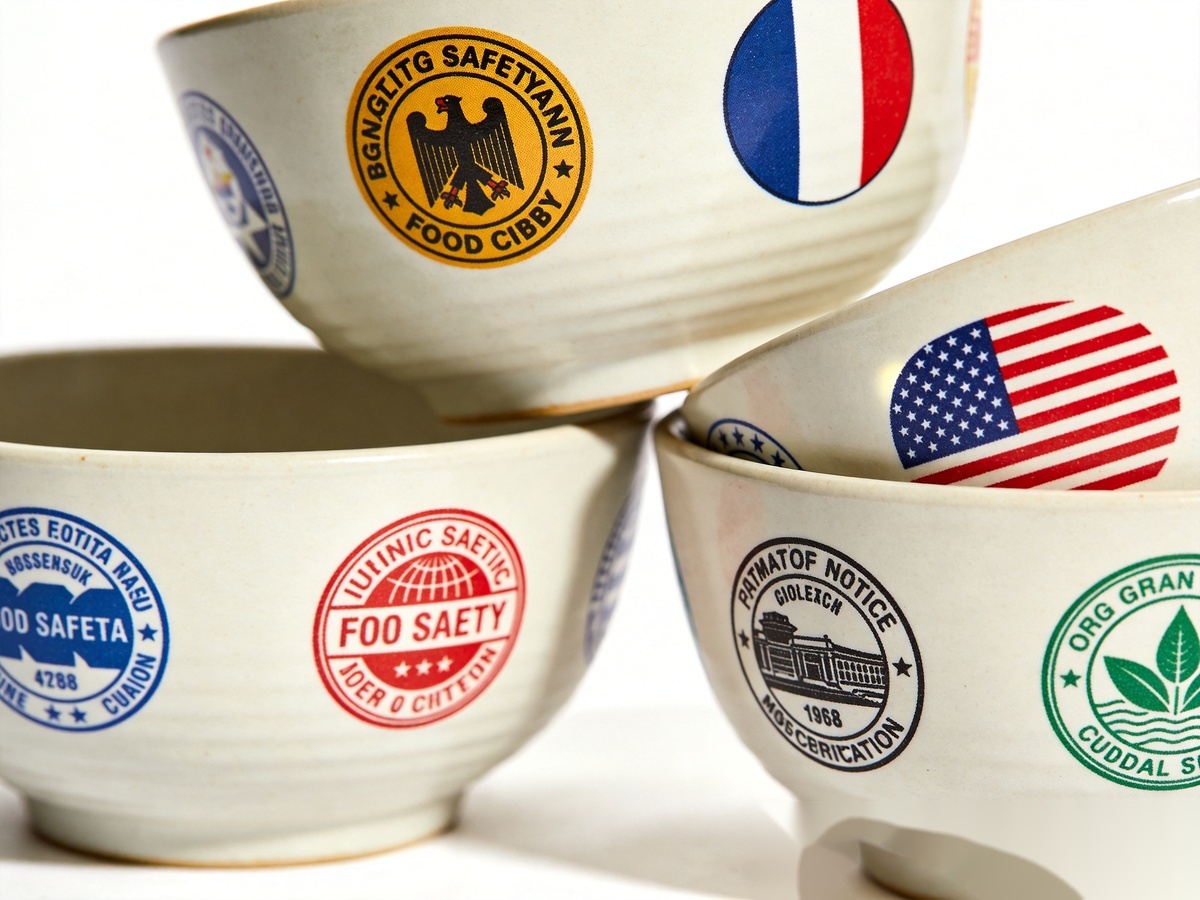
What Are Ceramic Certification Standards and Why Do They Matter?
Ceramic certification standards are regulatory frameworks and testing protocols designed to ensure that ceramic products — especially those that come into contact with food — are safe for consumer use. These standards focus primarily on limiting the migration of harmful heavy metals, particularly lead and cadmium, from ceramic glazes and decorations into food and beverages.
The importance of these standards cannot be overstated. Non-compliant ceramic products can result in:
- Product recalls that cost hundreds of thousands of dollars
- Customs seizures at ports of entry, leading to demurrage charges and lost inventory
- Legal liability if consumers are harmed by heavy metal contamination
- Brand reputation damage that can take years to rebuild
- Market access denial from major retailers who require proof of compliance
For B2B importers, having proper ceramic certification standards documentation before shipment is essential. Retailers like Walmart, Target, and major hospitality suppliers all require comprehensive compliance documentation before they will even consider placing an order.
Key Ceramic Certification Standards by Region
United States: FDA Compliance (21 CFR)
The U.S. Food and Drug Administration (FDA) regulates ceramic tableware under 21 CFR Parts 175-178 and the Compliance Policy Guide (CPG) 7117.06 and 7117.07. The FDA sets specific limits on leachable lead and cadmium:
- Flatware (plates, saucers): Lead ≤ 3.0 mg/L, Cadmium ≤ 0.5 mg/L
- Small hollowware (cups, bowls): Lead ≤ 2.0 mg/L, Cadmium ≤ 0.5 mg/L
- Large hollowware (serving dishes): Lead ≤ 1.0 mg/L, Cadmium ≤ 0.25 mg/L
The FDA also requires that decorative ceramic items not intended for food use carry a permanent warning label. Products that meet FDA standards can be marketed as “food safe” in the U.S. market. For more information on sourcing ceramic products that meet these requirements, explore our sourcing guides.
European Union: Regulation (EC) No 1935/2004 and LFGB (Germany)
The EU framework regulation (EC) No 1935/2004 establishes general safety requirements for all food-contact materials. Within this framework, the EU Ceramic Directive 84/500/EEC (amended by 2005/31/EC) sets specific migration limits:
- Category 1 (not fillable): Lead ≤ 0.5 mg/dm², Cadmium ≤ 0.02 mg/dm²
- Category 2 (fillable, depth ≤ 25mm): Lead ≤ 4.0 mg/L, Cadmium ≤ 0.3 mg/L
- Category 3 (fillable, depth > 25mm): Lead ≤ 1.5 mg/L, Cadmium ≤ 0.1 mg/L
Germany’s LFGB (Lebensmittel- und Futtermittelgesetzbuch) goes further than the general EU requirements. LFGB testing includes additional checks for cobalt, aluminum, and other metals beyond lead and cadmium. Products exported to Germany must meet these stricter requirements. The LFGB certification is widely recognized as one of the most rigorous ceramic certification standards in the world.
United Kingdom: BS 6748 and Post-Brexit Regulations
Following Brexit, the UK maintains its own regulatory framework for ceramic tableware based on BS 6748:1986 (reconfirmed 2011). The limits are similar to EU standards but are now enforced independently by UK authorities. Importers targeting the UK market must ensure separate compliance documentation for UK regulations.
Australia and New Zealand: AS/NZS 4371
The Australian/New Zealand standard AS/NZS 4371:2008 adopts limits similar to the EU Ceramic Directive but with some variations in testing methodology. Products destined for the Australian market should be tested specifically against this standard rather than relying solely on EU or FDA test results.
How Ceramic Certification Testing Works: Step by Step
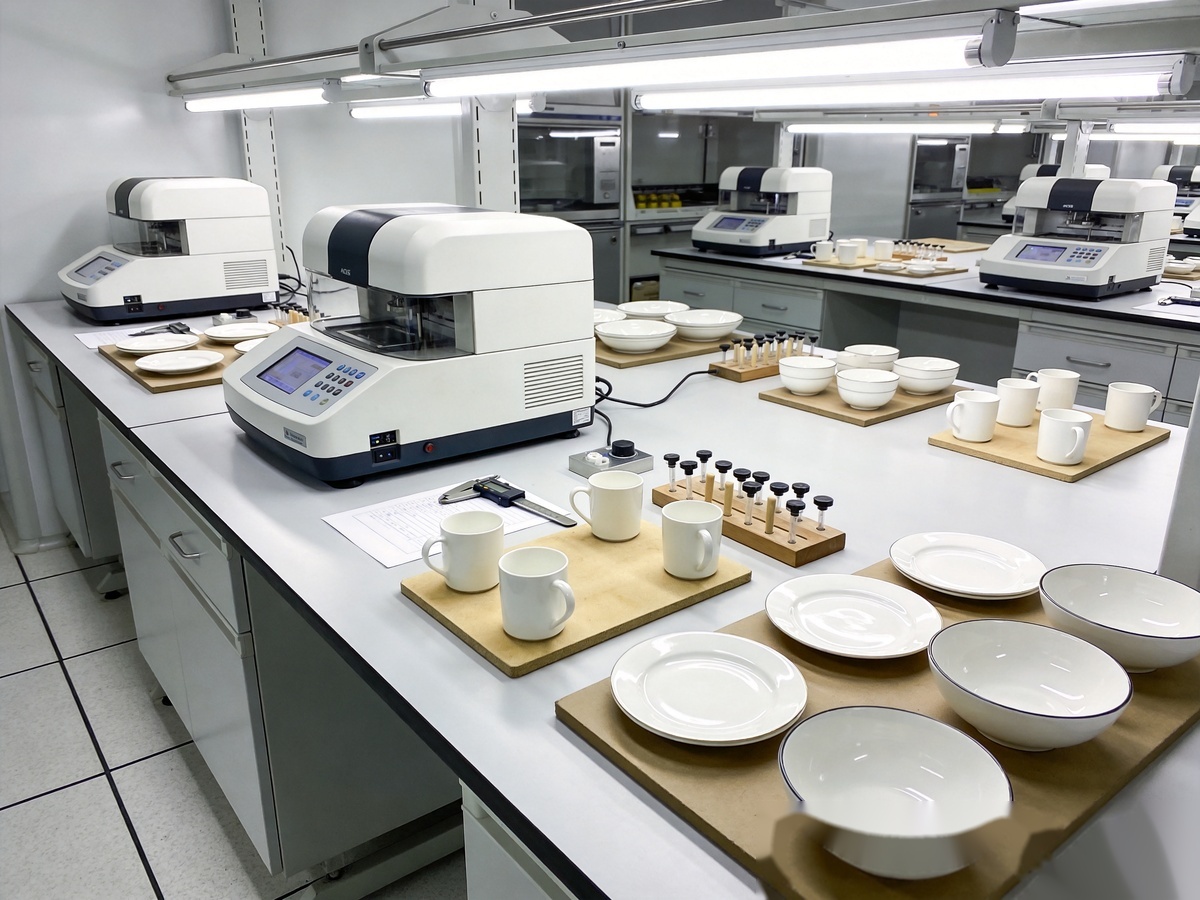
Understanding the testing process helps buyers appreciate why ceramic certification standards compliance takes time and investment. Here’s how a typical certification test is conducted:
- Sample Selection: A minimum of 6 identical samples are selected from a production batch. Samples must represent the actual product that will be shipped.
- Sample Preparation: Products are cleaned, dried, and measured. The fill volume and surface area are precisely calculated based on the product category.
- Simulant Filling: Samples are filled with a food simulant — typically 4% acetic acid solution — which mimics acidic food contact conditions.
- Migration Period: Samples are left at controlled temperature (22±2°C) for 24 hours, allowing any leachable metals to migrate into the simulant.
- Analysis: The simulant is analyzed using Atomic Absorption Spectroscopy (AAS) or Inductively Coupled Plasma Mass Spectrometry (ICP-MS) to measure heavy metal concentrations.
- Reporting: Results are compared against applicable limits and documented in a formal test report issued by an accredited laboratory.
Testing laboratories must be ISO 17025 accredited for the results to be accepted by most regulatory bodies and major retailers. Well-known testing providers include SGS, Intertek, Bureau Veritas, and TÜV SÜD.
Ceramic Certification Standards for Different Product Types
Not all ceramic products face the same ceramic certification standards requirements. The level of scrutiny depends on the product’s intended use and contact with food:
Food-Contact Tableware (Highest Scrutiny)
Plates, bowls, cups, mugs, and serving dishes that directly contact food require full migration testing against all applicable standards for each target market. This includes both glazed and decorated surfaces that may contact food during normal use.
Decorative Ceramics (Lower Scrutiny)
Vases, planters, and purely decorative items typically require only a “not for food use” warning label in most markets. However, if there is any possibility that consumers might use the product for food (e.g., a decorative bowl), it should meet food-contact standards as a precaution.
Cookware and Bakeware (Additional Requirements)
Ceramic cookware that is exposed to high temperatures during use may face additional testing requirements, including thermal shock resistance and high-temperature migration testing. California Proposition 65 compliance may also apply for products sold in the U.S.
Third-Party Certification Bodies: SGS, Intertek, and Beyond
While ceramic certification standards define the limits, third-party testing bodies provide the verification. Choosing the right certification body is crucial for market acceptance:
- SGS: Swiss-based global leader with labs worldwide. Widely accepted by European and Asian retailers. Offers comprehensive testing packages for ceramics.
- Intertek: Strong presence in North America and Europe. Preferred by many US retailers including Walmart and Target.
- Bureau Veritas: French-origin company with strong EU market recognition. Offers integrated testing and certification services.
- TÜV SÜD / TÜV Rheinland: German certification bodies with exceptional credibility in LFGB compliance. Preferred for the German market.
- CCIC (China Certification & Inspection Group): Chinese state-owned inspection body, useful for pre-shipment inspection and export compliance documentation.
For importers working with Chinese manufacturers, it’s common practice to arrange pre-production testing through SGS or Intertek’s China offices, followed by random batch testing before each shipment. Learn more about evaluating suppliers in our ceramic sourcing resources.
Cost and Timeline for Ceramic Certification Testing
Budgeting for ceramic certification standards compliance is essential for accurate landed cost calculations:
- Basic FDA lead/cadmium testing: $150–$300 per product type (6 samples)
- EU Directive full migration testing: $200–$400 per product type
- LFGB comprehensive testing: $400–$700 per product type (includes additional metals)
- California Prop 65 testing: $300–$500 per product type
- Multi-market testing package: $800–$1,500 per product type (FDA + EU + Prop 65 combined)
Testing timelines typically range from 5–10 business days for standard testing and 3–5 days for express services. Factor in sample shipping time to the laboratory (usually 2–5 days internationally) and report delivery time.
Pro tip: If you’re launching a new product line with 20+ SKUs, negotiate volume discounts with your testing provider. Many labs offer 15–30% discounts for batch testing of multiple products from the same factory.
Common Compliance Mistakes and How to Avoid Them
Based on years of experience helping importers navigate ceramic certification standards, here are the most frequent mistakes and how to prevent them:
- Using outdated test reports: Most retailers require test reports issued within the last 12 months. Always confirm the validity period with your buyers before shipping.
- Testing only one sample from a production run: Variations in glaze composition between batches can lead to different results. Always test samples from each production batch.
- Ignoring rim and lip contact areas: For cups and mugs, the rim area that contacts the user’s lips is subject to stricter limits. Ensure your testing protocol includes rim-specific analysis.
- Assuming one certification covers all markets: FDA compliance does not guarantee LFGB compliance, and vice versa. Each market requires its own specific testing.
- Neglecting packaging and labeling requirements: Many markets require specific warning labels, origin markings, and material declarations on the product or packaging.
Frequently Asked Questions About Ceramic Certification Standards
Q1: Do all ceramic products need certification?
Any ceramic product intended for food contact must meet applicable ceramic certification standards in the destination market. Decorative-only items have lower requirements but should still carry appropriate warning labels. When in doubt, test for food-contact compliance — it’s better to over-certify than risk a recall.
Q2: How long are ceramic certification test reports valid?
Most retailers and regulatory bodies accept test reports issued within the past 12 months. However, if there are changes in manufacturing processes, glaze formulations, or raw material sources, new testing should be conducted regardless of the report’s age.
Q3: Can I use Chinese national standards (GB) test results for export markets?
Chinese GB standards (such as GB 4806.4 for ceramic food-contact materials) are generally not accepted as substitutes for FDA, EU, or LFGB certifications in export markets. However, they can serve as a useful pre-screening test before submitting products for international certification.
Q4: What is the difference between lead-free and lead-safe ceramics?
“Lead-free” means no detectable lead in the product’s glaze or decoration (typically below the detection limit of 0.5 mg/kg). “Lead-safe” means the product may contain lead in its composition but does not release lead above regulatory limits when tested under standard conditions. Both can meet ceramic certification standards, but “lead-free” carries stronger marketing appeal.
Q5: Who pays for certification testing — the buyer or the factory?
This is typically negotiated as part of the supply agreement. Many established factories will absorb initial testing costs for standard orders, while buyers usually pay for additional market-specific testing (e.g., LFGB when the factory only has FDA reports). Always clarify testing responsibilities in your purchase contract.
Start Your Compliant Sourcing Journey Today
Navigating ceramic certification standards doesn’t have to be complicated when you work with an experienced partner. At CeraSupply, we ensure every product in our catalog meets the certification requirements of your target market — from FDA compliance to LFGB testing and beyond. Our in-house quality team coordinates testing with accredited laboratories and provides complete documentation packages with every order.
Whether you’re sourcing ceramic tableware for the first time or expanding into new markets, our team can guide you through the certification process and help you avoid costly compliance pitfalls. Contact us today for a free consultation, or get a free quote on WhatsApp to discuss your specific certification needs.