Ceramic glaze types are one of the most critical yet often overlooked factors in ceramic tableware sourcing. Whether you are importing dinnerware for a hotel chain, stocking shelves for a retail brand, or fulfilling OEM orders for a food-service company, the glaze on every piece directly affects appearance, durability, and — most importantly — food safety compliance. Yet many B2B buyers lack a clear understanding of the different glaze categories and the regulatory standards that govern them.
This guide breaks down the major ceramic glaze types used in commercial tableware manufacturing, explains how each performs under international food-contact regulations, and provides a practical framework for evaluating glaze quality before you commit to a bulk order. By the end, you will have the knowledge to specify the right glaze for your market and avoid costly compliance failures.
Why Ceramic Glaze Types Matter in Bulk Tableware Sourcing
The glaze is the thin glass-like coating fused to the ceramic body during firing. It serves three essential functions: sealing the porous ceramic surface, providing a decorative finish, and creating a food-safe barrier. Choosing the wrong glaze type can lead to lead or cadmium leaching, surface crazing under thermal stress, or premature wear that shortens product lifespan.
For B2B buyers, understanding ceramic glaze types directly impacts three areas:
- Compliance risk — Different markets (FDA, LFGB, EU Regulation 1935/2004) set specific migration limits. A glaze that passes US standards may fail in the EU.
- Product positioning — Glossy, matte, reactive, and crystalline glazes create distinct visual identities that align with different retail segments.
- Total cost of ownership — Higher-quality glazes reduce breakage rates, customer complaints, and recall exposure over the product lifecycle.
The Major Ceramic Glaze Types: A Technical Breakdown
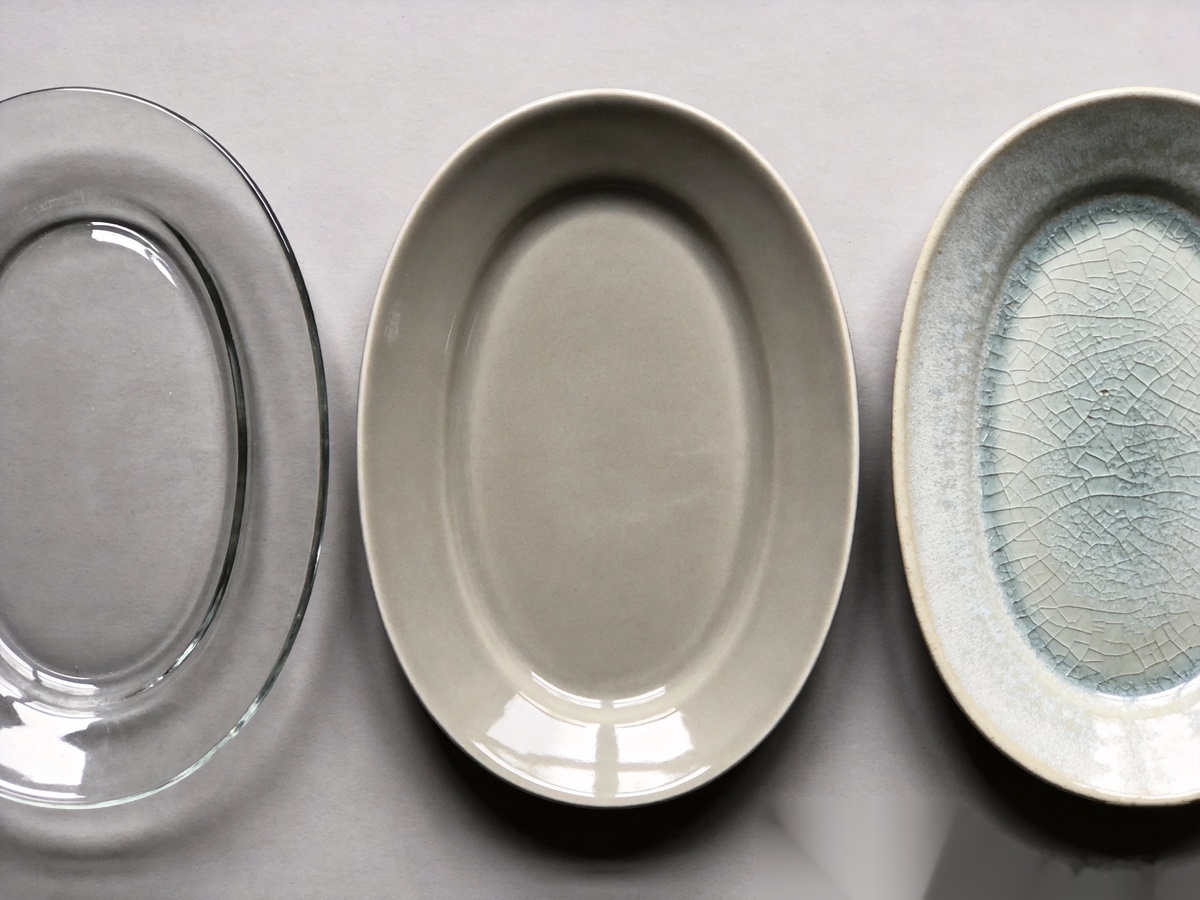
Commercial ceramic tableware uses several glaze families, each defined by its chemical composition, firing behavior, and surface characteristics. Here are the six most common types you will encounter when sourcing from Chinese manufacturers.
1. Transparent / Clear Glaze
Transparent glaze is the most widely used finish in mass-market tableware. It provides a high-gloss, glass-like surface that showcases the underlying clay body or underglaze decoration. Fired between 1,200–1,280°C, it creates a hard, scratch-resistant surface ideal for everyday dinnerware.
Best for: Hotel and restaurant supply, white-label retail lines, budget to mid-range collections.
2. Opaque / Colored Glaze
Opaque glazes contain opacifiers (typically tin oxide or zirconium silicate) that mask the ceramic body beneath. Available in virtually any Pantone color, they are the foundation of solid-color dinnerware collections popular in both Western and Middle Eastern markets.
Best for: Color-coordinated table settings, branded hospitality lines, seasonal collections.
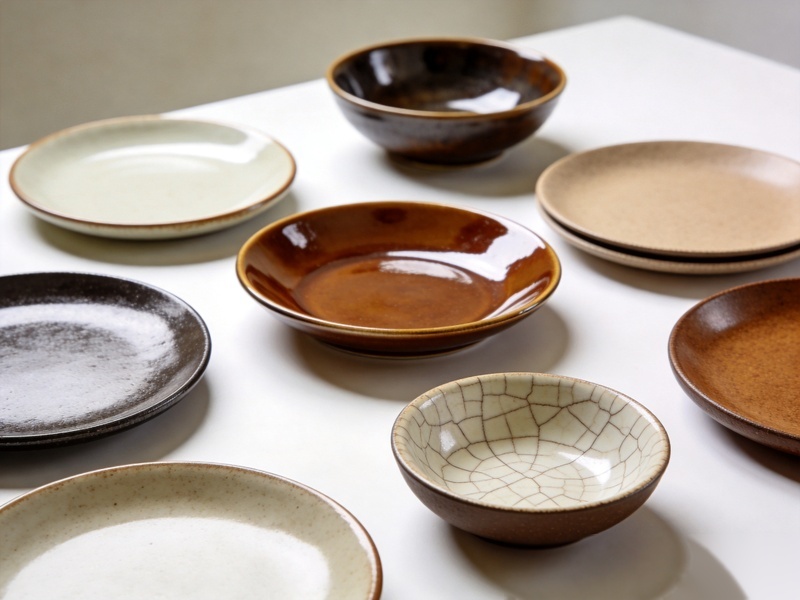
3. Matte Glaze
Matte glazes produce a soft, satin-like surface with minimal light reflection. Achieved through controlled crystal formation during cooling (devitrification), they deliver a contemporary aesthetic that appeals to design-forward retailers. However, matte surfaces can be more susceptible to staining from acidic foods if not properly sealed.
Best for: Premium retail brands, artisan-look collections, Scandinavian and minimalist design markets.
4. Reactive Glaze
Reactive glazes contain metallic oxides (iron, copper, manganese) that interact unpredictably during firing, creating unique color variations and organic patterns. No two pieces look identical — a feature that commands higher wholesale prices in the artisan and specialty retail channels.
Best for: Specialty retail, boutique hospitality, gift market, e-commerce brands emphasizing uniqueness.
5. Crystalline Glaze
Crystalline glazes form visible crystal structures during a carefully controlled cooling cycle. The result is a dramatic, almost jewel-like surface. This process is technically demanding and has higher rejection rates, making it a premium offering with corresponding price points.
Best for: Luxury tableware, limited editions, high-end department store placements.
6. Salt Glaze and Ash Glaze
These traditional glaze methods appeal to markets that value heritage craftsmanship. Salt glazing creates a slightly textured, orange-peel surface through sodium vapor reaction, while ash glaze (using wood or plant ash) yields earthy, natural tones. Both are niche but growing in the sustainability-conscious segment.
Best for: Eco-conscious brands, Japanese and wabi-sabi aesthetic markets, artisan wholesale.
Ceramic Glaze Types and Food Safety: Key Standards Explained
Every glaze that contacts food must meet the regulatory requirements of the destination market. The three most commonly referenced standards in international ceramic trade are:
FDA (United States)
The US Food and Drug Administration sets leaching limits for lead and cadmium under 21 CFR Part 175.300 and the Compliance Policy Guide 7117.06/07. Flatware must not exceed 3.0 mg/L lead and 0.5 mg/L cadmium. Hollowware has stricter limits. All ceramic tableware sold in the US must be labeled with country of origin and carry a declaration of compliance.
LFGB (Germany)
The German Lebensmittel- und Futtermittelgesetzbuch (LFGB) imposes tighter migration limits than the FDA and requires additional testing for heavy metals beyond lead and cadmium, including cobalt, nickel, and chromium. LFGB certification is widely regarded as the gold standard in European ceramic safety.
EU Regulation 1935/2004 and 84/500/EEC
The European framework directive sets general safety requirements for food-contact materials, while directive 84/500/EEC specifically addresses ceramic articles. It classifies products into three categories (flatware, small hollowware, large hollowware) with progressively stricter migration limits. The proposed 4th amendment (expected to tighten limits significantly) is worth monitoring for buyers planning long-term supply contracts.
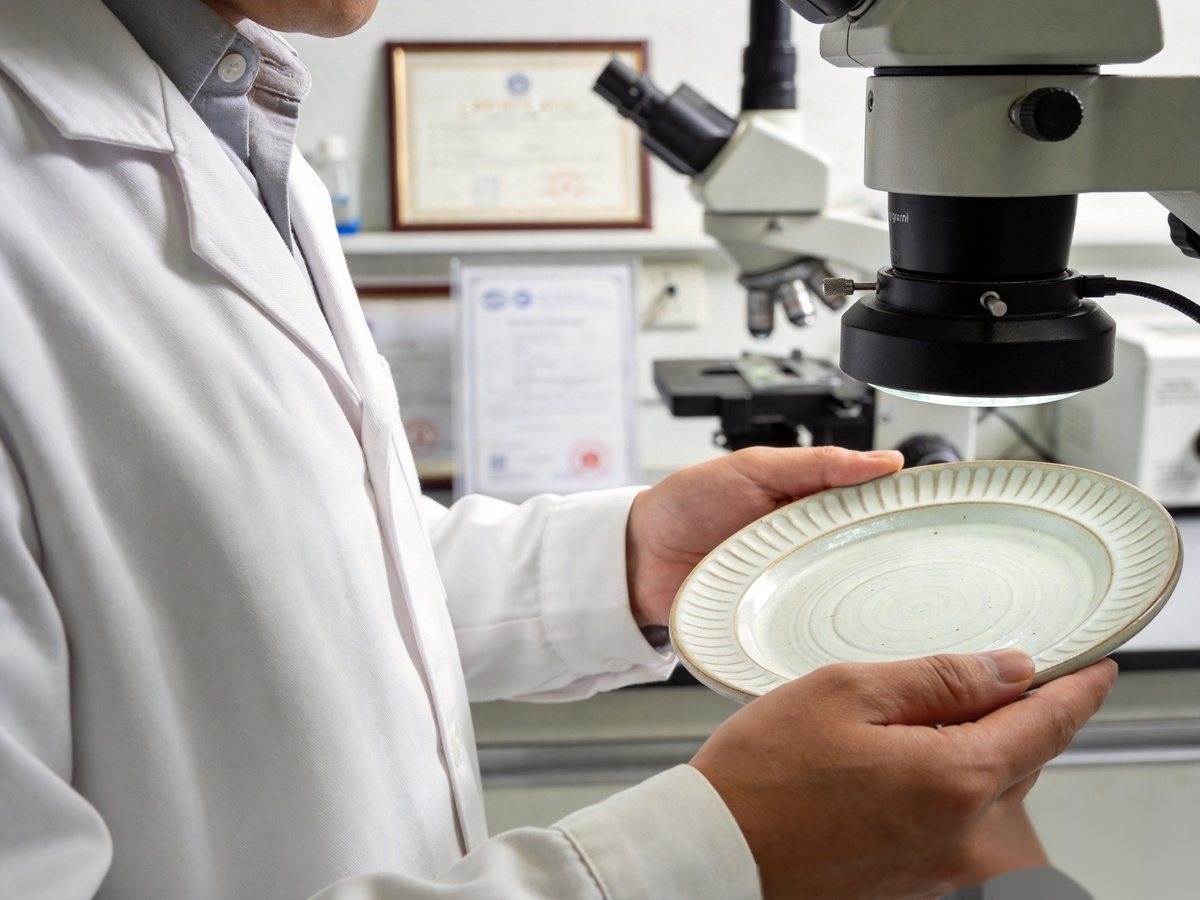
How to Evaluate Ceramic Glaze Types Before Placing a Bulk Order
Requesting samples is only the first step. A systematic glaze evaluation should include the following checks before you approve a supplier or sign a purchase order:
- Visual inspection — Check for pinholes, crawling, crazing, or color inconsistency across a batch of 10+ samples.
- Thermal shock test — Cycle samples between 0°C and 100°C at least 10 times. Crazing after thermal cycling indicates a glaze-body fit problem.
- Scratch hardness — Use a Mohs hardness pick or steel knife. Food-safe tableware should resist scratching at Mohs 5 or above.
- Acid resistance — Fill samples with 4% acetic acid solution for 24 hours at 22°C. Any change in surface gloss or color signals potential leaching issues.
- Lab migration testing — Send samples to an accredited lab (SGS, TÜV, Intertek) for lead/cadmium migration analysis per your destination market standard.
- Dishwasher durability — Run 100+ dishwasher cycles to assess glaze wear, etching, and color stability over time.
Suppliers who proactively provide test reports from accredited laboratories demonstrate stronger quality management and reduce your compliance risk. For a deeper look at evaluating supplier capabilities, see our sourcing guides collection.
Ceramic Glaze Types for Different Market Segments
Not every glaze suits every market. Here is a quick reference for matching ceramic glaze types to common B2B buyer profiles:
- Hotels and restaurants: Transparent or opaque glaze — prioritizes durability, dishwasher resistance, and cost efficiency.
- Premium retail brands: Matte or reactive glaze — differentiates on shelf and supports higher price points.
- E-commerce sellers: Reactive or crystalline glaze — unique appearance photographs well and drives social media engagement.
- Eco-conscious importers: Ash glaze or salt glaze — aligns with sustainability narratives and natural aesthetic trends.
- Promotional and branded merchandise: Opaque colored glaze — easy Pantone matching for brand consistency.
Common Ceramic Glaze Types Defects and How to Prevent Them
Even with a reliable supplier, understanding common glaze defects helps you catch problems during pre-shipment inspection:
- Crazing — Fine cracks in the glaze surface caused by thermal expansion mismatch. Indicates the glaze is under tension and may harbor bacteria.
- Shivering — Glaze chips or flakes off the body. The opposite of crazing; the glaze is under compression. A critical food-safety failure.
- Pinholes — Small craters caused by gas escaping during firing. Can trap food particles and compromise hygiene.
- Crawling — Glaze pulls back from edges, leaving bare ceramic exposed. Usually caused by dust or oil contamination before glazing.
- Bloating — Blisters or bubbles trapped under the surface. Results from over-firing or insufficient degassing of the clay body.
Implementing a quality inspection checklist that specifically addresses glaze defects will significantly reduce the rate of customer complaints and returns.
FAQ: Ceramic Glaze Types for B2B Buyers
Q1: Which ceramic glaze types are safest for food contact?
High-fired transparent and opaque glazes (fired above 1,200°C) are generally the safest for food contact because the high temperature fully vitrifies the glaze, locking heavy metals into a stable glass matrix. Matte and reactive glazes can also be food-safe, but require additional testing to confirm compliance with your destination market standards.
Q2: Can the same glaze pass both FDA and LFGB testing?
Yes, but not automatically. LFGB limits are stricter and test for additional metals (cobalt, nickel, chromium). A glaze formulated for FDA compliance may need reformulation to meet LFGB requirements. Always specify your target market when requesting quotes from suppliers.
Q3: How do reactive glazes affect production consistency?
Reactive glazes inherently produce variation — this is their selling point. However, buyers should establish acceptable color-range samples (upper and lower bounds) and include them in the purchase contract. Expect 5–10% of pieces to fall outside the approved range during production.
Q4: What is the cost difference between standard and premium glaze types?
Standard transparent and opaque glazes add minimal cost (typically $0.05–0.15 per piece). Reactive glazes add $0.20–0.50 per piece due to specialty raw materials and higher rejection rates. Crystalline glazes can add $1.00–3.00+ per piece because of the extended firing cycle and technical skill required.
Q5: How can I verify that a supplier’s glaze meets food safety standards?
Request test reports from an ISO 17025-accredited laboratory (SGS, TÜV, Bureau Veritas, Intertek). The report should specify the test standard (e.g., FDA 21 CFR 175.300 or 84/500/EEC), migration values for each regulated metal, and the test conditions used. Cross-check the report number directly with the issuing lab.
Take the Next Step in Your Ceramic Sourcing Journey
Understanding ceramic glaze types is a competitive advantage in the B2B tableware market. It allows you to specify products that match your brand positioning, meet your regulatory obligations, and deliver consistent quality to your end customers.
Whether you need high-volume transparent-glaze dinnerware for hospitality or small-batch reactive-glaze collections for specialty retail, CeraSupply offers factory-direct pricing with full compliance documentation. Explore our ceramic tableware products or get in touch for a free quote tailored to your market requirements.