When sourcing ceramic tableware at scale, understanding china ceramic production regions is one of the most valuable pieces of knowledge a bulk buyer can have. China produces over 70% of the world’s ceramic tableware, but not all production areas are equal. Each region has developed distinct specializations—from the translucent porcelain of Jingdezhen to the high-volume daily-use ceramics of Chaozhou—meaning that knowing where to source can dramatically impact your product quality, pricing, and supply chain reliability.
This comprehensive guide breaks down the major china ceramic production regions, compares their strengths and pricing, and gives you actionable sourcing strategies whether you’re an importer, wholesaler, or hospitality brand looking for reliable ceramic supply.
Why China Ceramic Production Regions Matter for Bulk Buyers
The phrase “made in China” covers enormous geographic and qualitative diversity. Unlike smaller manufacturing countries where most factories cluster in a single industrial zone, China’s ceramic industry is distributed across several distinct production clusters, each with centuries of accumulated expertise in specific ceramic types.
Understanding china ceramic production regions matters for bulk buyers because:
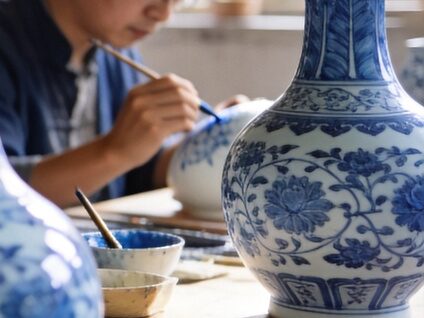
- Product specialization varies by region — Jingdezhen excels at fine porcelain, Chaozhou dominates daily-use tableware, Dehua is famous for white porcelain, and Liling leads in underglaze multicolor ceramics.
- Price points differ significantly — Handcrafted porcelain from Jingdezhen commands premium pricing, while mass-produced tableware from Chaozhou offers the best per-unit cost for high-volume orders.
- MOQ flexibility varies — Some regions cater to large container-load orders, while others accommodate smaller trial shipments.
- Quality certifications cluster geographically — Regions with established export markets tend to have factories already holding FDA, LFGB, and SGS certifications.
- Logistics and shipping costs differ — Coastal regions like Chaozhou offer shorter overland distances to ports, reducing inland transportation costs.
Top 4 China Ceramic Production Regions: A Detailed Overview
Below is a detailed breakdown of the four most important china ceramic production regions for tableware sourcing. Each region offers unique advantages depending on your product requirements, order volume, and target market.
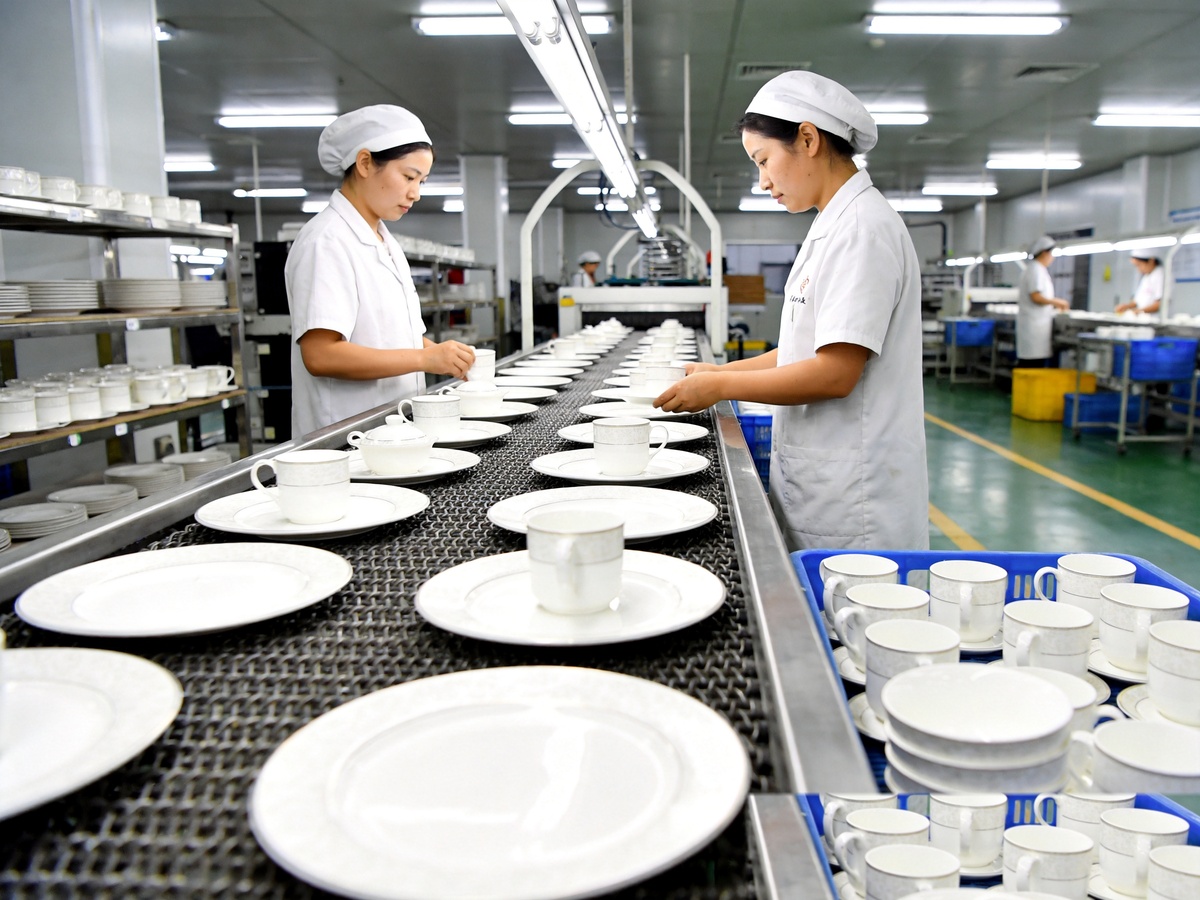
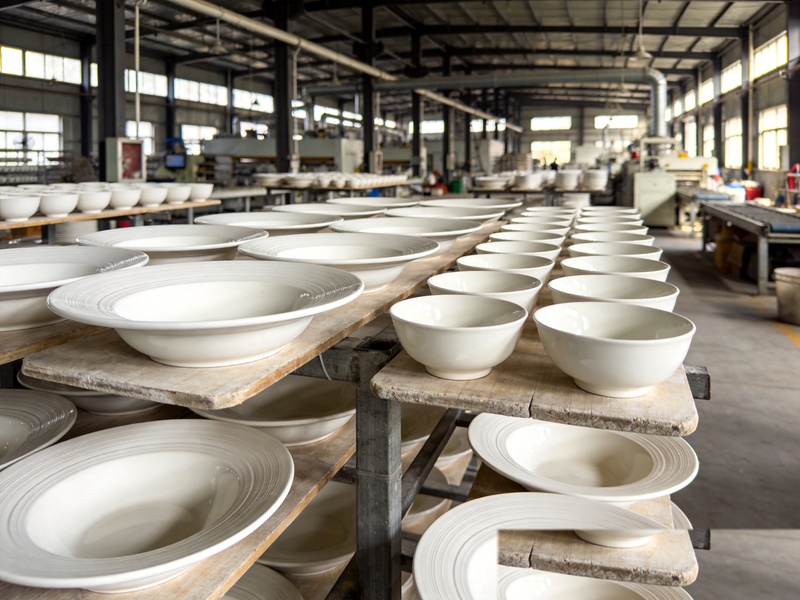
Key advantages: Unmatched production volume and the lowest per-unit costs in China. Chaozhou factories are highly automated, with many already holding international food-safety certifications. The proximity to Shenzhen and Guangzhou ports makes shipping cost-effective.
MOQ & Pricing: MOQs can be as low as 200–500 pieces for stock items, with container-load orders (10,000+ pieces) unlocking the best pricing. Per-unit costs are typically 40–60% lower than Jingdezhen for comparable items.
China Ceramic Production Regions: Cost Comparison & MOQ Guide
The following comparison helps you benchmark pricing across the major china ceramic production regions for standard tableware items:
- Jingdezhen: Premium pricing — dinner plates $1.50–$4.00/pc, mugs $0.80–$2.50/pc. MOQ 500–2,000 pcs. Best for: luxury, artisan, custom designs.
- Chaozhou: Volume pricing — dinner plates $0.30–$1.20/pc, mugs $0.20–$0.80/pc. MOQ 200–500 pcs (stock), 2,000+ (custom). Best for: high-volume import, supermarket supply.
- Dehua: Mid-range pricing — dinner plates $0.80–$2.00/pc, mugs $0.50–$1.50/pc. MOQ 300–1,000 pcs. Best for: minimalist brands, white porcelain focus.
- Liling: Commercial pricing — dinner plates $0.60–$1.80/pc, mugs $0.40–$1.20/pc. MOQ 500–3,000 pcs. Best for: restaurant/hotel supply, custom patterns.
These prices are FOB estimates for orders of one 20ft container or more. Actual pricing depends on design complexity, glaze type, packaging requirements, and current raw material costs. Always request updated quotations from at least three factories per region before committing.
How to Verify Suppliers Across China Ceramic Production Regions
Regardless of which region you source from, supplier verification is critical. Here’s a proven checklist for evaluating factories across china ceramic production regions:
<!– wp:list {"ordered":true}>
- Request factory audit reports — Reputable factories willingly share third-party audit results (BSCI, SEDEX, ISO 9001).
- Verify food-safety certifications — Ask for original FDA, LFGB, or SGS test certificates, not just claims. Cross-check certificate numbers with issuing bodies.
- Order samples before bulk — Always request physical samples (3–5 pieces per SKU) to evaluate glaze quality, weight consistency, and dimensional accuracy.
- Visit the factory — If possible, visit in person or hire a local inspection agency. Seeing the production line, kiln condition, and quality control processes firsthand is invaluable.
- Check export history — Factories exporting to your target market (EU, US, Australia, Japan) already understand the compliance and packaging requirements.
- Negotiate clear contracts — Include specifications for breakage allowance (typically 2–3%), lead times, payment terms (30% deposit, 70% before shipment is standard), and dispute resolution.
/wp:list –>
Frequently Asked Questions About China Ceramic Production Regions
Q1: Which China ceramic production region offers the lowest prices for bulk tableware?
Chaozhou consistently offers the lowest per-unit pricing for mass-produced ceramic tableware, thanks to its highly automated production lines and economies of scale. For orders of 10,000+ pieces, Chaozhou factories can offer prices 40–60% lower than other regions.
Q2: Can I source custom-designed tableware from these China ceramic production regions?
Yes. All four regions support custom designs, but their sweet spots differ. Jingdezhen excels at hand-painted custom work, Chaozhou specializes in decal and screen-printed custom patterns at scale, Dehua offers custom shapes in white porcelain, and Liling is ideal for custom underglaze multicolor patterns.
Q3: How long does production typically take across different China ceramic production regions?
Standard production lead times are 25–45 days for most regions. Chaozhou, with its automated lines, can sometimes deliver in 20–30 days for stock designs. Custom orders from Jingdezhen or Liling may require 35–50 days due to additional handwork and firing cycles.
Q4: Are factories in these China ceramic production regions FDA and LFGB certified?
Many export-oriented factories across all four regions hold FDA, LFGB, and SGS certifications. Chaozhou and Dehua have the highest concentration of certified factories. Always request original certificates and verify them with the issuing organization before placing orders.
Q5: What is the best way to reduce shipping costs when sourcing from China ceramic production regions?
Choose coastal regions like Chaozhou or Dehua to minimize inland transportation costs. Consolidate orders into full containers (FCL) rather than less-than-container-load (LCL) shipments. Negotiate FOB pricing so you control freight forwarding. And consider sourcing complementary products from nearby suppliers to maximize container utilization.
Start Sourcing from the Best China Ceramic Production Regions Today
Choosing the right region among China’s ceramic production hubs can make the difference between a profitable sourcing strategy and one plagued by quality issues, high costs, and supply chain disruptions. Whether you need premium artisan porcelain from Jingdezhen, high-volume tableware from Chaozhou, minimalist white porcelain from Dehua, or durable underglaze ceramics from Liling—each region offers distinct advantages that align with different business needs.
Ready to start sourcing from China’s top ceramic production regions? Our team at CeraSupply has deep partnerships with verified factories across all major production clusters. We handle quality control, certification compliance, packaging, and logistics—so you can focus on growing your business.
Get a Free Quote Today — Click Here to Chat with Our Sourcing Experts on WhatsApp