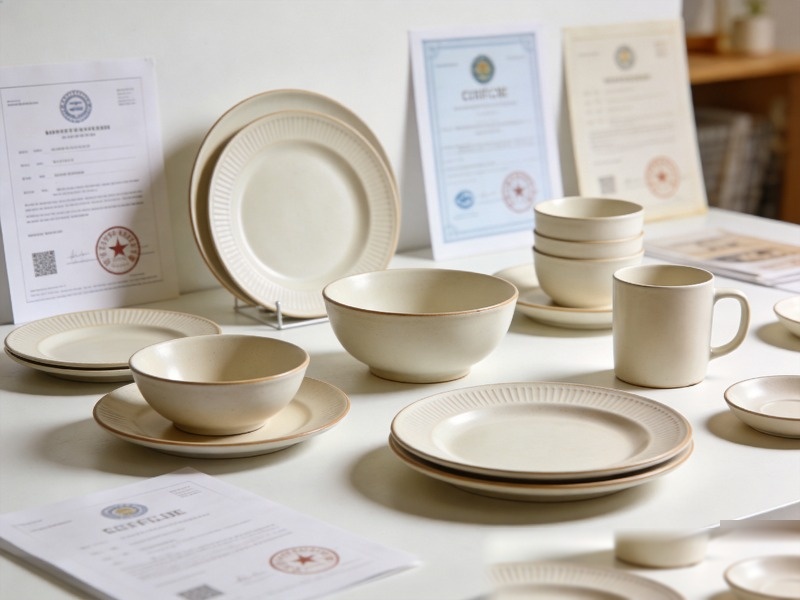
When importing ceramic tableware in bulk, understanding ceramic certification standards is not optional—it is the foundation of legal compliance, consumer safety, and market access. Every major market in the world enforces specific regulations on ceramic products that come into contact with food, and failure to meet these standards can result in product recalls, customs seizures, or costly penalties.
Whether you are a wholesaler, distributor, retailer, or hospitality procurement manager, this guide will walk you through the most critical ceramic certification standards you need to know—FDA, LFGB, and SGS—and explain exactly how they apply to your bulk orders from China and other manufacturing regions.
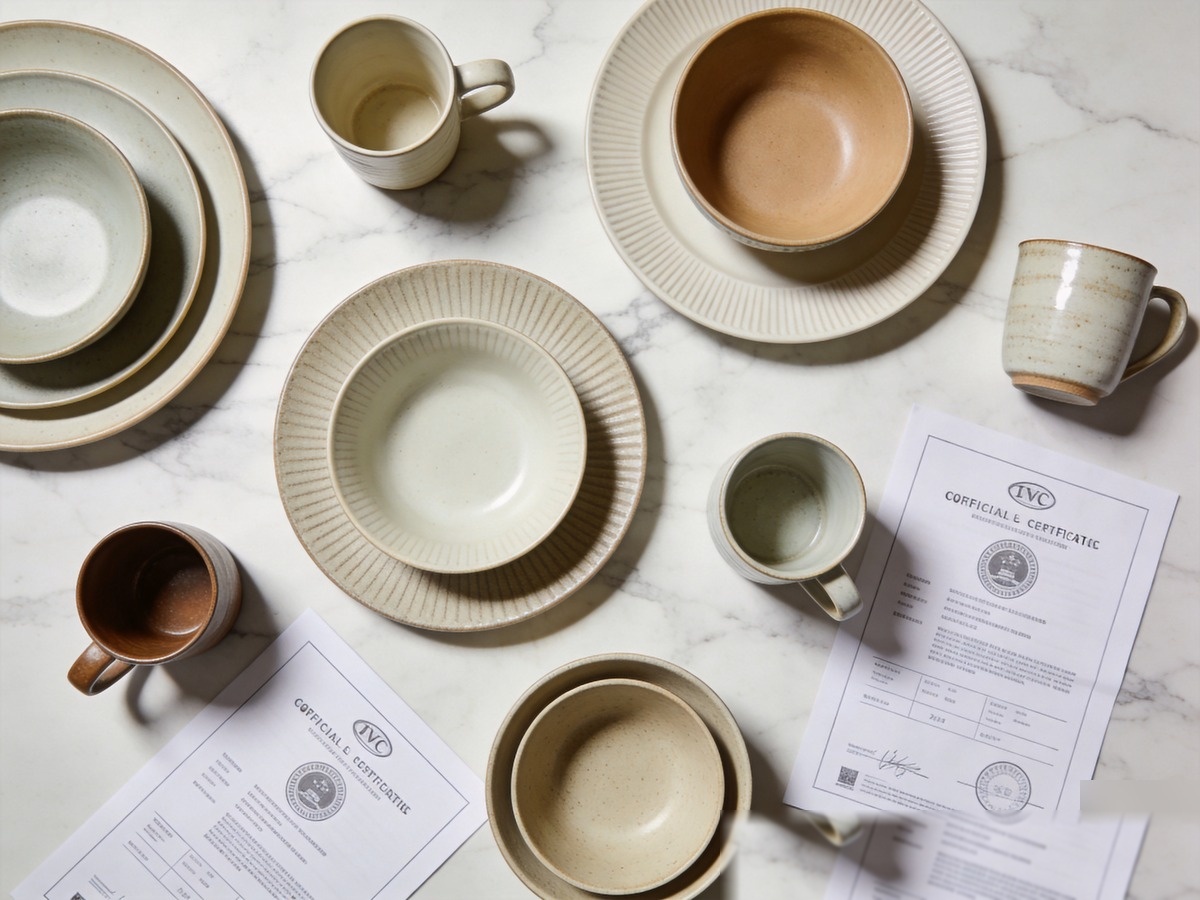
Why Ceramic Certification Standards Matter for Bulk Buyers
Ceramic products are made from natural minerals that may contain heavy metals such as lead and cadmium. During the glazing and firing process, these substances can migrate into food if the manufacturing process is not properly controlled. Ceramic certification standards exist to ensure that finished products are safe for food contact and meet the regulatory requirements of each destination market.
For B2B buyers, the stakes are particularly high:
- Customs clearance – Many countries will reject shipments that lack proper certification documentation
- Liability exposure – Retailers and importers can be held legally responsible for non-compliant products
- Brand reputation – A single recall event can destroy years of brand-building effort
- Market access – Different markets require different certifications; knowing which ones apply is essential for expansion
FDA Certification for Ceramic Tableware: U.S. Market Requirements
The U.S. Food and Drug Administration (FDA) regulates ceramic tableware under the Federal Food, Drug, and Cosmetic Act. The key regulation is 21 CFR Parts 175–178, which sets limits on the migration of lead and cadmium from ceramic surfaces into food.
Key FDA Requirements
- Lead and cadmium leaching limits – Products are tested using standardized acidic food simulants (4% acetic acid) over a 24-hour contact period. The allowable limits vary by product type: flatware, small hollowware, and large hollowware each have different thresholds.
- Proper labeling – Ceramic products sold in the U.S. must carry a permanent label indicating the manufacturer, country of origin, and a statement of compliance if applicable.
- California Proposition 65 – Beyond federal FDA requirements, products sold in California must also comply with Prop 65, which sets even stricter limits on lead exposure. Many manufacturers now design products to meet Prop 65 standards as a baseline.
FDA Testing Methodology
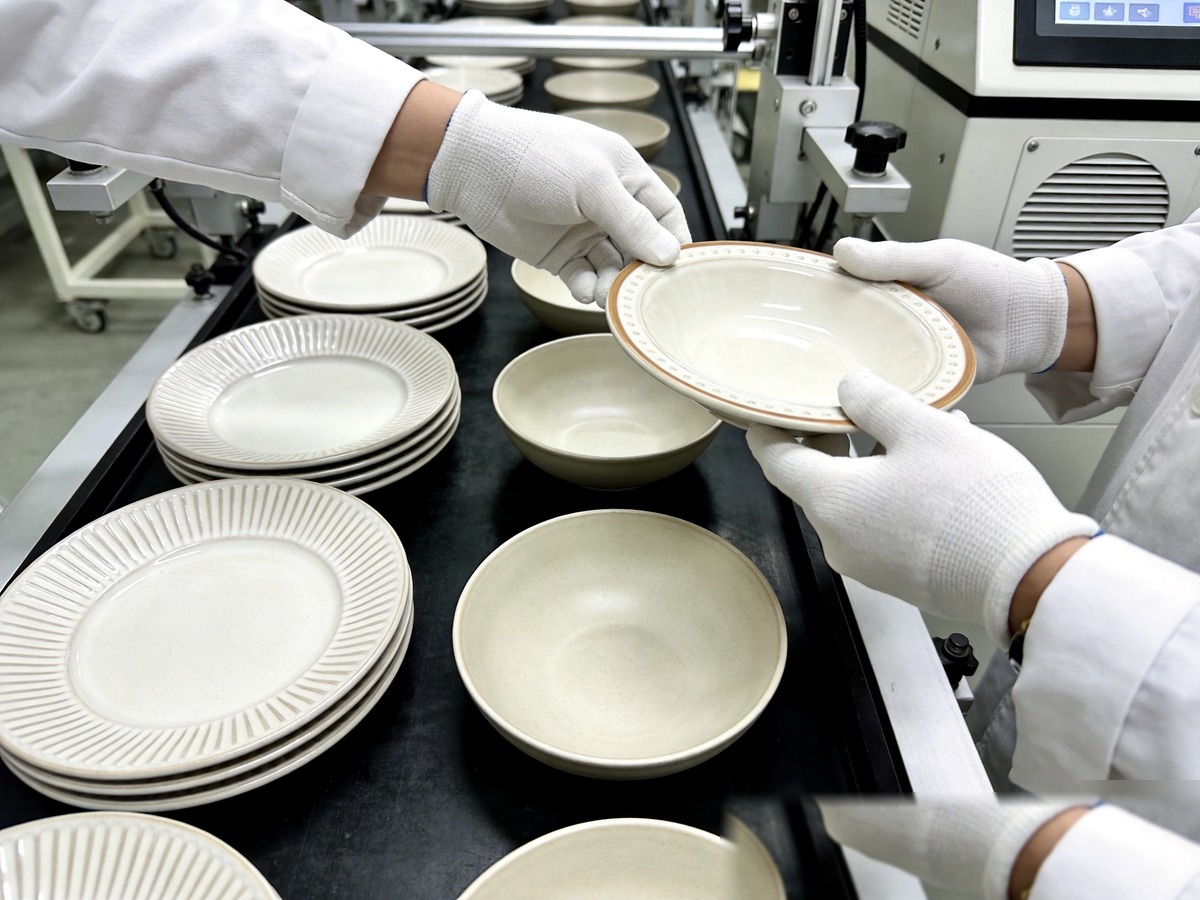
The standard test method is ASTM C738-94 (Standard Test Method for Lead and Cadmium Extracted from Glazed Ceramic Surfaces). Laboratories fill the ceramic vessel with 4% acetic acid solution, seal it, and measure heavy metal concentrations after 24 hours at room temperature (22°C ± 2°C).
Flatware products are tested by pouring the solution over the food-contact surface and covering it. The results are reported in parts per million (ppm) or milligrams per liter (mg/L).
LFGB Certification: European Ceramic Certification Standards
The LFGB (Lebensmittel- und Futtermittelgesetzbuch) is Germany’s food and feed code, and it represents one of the most stringent ceramic certification standards in the world. While the EU has its own framework regulation (EC No 1935/2004 and Directive 84/500/EEC for ceramics), LFGB adds additional requirements that many European buyers insist upon.
How LFGB Differs from EU Directive 84/500/EEC
The EU Ceramic Directive (84/500/EEC, amended by 2005/31/EC) sets migration limits for lead and cadmium similar to FDA standards. However, LFGB goes further:
- Broader substance testing – LFGB tests for additional heavy metals and chemical substances beyond just lead and cadmium
- Sensory testing – Products are evaluated for taste and odor transfer, which is not required under the EU directive
- More restrictive limits – In some categories, LFGB limits are significantly lower than the EU baseline
- Documentation requirements – Suppliers must provide a Declaration of Compliance (DoC) with detailed supporting documentation
LFGB Certification Process
To obtain LFGB certification, ceramic products must be tested by an accredited laboratory. The process typically involves:
- Sample submission to an accredited testing lab (e.g., SGS, TÜV, Intertek)
- Migration testing with food simulants at specified temperatures and durations
- Sensory evaluation (taste and odor test)
- Heavy metal analysis across multiple categories
- Issuance of a test report and, if passed, an LFGB certificate
The entire process typically takes 2–4 weeks and costs between $500–$1,500 per product line, depending on the number of glazes and colors being tested.
SGS Certification: Comprehensive Ceramic Certification Standards
SGS (Société Générale de Surveillance) is not itself a certification standard but rather the world’s leading testing, inspection, and certification company. When buyers refer to “SGS certification” for ceramics, they are typically referring to test reports issued by SGS that verify compliance with specific standards—FDA, LFGB, EU regulations, or other market-specific requirements.

What SGS Testing Covers for Ceramics
- Physical properties – Water absorption, thermal shock resistance, chipping resistance, and dimensional accuracy
- Chemical safety – Lead and cadmium migration, other heavy metal content in glazes and decorations
- Mechanical performance – Impact resistance, handle strength (for mugs), and stackability testing
- Microwave and dishwasher safety – Testing for metal content in decorations, thermal cycling durability
- Food contact compliance – Verification against FDA, EU, LFGB, or other applicable standards
Why SGS Reports Are Trusted Globally
SGS operates over 2,600 offices and laboratories worldwide and is accredited by virtually every major regulatory body. An SGS test report is universally recognized by customs authorities, retailers, and quality assurance teams across all major markets. For B2B ceramic buyers, an SGS report serves as a universal passport for market entry.
Other Important Ceramic Certification Standards to Know
Beyond FDA, LFGB, and SGS testing, several other ceramic certification standards may apply depending on your target market:
Japan: JIS Standards
The Japanese Industrial Standards (JIS S 5501) regulate ceramic tableware for the Japanese market. Japan’s Food Sanitation Act also requires specific testing for lead and cadmium migration, with limits that differ from both FDA and EU standards.
Australia and New Zealand
Products entering these markets must comply with the Australia New Zealand Food Standards Code (Standard 4.2.4), which references international testing methods but sets its own migration limits.
Canada: Consumer Chemicals and Containers Regulations
Canada enforces its own ceramic tableware regulations under the Hazardous Products Act, with lead and cadmium limits that align closely with FDA standards but include additional labeling requirements.
Ceramic Certification Standards: A Comparison Table
The following table summarizes the key differences between the major ceramic certification standards:
| Standard | Market | Key Focus | Test Method | Typical Cost |
|---|---|---|---|---|
| FDA (21 CFR) | United States | Lead & cadmium migration | ASTM C738-94 | $300–$800 |
| Prop 65 | California, USA | Stricter lead limits | Same as FDA | $200–$500 additional |
| EU 84/500/EEC | European Union | Lead & cadmium migration | EN 1388-1/2 | $400–$900 |
| LFGB | Germany / EU premium | Heavy metals + sensory | EN 1388 + sensory | $500–$1,500 |
| JIS S 5501 | Japan | Lead & cadmium migration | JIS methods | $400–$700 |
How to Verify Ceramic Certification Standards When Sourcing from China
When sourcing ceramic tableware from Chinese manufacturers, verifying ceramic certification standards compliance requires a systematic approach:
- Request test reports upfront – Reputable manufacturers should have current (within the past 12 months) test reports from accredited laboratories. Ask for reports specific to the products and glazes you are ordering.
- Verify laboratory accreditation – Ensure the testing lab is ISO 17025 accredited and recognized in your target market. SGS, TÜV, Intertek, and Bureau Veritas are widely accepted.
- Match reports to products – Test reports should specifically cover the product categories, glaze types, and decorative techniques you are ordering. A report for a plain white plate does not automatically cover a hand-painted design with colored glazes.
- Conduct independent testing – For large orders or high-risk products, commission your own independent testing from pre-production samples. This typically costs $300–$800 and provides an additional layer of assurance.
- Audit manufacturing processes – The best ceramic certification standards compliance comes from controlling the production process, not just testing finished products. Verify that the factory uses certified raw materials, maintains proper firing temperatures (typically 1280°C+ for high-fire ceramics), and has documented quality control procedures.
Cost and Timeline for Ceramic Certification
Budgeting for ceramic certification standards compliance is an important part of your sourcing strategy. Here are typical costs and timelines:
- FDA testing: $300–$800 per product line, 5–10 business days
- EU Directive testing: $400–$900 per product line, 7–14 business days
- LFGB testing: $500–$1,500 per product line, 10–20 business days
- SGS comprehensive report: $800–$2,000 depending on scope, 10–15 business days
- Prop 65 testing: $200–$500 additional, 5–7 business days
Important note: Each distinct glaze color and decorative technique typically requires separate testing. A single product with 5 different colored glazes may require 5 separate test reports.
Frequently Asked Questions About Ceramic Certification Standards
Q1: Do all ceramic products need certification?
Not all ceramic products require certification, but any ceramic item intended for food contact must comply with the applicable food safety regulations in its destination market. Decorative ceramics that are not food-contact items may not require food safety certification but may still need to comply with general product safety regulations.
Q2: How long is a ceramic certification valid?
Test reports do not have a formal expiration date, but most buyers and regulators expect reports to be no more than 12–24 months old. If the manufacturing process, glaze formulation, or raw material source changes, new testing is required regardless of the previous report’s age.
Q3: Can one certification cover all markets?
No. Different markets have different ceramic certification standards, and a test report accepted in one country may not be accepted in another. However, testing laboratories like SGS can often run multiple standards simultaneously on the same samples, which is more cost-effective than separate testing rounds.
Q4: Who is responsible for certification—the buyer or the manufacturer?
Legally, the importer of record is responsible for ensuring compliance in the destination market. However, in practice, most buyers require manufacturers to provide test reports as a condition of the purchase agreement. Smart buyers maintain their own independent testing program as a backup.
Q5: What happens if my shipment fails customs due to certification issues?
Failed customs inspections can result in product detention, re-export at your cost, or destruction of the goods. In the U.S., FDA can place the manufacturer on an Import Alert list, effectively banning future shipments until the issue is resolved. This is why proactive ceramic certification standards compliance is critical before goods are shipped.
Partner with a Certified Ceramic Supplier
Navigating ceramic certification standards can be complex, but you don’t have to do it alone. At CeraSupply, we provide comprehensive support for all certification requirements across every major market. Our products are pre-tested against FDA, LFGB, EU, and other international standards, and we maintain current test reports from accredited laboratories.
Whether you’re importing ceramic tableware for the first time or expanding into new markets, our team can guide you through the certification process, provide all necessary documentation, and ensure your products clear customs smoothly.