When importing ceramic tableware in bulk, packaging and shipping can make or break your order. Even the finest porcelain arrives worthless if it reaches your warehouse in pieces. Ceramic packaging shipping is a critical yet often overlooked aspect of international tableware trade — one that directly impacts product integrity, landed costs, and customer satisfaction.
In this comprehensive guide, we break down everything B2B buyers need to know about ceramic packaging shipping: from choosing the right protective materials to optimizing container loading, navigating international freight options, and minimizing damage rates. Whether you’re a first-time importer or an experienced procurement manager, these best practices will help you protect your investment and streamline your supply chain.
Why Ceramic Packaging Shipping Demands Special Attention
Ceramics are inherently fragile. Unlike metal or plastic tableware, ceramic products are susceptible to chipping, cracking, and shattering under impact, vibration, and thermal stress during transit. The breakage rate for poorly packaged ceramic shipments can exceed 15-20%, turning profitable orders into costly losses.
Several factors make ceramic packaging shipping uniquely challenging:
- Brittleness: Ceramic items fracture under relatively low impact forces compared to other materials
- Weight: Dense ceramic products create high inertia during sudden stops or drops
- Shape diversity: Plates, bowls, mugs, and vases each require different protective strategies
- Stacking pressure: Bulk orders mean items are stacked, creating compression risks
- Climate sensitivity: Temperature fluctuations during ocean transit can affect certain glazes
Understanding these challenges is the first step toward building a robust ceramic packaging shipping strategy that protects your products from factory floor to final destination.
Essential Ceramic Packaging Shipping Materials
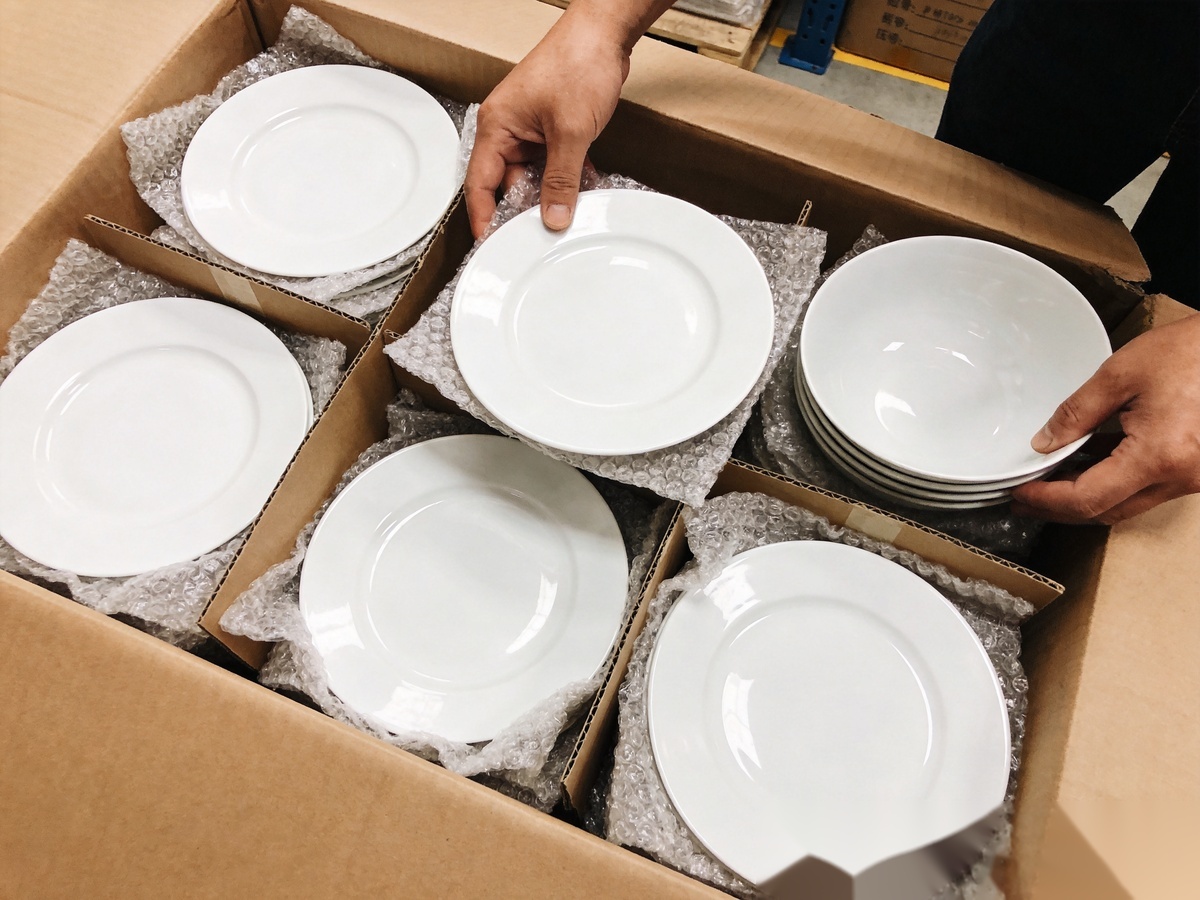
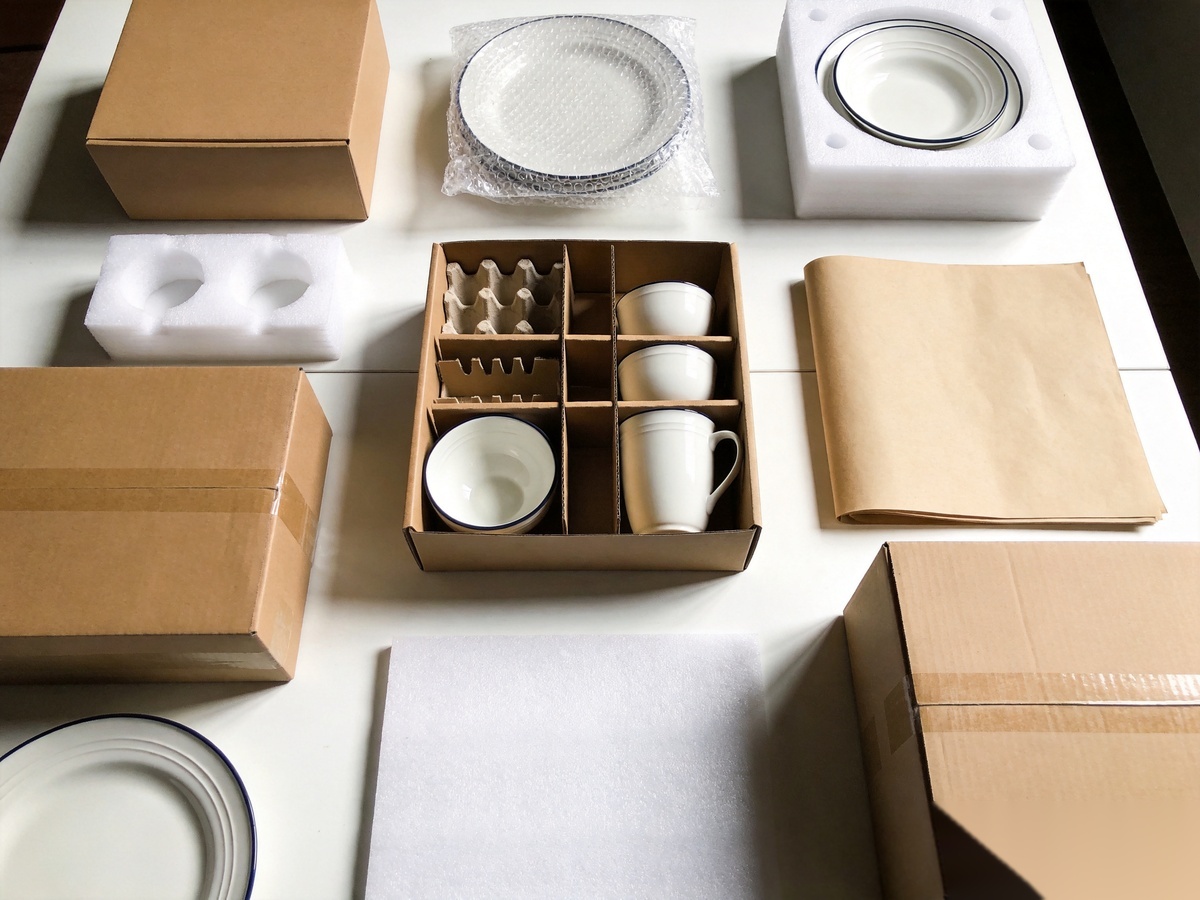
Selecting the right combination of packaging materials is the foundation of safe ceramic packaging shipping. Here are the most effective options used by professional exporters:
1. Inner Wrapping: Individual Item Protection
Every ceramic piece should be individually wrapped before being placed in any secondary packaging:
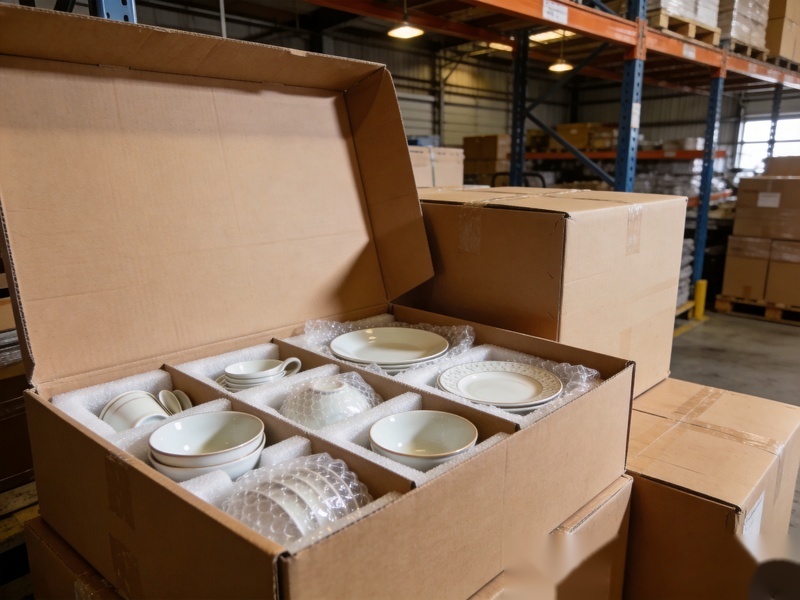
- EPE foam sheets (1-3mm): Lightweight, cushioning, and moisture-resistant — the industry standard for premium ceramics
- Bubble wrap (large bubble): Cost-effective cushioning for mid-range products; use at least two layers
- Kraft paper wrapping: Eco-friendly option for sturdy items like stoneware mugs and plates
- PE foam corner protectors: Essential for items with handles, spouts, or protruding edges
2. Divider Systems: Preventing Item-to-Item Contact
When stacking plates or nesting bowls, dividers are non-negotiable for ceramic packaging shipping:
- Corrugated cardboard dividers: Most common; use double-wall for heavy stoneware
- Foam grid separators: Premium option for fine bone china and decorated pieces
- Honeycomb paper pads: Sustainable alternative that provides excellent cushioning between items
3. Outer Packaging: The First Line of Defense
The outer carton must withstand stacking, handling, and potential drops:
- Double-wall corrugated boxes (BC flute): Standard for most ceramic exports; burst strength of 12 kg/cm2 or higher
- Triple-wall boxes: Required for large or heavy items exceeding 20 kg per carton
- Reinforced corners: Add corner boards or edge protectors for long-distance shipping
- Water-resistant coating: Essential for ocean freight to protect against humidity and condensation
Ceramic Packaging Shipping: Container Loading Best Practices
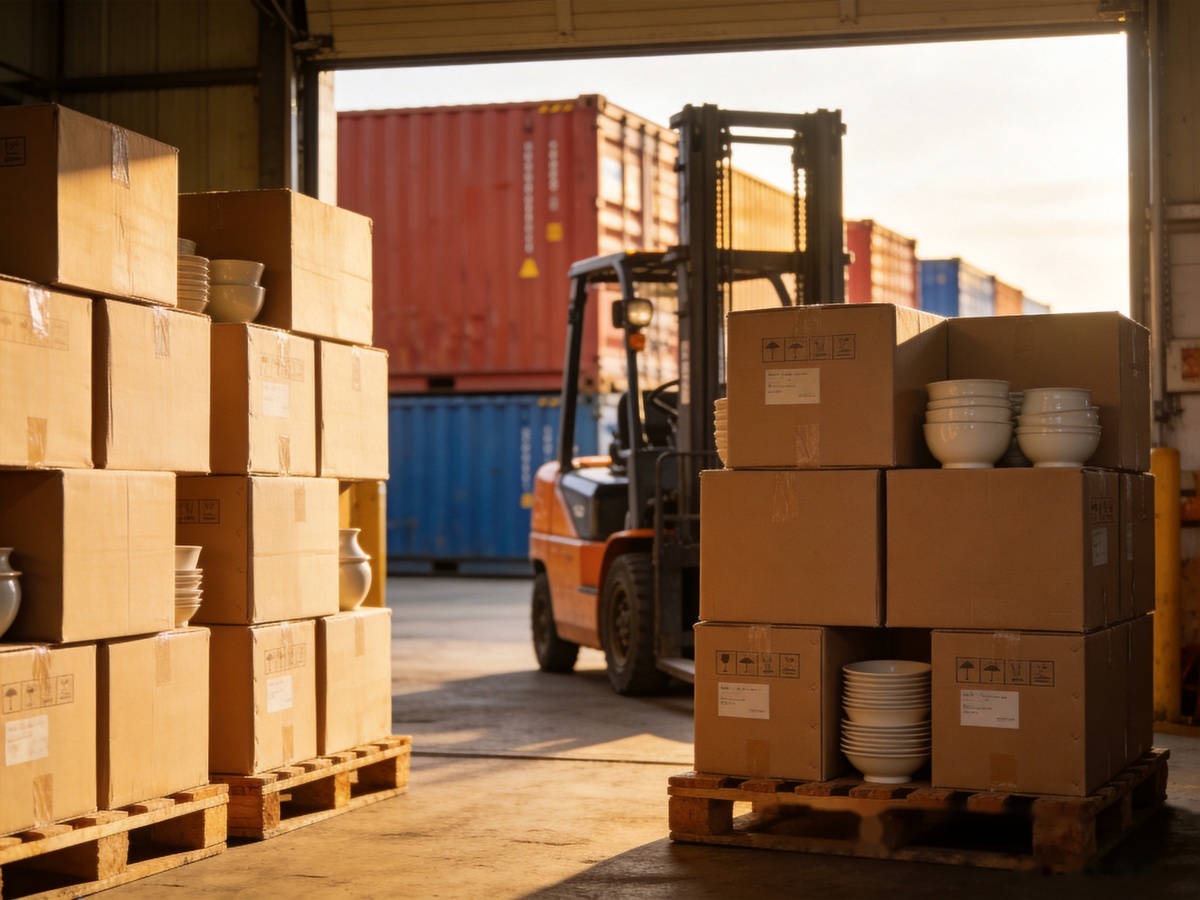
Even the best packaging fails if containers are loaded incorrectly. Proper container loading is a critical component of ceramic packaging shipping that reduces transit damage by up to 80%.
Weight Distribution
Heavier cartons should be placed at the bottom and toward the center of the container. Lighter items go on top. Uneven weight distribution causes shifting during transit, which is one of the leading causes of ceramic breakage.
Eliminating Empty Spaces
Void spaces in a container allow cargo to shift. Use the following to fill gaps:
- Dunnage bags (air bags): Inflatable cushions placed between pallets — the gold standard for securing ceramic shipments
- Foam boards: Placed against container walls to absorb lateral impact
- Cardboard filler blocks: Cost-effective for smaller gaps between cartons
- Strapping and lashing: Secures pallets to container anchor points to prevent movement
Palletization Standards
For ceramic packaging shipping, palletization should follow these guidelines:
- Use fumigated wooden pallets or plastic pallets (ISPM-15 compliant for international shipping)
- Stack cartons in interlocking patterns for stability — avoid column stacking
- Wrap completed pallets with stretch film (minimum 4 layers) and secure with PP strapping
- Maximum pallet height: 1.2m for 20ft containers, 1.4m for 40ft containers
- Label each pallet with handling instructions: FRAGILE, THIS SIDE UP, and DO NOT STACK
Choosing the Right Freight Method for Ceramic Packaging Shipping
The shipping method you choose affects both cost and risk. Here is a comparison of common options for ceramic packaging shipping:
Sea Freight (FCL — Full Container Load)
The most economical choice for bulk ceramic orders. A 20ft container can hold approximately 25-28 CBM of packaged ceramics. Key considerations:
- Transit time: 25-45 days depending on route
- Use desiccant packs (silica gel or clay) to control humidity inside the container
- Request below-deck stowage to minimize temperature extremes
- Consider container insurance — typically 0.3-0.5% of cargo value
Sea Freight (LCL — Less than Container Load)
For smaller orders, LCL is viable but carries higher risk due to multiple handling points. Extra packaging precautions are essential:
- Use triple-wall cartons even for small shipments
- Add extra cushioning (50% more than FCL packaging)
- Clearly label FRAGILE — CERAMIC TABLEWARE on all sides
- Request direct consolidation to minimize transshipment
Rail Freight (China-Europe Routes)
An increasingly popular middle ground for ceramic packaging shipping to European markets:
- Transit time: 15-20 days (faster than sea, cheaper than air)
- Less vibration than road transport, more stable than sea
- Growing network connecting Chinese ceramic hubs to European distribution centers
Ceramic Packaging Shipping Cost Optimization Strategies
Packaging and shipping costs typically add 8-15% to the FOB price of ceramic products. Smart buyers optimize these costs without compromising protection:
- Right-size your cartons: Oversized boxes waste space and increase volumetric shipping costs. Design cartons to fit products snugly with just enough cushioning space (2-3 cm on each side).
- Nest products intelligently: Bowls and cups can be nested with dividers, reducing per-unit packaging volume by 20-30%.
- Negotiate packaging included in FOB price: Many factories include basic packaging in their quote. Specify your requirements upfront to avoid surprise surcharges.
- Consolidate orders: Combining multiple product types into one FCL shipment reduces per-unit shipping costs significantly.
- Use lightweight packaging materials: EPE foam weighs less than bubble wrap at equivalent protection levels, reducing overall shipment weight.
- Plan container loading in advance: Use 3D loading software to maximize space utilization — every cubic meter counts.
International Ceramic Packaging Shipping Compliance and Documentation
Ceramic packaging shipping involves several regulatory requirements that vary by destination market:
Packaging Compliance
- ISPM-15: All wooden packaging materials (pallets, crates) must be heat-treated or fumigated and bear the IPPC stamp for international shipping
- EU Packaging Directive: Packaging must meet minimum recycling and recovery standards; consider recyclable materials for European markets
- US DOT regulations: Specific labeling requirements for fragile goods transported by road within the United States
Shipping Documentation
- Commercial Invoice: Must accurately describe ceramic products, quantities, and values
- Packing List: Detailed breakdown of carton contents, weights, and dimensions
- Certificate of Origin: Required for preferential tariff treatment under trade agreements
- Fumigation Certificate: Proof of wooden packaging treatment (ISPM-15 compliance)
- Insurance Certificate: Recommended for all ceramic shipments given breakage risk
Quality Control: Inspecting Ceramic Packaging Shipping Before Dispatch
A pre-shipment inspection focused on packaging can prevent costly surprises. Here is what to check during ceramic packaging shipping QC:
- Drop test: Randomly select 2-3 packed cartons and perform a 1-meter drop test on all six faces — no breakage should occur
- Vibration simulation: Professional inspection agencies can simulate transit vibration to verify packaging adequacy
- Carton integrity: Check for proper sealing, correct labeling, and structural soundness
- Inner packaging verification: Open sample cartons to confirm individual wrapping, dividers, and cushioning meet specifications
- Container condition: Inspect the container for holes, moisture, or structural damage before loading
- Loading supervision: Have a QC representative present during container loading to ensure proper stacking and securing
For a more detailed approach to supplier evaluation, our China ceramic production regions guide covers how different manufacturing areas handle packaging standards differently.
Frequently Asked Questions About Ceramic Packaging Shipping
Q: What is the typical breakage rate for ceramic packaging shipping?
With proper packaging and container loading, the breakage rate should be below 2-3%. Poorly packaged shipments can see rates of 15% or higher. Always specify packaging requirements in your purchase contract and conduct pre-shipment inspections.
Q: Should I choose FOB or CIF for ceramic packaging shipping?
FOB gives you more control over shipping arrangements and often results in lower overall costs, especially for experienced importers. CIF is simpler for beginners but the seller’s shipping agent may not prioritize ceramic-specific handling. We recommend FOB for orders above $10,000.
Q: How much does ceramic packaging add to the product cost?
Standard export packaging typically adds $0.15-$0.50 per piece depending on product size and protection level. Premium packaging with custom foam inserts may cost $0.50-$1.20 per piece. This investment is well justified when compared to the cost of breakage and customer complaints.
Q: Can I reuse ceramic packaging materials for redistribution?
Yes, many packaging materials like EPE foam, corrugated dividers, and outer cartons can be reused if they remain in good condition. Design your packaging with potential reuse in mind — it reduces waste and can lower your warehousing costs.
Q: What insurance coverage is recommended for ceramic packaging shipping?
We recommend All Risks marine cargo insurance covering 110% of CIF value. This covers breakage, water damage, theft, and general average. Premium rates for ceramics are typically 0.3-0.8% of insured value — a small price for peace of mind on fragile cargo.
Start Your Ceramic Packaging Shipping Journey with CeraSupply
Getting ceramic packaging shipping right requires experience, attention to detail, and a reliable manufacturing partner. At CeraSupply, every order ships with professional export-grade packaging — individually wrapped items, reinforced cartons, proper palletization, and container loading supervised by our QC team.
Whether you are importing 500 pieces or 50,000, we ensure your ceramic tableware arrives in perfect condition, every time. Browse our product catalog to explore our full range, or explore more sourcing guides and industry insights.
Ready to get started? Contact us on WhatsApp for a free quote with packaging specifications tailored to your products and destination market.