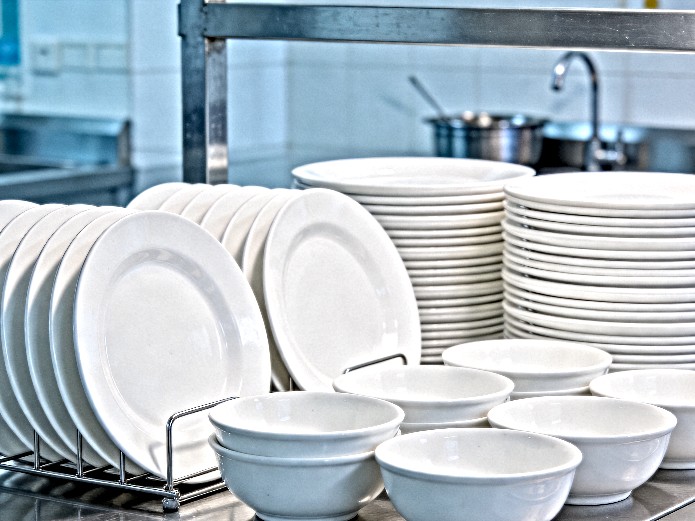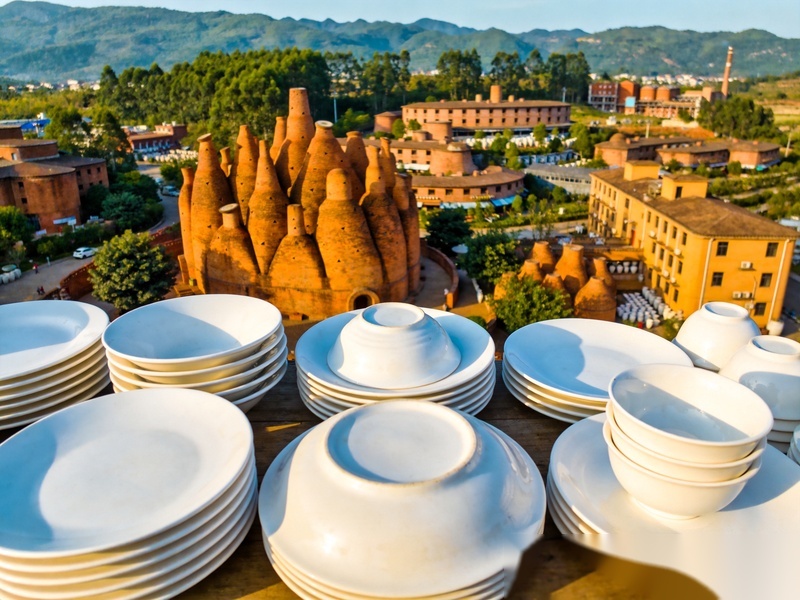
When sourcing ceramic tableware in bulk, understanding the ceramic production regions in China is essential for making informed purchasing decisions. China produces over 70% of the world’s ceramic tableware, but quality, price, and specialization vary dramatically across different manufacturing hubs. This guide covers the four most important ceramic production regions in China — Jingdezhen, Chaozhou, Dehua, and Liling — helping B2B buyers identify which region best matches their product requirements, order volume, and quality standards.
Why Ceramic Production Regions in China Matter for Bulk Buyers
Not all ceramic factories are created equal. Each of the major ceramic production regions in China has developed distinct capabilities over centuries of specialization. A factory in Jingdezhen that excels at hand-painted artisan porcelain may not be the right partner for a 50,000-piece order of stackable restaurant plates. Similarly, a Chaozhou factory optimized for mass production might not offer the artisanal finishing that a luxury hotel chain requires.
For bulk buyers, importers, and hospitality procurement managers, knowing which region aligns with your specific needs can save thousands of dollars in sampling costs, reduce lead times by weeks, and dramatically improve product-market fit. Let’s explore each region in detail.
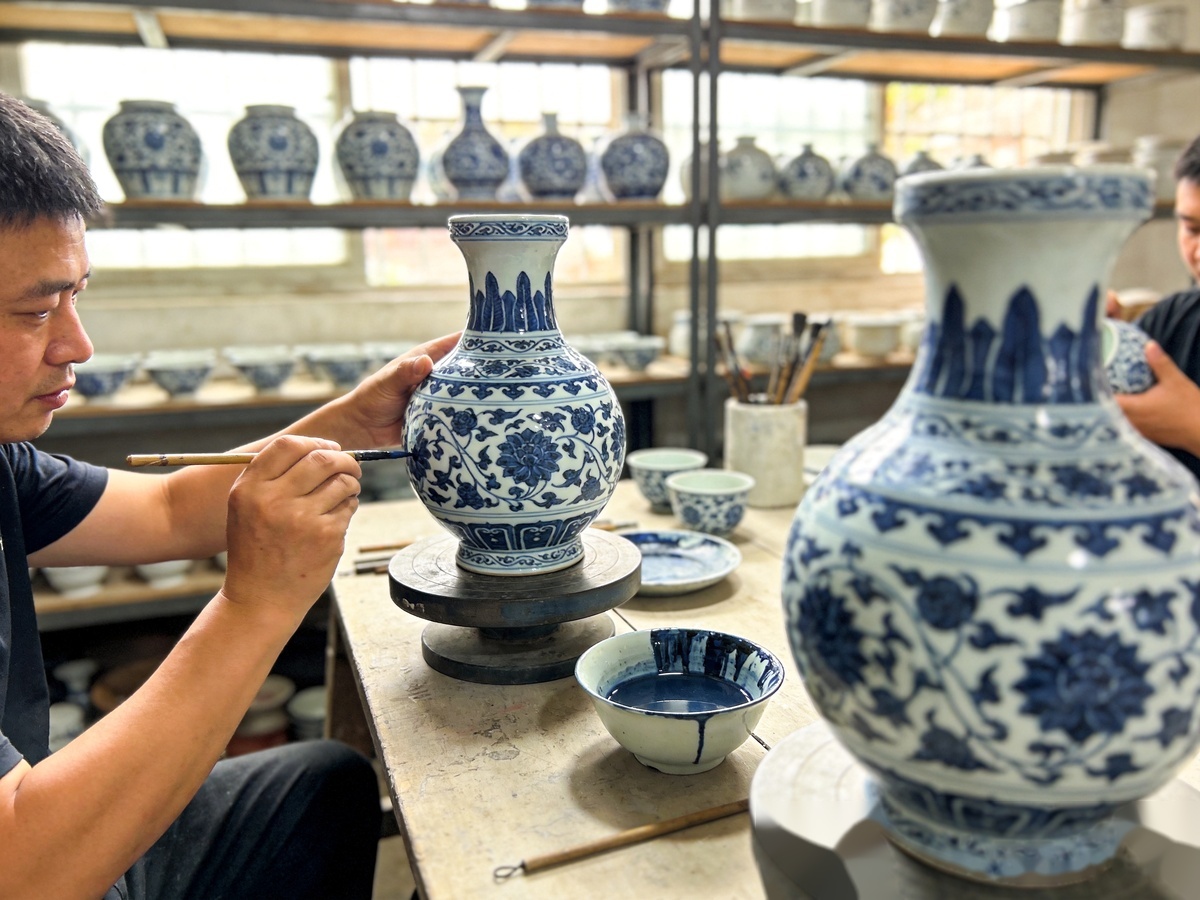
Jingdezhen: The Porcelain Capital of Ceramic Production Regions in China
Overview and Heritage
Jingdezhen, located in Jiangxi Province, has been the epicenter of Chinese porcelain production for over 1,700 years. Known as the “Porcelain Capital,” this city is synonymous with the highest quality ceramic craftsmanship in the world. The region’s unique kaolin clay deposits and centuries of accumulated expertise make it irreplaceable for premium ceramic production.
Key Strengths
- Premium blue-and-white porcelain — the iconic Qinghua style, perfect for high-end restaurant and hotel collections
- Hand-painted artistry — skilled artisans capable of intricate custom designs and decorative patterns
- Specialty glazes — including famille rose, underglaze blue, and celadon finishes
- Art and gift porcelain — vases, tea sets, and decorative items with strong collectible value
- Custom OEM capabilities — many factories accept bespoke designs for luxury brands
Best Suited For
Jingdezhen is ideal for buyers seeking premium-quality porcelain with artistic value, luxury hospitality tableware, custom-designed collections, and decorative ceramic products. MOQs tend to be moderate (500–2,000 pieces per design), and prices are higher than mass-production regions, but the quality and craftsmanship justify the investment for mid-to-high-end markets.
Practical Sourcing Tips
- Visit during the annual Jingdezhen International Ceramic Expo (October) to see the full range of factory capabilities
- Request samples from at least 3–5 factories before committing — craftsmanship varies significantly even within the city
- For bulk orders, focus on factories in the Jingdezhen High-Tech Industrial Zone where production is more standardized
- Allow 30–45 days production time for hand-painted items
Chaozhou: The Mass Production Powerhouse Among Ceramic Production Regions in China
Overview and Scale
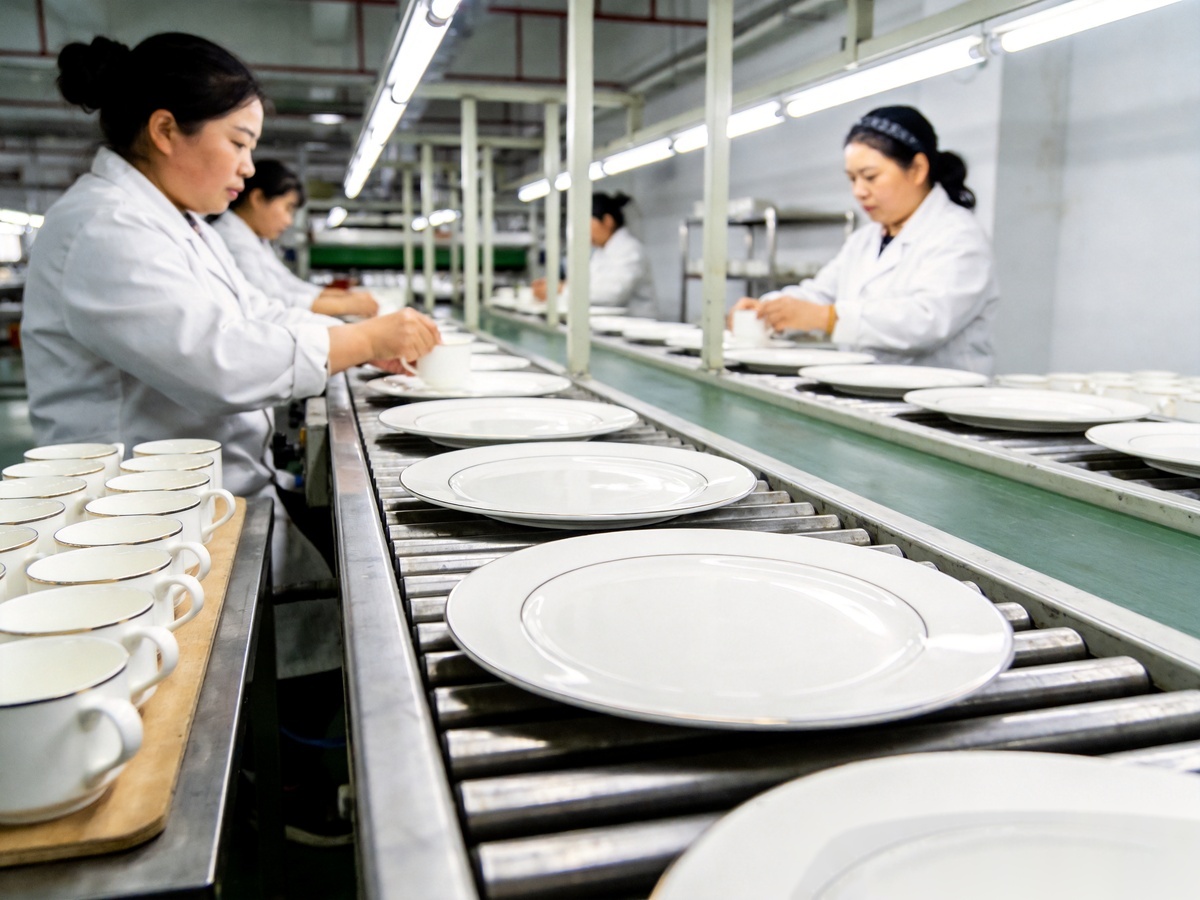
Chaozhou, in Guangdong Province, is the world’s largest ceramic tableware manufacturing hub. The city produces billions of pieces annually, accounting for roughly 40% of China’s total ceramic tableware exports. If you’ve ever purchased white porcelain plates from a major retailer, there’s a strong chance they originated from Chaozhou. This region is the undisputed leader in cost-efficient, high-volume ceramic production.
Key Strengths
- Unmatched production scale — factories capable of producing 100,000+ pieces per order with consistent quality
- Competitive pricing — FOB prices 20–40% lower than Jingdezhen for standard white porcelain
- Wide product range — dinner plates, bowls, mugs, cups, saucers, serving dishes in every shape and size
- Advanced automation — isostatic pressing, automatic glazing lines, and tunnel kilns for consistent output
- Export-ready compliance — most factories already hold FDA, LFGB, SGS, and BSCI certifications
- Fast turnaround — standard production lead time of 25–35 days for bulk orders
Best Suited For
Chaozhou is the go-to region for large-volume orders of standard ceramic tableware. Restaurant chains, hotel groups, supermarket private labels, and wholesale distributors benefit most from Chaozhou’s combination of scale, price, and reliability. MOQs are typically 3,000–5,000 pieces per shape, with some factories accepting as low as 1,000 for stock items.
Practical Sourcing Tips
- Focus on factories in Fengxi District and Chao’an District — these are the main ceramic industrial zones
- Request a factory audit or third-party inspection before first orders — scale doesn’t automatically mean quality
- Ask for product testing certificates (lead and cadmium release) specific to your destination market
- Consider visiting during the Canton Fair (April/October) where hundreds of Chaozhou factories exhibit
Dehua: White Porcelain Specialist Among China’s Ceramic Production Regions
Overview and Specialization
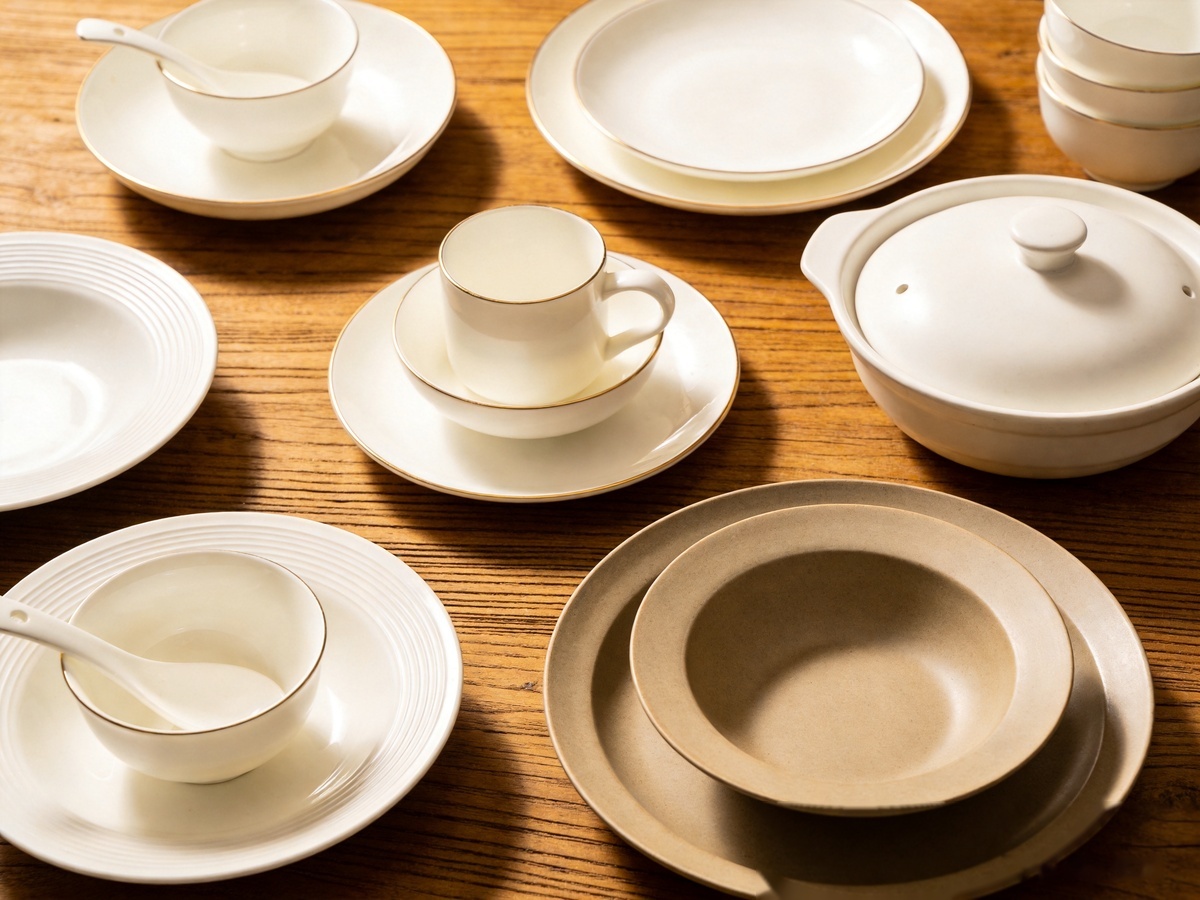
Dehua County in Fujian Province is renowned for its “Blanc de Chine” — the pure white porcelain that has captivated collectors and buyers for over 600 years. Today, Dehua is one of the most important ceramic production regions in China, combining its traditional white porcelain heritage with modern manufacturing capabilities. The region specializes in white porcelain tableware, ceramic crafts, and export-oriented production.
Key Strengths
- Premium white porcelain — exceptional whiteness (95%+ whiteness index) and translucency
- Sculptural ceramics — figurines, decorative items, and artistic pieces with fine detail
- Tea ware specialization — gaiwans, tea cups, and tea sets popular in both domestic and export markets
- Competitive mid-range pricing — 10–20% cheaper than Jingdezhen but higher quality than basic Chaozhou output
- E-commerce ready — many factories produce retail-packaged products suitable for Amazon, Etsy, and DTC brands
- Cross-border e-commerce experience — factories familiar with FBA requirements and small-parcel shipping
Best Suited For
Dehua is perfect for buyers looking for high-quality white porcelain at moderate prices, tea ware collections, e-commerce product lines, and gift/souvenir ceramics. It’s particularly attractive for DTC brands and Amazon sellers who need retail-ready packaging and smaller MOQs (500–2,000 pieces).
Practical Sourcing Tips
- Request whiteness index data when comparing factories — the difference between 85% and 95% whiteness is dramatic
- Dehua factories are generally more flexible with custom packaging and small batch orders
- For tea ware, ask about heat retention testing and food safety compliance for your target market
- Consider combining orders with Jingdezhen (only 300km away) for diversified product lines
Liling: The Underglaze Multicolor Pioneer in China’s Ceramic Production Regions
Overview and Innovation
Liling, located in Hunan Province, is China’s youngest major ceramic production region but has rapidly grown into a significant hub. Known for pioneering underglaze multicolor (釉下五彩) technology, Liling produces distinctive ceramic products that combine vibrant color with food-safe glazes. The region has become increasingly important for B2B buyers seeking colorful, durable, and compliant ceramic tableware.
Key Strengths
- Underglaze multicolor printing — vibrant, fade-resistant designs that are completely food-safe (colors are sealed under the glaze)
- Daily-use tableware — affordable, durable ceramic products ideal for restaurants and cafeterias
- Government/state porcelain heritage — Liling produced official porcelain for Chinese state banquets
- Modern production lines — newer factories with updated equipment and quality management systems
- Competitive pricing — comparable to Chaozhou for standard items, with better color options
Best Suited For
Liling is excellent for buyers who need colorful, patterned tableware without the food safety concerns of overglaze decoration. Restaurant chains, school cafeterias, and institutional buyers benefit from Liling’s combination of durability, compliance, and visual variety. MOQs typically range from 2,000–5,000 pieces.
Comparison Table: Ceramic Production Regions in China at a Glance
Here’s a quick reference to help you compare the four major ceramic production regions in China:
| Factor | Jingdezhen | Chaozhou | Dehua | Liling |
|---|---|---|---|---|
| Specialty | Premium hand-painted porcelain | Mass-production tableware | White porcelain & tea ware | Underglaze multicolor |
| Price Range | $$$ | $ | $$ | $–$$ |
| Typical MOQ | 500–2,000 pcs | 3,000–5,000 pcs | 500–2,000 pcs | 2,000–5,000 pcs |
| Lead Time | 30–45 days | 25–35 days | 25–40 days | 25–35 days |
| Best For | Luxury / custom | High volume / standard | E-commerce / white ware | Colorful / institutional |
| Key Certifications | ISO, some FDA | FDA, LFGB, BSCI, SGS | FDA, LFGB | FDA, ISO |
How to Choose the Right Ceramic Production Region for Your Business
Selecting the right ceramic production region depends on several factors. Here’s a decision framework for bulk buyers:
Step 1: Define Your Product Requirements
- Product type — Standard daily-use tableware? Luxury hospitality sets? Tea ware? Decorative items?
- Design complexity — Solid colors? Simple patterns? Intricate hand-painted designs?
- Volume — Under 2,000 pieces? 5,000–20,000? Over 50,000?
- Quality tier — Budget, mid-range, or premium?
Step 2: Match Region to Requirements
- Premium + custom + hand-painted → Jingdezhen
- High volume + standard + budget → Chaozhou
- White porcelain + e-commerce + tea ware → Dehua
- Colorful patterns + food safety + institutional → Liling
Step 3: Verify and Validate
Once you’ve identified the target region, request samples from 3–5 factories, conduct a factory audit, and verify all relevant certifications before placing your first order. Learn more about OEM/ODM customization options available across different regions.
Frequently Asked Questions About Ceramic Production Regions in China
Q1: Which ceramic production region in China offers the lowest prices for bulk orders?
Chaozhou generally offers the most competitive prices for standard ceramic tableware in bulk quantities. Its massive scale, automated production lines, and mature supply chain allow factories to achieve economies of scale that other regions cannot match. For orders above 10,000 pieces, Chaozhou factories can often offer FOB prices 20–40% lower than other regions.
Q2: Can I source products from multiple ceramic production regions in China for a single order?
Absolutely. Many experienced importers combine sourcing from different regions — for example, ordering premium hand-painted serving pieces from Jingdezhen alongside mass-produced standard plates from Chaozhou. Working with a sourcing partner who has factory relationships across multiple regions can help consolidate shipments and simplify logistics.
Q3: Are there food safety differences between ceramic production regions in China?
All major ceramic production regions in China can produce food-safe products that meet international standards (FDA, LFGB, EU Regulation 1935/2004). However, not all factories in every region maintain these certifications. Always request specific testing certificates for your destination market, regardless of the region. Liling’s underglaze technology has a natural advantage for food safety since the color pigments are sealed beneath the glaze layer.
Q4: What is the best time of year to visit China’s ceramic production regions?
The Canton Fair in April and October is the best window for visiting, as hundreds of factories from all regions exhibit in Guangzhou. For Jingdezhen specifically, the International Ceramic Expo in October is worth attending. Avoid Chinese New Year (January/February) and the National Day holiday week (October 1–7), when factories shut down.
Q5: How do I verify the quality of a ceramic factory before placing a bulk order?
Follow a structured quality inspection process that includes requesting product samples, reviewing third-party audit reports (BSCI, ISO), checking food safety test certificates, and ideally conducting an on-site factory visit. For remote verification, consider hiring a third-party inspection service like SGS or Bureau Veritas.
Start Sourcing from China’s Best Ceramic Production Regions Today
Understanding the ceramic production regions in China is the foundation of smart ceramic sourcing. Whether you need premium hand-painted porcelain from Jingdezhen, high-volume standard tableware from Chaozhou, elegant white porcelain from Dehua, or colorful underglaze designs from Liling, knowing where to look saves time, money, and headaches.
Ready to start sourcing? Our team at CeraSupply works with verified factories across all major ceramic production regions in China. We help B2B buyers navigate the complexities of ceramic procurement — from factory selection and sample management to quality inspection and shipping logistics.
Get a free quote today and let us connect you with the right factory in the right region for your specific needs.