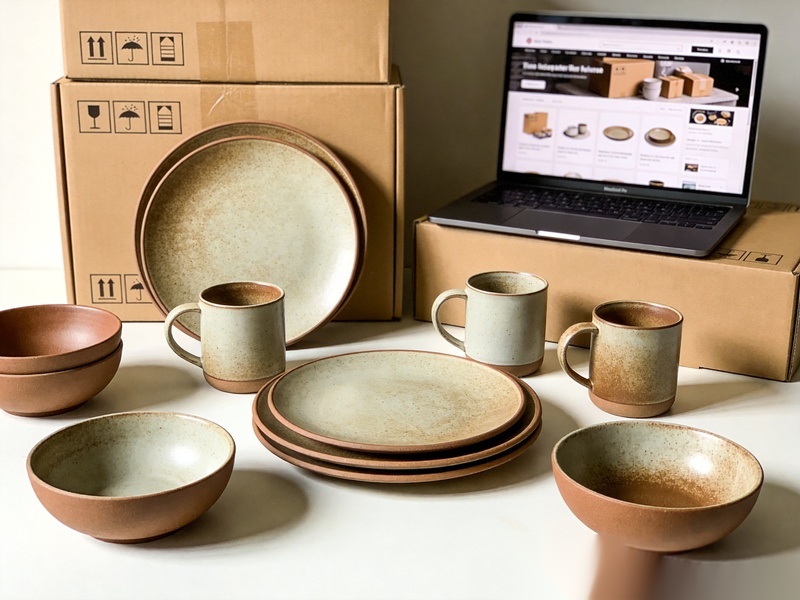
Ceramic tableware for e-commerce is one of the fastest-growing product categories in online retail. With global demand for artisanal, handcrafted, and premium dining experiences rising, sellers on platforms like Amazon, Etsy, Shopify, and independent online stores are discovering that ceramic tableware offers exceptional profit margins and strong repeat-purchase potential. However, succeeding in this niche requires more than simply listing a few mugs and plates — it demands a strategic approach to product selection, supplier sourcing, visual merchandising, and marketplace optimization.
This guide provides a complete framework for e-commerce sellers who want to build a profitable ceramic tableware business online. Whether you are launching a new store or expanding an existing product line, the strategies outlined here will help you make data-driven decisions that maximize revenue while minimizing risk.
Why Ceramic Tableware for E-commerce Is a High-Potential Category
The global ceramic tableware market is projected to exceed $10 billion by 2028, driven by the growing preference for premium, sustainable, and aesthetically distinctive dining products. For e-commerce sellers, ceramic tableware for e-commerce offers several structural advantages:
- High perceived value: Handcrafted and artisan ceramics command premium pricing compared to mass-produced alternatives, allowing sellers to maintain healthy margins even after platform fees.
- Strong visual appeal: Ceramic products photograph beautifully, making them ideal for image-driven platforms like Instagram Shopping, Pinterest, and Etsy where visual content drives conversions.
- Gift-oriented purchasing: Ceramic tableware sets are popular gift items, creating natural demand spikes during holidays, wedding seasons, and corporate gifting periods.
- Repeat purchase behavior: Customers who buy ceramic tableware often return for complementary pieces — additional place settings, serving bowls, or matching accessories — creating a built-in upsell funnel.
- Sustainability positioning: Ceramic is a natural, long-lasting material that appeals to eco-conscious consumers who are willing to pay more for sustainable alternatives to disposable or plastic products.
How to Select the Right Ceramic Tableware for E-commerce Products
Not all ceramic tableware sells equally well online. The key to building a profitable e-commerce ceramic business lies in selecting products that align with online buyer behavior, shipping logistics, and marketplace algorithms. Here are the critical selection criteria for ceramic tableware for e-commerce:
1. Prioritize Products with Strong Visual Differentiation
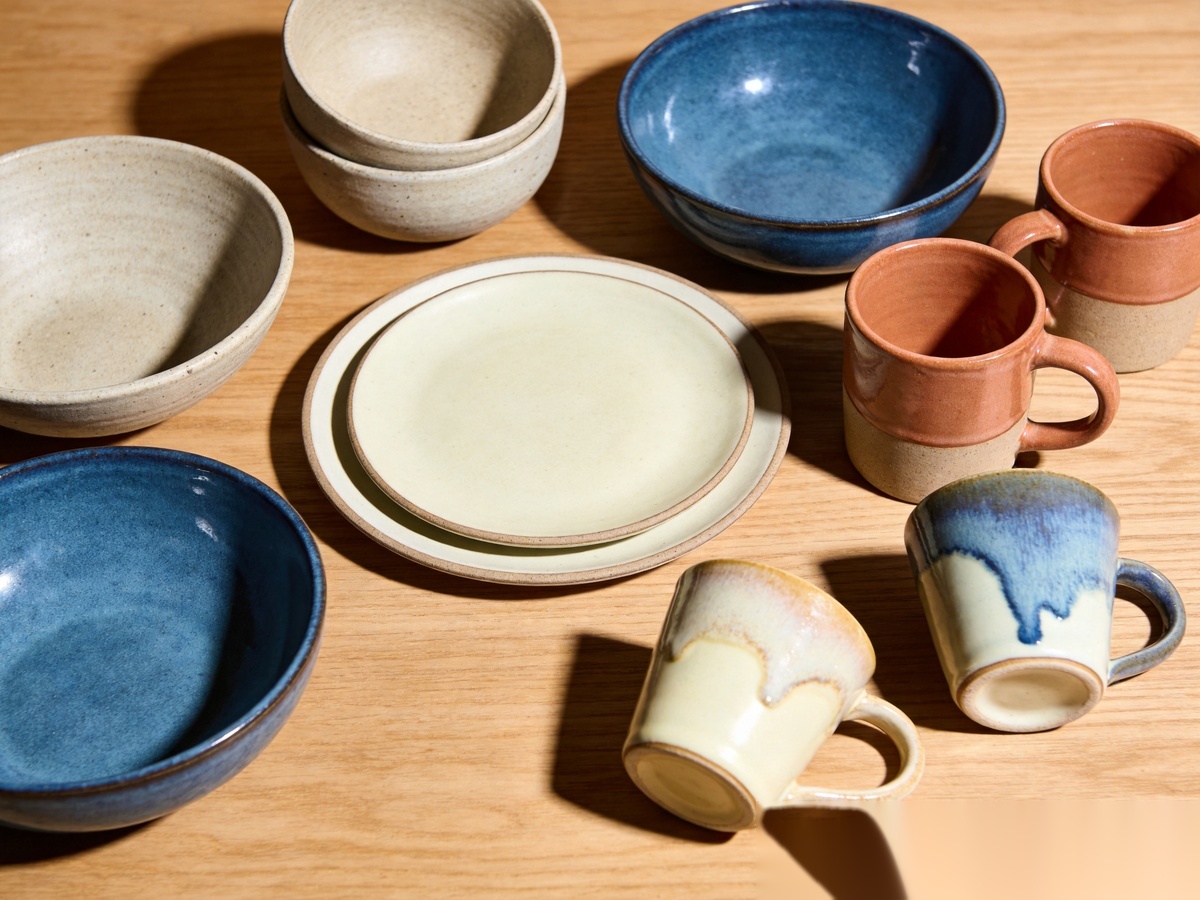
Online shoppers scroll through hundreds of listings in seconds. Ceramic tableware for e-commerce must stand out visually to earn the click. Products with distinctive glaze patterns, unique shapes, or bold color palettes consistently outperform generic white plates in click-through rates. Reactive glazes, hand-painted designs, and wabi-sabi aesthetics are particularly popular among online buyers seeking artisan quality.
2. Focus on Sets and Bundles for Higher Average Order Value
Selling individual pieces online is challenging due to shipping cost ratios. A single mug may sell for $15, but the packaging and shipping cost might consume most of the margin. Instead, focus on curated sets — dinnerware sets for 4, coffee cup collections, or serving bowl bundles — that push the average order value above $60. This creates enough margin to absorb shipping costs while still offering competitive pricing.
3. Choose Products That Ship Well
Ceramic tableware is inherently fragile, but some products ship much better than others. Thick-walled mugs, stoneware bowls, and dense porcelain plates are far less prone to breakage than delicate teacups or thin-rimmed platters. When selecting ceramic tableware for e-commerce, always factor in the breakage rate during transit — even a 5% damage rate can erase your profit margin on low-ticket items.
Ceramic Tableware for E-commerce: Sourcing Strategy and Supplier Selection
Once you have identified the product categories you want to sell, the next step is finding reliable suppliers who can deliver consistent quality at scale. China remains the world’s leading ceramic production hub, and sourcing directly from Chinese manufacturers offers significant cost advantages for e-commerce sellers.
Factory Direct vs. Trading Companies
For e-commerce sellers ordering in bulk, working directly with factories is generally the better option. Factory-direct sourcing eliminates the middleman markup (typically 15-30%), provides better quality control, and allows for custom designs that differentiate your listings from competitors. However, factories usually require higher minimum order quantities (MOQs), typically 500-1,000 pieces per SKU. For more details on sourcing advantages, explore our guide on factory-direct ceramic sourcing.
Trading companies are a viable alternative for sellers who are testing the market with smaller quantities. They offer lower MOQs, handle logistics, and can source from multiple factories to provide a broader product range. The trade-off is higher per-unit cost and less control over production quality.
Quality Control Before Shipping
Quality issues discovered after products arrive at your warehouse are exponentially more expensive to fix than catching them at the factory. Implement a pre-shipment inspection protocol for your ceramic tableware for e-commerce orders:
- Visual inspection: Check for glaze defects, color inconsistencies, chips, and cracks across a statistically significant sample (typically 10-15% of the order).
- Dimensional verification: Ensure products match the specified dimensions — even minor variations can affect stacking, packaging, and customer satisfaction.
- Functional testing: Test microwave safety, dishwasher resistance, and thermal shock tolerance on random samples from each production batch.
- Packaging audit: Verify that inner packaging provides adequate protection, outer cartons meet shipping standards, and labeling is correct for your target marketplace.
For a comprehensive quality control framework, refer to our established ceramic quality control checklist that covers every stage of the manufacturing process.
Listing Optimization: Making Your Ceramic Tableware for E-commerce Stand Out
Great products mean nothing if customers cannot find them. Listing optimization is the bridge between having excellent ceramic tableware and actually selling it online. Here is how to build listings that convert:
Product Photography That Sells
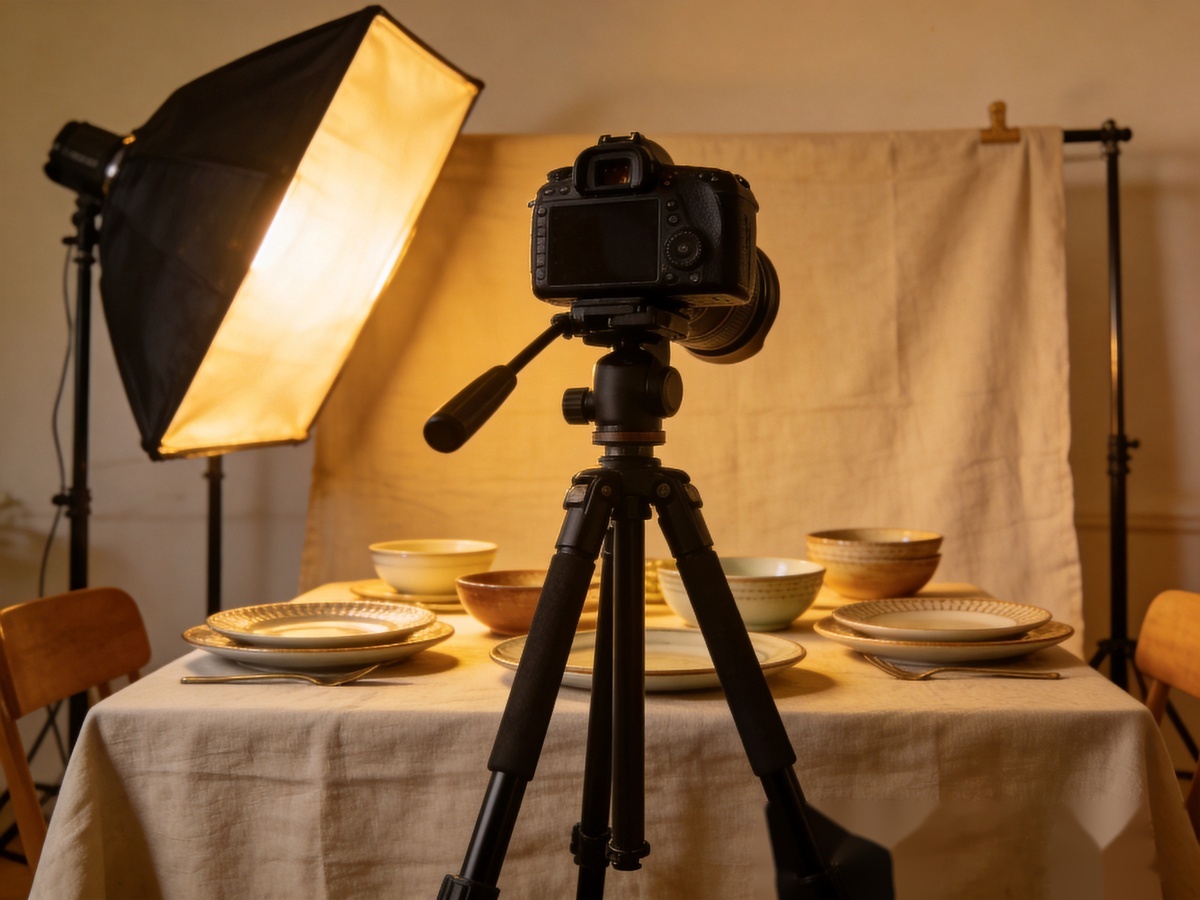
Ceramic tableware for e-commerce is a highly visual product category, and your photography is the single most important factor in conversion rates. Professional product photography for ceramics should include:
- Hero shots: Clean, well-lit images on a neutral background that showcase the product’s shape, glaze, and texture. Use natural or soft studio lighting to avoid harsh reflections on glazed surfaces.
- Lifestyle images: Styled table settings that help customers visualize how the products look in real dining scenarios. These images drive emotional connection and justify premium pricing.
- Detail shots: Close-ups of glaze texture, rim details, base markings, and any handcrafted elements that justify the price point and differentiate from mass-produced alternatives.
- Scale references: Include images that show the product’s size relative to common items — a hand holding a mug, food plated on a dinner plate, or a full table setting with multiple pieces.
Keyword-Rich Titles and Descriptions
Marketplace search algorithms rely heavily on titles and descriptions to match products with buyer queries. Your product titles should include the material (ceramic, stoneware, porcelain), product type (dinner plate, mug, serving bowl), style descriptor (rustic, modern, minimalist), and key attributes (microwave safe, dishwasher safe, set of 4). Avoid keyword stuffing — instead, write titles that read naturally while incorporating the terms your target customers actually search for.
Ceramic Tableware for E-commerce: Pricing Strategy and Margin Management
Pricing ceramic tableware for e-commerce requires balancing competitive positioning with sustainable profitability. Here is a framework for building your pricing strategy:
Understand Your True Cost Structure
Many e-commerce sellers underprice their products because they only account for the purchase price. Your true cost for ceramic tableware for e-commerce includes the product cost (FOB or CIF), international shipping and customs duties, domestic warehousing and fulfillment, packaging materials, marketplace commission fees (typically 8-15%), advertising spend, returns and breakage allowance (budget 3-5% for ceramics), and photography and listing creation costs. For a detailed cost breakdown, check our ceramic pricing analysis guide.
Tiered Pricing for Different Channels
Different sales channels have different cost structures and customer expectations. Your own Shopify store can support higher prices because you avoid marketplace commissions, while Amazon requires more competitive pricing due to direct comparison. Consider offering exclusive bundles or limited-edition designs on your own site to justify premium pricing, while maintaining value-oriented sets on high-volume marketplaces.
Seasonal Pricing Opportunities
Ceramic tableware demand follows predictable seasonal patterns. Q4 holiday season, Mother’s Day, and wedding season (spring and early summer) are peak periods when customers are less price-sensitive. Plan your sourcing calendar to have inventory in place 6-8 weeks before these peaks, and consider modest price increases during high-demand periods. Our seasonal sourcing calendar can help you time your purchases perfectly.
Inventory Management and Logistics for Ceramic E-commerce
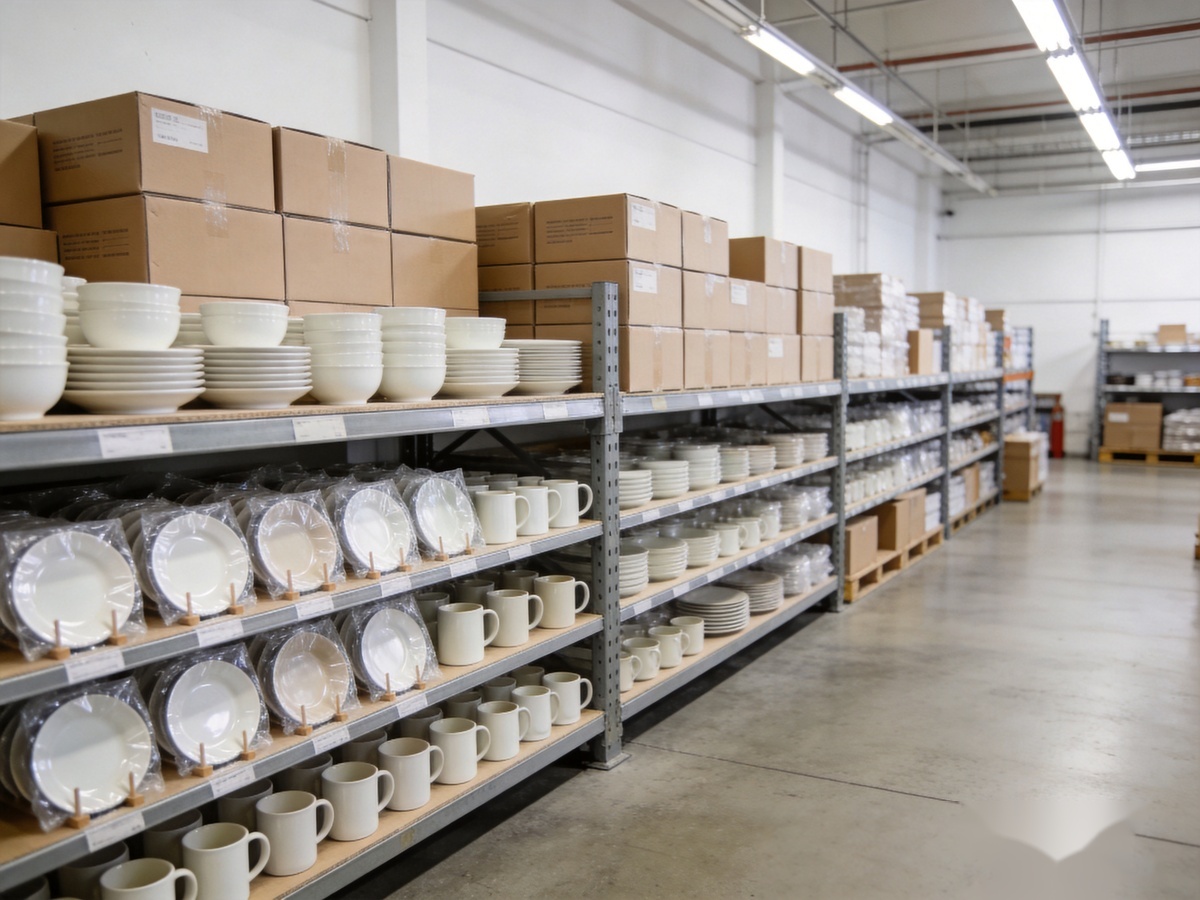
Ceramic tableware presents unique inventory challenges for e-commerce sellers. Products are heavy, fragile, and often come in multiple SKUs (individual pieces, sets, color variations). Here are strategies for managing ceramic tableware for e-commerce inventory efficiently:
- Start with a focused SKU count: Launch with 5-8 carefully curated products rather than 50 mediocre ones. This reduces initial investment, simplifies inventory management, and allows you to learn which products resonate with your audience before expanding.
- Use third-party fulfillment: Services like Amazon FBA or third-party logistics providers handle storage, packing, and shipping — reducing your breakage risk and freeing you to focus on marketing and product development.
- Implement FIFO inventory rotation: Ceramic glazes can vary slightly between production batches. Always sell older inventory first to maintain consistent product appearance across customer orders.
- Plan reorder points carefully: Ceramic production lead times are typically 30-45 days, plus 15-30 days for international shipping. Set reorder triggers when inventory reaches 4-6 weeks of projected sales to avoid stockouts during peak demand.
Building a Ceramic Tableware Brand for E-commerce Success
In a crowded online marketplace, building a recognizable brand is the most effective long-term strategy for ceramic tableware for e-commerce sellers. A strong brand creates customer loyalty, justifies premium pricing, and reduces dependence on paid advertising. Key brand-building strategies include:
- Consistent visual identity: Use cohesive photography styling, packaging design, and brand colors across all listings and marketing channels. Customers should instantly recognize your products in search results.
- Storytelling: Share the origin story of your ceramics — the artisans, the production process, the cultural heritage behind the designs. This narrative adds emotional value that commodity sellers cannot replicate.
- Customer experience: Premium unboxing experiences with branded packaging, care instruction cards, and personalized thank-you notes turn one-time buyers into repeat customers and brand advocates.
- Content marketing: Create blog content, social media posts, and email newsletters that educate customers about ceramic craftsmanship, table styling, and care tips. This positions your brand as a trusted authority in the ceramic tableware space.
For sellers interested in creating custom-branded ceramic products, exploring custom ceramic tableware options can be a powerful differentiator that sets your brand apart from generic competitors.
FAQ: Ceramic Tableware for E-commerce
Q1: What is the best platform for selling ceramic tableware online?
The best platform depends on your target market and product positioning. Etsy excels for artisan and handcrafted ceramics, Amazon provides the highest traffic volume for standardized products, and Shopify offers the most brand control for sellers building an independent identity. Many successful sellers operate across multiple platforms simultaneously.
Q2: How do I handle shipping breakage for ceramic products sold online?
Minimize breakage through professional packaging with individual foam inserts, double-boxing for fragile items, and clear “fragile” labeling. Budget 3-5% of revenue for breakage replacements, and consider shipping insurance for high-value orders. Working with experienced suppliers who understand export packaging standards is essential.
Q3: What MOQ should I expect when sourcing ceramic tableware for e-commerce?
Factory-direct MOQs typically range from 500 to 2,000 pieces per SKU, depending on the product complexity and customization level. Trading companies can offer lower MOQs of 100-300 pieces. For new sellers, starting with a trading company allows market testing before committing to larger factory orders.
Q4: How long does it take from order placement to having products ready to sell?
The total timeline from order to sale-ready inventory is typically 8-12 weeks: 30-45 days for production, 15-30 days for international shipping, and 5-10 days for receiving, quality inspection, and warehouse processing. Custom or OEM orders may require an additional 2-4 weeks for mold development and sample approval.
Q5: Is ceramic tableware profitable for small e-commerce sellers?
Yes, ceramic tableware can be highly profitable for small sellers who focus on differentiated products, strong branding, and efficient operations. The key is to avoid competing on price with mass-market sellers and instead position your offerings in the premium or artisan segment where margins are healthier and customer loyalty is stronger.
Take the Next Step in Your Ceramic Tableware for E-commerce Journey
Building a successful ceramic tableware e-commerce business requires thoughtful product selection, reliable supplier partnerships, and strategic listing optimization. By focusing on visually distinctive products, implementing rigorous quality control, and creating compelling brand experiences, you can carve out a profitable niche in this growing market. Whether you are just starting out or looking to scale an existing operation, the strategies in this guide provide a roadmap for sustainable growth in the online ceramic tableware space.
Ready to explore premium ceramic tableware options for your online store? Our team specializes in helping e-commerce sellers source high-quality, market-ready ceramic products from China’s top production regions. Get a free quote today and discover how we can help you build a ceramic tableware brand that stands out online.