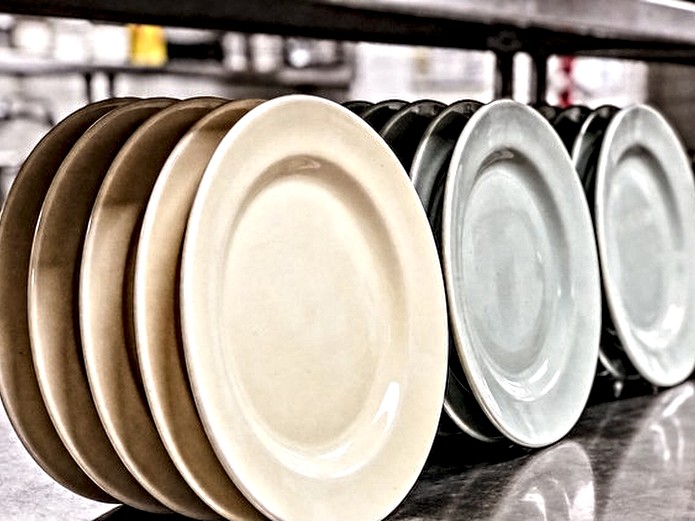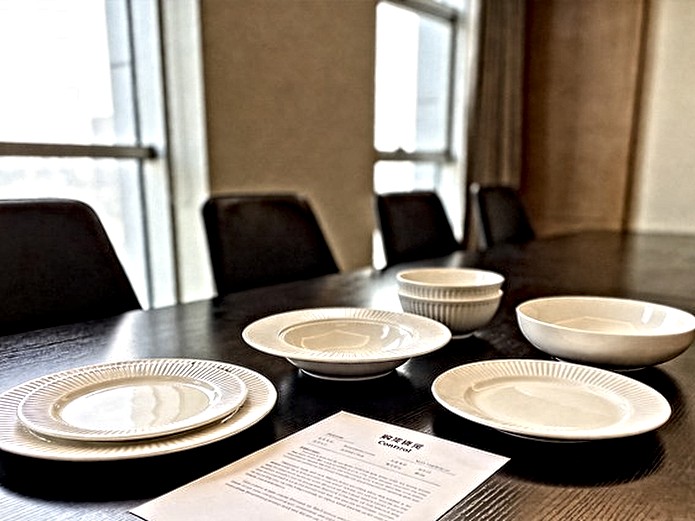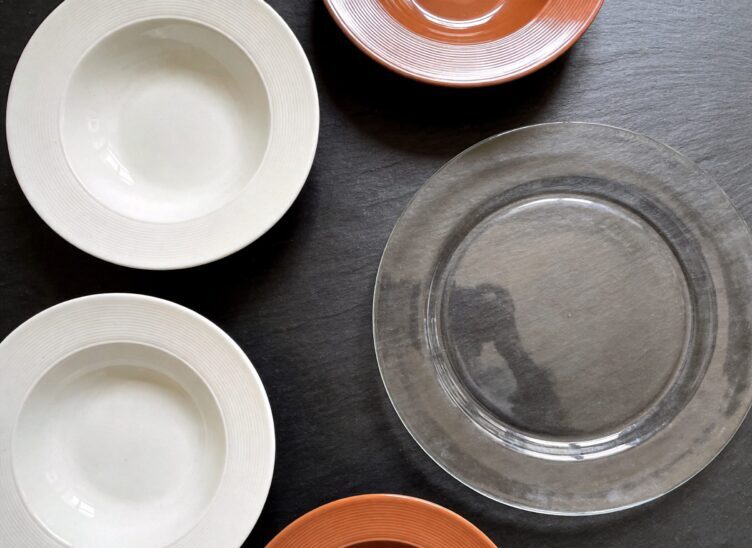
Conducting a thorough commercial tableware material comparison is essential for B2B buyers evaluating Ceramic, Melamine, and Tempered Glass. While ceramic wins on perceived value and heat retention, melamine wins on drop resistance, and glass wins on visual clarity. But the number that matters most for commercial buyers is cost-per-use — and that figure changes dramatically based on your operation type, dishwasher setup, and customer expectations. If you run a fast-casual chain, melamine may cut your tableware spend by half over three years. If you operate a boutique hotel restaurant, ceramic likely pays for itself through guest satisfaction and brand positioning. This article breaks down the real numbers, trade-offs, and sourcing considerations so you can make a decision grounded in your actual operation, not generic recommendations.
Commercial Tableware Material Comparison: Lifetime Costs
Most buyers look at unit price first. That is a mistake. A $3 melamine plate that chips in eight months and a $12 ceramic plate that lasts four years produce very different lifetime costs. Add dishwasher damage, replacement shipping, and the labor of swapping out broken stock, and the gap widens further.
Cost-per-use accounts for purchase price, expected lifespan, replacement frequency, and handling costs. For a plate used twice daily in a commercial setting, the calculation looks like this: (Unit Price + Replacement Cost Over Lifespan) / Total Uses. This metric reveals why some “cheap” materials become expensive and why some “premium” materials are more affordable than they appear.
Your service model also changes the math. A fine-dining restaurant where plates face gentle handling and one wash cycle per day has different durability demands than a university cafeteria where plates are stacked, dropped, and run through high-temp racks twelve times daily.
Cost-Per-Use Breakdown: Real Numbers for Commercial Buyers
The table below shows estimated cost-per-use ranges based on typical commercial usage patterns. These figures assume standard commercial dishwasher cycles, moderate handling, and mid-grade product sourcing. Your actual numbers will vary based on supplier quality and operational discipline.
| Material | Unit Price (FOB) | Est. Lifespan | Replacement Rate | Cost Per Use* |
|---|---|---|---|---|
| Durable Ceramic (stoneware, vitrified) | $4–$9 | 3–5 years | 5–10% annually | $0.003–$0.008 |
| Melamine (high-grade, NSF-certified) | $1.50–$4 | 1–2 years | 20–35% annually | $0.004–$0.012 |
| Tempered Glass (commercial grade) | $3–$7 | 2–4 years | 10–20% annually | $0.004–$0.010 |
| Premium Ceramic (porcelain, bone china) | $8–$18 | 4–7 years | 3–8% annually | $0.003–$0.007 |
*Cost per use assumes two uses per day, 350 operating days per year, and includes estimated replacement costs over the lifespan. [INTERNAL DATA REQUIRED] — Replace with your own field data for accuracy.
Three observations stand out. First, premium ceramic and durable ceramic overlap in cost-per-use despite large unit price differences — the longer lifespan of porcelain closes the gap. Second, melamine is not always the cheapest option; in high-volume operations with aggressive replacement cycles, it can exceed ceramic on a per-use basis. Third, tempered glass sits in the middle but carries hidden costs in breakage during temperature shifts.
Durability Grades and Replacement Cycle Reality
Durability in commercial settings is not about surviving a single drop test. It is about surviving thousands of thermal cycles, chemical exposures, and stacking pressures without showing wear that affects guest perception.
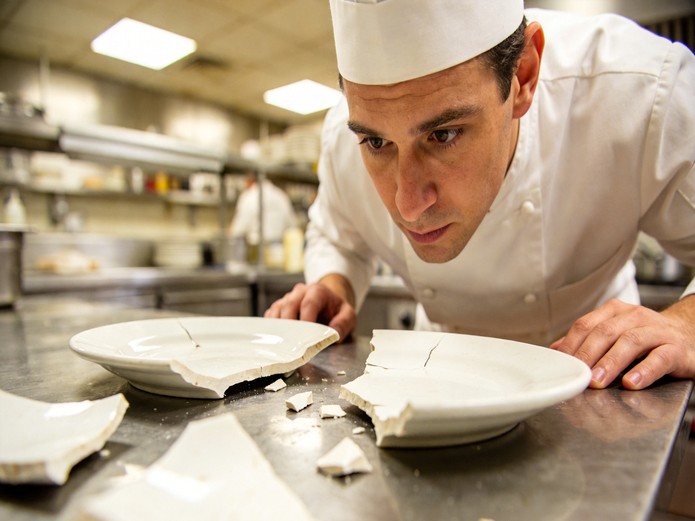
Ceramic fails through chipping, crazing (fine surface cracks), and glaze wear. Chipping usually happens at the rim and foot ring — the points that contact racks, other dishes, and hard surfaces. Crazing develops slowly under repeated thermal shock and can harbor bacteria even if the plate looks intact. Glaze wear dulls the surface over 2–3 years of commercial dishwasher exposure.
Melamine fails through surface scoring, staining, and structural fatigue. High-heat dishwasher cycles above 80°C accelerate degradation. Scored surfaces trap food particles and look permanently dirty — a bigger problem for guest-facing service than a small chip on ceramic. Melamine also yellows over time, especially with acidic foods and aggressive detergents.
Glass fails through thermal shock cracking and edge chipping. Tempered glass resists impact well but is vulnerable to rapid temperature changes — moving from a hot dishwasher to a cold prep area can cause spontaneous fracture. Edge chips on glass plates are also more visible than on ceramic because of the transparent nature of the material.
Dishwasher, Microwave, and Daily Wear Performance
Your equipment setup directly affects material lifespan. A high-temp conveyor dishwasher running at 82°C will shorten melamine life by 30–50% compared to low-temp chemical sanitizing units. Ceramic handles high heat well but is sensitive to thermal shock if removed wet and exposed to cold air drafts. Glass tolerates heat but must be cooled gradually.

Microwave compatibility is another practical concern. Ceramic is generally microwave-safe unless it contains metallic decorative elements. Melamine should never go in a microwave — it can warp, release formaldehyde, and create safety hazards. Tempered glass is microwave-safe but can overheat at contact points where food is unevenly distributed.
For operations that rely heavily on microwave reheating — hospital cafeterias, catering warm-holding stations, quick-service prep — melamine is essentially disqualified regardless of its other advantages.
Weight, Stackability, and Storage Economics
Storage space is real estate. The way each material stacks affects how many pieces fit per shelf, how stable tall stacks are, and how much labor is required to move stock from storage to service.
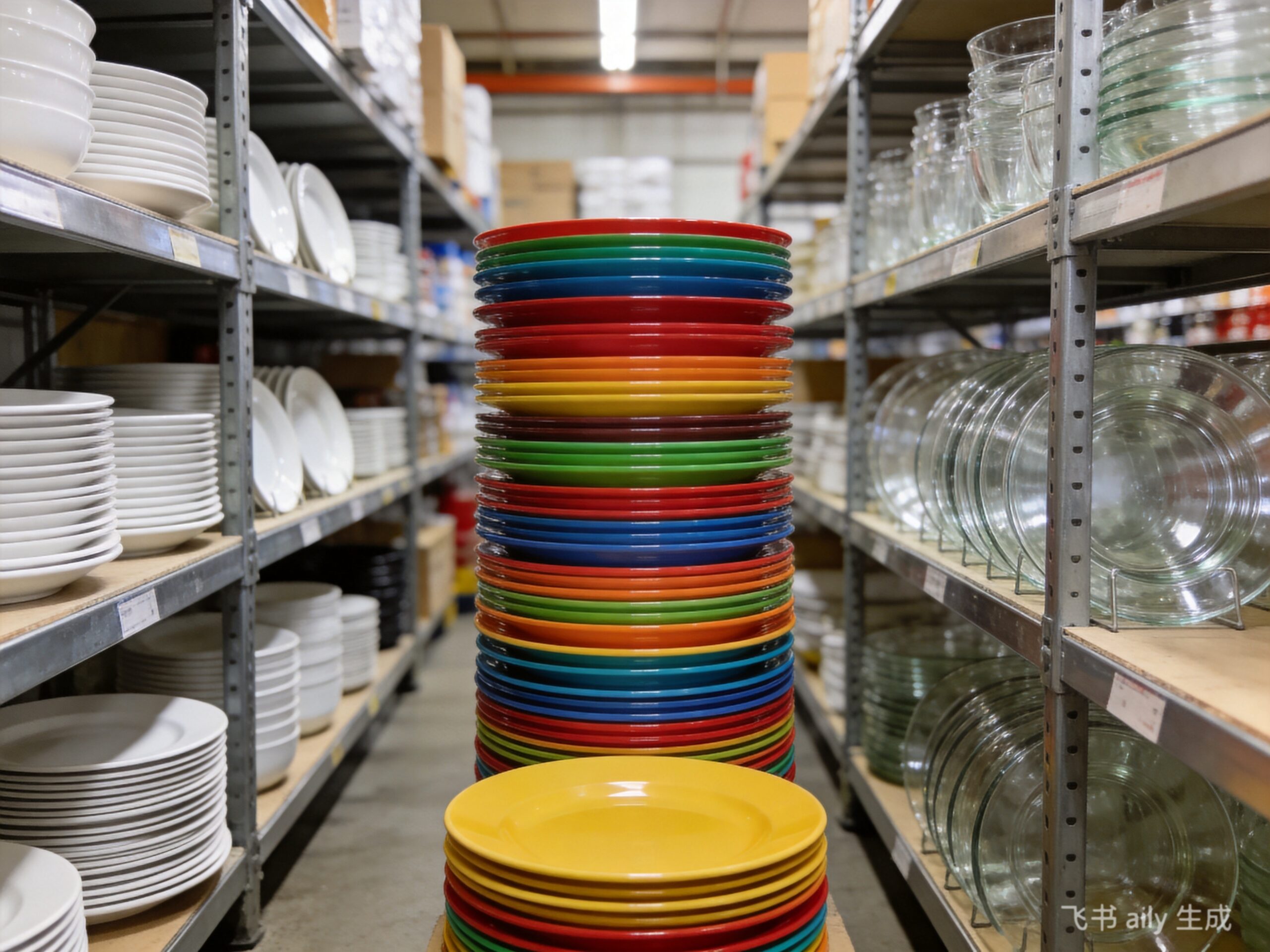
Ceramic plates are heavy — a stack of twenty dinner plates can exceed 15 kg. This limits stack height, increases handling labor, and raises shipping costs. However, the weight contributes to guest perception of quality. Melamine is roughly one-third the weight of equivalent ceramic, allowing taller stacks and easier transport. Glass weight falls between the two but with slick surfaces that can shift in stacks if not separated with mats or liners.
For venues with limited back-of-house space — food trucks, pop-ups, small cafes — melamine’s stackability advantage can be decisive. For venues where storage is ample and presentation is paramount — hotels, banquet halls — ceramic’s weight is a feature, not a drawback.
Safety Standards Buyers Must Verify
Each material carries different regulatory requirements. Do not assume that because a product is sold for foodservice it meets your market’s standards.
Ceramic: Verify compliance with FDA 21 CFR 175.300 (indirect food additives) for US markets and Regulation (EC) No 1935/2004 for EU markets. Lead and cadmium migration limits are defined in FDA CPG Sec. 545.450 and EN 1388-1/2. Request third-party test reports from your supplier — do not accept self-certification. [VERIFY BEFORE PUBLISHING]
Melamine: NSF/ANSI 51 certification is the standard for food equipment materials in North America. For EU markets, verify compliance with EU 10/2011 on plastic materials in contact with food. Melamine formaldehyde migration limits are strict — 2.5 mg/dm² in the EU — and should be documented in test reports. [VERIFY BEFORE PUBLISHING]
Glass: Borosilicate and tempered glass for food contact generally meet FDA and EU requirements without special certification, but decorative coatings, painted rims, or gold detailing may introduce compliance issues. Always request composition declarations for decorated glass. [VERIFY BEFORE PUBLISHING]
Sources for verification: FDA Food Contact Substances database (fda.gov), EU Reference Laboratory for Food Contact Materials (EU JRC), NSF International product listings (nsf.org). [VERIFY BEFORE PUBLISHING]
Material Decision Framework: When to Choose What
Use this framework to narrow your choice based on operational priorities rather than general preference.
Choose ceramic when: Guest perception drives revenue, your operation handles dishes gently, you have adequate storage and dishwashing capacity, and you plan to keep the same tableware style for 3+ years. Ceramic suits hotels, fine dining, boutique cafes, and catering companies serving high-end events.
Choose melamine when: Drop resistance is critical (outdoor dining, schools, buffets), storage space is limited, upfront budget is tight, and microwave use is not required. Melamine suits casual dining, poolside service, institutional cafeterias, and outdoor event catering.
Choose glass when: Visual presentation of food is paramount (dessert service, tasting menus), chemical neutrality is required (acidic or strongly flavored dishes), and handling protocols can control thermal shock risk. Glass suits dessert-focused operations, wine bars, and presentation-heavy banquet service.
Sourcing Differences: MOQ, Lead Time, and Customization
Material choice affects your sourcing terms, not just your tableware performance.
Ceramic: MOQs typically start at 500–1,000 pieces per SKU for factory-direct orders. Custom glazes, shapes, and decals add 2–4 weeks to lead times. Color matching requires physical samples and typically 1–2 approval rounds. Packaging is critical — ceramic shipments need molded pulp or foam dividers, which add cost but prevent breakage. Lead time from order to port: 45–75 days for standard items, 60–90 days for custom.
Melamine: MOQs are lower — often 300–500 pieces per SKU — because melamine is injection-molded, not fired. Custom colors and shapes are faster to prototype (1–2 weeks) but mold costs can be significant for unique shapes. Lead times are shorter: 30–50 days standard, 45–60 days custom. Melamine ships more densely per carton, reducing freight cost per unit.
Glass: MOQs vary widely. Machine-pressed glass starts at 1,000+ pieces. Hand-blown or specialty glass can require 500+ but with higher unit costs. Tempering adds a production step and typically 1–2 weeks. Custom molds for pressed glass are expensive — $3,000–$8,000 depending on complexity — so glass customization is usually limited to decals, etching, or rim colors unless volumes justify mold investment. Lead time: 40–70 days standard.
If you need specific MOQ and lead time figures for your product category, request a quote by category — we break down minimums and timelines for ceramic mugs, plates, bowls, and hotel dinnerware separately.
Common Mistakes When Choosing Tableware Material
Mistake 1: Buying based on unit price alone. A $2 melamine plate that needs replacement every 14 months costs more over five years than a $7 ceramic plate that lasts five. Factor replacement rates, shipping costs for reorders, and labor into your total cost calculation.
Mistake 2: Ignoring your dishwasher setup. High-temp dishwashers destroy melamine faster than spec sheets suggest. If your facility runs high-temp racks, melamine’s lifespan drops by a third — changing the cost-per-use math entirely.
Mistake 3: Choosing material before defining the use case. A material that works for room service may fail for buffet service. Map your actual usage patterns — handling frequency, drop risk, thermal exposure, microwave needs — before selecting material.
Actionable Recommendations
Recommendation 1: Run a 90-day trial before committing to volume. Order 50–100 pieces of each material you are considering. Track breakage, guest feedback, and dishwasher wear. Real data from your operation beats any spec sheet.
Recommendation 2: Negotiate replacement terms in your purchase agreement. Ask suppliers to warranty against defects for 12 months and to provide replacement credits for breakage above a defined threshold. This shifts some replacement risk to the supplier and gives you leverage if quality falls short.
Recommendation 3: Split your order by use zone. Many successful operations use ceramic in guest-facing dining rooms, melamine in back-of-house prep and staff areas, and glass for dessert and beverage service. This hybrid approach optimizes cost and experience simultaneously.
Commercial Tableware Selection Checklist
Save or copy this checklist for your next tableware purchase:
- Mapped daily usage per piece (meals served, wash cycles, handling points)
- Confirmed dishwasher type and maximum temperature setting
- Verified microwave requirements for each service area
- Calculated cost-per-use for 3-year and 5-year horizons
- Evaluated storage space against stack height and weight limits
- Requested third-party test reports for food contact compliance
- Checked supplier warranty and replacement credit terms
- Ordered trial batch (50–100 pieces) before volume commitment
- Documented guest feedback from trial period
- Confirmed lead time aligns with planned rollout schedule
- Verified packaging specifications for international shipment
FAQ
Is melamine safe for hot food service?
High-grade NSF-certified melamine is safe for serving food up to 70°C. It should not be used in microwaves, ovens, or for boiling liquids. Prolonged contact with very hot food can cause surface degradation. For soups and dishes served above 80°C, ceramic or glass is the safer choice.
Can I mix ceramic and melamine in the same service?
Yes, and many operations do. Ceramic for mains and melamine for sides or buffets is a common split. The key is consistent presentation — guests should not notice the material difference unless that is part of your concept. Avoid mixing in the same stack or rack to prevent cross-material abrasion.
How do I know if my ceramic supplier’s glaze is food-safe?
Request a third-party migration test report, not a self-declaration. Look for lead and cadmium test results against FDA or EU limits. If the supplier cannot provide dated test reports from an accredited lab, treat the glaze as unverified and request sample testing before ordering.
Does tempered glass really shatter into safe pieces?
Tempered glass breaks into small granular fragments rather than sharp shards, which reduces injury risk. However, these fragments are still hazardous in a foodservice environment. Any breakage requires immediate cleanup and disposal. Tempered glass is safer than untempered glass but not damage-proof.
What is the realistic MOQ for a first-time tableware order?
For ceramic, expect 500–1,000 pieces per SKU from most factories. Melamine often starts at 300 pieces. Some suppliers offer mixed-SKU pallets at lower per-item minimums for first orders. Always ask about trial-order programs before committing to full MOQs.
Should I worry about lead time when reordering?
Yes. Ceramic lead times of 45–75 days mean you need to forecast 2–3 months ahead. Melamine is faster at 30–50 days but still requires planning. Build a safety stock of 15–20% above normal usage to cover unexpected breakage spikes and shipping delays.
Ready to compare specific product categories? Get MOQ and lead time breakdowns by product type — from ceramic mugs and plates to hotel dinnerware sets — so you can plan your order with exact numbers.