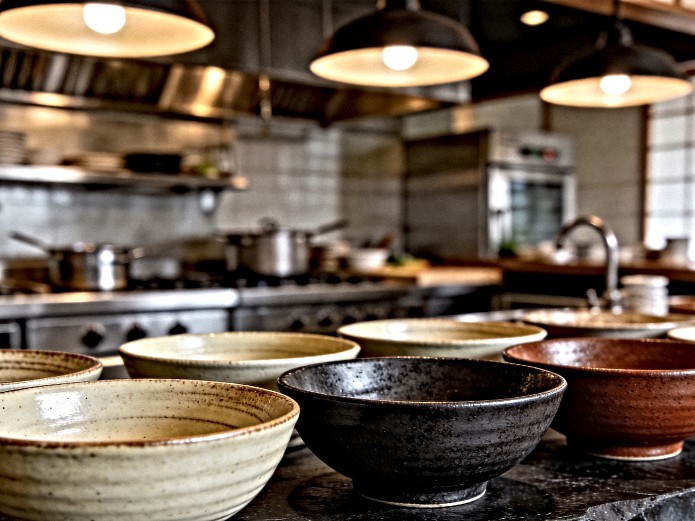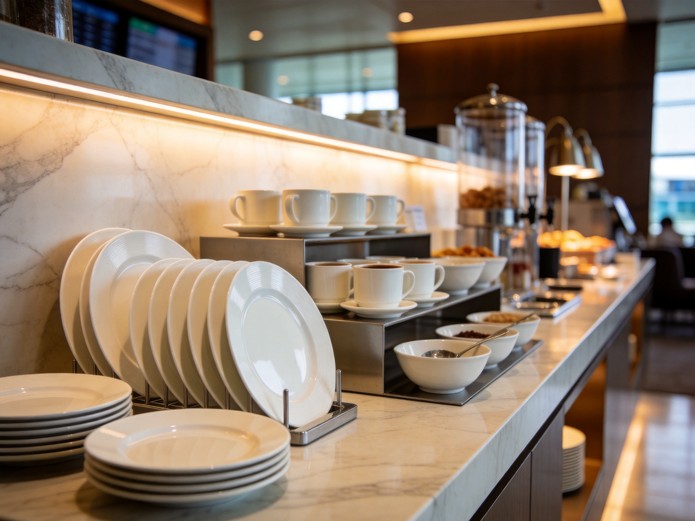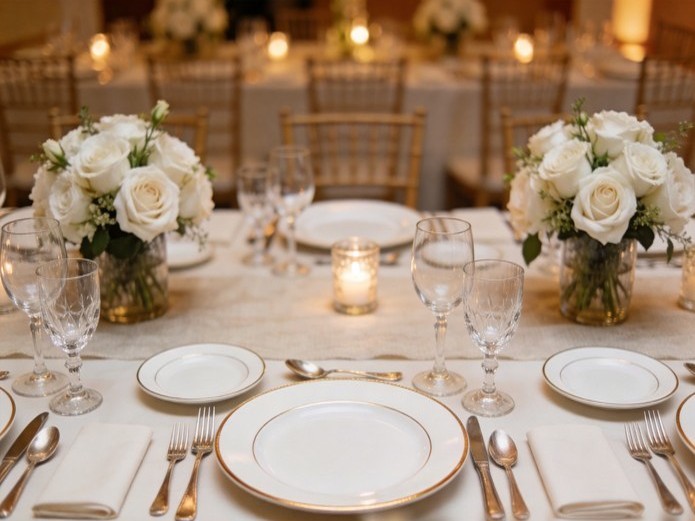
Sourcing wedding rental ceramic tableware requires a vastly different approach than purchasing for standard restaurants or hotels. Your ceramic pieces must survive repeated transport, dynamic stacking, commercial dishwasher cycles, and seasonal surges—while still looking flawless under reception lighting.
After working with dozens of rental inventories across North America and Europe, one pattern is clear: most ceramic failures in rental use trace back to three sourcing decisions made at the quote stage—glaze hardness, wall thickness, and edge reinforcement. Get those right, and your cost-per-rental drops dramatically. Get them wrong, and you are replacing 15–25% of your inventory every season.
This guide covers what specifications to demand from your supplier, how to calculate true cost-per-rental, and the inspection routine that catches defects before they reach your client’s table.
Why Standard Restaurant Ceramic Fails in Rental Use
Restaurant-grade ceramic is built for stationary use. It sits on a shelf, moves to a table, and returns to a dish pit in the same building. Rental ceramic faces a harsher life: loaded into vans, stacked in crates, washed in high-alkaline commercial machines, and handled by temporary event staff who may not treat each piece like glass.
The failure modes differ too. Restaurant ceramics crack from thermal shock—hot food on cold plates. Rental ceramics chip at the rim from stacking friction, crack from transport vibration, and show surface scratches from abrasive scrubbing. A glaze that scores well on ASTM C373 water absorption may still fail when a stack of plates shifts during a 40-mile van ride.
What rental operators actually need is a ceramic body with higher flexural strength, a harder glaze surface, and reinforced edges that can handle the load of a full stack without micro-fracturing. Most suppliers who sell “commercial grade” do not distinguish between restaurant and rental use. You need to ask the right questions.
What to Look for in Wedding Rental Ceramic Tableware
Wedding venues demand aesthetics that restaurant ceramics rarely need. Matte glazes photograph better under flash but stain more easily. Reactive glazes look artisanal but vary between production runs, which matters when a client orders 200 plates and expects identical color. Gloss finishes are easiest to clean but show water spots and fingerprints immediately.
The right choice depends on your target event tier and your washing infrastructure. Below is a decision table that maps ceramic properties to rental business needs:
| Property | Budget Rental ($3–8/rental) | Mid-Market ($8–18/rental) | Luxury ($18–45/rental) |
|---|---|---|---|
| Body Material | Durable stoneware, 8–10mm wall | High-fired stoneware or porcelain, 7–9mm | Fine porcelain or bone china, 5–7mm |
| Glaze Finish | Hard glossy glaze, uniform color | Semi-matte or satin, consistent batch | Reactive or hand-applied, artisan variation |
| Edge Style | Rolled rim, reinforced | Beveled edge, chip-resistant | Thin, refined edge (handle with care) |
| Weight per Plate | 450–650g (stable, hard to tip) | 350–500g (balanced feel) | 250–400g (elegant, lightweight) |
| Color Consistency | Critical—clients expect match | Critical within each order | Variation acceptable, even desired |
| Dishwasher Safe | Required, industrial cycle | Required, industrial cycle | Commercial dishwasher only |
| Typical Lifespan | 80–120 rental cycles | 120–200 rental cycles | 60–100 rental cycles (higher touch) |
| Replacement Rate | 12–18% annually | 8–12% annually | 15–22% annually |
[INTERNAL DATA REQUIRED: Replace the lifespan and replacement rate figures with data from your actual rental inventory tracking. The ranges above are based on industry conversations and should be validated against your operation.]
The trade-off to understand: Heavier, thicker plates last longer but cost more to ship and store. Lighter, refined pieces command higher rental fees but break faster and require more delicate handling. Most profitable rental operations settle in the mid-market tier where durability and margin balance out.
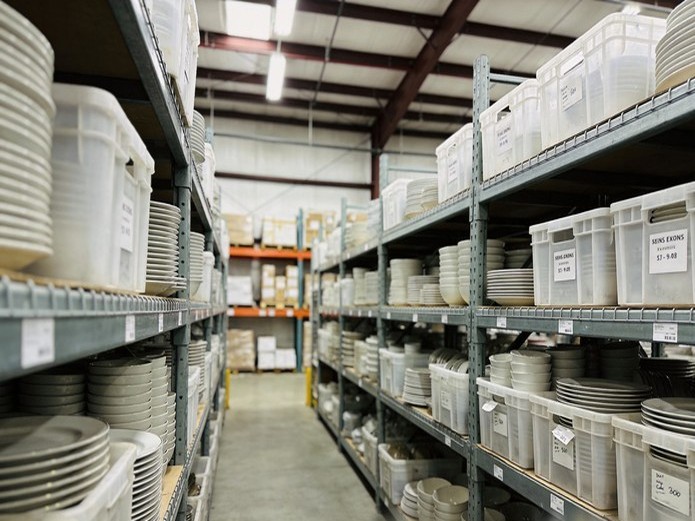
Cost-Per-Rental vs. Cost-Per-Piece: The Math That Matters
Event rental companies often make the mistake of buying on unit price alone. A $4.50 plate that lasts 80 rentals costs $0.056 per use. A $7.20 plate that lasts 180 rentals costs $0.040 per use. The more expensive plate is 29% cheaper over its life—and that is before factoring in the labor cost of reordering, inspecting, and integrating replacements.
Here is a simple calculator you can use for every SKU you evaluate:
Cost-Per-Rental = (Unit FOB Price + Inbound Shipping per Unit + Customs per Unit) ÷ Expected Rental Cycles
Then add your internal costs:
- Storage cost per unit per year (warehouse square footage ÷ total units)
- Cleaning cost per rental cycle (labor + detergent + water + machine depreciation)
- Transport cost per rental (fuel + vehicle wear ÷ pieces per load)
- Replacement reserve (annual replacement % × unit cost)
Most rental operators find that true cost-per-rental runs 2.5–4× the FOB unit price over the piece’s lifetime. Use this to set your rental pricing floor: if your all-in cost is $0.18 per rental and your target margin is 65%, your minimum rental fee for that piece is $0.51. [INTERNAL DATA REQUIRED: Replace with your actual margin targets and operational cost structure.]
Common Mistakes When Sourcing Wedding Rental Ceramics
Mistake 1: Ordering Without a Sample Wash Test
Suppliers send pristine samples. What you need to see is how that sample looks after 50 simulated wash cycles. Rent a commercial dishwasher for a day, run your samples through it with your actual detergent and rinse aid, then inspect for glaze dulling, water spotting, and edge wear. A glaze that looks perfect on arrival can turn hazy after industrial washing. This test costs under $200 and saves thousands in write-offs.
Mistake 2: Ignoring Stack Height Limits
Every plate has a safe stack height before the bottom pieces start stress-cracking. Most suppliers have never tested this because restaurants do not stack 60 plates on a wheeled cart. Ask your supplier: “What is the maximum safe stack height for transport, and has this been tested with a 50kg dynamic load?” If they cannot answer, test it yourself with a sample stack on a pallet jack over 100 meters of concrete. The results will tell you whether you need to halve your stack heights and double your crate count.
Mistake 3: Specifying Color Without a Production Batch Tolerance
Wedding clients are more color-sensitive than restaurant operators. A bride who chose dusty rose will notice if plate 201 is visibly different from plate 1. When you order reactive or tinted glazes, specify a Delta E tolerance (CIELAB color difference) in your purchase order. [VERIFY BEFORE PUBLISHING: Delta E tolerance standards for ceramic glazes should be confirmed with your supplier’s QC lab; typical commercial tolerance ranges from Delta E 1.0 to 3.0 depending on glaze type.] Require the supplier to include a batch color report with every shipment, and reject any batch that exceeds your agreed tolerance.
A 12-Point Pre-Delivery Inspection Checklist
Use this checklist on every incoming shipment before you sign the delivery receipt. Print it, laminate it, and hand it to whoever unloads your containers.
| # | Check | Pass / Fail | Notes |
|---|---|---|---|
| 1 | Carton count matches packing list | ||
| 2 | No visible carton damage (crush, puncture, moisture) | ||
| 3 | Random sample: 2% of cartons opened and inspected | ||
| 4 | Each piece inspected for chips, cracks, or glaze flaws | ||
| 5 | Stack test: 20 plates stacked, bottom plate checked for stress marks | ||
| 6 | Color consistency check across 10 randomly selected pieces | ||
| 7 | Weight tolerance: ±5% from sample weight | ||
| 8 | Glaze coverage complete (no bare spots on foot or rim) | ||
| 9 | Foot ring smooth (no sharp edges that scratch table surfaces) | ||
| 10 | Dishwasher test: 3 pieces washed, checked for water spotting | ||
| 11 | Stacking test: plates nest cleanly without rocking or jamming | ||
| 12 | Documentation: batch color report, QC certificate, and packing list filed |
Rule: If more than 3% of inspected pieces fail any single check, photograph the defects and reject the batch. Most suppliers will negotiate a partial credit or replacement if you have documentation.
MOQ, Lead Time, and Customization for Rental Inventory
Most ceramic suppliers set MOQs based on kiln capacity, not your rental business size. A standard 20-foot container holds roughly 8,000–12,000 dinner plates depending on packing density. That is a massive capital tie-up for a rental company starting out.
Here is what you can realistically negotiate:
- MOQ for standard designs: 500–1,000 pieces per SKU if you commit to a 6-month rolling order. Suppliers prefer predictable revenue over one-off large orders.
- MOQ for custom colors: 2,000–3,000 pieces minimum to justify glaze batching. Some suppliers accept 1,000 if you choose from their existing glaze library.
- MOQ for custom shapes: 5,000+ pieces, plus mold development fees of $800–$2,500 [INTERNAL DATA REQUIRED: Replace with actual mold costs from your supplier network]. This only makes sense at scale or for signature pieces you rent at premium rates.
Lead times: Standard stock designs ship in 25–40 days after order confirmation. Custom colors add 10–15 days for glaze matching and sample approval. Custom molds add 45–60 days for toolmaking and first-article inspection. Plan your inventory purchases 90–120 days before peak wedding season (April–October in most markets).
Customization that pays off for rentals: Embossed logos on the foot ring (invisible to guests but branded for theft deterrence), custom glaze colors that differentiate your inventory from competitors, and nested bowl designs that reduce storage volume by 30–40%. Avoid edge painting or gold banding—they wear off in commercial washing and trigger replacement faster than plain glaze.
Packaging That Survives Repeated Transport
Standard export packaging—corrugated cartons with paper dividers—protects ceramic once, from factory to your warehouse. Rental operations need packaging that protects ceramic through hundreds of load-unload cycles.
Request these specifications from your supplier:
- Inner packing: Each piece wrapped in non-abrasive tissue or foam sleeve, not loose in a carton. Plate separators should be EPE foam, not paper, which compresses after 5–10 uses.
- Outer carton: 5-ply corrugated, minimum 200lb test, with reinforced corners. Cartons should stack 6 high without deformation.
- Pallet specification: Heat-treated ISPM-15 pallet, 1,000kg dynamic load rating. Cartons strapped with PET bands, not stretch wrap alone.
- Labeling: Each carton labeled with SKU, quantity, weight, and a fragile-handling symbol. Color-coded labels by SKU speed up inventory counts.
Once cartons reach your warehouse, invest in reusable plastic crates with fitted dividers for your transport operations. They cost more upfront but last 3–5 years and reduce transport damage by 60–80% compared to reusing export cartons. [INTERNAL DATA REQUIRED: Replace damage reduction claim with actual figures from your transport testing.]
Three Moves That Cut Replacement Costs by Half
1. Buy 15% Over Your Target Inventory Count
Rental companies typically order exactly the inventory they need for peak bookings. This leaves zero buffer for breakage, loss, or last-minute client additions. Order 115% of your target and treat the extra 15% as a rotating reserve. When your active inventory drops to 90% of target due to breakage, draw from the reserve instead of placing an emergency reorder at air-freight rates.
2. Negotiate a Replacement Warranty Clause
Most ceramic suppliers offer no warranty on breakage after delivery. Push for a 90-day defect warranty covering manufacturing flaws that appear during normal rental use—not impact damage, but glaze delamination, hairline cracks from thermal stress, and foot-ring failures. A supplier who stands behind their product is worth a 5–10% price premium. Get the warranty terms in writing on the purchase order, not just in an email.
3. Run a Staggered Replacement Cycle
Instead of replacing your entire inventory every 3–4 years, replace 25–30% annually. This spreads capital expenditure, keeps your inventory looking fresh, and lets you test new styles with small orders before committing to a full refresh. Staggered replacement also reduces storage pressure—you are not holding two full generations of inventory during a changeover.
Frequently Asked Questions
How many rental cycles should I expect from commercial ceramic plates?
Mid-market stoneware typically lasts 120–200 rental cycles under normal handling. Budget stoneware averages 80–120 cycles. Fine porcelain in luxury settings, where handling is gentler but expectations are higher, averages 60–100 cycles. Your actual results depend on transport distance, stack height, dishwasher chemistry, and staff training. Track breakage by SKU and supplier batch to build your own dataset. [INTERNAL DATA REQUIRED]
Should I choose stoneware or porcelain for wedding rentals?
Stoneware for budget and mid-market rentals—heavier, harder to break, lower replacement rates. Porcelain for luxury tiers—lighter, more refined appearance, higher rental fees, but faster wear. Some operators stock both: stoneware for large corporate events and porcelain for intimate weddings where aesthetics drive the booking.
What is the safest way to transport ceramic tableware to venues?
Use reusable plastic crates with fitted foam dividers, never loose cartons. Stack crates no more than 4 high in a van with shock-absorbing mats on the floor. Secure stacks with cargo straps, not bungee cords. Drive as if carrying eggs. Pre-route to avoid unpaved roads and sharp turns when possible.
Can I get custom colors for my rental inventory without paying mold fees?
Yes, if you choose from the supplier’s existing glaze library. Custom glaze matching requires a development fee of $300–$800 [INTERNAL DATA REQUIRED] and a 2,000–3,000 piece MOQ. Existing library colors have no development cost and often accept 1,000-piece MOQs. Start with library colors to test market response before investing in custom matching.
How do I handle a client who wants a color I do not stock?
Partner with a local event designer who owns complementary inventory, or source disposable accent pieces (napkins, runners, florals) in the client’s color and keep your ceramic neutral. White, ivory, and soft gray ceramics rent more frequently than trend colors because they match any palette. Trend colors require larger inventory and sit idle between seasons.
What certifications should wedding rental ceramics carry?
All food-contact ceramics should meet FDA 21 CFR 175.300 for lead and cadmium leaching in the US market, or EU Regulation 1935/2004 for European clients. [VERIFY BEFORE PUBLISHING: Confirm current FDA and EU regulatory references with authoritative sources at fda.gov and ec.europa.eu.] If you serve corporate clients, they may request LFGB compliance (Germany) or Prop 65 statements (California). Ask your supplier for current test reports before placing your first order. Do not accept certificates older than 24 months.
Ready to Build Your Rental Collection?
Choosing the right wedding rental ceramic tableware is not about finding the cheapest unit price. It is about matching ceramic specifications to your operational reality: how far you transport, how often you wash, how rough your handling environment is, and what your clients are willing to pay per place setting.
Start with the decision table in this guide to identify your tier. Run the sample wash test before committing to any supplier. Use the 12-point checklist on every delivery. And build your replacement reserve into your purchasing plan from day one.
Request our wedding rental ceramic specification sheet—a one-page PDF with the exact glaze hardness, wall thickness, and edge specs we recommend for rental operations, ready to attach to your next RFQ.
Related reading: Ceramic Tableware Durability Testing | Ceramic MOQ Strategy | Ceramic Packaging and Shipping Best Practices