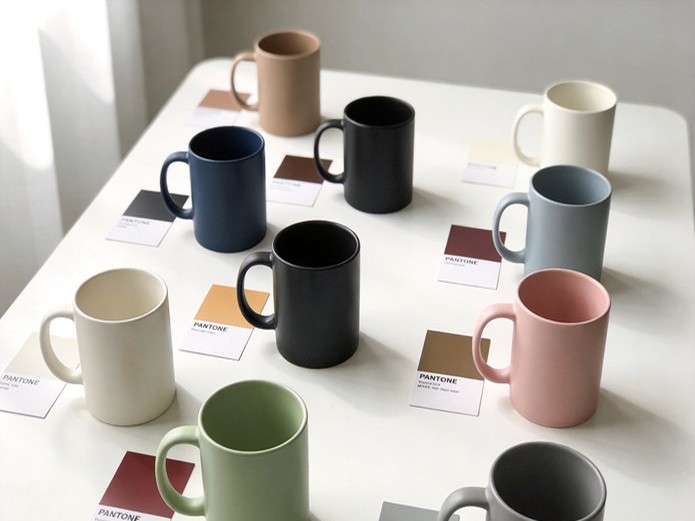
Custom color matching ceramic mugs lets you turn a Pantone swatch into shelf-ready inventory. Getting your brand color right on a ceramic mug is harder than it looks because glaze chemistry, kiln temperature, and surface texture all shift the final shade.
This guide explains how custom color matching works for ceramic mugs, what causes color drift, and how to manage the process so your bulk order matches your approved sample. You will also get a supplier checklist, a cost comparison table, and a sampling timeline you can use on your next project.
How Ceramic Color Matching Works from Pantone to Kiln
Color matching on ceramic mugs is not a simple print job. Unlike paper or plastic, ceramic glaze colors change during firing. A bright cobalt blue at room temperature may turn darker or develop a slightly different undertone after reaching 1,200°C in the kiln.
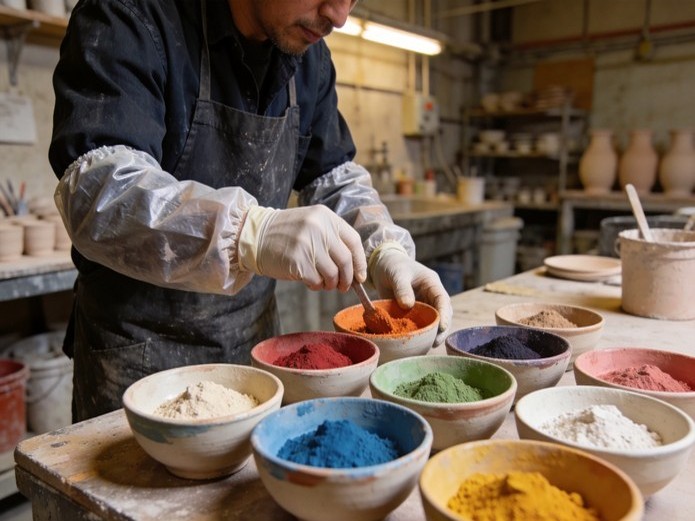
The process starts with a physical Pantone chip or a digital color value (CMYK or LAB) provided by the buyer. The factory’s glaze technician then mixes raw ceramic pigments — metal oxides like cobalt, copper, iron, and chrome — to create a test glaze. This test glaze is applied to sample tiles or actual mug bodies and fired under controlled conditions. The fired sample is compared against the target color, and the formula is adjusted until the match is acceptable.
Key factors that affect the final color include:
- Firing temperature: A difference of 20°C can shift some colors visibly.
- Kiln atmosphere: Oxidation versus reduction firing changes how metal oxides behave.
- Clay body color: White porcelain, cream stoneware, and red earthenware each affect how the glaze appears.
- Glaze thickness: Thicker application produces deeper, more saturated color.
- Glaze chemistry: Matte versus glossy bases can make the same pigment look different.
[VERIFY BEFORE PUBLISHING: Confirm standard firing temperature ranges and Pantone-to-ceramic conversion protocols with your production partner.]
The 6-Step Custom Color Matching Process
Most factories follow a similar sequence for custom color development. Understanding these steps helps you set realistic expectations and avoid surprises.
- Step 1 — Submit target color: Send a physical Pantone chip, digital LAB value, or an existing product sample. Digital-only references carry higher risk of misinterpretation.
- Step 2 — Formula development: The glaze technician creates 3–5 test batches with slight variations in pigment ratios. This typically takes 3–5 business days.
- Step 3 — Sample firing: Test glazes are applied to tiles or mugs and fired. Results are photographed and sent to the buyer for review.
- Step 4 — Buyer approval: The buyer selects the closest match or requests adjustments. Most projects need 2–3 rounds of revision.
- Step 5 — Production sample: Once a formula is approved, the factory produces a small batch of actual mugs using production equipment and schedules.
- Step 6 — Lock the formula: The approved glaze recipe is documented with batch numbers, pigment sources, and firing parameters to ensure consistency across production runs.
Each revision round adds time and cost. Buyers who provide a physical reference and specify acceptable tolerance upfront typically complete the process in fewer rounds.
Why Colors Drift Between Sample and Mass Production
Even after a sample is approved, color inconsistencies can appear in the bulk order. Here are the three most common causes:
1. Pigment batch variation from raw material suppliers
Ceramic pigments are sourced from chemical suppliers, and each batch can vary slightly in purity and particle size. A factory that does not test incoming pigment batches against the locked formula may unknowingly produce glaze that drifts off-color. [INTERNAL DATA REQUIRED: Add specific pigment testing protocol used by your factory.]
2. Kiln temperature inconsistency across firing zones
Large tunnel kilns have hot and cool zones. Mugs fired near the kiln walls may experience a different temperature profile than those in the center. This is especially noticeable with sensitive colors like bright reds, oranges, and certain pastels. [FACTORY PHOTO REQUIRED: Insert kiln zone temperature mapping diagram.]
3. Changing the clay body or glaze base without retesting
If a factory switches from one stoneware body to another — perhaps for cost or availability reasons — the same glaze formula can produce a visibly different color. The locked formula must be retested whenever the substrate or base glaze changes.
Cost vs Quality Trade-offs in Ceramic Color Matching
Not every custom color project justifies the same investment. The table below helps you decide which approach fits your budget and quality requirements.
| Approach | Color Accuracy | Cost per SKU | Best For | Risk Level |
|---|---|---|---|---|
| Stock glaze closest match | Acceptable (±10% variance) | $0 setup | Budget lines, promotional items | Low |
| Custom glaze from existing base | Good (±5% variance) | $200–500 per color | Mid-tier private label, cafe brands | Medium |
| Full custom formula with LAB confirmation | High (±2% variance) | $800–1,500 per color | Premium brands, retail collections | Low |
| Digital glaze mixing + spectrophotometer check | Very high (±1% variance) | $2,000+ per color | Luxury, corporate identity programs | Very low |
[INTERNAL DATA REQUIRED: Confirm actual cost ranges with your production partner. Prices vary by region and factory capability.]
The trade-off is straightforward: higher precision requires more lab time, more testing rounds, and often specialized equipment like a spectrophotometer. For most private label mug projects, the “custom glaze from existing base” tier offers the best balance of cost and color fidelity.
Supplier Capability Checklist for Color-Matching Projects
Use this checklist before committing to a supplier for a custom color project. Mark each item as verified, unverified, or not applicable.
| Check Item | Verified | Notes |
|---|---|---|
| Can accept physical Pantone chips as reference | ☐ | |
| Has in-house glaze technician (not outsourced) | ☐ | |
| Provides test tiles with each formula revision | ☐ | |
| Documents locked formula with batch numbers | ☐ | |
| Tests incoming pigment batches for consistency | ☐ | |
| Can produce production sample before bulk order | ☐ | |
| Has temperature monitoring in multiple kiln zones | ☐ | |
| Offers color tolerance specification in writing | ☐ | |
| Has prior experience matching colors for export brands | ☐ | |
| Provides clear revision round policy and costs | ☐ |
MOQ, Lead Time, and Sampling Timeline for Custom Mug Colors
Custom color matching changes the standard ordering process. Here is what to expect in terms of minimums and timelines.
- MOQ for custom colors: Most factories require 3,000–5,000 pieces per color to justify glaze development costs. Some accept 1,500 pieces for simpler colors if you commit to a multi-SKU order.
- Color development time: 2–4 weeks for standard colors; 4–6 weeks for complex or pastel shades that require multiple revision rounds.
- Production lead time after approval: 45–60 days for orders under 10,000 pieces; 60–75 days for larger volumes or during peak season (September–December).
- Sample cost: $50–200 per revision round, depending on factory. Some factories waive sample fees if the bulk order is confirmed.
- Color retention testing: [VERIFY BEFORE PUBLISHING: Reference ISO 105-B02 or ASTM D4303 for lightfastness testing requirements for ceramic glazes.]
[INTERNAL DATA REQUIRED: Add specific MOQ and lead time data from your factory.]
Three Moves That Guarantee Better Color Results
1. Always send a physical reference, never digital-only
Screen colors vary by device and calibration. A physical Pantone chip or an existing product sample removes ambiguity. If you must use a digital reference, specify the color space (LAB preferred over CMYK or RGB) and confirm the factory’s monitor is color-calibrated.
2. Define acceptable tolerance before the first sample
Agree in writing what “close enough” means. A Delta E of 3 or less is generally acceptable for commercial ceramic tableware. Without a documented tolerance, you and the factory may have different expectations.
3. Lock the formula with production conditions, not lab conditions
Some factories develop colors on small test kilns that behave differently from production tunnel kilns. Insist that the final approval sample is fired on the same kiln line, with the same clay body, that will be used for your bulk order. This one step prevents most mass-production color drift issues.
Frequently Asked Questions
Can any Pantone color be matched on ceramic?
No. Neon colors, metallic finishes, and some very light pastels are difficult or impossible to achieve with standard ceramic glazes. Your supplier can tell you which colors are feasible before starting development.
How many revision rounds are typical?
Most projects require 2–3 rounds. Simple colors like navy blue or forest green often match on the first try. Complex colors like sage green or dusty rose may need 4–5 rounds.
Does the mug shape affect color appearance?
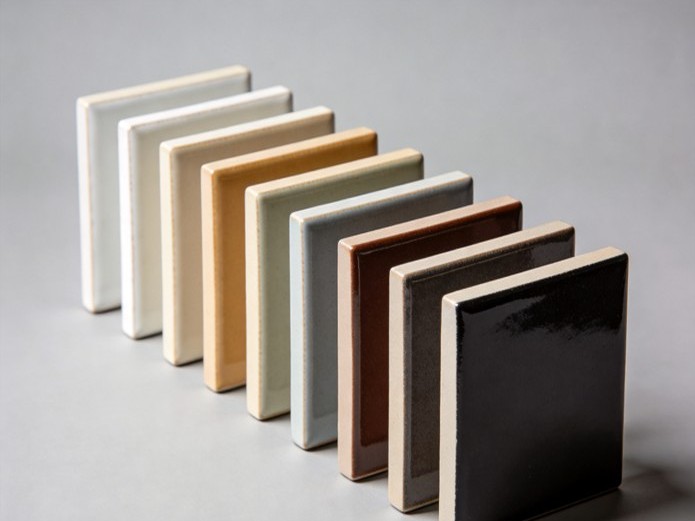
Yes. Curved surfaces reflect light differently than flat tiles. A color that looks perfect on a test tile may appear slightly different on a rounded mug body. Always approve the color on the actual product shape.
Can I match colors across different mug sizes?
Matching across sizes is possible but not guaranteed. Larger mugs may show slight color variation due to differences in glaze thickness and heat distribution. Request a sample from each size before approving the full range.
What happens if the bulk order does not match the approved sample?
This depends on your purchase agreement. A well-written contract should specify color tolerance, inspection criteria, and remedies for non-conformance. Document everything with dated photos and written approvals at each stage.
Is there a faster way to get custom colors without full development?
Some suppliers maintain a library of pre-developed glaze colors. Choosing from an existing catalog eliminates development time and reduces cost, though your color choice is limited to what is already available.
Ready to get your brand color on ceramic? Submit your design for feasibility review and we will confirm color matchability, MOQ, and timeline within 48 hours.