Ceramic tableware food courts depend on faces harsher conditions than standard restaurant-grade pieces ever see. You are not buying for one kitchen with one dishwashing cycle per day. You are sourcing for ten to thirty individual stalls, each running three to five seatings during lunch rush, with shared dishwashing stations that push ceramics through commercial machines at speeds most full-service restaurants never reach. The plates chip faster, the bowls crack from thermal shock, and the replacement cycle is measured in months, not years. After ten years of walking factory floors and sitting across from food court operators in Singapore, Dubai, and Bangkok, I have learned that the buyers who save money are not the ones who negotiate the lowest unit price. They are the ones who match the right material grade, wall thickness, and glaze type to the actual stress the tableware will face.
This guide is written for procurement managers and food court operators who need tableware that survives high turnover, simplifies cleaning logistics, and stays within tight per-seat budgets. You will get a decision framework for material selection, a vendor checklist you can send directly to suppliers, and specific numbers on MOQ, lead time, and defect rates to plan around.
For buyers evaluating commercial ceramic tableware options across multiple stalls, the material grade and wall thickness matter more than the glaze finish.
What Makes Food Court Ceramic Tableware Different from Restaurant-Grade?
Restaurant-grade ceramics are designed for controlled environments: one menu, one kitchen temperature, one washing protocol. Food court ceramics live in a different world. Shared dishwashers run at 80-85 degrees Celsius with alkaline detergents that degrade standard glazes over time. Diners stack their own trays, which means plates get scraped against metal rails and dropped into bus tubs from a height. The turnover rate in a busy food court can hit 300-500 covers per stall per day, compared to 80-120 in a typical casual restaurant.
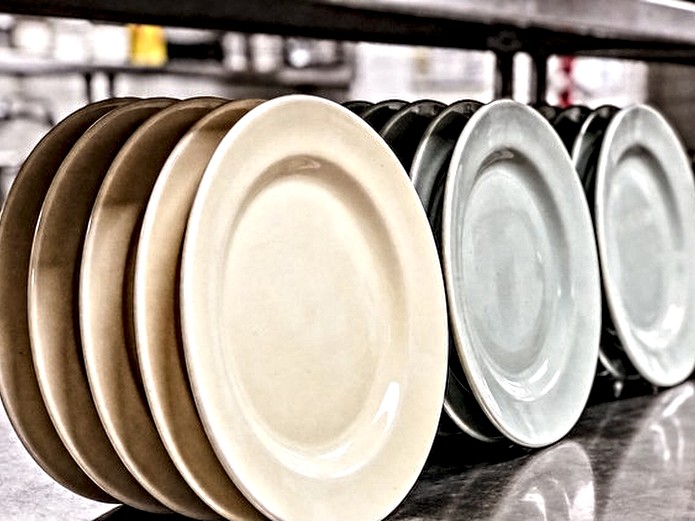
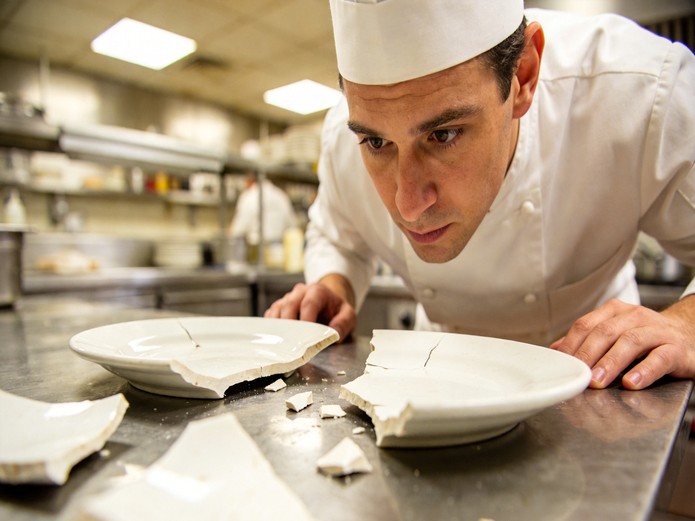
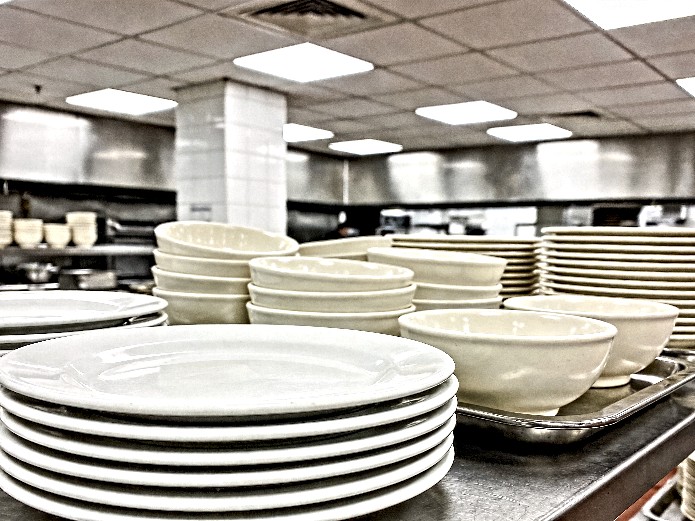
The three design requirements that separate food court ceramics from restaurant-grade are stackability, edge reinforcement, and thermal shock resistance. Stackability reduces storage footprint behind each stall. Edge reinforcement, usually a slightly thicker rim or rolled edge, prevents the chipping that happens when plates are scraped across stainless steel counters. Thermal shock resistance matters because food court plates move from hot holding cabinets to cold prep surfaces and then into commercial dishwashers within minutes.
If you source standard restaurant-grade ceramics for a food court, expect a 40-60% higher replacement rate in the first twelve months. That difference alone can erase any per-unit savings you negotiated.
Material Selection: Where Durability Meets Budget Reality
For food court applications, the realistic choices are vitrified stoneware, high-alumina porcelain, and ironstone. Bone china is too fragile and too expensive for this environment. Earthenware absorbs water over time and weakens under repeated thermal cycling, so it is out of the running for any location with a commercial dishwasher.
Vitrified stoneware differs from porcelain in weight and thermal properties, making it the workhorse. It is fired above 1200 degrees Celsius, which makes it non-porous and resistant to thermal shock. The body is heavier than porcelain, which gives it stability on self-service trays. A standard 10-inch vitrified stoneware plate weighs 650-850 grams, compared to 450-600 grams for a comparable porcelain plate. That extra weight reduces sliding and tipping on trays. The downside is freight cost: you are shipping roughly 25% more weight per piece.
High-alumina porcelain offers the best strength-to-weight ratio. The alumina content, typically 35-45% in the body clay, increases flexural strength by 30-40% over standard porcelain. A high-alumina plate can be lighter than stoneware while surviving the same drop tests. The trade-off is price: expect a 15-25% premium over vitrified stoneware at equivalent volumes. For operators who pay for freight by volumetric weight or who need to maximize tray capacity, the math often favors high-alumina porcelain despite the higher piece price.
Ironstone sits between the two. It has a denser body than standard stoneware and a harder surface, which resists cutlery marking. Ironstone is a strong candidate for food courts where cutlery is metal rather than disposable, since knife marks on softer glazes create visible wear lines within weeks. The limitation is glaze variety: ironstone bodies tend to work best with simpler, more durable glazes, so if you need custom colors or reactive glazes, your options narrow.
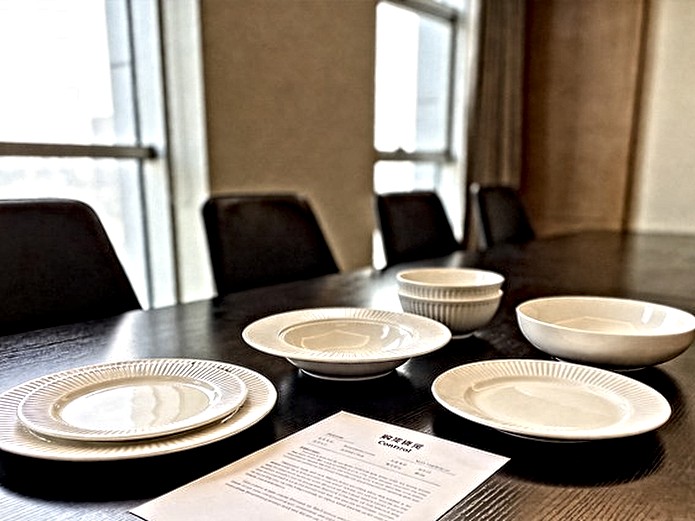
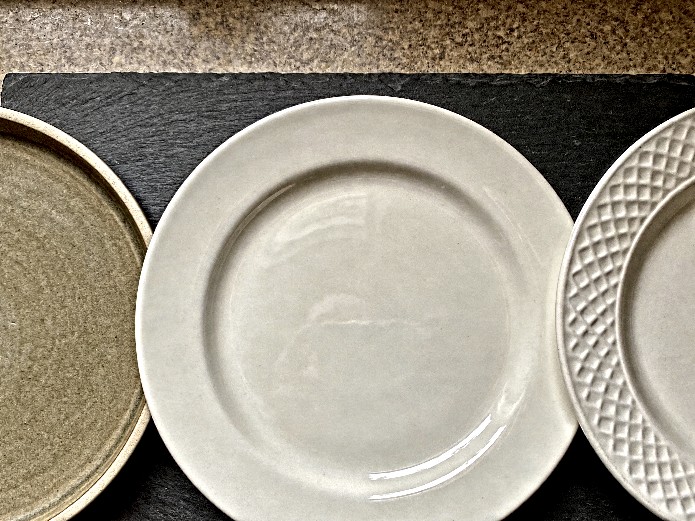
Plate shape directly affects throughput in food courts. A rim that is too wide takes up tray space and slows bussing. A bowl that is too deep forces diners to tilt it, increasing spill risk. The standard sizes that work best are dinner plates at 9.5-10 inches with a 15-20 mm rim, side plates at 7-7.5 inches flat, soup bowls at 6-7 inches diameter with straight walls, rice bowls at 4.5-5 inches, and mugs at 8-10 oz with reinforced handles. Every piece must inter-stack securely: dinner plates 12-15 high without wobbling, bowls nesting with a 5-8 mm rim gap. Avoid coupe shapes; flat rims with a slight bevel stack better and resist edge chips.
Procurement Decision Table: Comparing Options for Food Court Operators
| Factor | Vitrified Stoneware | High-Alumina Porcelain | Ironstone |
|---|---|---|---|
| Unit price (FOB, 5000+ pcs) | $1.80 – $2.40 | $2.20 – $2.90 | $2.00 – $2.60 |
| Weight (10-inch plate) | 650-850g | 450-600g | 700-900g |
| Thermal shock resistance | Good (180 degrees C differential) | Excellent (220 degrees C differential) | Good (190 degrees C differential) |
| Chip resistance | Good | Very good | Excellent |
| Cutlery marking | Moderate | Low | Very low |
| Glaze color options | Wide | Wide | Limited |
| Typical replacement cycle | 18-24 months | 24-30 months | 20-26 months |
| Best for | Budget-focused operators | Freight-sensitive projects | Metal cutlery environments |
Use this table to frame your supplier conversations. If a factory quotes you standard porcelain at stoneware prices, that is a red flag. If they cannot tell you the alumina content of their high-alumina body, assume it is marketing language and ask for a material data sheet.
Common Mistakes When Sourcing Ceramic for High-Traffic Food Courts
Mistake 1: Choosing aesthetics over wall thickness. A thin-walled plate with a beautiful reactive glaze will look great in the sample photo and terrible after three months in a commercial dishwasher. The glaze will craze, the body will absorb water, and the plate will start sounding dull when tapped. Always request the wall thickness specification with your samples. For food court use, dinner plates should have a minimum wall thickness of 5.5 mm at the center and 7 mm at the rim.
Mistake 2: Ignoring the shared dishwasher variable. Many food court operators test samples by hand-washing them in an office sink. That tells you nothing. The real test is a 50-cycle commercial dishwasher run with the actual detergent and rinse aid you will use. Alkaline detergents above pH 11 will etch certain glazes within weeks. If your supplier does not have dishwasher test data, commission it yourself or factor in a 15-20% higher replacement budget.
Mistake 3: Buying the full set from the first supplier you like. Food court operators often need 8,000 to 15,000 pieces for a single location. That is a large enough order to split across two suppliers: one for the high-volume, high-wear items like dinner plates and rice bowls, and another for lower-volume items like serving platters and sauce dishes. Splitting the order reduces single-supplier risk and gives you leverage on price for the next reorder. The buyers who put everything in one basket are the ones who panic when that factory misses a deadline.
Vendor Evaluation Checklist for Food Court Tableware Suppliers
Send this checklist to every supplier you are evaluating. A supplier who cannot or will not answer these questions is not ready for a food court contract.
| Check Item | Required Response | Your Notes |
|---|---|---|
| Firing temperature | Min 1200 degrees C for vitrified body | |
| Water absorption rate | Below 0.5% (ASTM C373) | |
| Thermal shock test data | Min 180 degrees C differential, no cracks | |
| Commercial dishwasher test | 50+ cycles with alkaline detergent | |
| Drop test from 1 meter | 90%+ survival rate on concrete | |
| Glaze lead and cadmium | Below FDA / EU 10/2011 limits [VERIFY BEFORE PUBLISHING] | |
| Wall thickness (dinner plate) | Min 5.5 mm center, 7 mm rim | |
| MOQ per item | Specific number per SKU | |
| Production lead time | Confirmed in weeks, ex-factory | |
| Sample lead time | Confirmed in days | |
| Defect rate commitment | Max acceptable %, with rework terms | |
| Packaging spec | Inner box + master carton + pallet | |
| Custom color matching | Pantone or physical sample match | |
| Previous food court references | Client names or project types |
MOQ, Lead Time, and Budget Planning for Mall Dining Projects
Most Chinese factories set MOQ at 1,000 to 3,000 pieces per SKU for standard shapes. For food court projects, where you are typically ordering 5 to 10 SKUs, the total MOQ often falls in the 5,000 to 15,000 piece range. Here is how to think about the numbers:
- MOQ per SKU: 1,000-3,000 pieces for standard shapes; 3,000-5,000 for custom colors or logos
- Total project MOQ: 5,000-15,000 pieces depending on SKU count
- Sample lead time: 10-15 days for existing molds; 20-30 days for custom shapes
- Production lead time: 45-60 days for standard orders; 60-75 days for custom glazes or colors
- Sea freight: 25-35 days to major ports (FOB terms)
- Total timeline from order to delivery: 80-110 days
Budget at $2.00 to $2.80 per piece FOB for a mid-range vitrified stoneware or ironstone set, plus $0.30 to $0.50 per piece for freight and duties depending on your destination. High-alumina porcelain adds 15-25% to the piece price but can reduce freight cost per piece if weight savings offset the premium.
One cost strategy that works: negotiate a two-year supply agreement with quarterly releases. This locks in your unit price, gives the factory predictable volume, and often secures a 5-10% discount over spot pricing. The catch is that you need storage space and capital to hold inventory. If your food court operates on thin margins, factor in a 3-4% annual carrying cost for warehoused stock.
Packaging matters because food court orders ship in bulk: hundreds of pieces per carton, thousands per container. The standard structure is bubble-wrapped pieces, 12-24 per inner carton, 4-6 inner cartons per master carton, palletized with corner boards and stretch wrap. I always insist on double-wall inner cartons and corner protectors on every master carton. Single-wall cartons collapse under stacked ceramic weight during ocean transit, causing edge chips on bottom layers. Double-wall adds roughly $0.02-$0.03 per piece but reduces edge-chip damage by 60-70%. Transit breakage runs 1-3% for FCL and 2-5% for LCL, so a 10,000-piece order can see 100-300 damaged pieces. Build this into your budget and negotiate rework terms upfront: who pays for replacement, shipping timeline, and freight responsibility.
Three Actionable Steps to Reduce Replacement Costs
Step 1: Run a 90-day pilot before the full order. Order 200-300 pieces of each SKU and put them into actual food court service. Track chip rate, crack rate, and dishwasher etching weekly. The data you collect in those 90 days is worth more than any factory sample test. If a plate chips at 8% per month in pilot, you know the full order will cost you that replacement rate for two years.
Step 2: Negotiate a defect-rate cap with financial teeth. Do not settle for vague promises of “high quality.” Put a number in the contract: if the defect rate exceeds 2% on arrival inspection, the supplier pays for replacement pieces plus inbound freight. If it exceeds 4%, you have the right to reject the batch and demand a full remake at the supplier’s cost. Suppliers who balk at this clause are telling you something about their quality confidence.
Step 3: Standardize your SKU count aggressively. Every unique SKU is a separate MOQ, a separate mold fee, and a separate inventory line. I have seen food court operators order twelve different plate sizes because each stall manager had a preference. The result was higher unit costs, more breakage from incompatible stacking, and a storage nightmare. Standardize on four to six core pieces across all stalls: one dinner plate, one side plate, one soup bowl, one rice bowl, one mug, and one serving platter. Let the food differentiate itself. The tableware should be invisible, durable, and consistent.
FAQ
What is the typical lifespan of ceramic tableware in a busy food court?
With vitrified stoneware or high-alumina porcelain, expect 18 to 30 months before replacement becomes necessary. The actual lifespan depends on dishwasher protocol, tray design, and how aggressively diners handle their plates. A 90-day pilot will give you a location-specific forecast.
Can I get custom colors or branding on food court ceramics?
Yes, but budget for higher MOQ and longer lead time. Custom ceramic designs and glaze colors typically require 3,000-5,000 pieces per SKU and add 15-20 days to production. Logo printing via underglaze decal adds roughly $0.15-$0.30 per piece depending on color count and size. For food courts, I usually recommend keeping the base ceramic uniform and using colored tray liners or placemats for branding, since tray liners are cheaper to replace and easier to update seasonally.
How do I test ceramics for commercial dishwasher compatibility?
Send samples to an independent testing lab or run them through your actual dishwasher for 50 cycles with your standard detergent and rinse aid. Inspect for glaze crazing, edge chipping, and water absorption after the test. A simple tap test works too: tap the piece with a metal spoon before and after the dishwasher cycles. If the pitch drops noticeably, the body has absorbed water and weakened.
Should I order everything from one supplier or split the order?
For orders above 8,000 pieces, splitting across two suppliers reduces risk and improves negotiating position. Put the high-volume items (dinner plates, rice bowls) with the supplier who offers the best price at your volume, and place lower-volume items (serving platters, specialty bowls) with a second supplier who offers better design flexibility.
What Incoterm works best for food court ceramic orders?
FOB is the standard starting point. It gives you control over freight and customs clearance while keeping the supplier responsible for packing and inland transport to the port. If you are new to importing, CIF can simplify logistics but gives the supplier control over the shipping line and insurance, which sometimes leads to slower transit or lower coverage. For large food court projects, FOB with a freight forwarder you trust is usually the better balance of cost and control.
How much should I budget for breakage and replacement in year one?
Budget 10-15% of your initial order quantity for first-year replacements. This covers transit breakage (1-3%), pilot-test discoveries (2-5%), and operational losses from chips and cracks (5-8%). In year two, that number typically drops to 5-8% as your dishwasher protocol stabilizes and staff handling improves.
Ready to get specific numbers for your project? Request our food court tableware specification sheet with material data, size charts, and sample pricing tailored to your stall count and turnover targets.