Ceramic tableware sushi restaurants source must strike a balance most other dining concepts do not: the plates need to look refined enough for raw fish presentation while holding up to soy sauce stains, wasabi residue, and commercial dishwashers running three cycles a day. The wrong choice means chipped edges within six months, glaze discoloration from vinegar-based sauces, or plates that look out of place next to a $35 omakase course.
This article breaks down what sushi restaurants actually need from their ceramic tableware, which plate sizes and materials work best for different service styles, and how to avoid the sourcing mistakes that turn a tableware investment into a recurring expense.
What Sushi Restaurants Actually Need from Ceramic Tableware
Sushi service creates demands that differ from Western dining. Plates sit under vinegar-seasoned rice, raw fish, and soy sauce for extended periods. Chopsticks scrape across surfaces repeatedly. Cold items go out on room-temperature ceramics, then return to dish pits where thermal shock becomes a real factor.
Here is what matters in practice:
- Glaze resistance to acid: Soy sauce, vinegar, and citrus-based garnishes will etch low-quality glazes over time. Look for vitrified glazes fired above 1,200 degrees Celsius.
- Low water absorption: Below 0.5% absorption prevents moisture from seeping into the body and causing odor retention or glaze cracking.
- Flat, stable bases: Sushi plates often carry minimal food weight but sit on narrow counters and conveyor belts. A wobbly base is a spill waiting to happen.
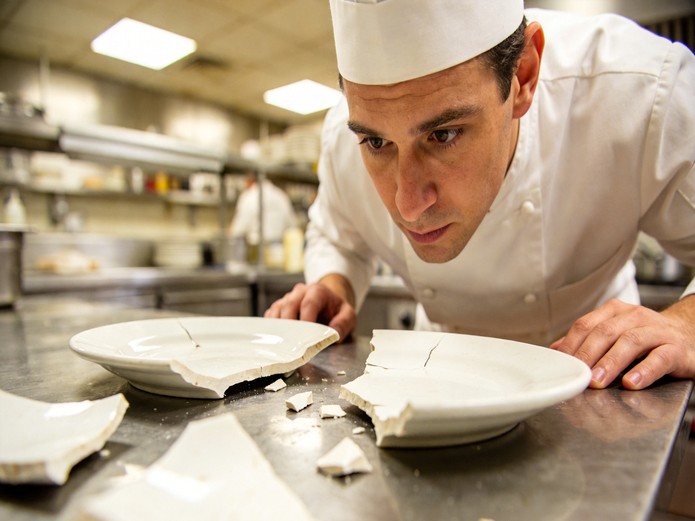
- Edge durability: The rim takes the most impact during stacking, scraping, and handling. A rounded or slightly thickened edge outlasts sharp rims.
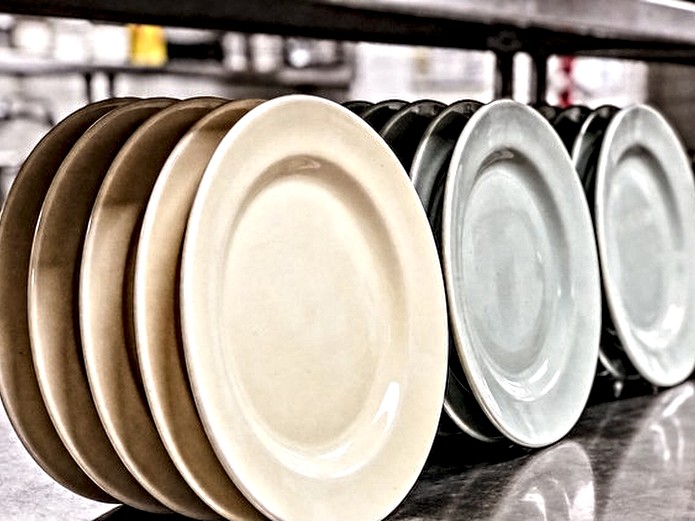
For conveyor belt (kaiten) operations, add weight to that list. Light plates spin off rails. Most kaiten operators prefer plates in the 350-500 gram range depending on diameter.
Plate Sizes and Shapes: Matching Your Menu Format
Sushi restaurants do not use one standard plate. The format dictates the dimensions:
| Service Style | Typical Plate Size | Shape | Key Consideration |
|---|---|---|---|
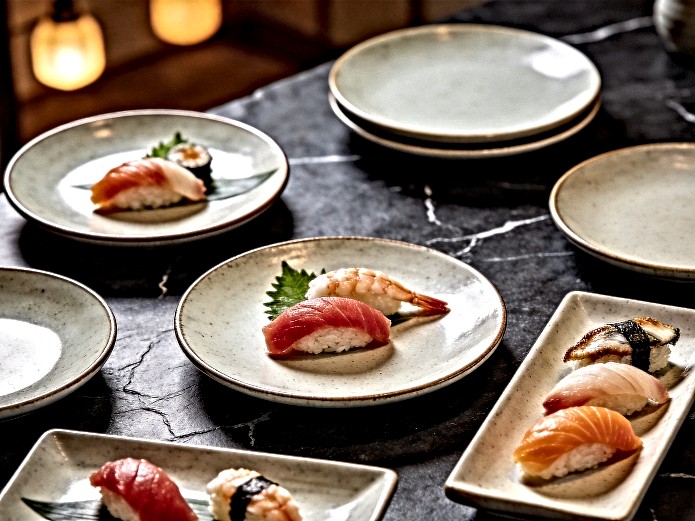
| Nigiri (2 pcs) | 15-18 cm diameter | Round or oval | Minimal surface, maximum presentation |
| Sashimi platter | 25-30 cm long | Rectangular or oblong | Flat surface for artful arrangement |
| Maki roll set | 20-22 cm diameter | Round | Depth for soy sauce pooling |
| Omakase course | 12-25 cm varying | Assorted artisan | Each course gets its own vessel |
| Kaiten conveyor | 15-20 cm diameter | Round, stackable | Uniform size for conveyor spacing |
| Family-style sharing | 30-35 cm diameter | Round or square | Large surface, sturdy build |
Omakase and high-end counter service often mix plate sizes within a single seating. If you run this format, confirm with your supplier whether they can maintain consistent glaze colors and body tones across different dimensions. Mismatched whites look unprofessional under omakase lighting.
Material Choices: Porcelain vs Stoneware for Sushi Service
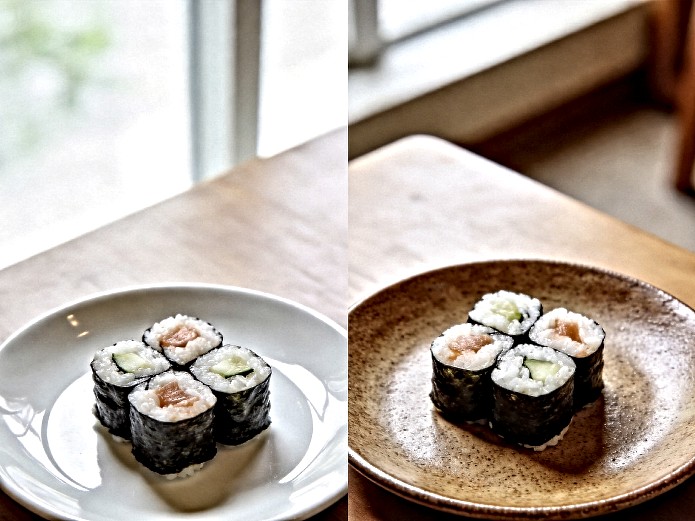
Both porcelain and stoneware work for sushi restaurants, but the choice changes cost, weight, and replacement frequency:
Porcelain offers the finest surface and the brightest white, which makes salmon, tuna, and uni pop visually. It is also harder and more chip-resistant than most stoneware. The trade-off is price and weight. High-alumina porcelain suitable for commercial use typically runs 30-50% more per piece than stoneware, and thin profiles can crack under thermal shock if your dishwasher runs hot cycles immediately after cold service. For a deeper comparison, see our porcelain vs stoneware guide.
Stoneware provides better thermal shock resistance and a more rustic, hand-crafted look that fits izakaya and casual sushi concepts. It is heavier, which helps on kaiten belts, and generally costs less. The downside: unvitrified stoneware absorbs more moisture, and rougher surfaces stain more easily from soy sauce and wasabi oils.
Recommendation: Use porcelain for omakase and premium counter service where presentation dominates. Use stoneware for kaiten, casual dining, and high-volume turnover where durability and cost matter more than visual refinement.
The Sushi Restaurant Tableware Checklist
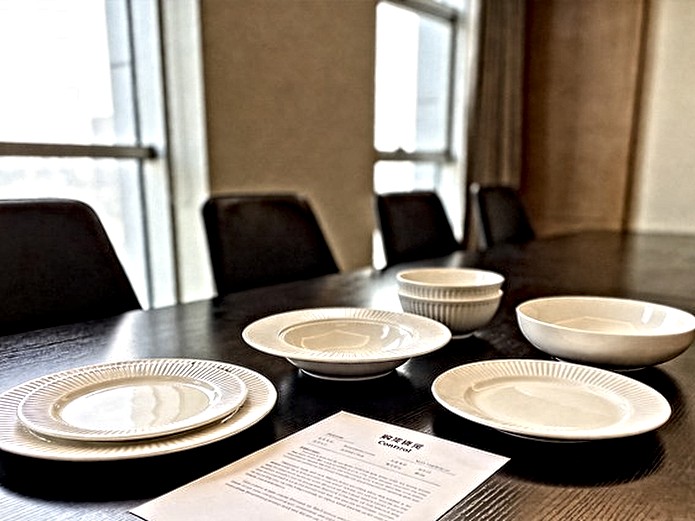
Use this checklist when evaluating samples from suppliers. Print it, take it to the factory, or send it to your QC agent.
- Glaze is fully vitrified (water absorption test shows <0.5%)
- No visible pinholes, cracks, or glaze crawl on the eating surface
- Base sits flat on a level surface with no rocking
- Edge thickness is consistent around the entire rim
- Color matches across all pieces in the sample lot
- Stacking height is uniform (critical for kaiten operations)
- Dishwasher-safe label confirmed by supplier (not assumed)
- Weight falls within your operational range (350-500g for kaiten)
- Surface resists soy sauce staining after 24-hour exposure test
- Supplier provides lead and cadmium test documentation
For the soy sauce stain test, place a small puddle on the glaze surface, leave it for 24 hours, rinse with warm water, and inspect under direct light. Any darkening indicates porous glaze that will discolor in real service.
Three Mistakes That Drive Up Replacement Costs
1. Buying Artisan Plates for High-Volume Service
Hand-thrown plates with irregular glazes look beautiful in photos. They also chip faster, stack unevenly, and cost two to three times machine-made alternatives. One restaurant group we work with [CASE STUDY REQUIRED] replaced 40% of their artisan plates within eight months. For omakase, limit artisan pieces to the first two courses and switch to commercial-grade for the rest.
2. Ignoring Thermal Shock Ratings
Sushi plates go from room temperature to hot dish pits repeatedly. If your ceramics are not rated for thermal shock resistance of at least 150 degrees Celsius differential, you will see hairline cracks within the first quarter. Ask your supplier for thermal shock test data or run your own test: freeze a plate for two hours, then place it in a 180-degree oven for 15 minutes. Any cracking means the body formulation is wrong for your operation. For more on testing standards, see our thermal shock resistance guide.
3. Ordering Without Stacking Tests
Sushi restaurants stack plates aggressively during rushes. If the foot ring is too small or the surface too curved, stacks topple. Order a sample set of 20 pieces and stack them ten high. If the stack leans more than 2 centimeters at the top, the profile needs adjustment before you commit to a full order.
Cost, Quality, and Lead Time: What the Trade-offs Look Like
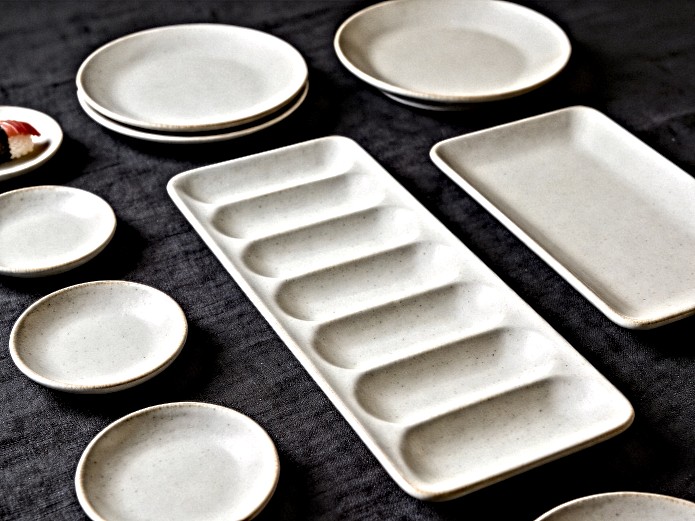
Here is a realistic breakdown based on current factory quotes from Chaozhou and Dehua [VERIFY BEFORE PUBLISHING]. Your actual pricing will vary by volume, glaze complexity, and decoration requirements.
| Material | Unit Price (FOB) | MOQ | Lead Time | Best For |
|---|---|---|---|---|
| Standard porcelain | $1.80 – $3.50 | 500 pcs/style | 35-45 days | Kaiten, casual sushi |
| High-alumina porcelain | $3.50 – $6.00 | 300 pcs/style | 45-60 days | Omakase, premium counter |
| Vitrified stoneware | $1.50 – $2.80 | 500 pcs/style | 30-40 days | Izakaya, family-style |
| Custom glazed porcelain | $4.00 – $8.00 | 1,000 pcs/style | 55-70 days | Branded concepts |
Custom colors or reactive glazes add 10-15 days to lead time and typically require higher MOQs because the factory must mix glaze batches specifically for your order. If you are opening a single location, stick to stock glazes for your first order and reserve custom work for reorders once you know your turnover rate.
Packaging for sushi ceramics follows the same rules as other commercial tableware: egg-crate dividers, corner protectors, and palletized shipping. One difference: sushi plates often run smaller and lighter, so you can fit more pieces per carton. Confirm with your supplier that they adjust carton dividers for smaller diameters. Loose packing causes rim-to-rim contact and chipping in transit.
FAQ
Can I use the same plates for sushi and hot Japanese dishes?
Yes, if the ceramics are thermal-shock rated and dishwasher-safe. Most commercial porcelain handles both cold sushi service and hot tempura plates. Just avoid extreme temperature swings, like pulling a plate from a freezer and placing hot food on it immediately.
What is the typical replacement cycle for sushi restaurant plates?
In high-volume kaiten operations, expect 15-20% annual replacement due to chipping and staining. Omakase concepts with gentler handling see 5-10%. Buying 20% extra in your initial order covers the first-year replacement cycle without reordering.
Should I source Japanese-made ceramics or Chinese-made for my sushi restaurant?
Japanese-made ceramics carry prestige and authenticity, but at 3-5 times the price of comparable Chinese porcelain. For the dining room and omakase counter, Japanese pieces can justify the cost. For back-of-house, kaiten, and high-turnover service, Chinese-made commercial porcelain offers the same durability at a fraction of the price. Most successful operators mix both.
How do I test glaze safety for sushi service?
Request lead and cadmium migration test reports from your supplier. For sushi service, where acidic ingredients contact the glaze directly, confirm compliance with FDA 21 CFR 175.300 or EU 84/500/EEC limits [VERIFY BEFORE PUBLISHING]. Do not accept verbal assurances. If the supplier cannot provide test documentation, budget $200-400 per glaze color for third-party lab testing through SGS or Intertek. See our ceramic certification standards guide for full compliance requirements.
Can I get custom shapes for my sushi concept?
Yes, but custom molds add $800-2,500 in mold development costs and extend lead time by 2-3 weeks. Most factories in Chaozhou and Dehua offer custom shaping for orders above 2,000 pieces per style. For your first order, use existing mold shapes and reserve custom profiles for reorders once you validate the concept. Learn more about the sample evaluation process before committing.
—
If you are planning a sushi restaurant opening or refreshing your existing tableware, submit your design for feasibility review. We can evaluate your menu format, service style, and volume to recommend plate sizes, materials, and quantities that match your operation.