Ceramic tableware for catering companies needs to survive transport, repeated industrial washing, and high-turnover service without chipping or losing its presentation appeal. After sourcing ceramics for mobile food operations for over a decade, I have seen the same pattern: buyers either over-spec and pay for hotel-grade durability they do not need, or under-spec and watch plates crack after three months of event-site handling. The right approach is to match the ceramic specification to the actual stress profile of your operation — transport vibration, stack compression, dishwasher alkalinity, and guest-facing presentation. This guide gives you a decision framework, a sample evaluation checklist, and concrete supplier requirements you can copy into your next RFQ.
What Makes Catering Tableware Different from Restaurant Dinnerware
Restaurant ceramics stay in one building. Catering ceramics travel. That single difference changes every specification priority.
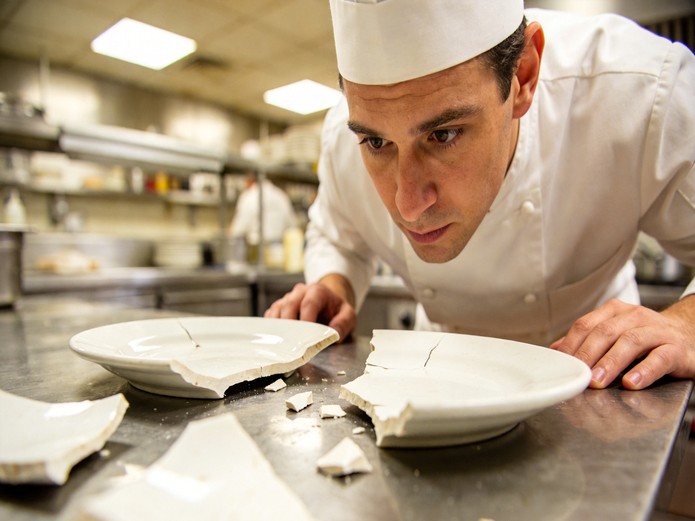
In a fixed restaurant, breakage comes from dropped plates and thermal shock. In catering, breakage comes from vibration during transport, pressure from stacked transport crates, edge-to-edge contact in insulated carriers, and rapid temperature swings when hot food meets ambient-temperature ceramic in an outdoor tent. A plate that scores perfectly in a restaurant kitchen may fail catastrophically in a catering van.
Catering operations also run at higher volume per piece. A single catering plate might serve three events in one weekend, each followed by an industrial dishwasher cycle. That is six to nine wash cycles per week per plate — versus two to three for restaurant tableware. Glaze durability and foot-ring structural integrity matter more in catering than in any other food service segment.
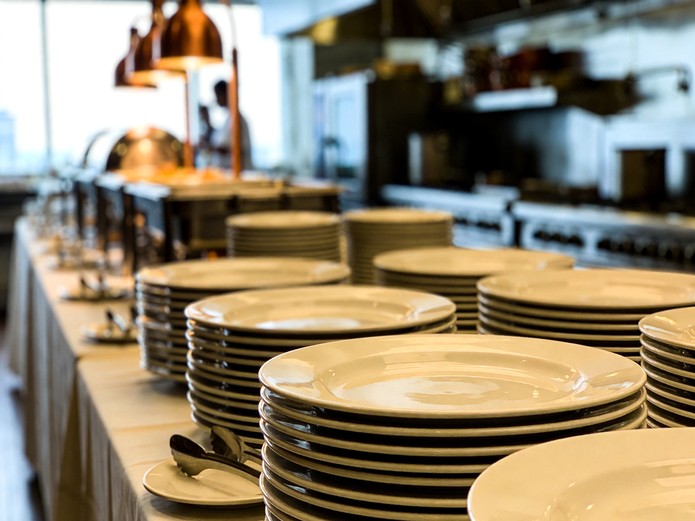
Finally, catering presentation is context-dependent. A corporate lunch buffet demands neutral, stackable plates that look consistent under fluorescent lights. A wedding plated dinner demands rimmed pieces with enough surface area for sauced proteins and garnishes. The same supplier rarely serves both needs well, which is why many catering companies split orders across two ceramic lines.
Key Specs to Prioritize When Buying Ceramic Tableware for Catering
Not all ceramic specs matter equally for catering. Here is how to weight them based on what actually breaks in the field.
Thermal Shock Resistance
Catering ceramics move between ambient outdoor temperatures, heated holding cabinets, and commercial dishwashers in short cycles. Look for a thermal shock differential of at least 150°C. Porcelain and high-fired stoneware (above 1,200°C) generally meet this. Low-fired earthenware and some decorative stoneware do not. Ask your supplier for the ASTM C1525 or ISO 10545-9 test result. If they cannot produce it, assume the ceramic will crack under thermal stress. [VERIFY BEFORE PUBLISHING]
Stackability and Foot-Ring Design
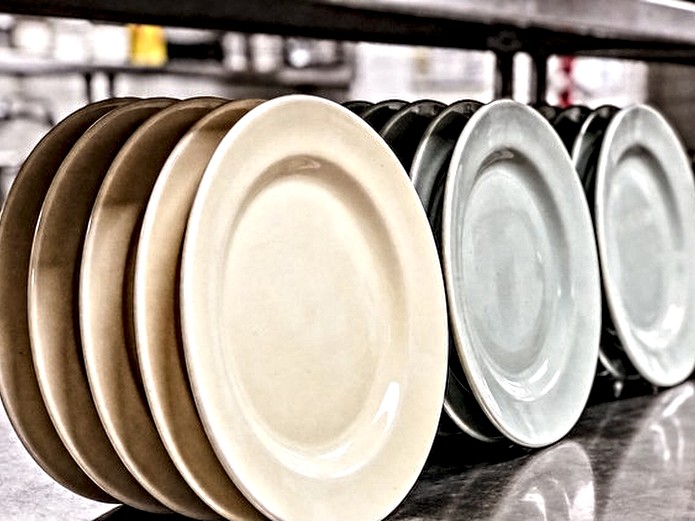
A catering plate spends more time stacked in a transport crate than on a table. The foot-ring — the unglazed ring on the underside — must be wide enough and flat enough to distribute weight evenly across the piece below it. Narrow or warped foot-rings create pressure points that cause chipping during transit. When evaluating samples, stack twenty identical plates and check whether the stack leans or the bottom plate shows stress marks.
Glaze Hardness and Alkali Resistance
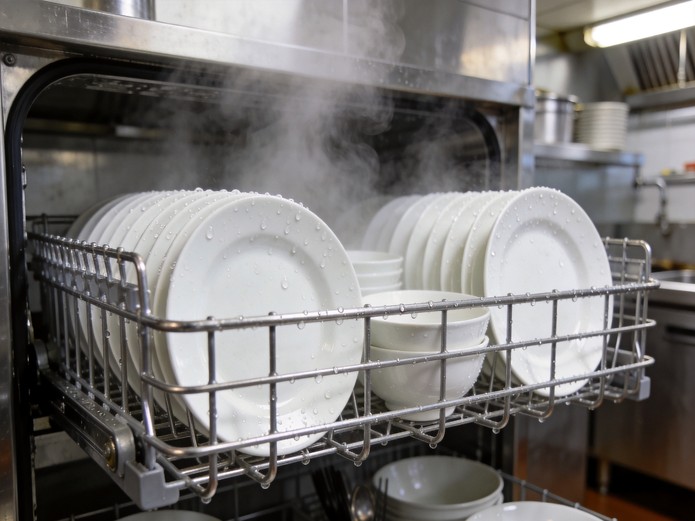
Industrial dishwasher detergents are highly alkaline. Over time, soft glazes develop a cloudy “etching” that makes white plates look gray and colored plates look dull. Look for a Mohs hardness of 5 or higher and an alkali resistance rating of GA (Class A) under ISO 10545-13. [VERIFY BEFORE PUBLISHING] If your supplier cannot confirm glaze hardness, run a simple test: soak a sample in a 5% sodium hydroxide solution at 60°C for 24 hours and compare gloss retention against an unsoaked control.
Weight and Handling Ergonomics
Your serving staff carry hundreds of plates per event. A dinner plate that weighs 50 grams more than necessary adds measurable fatigue over a service. At the same time, plates that are too light feel cheap to guests. The sweet spot for catering dinner plates is 450–550 grams for porcelain and 550–700 grams for stoneware. Soup bowls and serveware can run heavier because they are carried less frequently.
MOQ, Lead Time, and Budget Planning for Catering Orders
Catering companies typically reorder every 12–18 months due to attrition and style updates. Your first order sets the pattern for every reorder, so getting the volume and mix right matters.
| Order Parameter | Small Catering (under 500 covers/week) | Mid-Size Catering (500–2,000 covers/week) | Large Catering (2,000+ covers/week) |
|---|---|---|---|
| Typical MOQ per SKU | 100–200 pieces | 300–500 pieces | 500–1,000 pieces |
| Total first order volume | 500–1,500 pieces | 2,000–5,000 pieces | 5,000–15,000 pieces |
| Production lead time | 30–45 days | 45–60 days | 60–90 days |
| Sea freight + customs | 25–35 days | 25–35 days | 25–40 days |
| Total timeline (order to delivery) | 55–80 days | 70–95 days | 85–130 days |
| Estimated cost per piece (FOB) | $2.50–$4.50 | $2.00–$3.80 | $1.60–$3.20 |
| Recommended buffer stock | 15% | 12% | 10% |
The cost-per-piece ranges above assume standard white or neutral-colored porcelain with simple glaze. Custom colors, decals, or embossed rims add 15–40% to unit cost and 2–4 weeks to lead time. If you need custom branding, plan for sample approval cycles that can add 3–6 weeks before production even starts. See our ceramic production timeline guide for a detailed month-by-month breakdown.
For budget planning, allocate 60–70% of your ceramic budget to dinner plates and soup bowls — these are your highest-attrition items. Allocate 20–25% to serveware and platters, which break less often but cost more per piece. Reserve 10–15% for specialty items like bread plates, sauce boats, and display stands that differentiate your presentation but do not need replacement as frequently.
Common Mistakes Catering Buyers Make (and How to Avoid Them)
These are the three errors I see most often when catering companies source ceramics for the first time.
Mistake 1: Buying Based on Restaurant Supplier Recommendations
A supplier who serves fine-dining restaurants will recommend fine-dining ceramics — thinner bodies, delicate rims, and decorative glazes that look beautiful in a dining room but chip in a transport crate. Catering ceramics need thicker bodies (minimum 5 mm at the rim), flatter profiles for stable stacking, and neutral glazes that hide minor wear. Ask your supplier specifically for their catering or hospitality line, not their restaurant line. If they do not have one, you are working with the wrong supplier.
Mistake 2: Ignoring the Transport Packaging
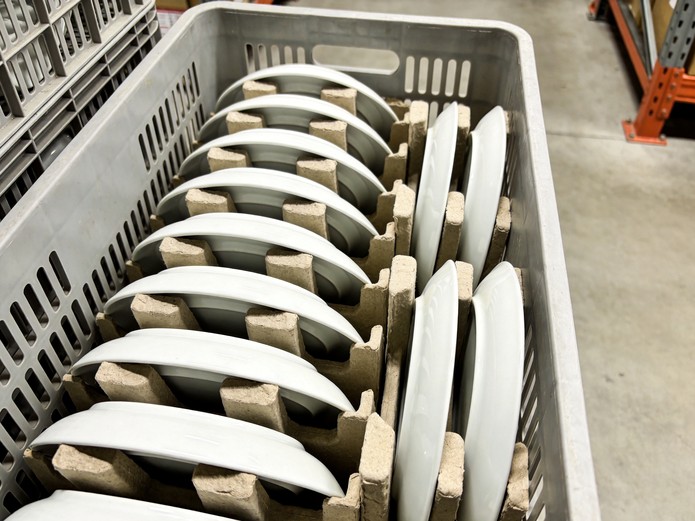
Most breakage in catering happens during transport, not service. Yet buyers obsess over glaze color and rim shape while accepting flimsy cardboard dividers that collapse after the third use. Demand molded pulp dividers or corrugated inserts rated for at least 50 reuse cycles. Better yet, negotiate reusable plastic crate packaging with your supplier — the upfront cost is higher, but breakage drops by 30–50% and your staff save hours of packing time per event. See our ceramic packaging and shipping guide for divider specifications.
Mistake 3: Ordering Too Many SKUs Too Soon
New catering companies want a full “line” — dinner plates, salad plates, bread plates, soup bowls, dessert plates, coffee cups, and saucers. The result is fragmented inventory, higher per-SKU MOQs, and constant shortages of the one item that breaks most. Start with three SKUs: a versatile dinner plate (10.5–11 inch), a deep soup bowl (20–24 oz), and a rectangular platter for buffet display. Run these for six months, track breakage by SKU, then expand. This approach cuts your first-order cost by 40–50% and gives you real attrition data before you commit to a full line.
A Practical Checklist for Evaluating Catering Ceramic Samples
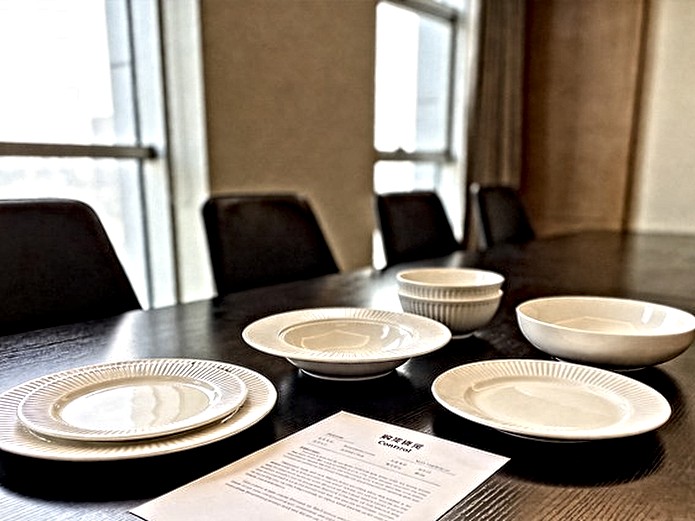
Use this checklist when samples arrive. Do not approve a production order until every item passes.
- Visual inspection: No glaze pinholes, cracks, or color variation across the sample set. Hold five identical pieces side by side under daylight — variation visible to the eye will be obvious to guests under event lighting.
- Stack test: Stack 20 identical plates. The stack must stand straight without leaning. The bottom plate must show no stress marks or hairline cracks after 24 hours under load.
- Edge test: Tap the rim gently against a hard surface (a countertop edge works). A dull thud indicates a well-fired, dense body. A ringing or hollow sound suggests micro-cracks or under-firing.
- Thermal test: Transfer the plate from a 200°C oven directly into room-temperature water. No cracks after three cycles. [Caution: this is a destructive test — use a sample you do not need intact.]
- Dishwasher simulation: Run the sample through 50 commercial dishwasher cycles. Check for glaze etching, edge chipping, and foot-ring wear. Mark any degradation with a permanent marker and photograph it for supplier reference.
- Weight check: Weigh five identical pieces. Variance should not exceed ±3%. High variance indicates inconsistent clay composition or forming process.
- Food contact check: Soak the sample in 4% acetic acid at 22°C for 24 hours. Test the leachate for lead and cadmium with a lead-test kit or send to a lab. Any detectable lead or cadmium above FDA limits (0.5 μg/mL for lead, 0.25 μg/mL for cadmium in flatware) is a rejection. [VERIFY BEFORE PUBLISHING]
- Transport simulation: Pack the sample in the proposed transport divider and shake vigorously for 60 seconds. No chips, no glaze contact marks.
If a sample fails any of these tests, reject the batch and ask the supplier for process documentation showing how they will correct the defect. Do not accept verbal assurances. For a deeper breakdown of defect classification, see our ceramic defect classification standards article.
Cost-vs-Quality Tradeoffs: Where to Save and Where to Spend
Catering ceramics are a volume game. A $0.50 saving per plate on a 5,000-piece order is $2,500 — enough to cover custom transport crates or a second color SKU. But cutting costs in the wrong places creates hidden expenses that erase the savings within one quarter.
| Spec Area | Where to Save | Where to Spend | Rationale |
|---|---|---|---|
| Body material | Standard porcelain instead of bone china | High-fired stoneware for serveware and buffet pieces | Bone china adds cost without meaningful durability gains for catering. High-fired stoneware resists thermal shock and stack pressure better. |
| Glaze color | Single neutral color (white, ivory, slate) | Alkali-resistant glaze formulation | Neutral colors hide wear and match any event theme. Alkali-resistant glaze prevents etching and extends service life by 30–50%. |
| Rim shape | Flat or slightly rolled rim | Reinforced rim thickness (minimum 5 mm) | Ornate rims chip in transport. A thick, simple rim survives stacking and handling. |
| Decoration | No decals, no gold rims, no hand-painting | Subtle embossed logo or pattern | Decorative elements add cost and break down under dishwasher alkalinity. A subtle embossed pattern adds brand identity at near-zero marginal cost. |
| Packaging | Standard sea-freight carton | Molded pulp dividers or reusable transport crates | Breakage during transport is your highest hidden cost. Investing in proper packaging pays for itself in reduced replacement orders. |
The single best return on investment in catering ceramics is alkali-resistant glaze. A plate with standard glaze may look perfect for three months and then develop irreversible clouding. A plate with alkali-resistant glaze maintains its finish for 18–24 months under the same conditions. The cost difference is usually $0.20–$0.40 per piece. Over a 5,000-piece order, that is $1,000–$2,000 upfront — versus replacing 20–30% of your inventory every year due to glaze degradation.
For more on cost breakdowns by material and firing type, see our ceramic tableware total cost of ownership guide.
Three Actionable Steps Before Your Next Order
If you take nothing else from this guide, do these three things before placing your next catering ceramic order.
- Run a 50-cycle dishwasher test on samples. This single test reveals more about real-world durability than any factory certificate. Document the results with photographs and share them with your supplier. If the glaze etches or the rim chips, negotiate a formulation change or switch suppliers.
- Order a 90-day trial batch before committing to volume. Buy 50–100 pieces of each SKU and use them in actual events for three months. Track breakage by cause — transport, thermal shock, dishwasher, guest damage — and use the data to refine your specifications before the main order.
- Negotiate transport packaging as part of the unit price. Do not treat packaging as an afterthought. Ask your supplier to quote molded pulp dividers or reusable crates inclusive in the per-piece price. If they refuse, add 8–12% to your budget for third-party protective packaging.
Need a specification sheet you can send directly to suppliers? Request our catering serveware specification sheet — it includes the exact parameters, test methods, and acceptance criteria outlined in this guide, formatted for RFQ distribution.
Frequently Asked Questions
What is the minimum order quantity for catering ceramic tableware?
Most suppliers set MOQs at 100–200 pieces per SKU for small catering companies and 500–1,000 pieces for large operations. Some will accept 50-piece trial orders at a 20–30% premium. If you need multiple SKUs, negotiate a combined MOQ across the order rather than per-SKU minimums.
How long does it take to receive a bulk catering ceramic order?
From sample approval to delivery, expect 55–80 days for small orders (under 1,500 pieces), 70–95 days for mid-size orders, and 85–130 days for large orders. Custom colors or decals add 2–4 weeks. Sea freight from China to North America or Europe typically takes 25–40 days after production completes.
Can catering ceramics go in commercial dishwashers?
Yes, provided the glaze is alkali-resistant and the body is high-fired porcelain or stoneware. Avoid low-fired earthenware and decorative glazes with metallic accents — these degrade rapidly under industrial detergent. For dishwasher safety standards and test methods, see our ceramic microwave and dishwasher safety standards guide.
What is the typical lifespan of catering ceramic plates?
Well-specified catering ceramics last 18–30 months under normal use, with attrition rates of 2–4% per month for dinner plates and 1–2% for serveware. Poorly specified ceramics may show glaze degradation within three months and reach 50% attrition within a year. The difference is almost always glaze quality and foot-ring design, not body material.
Should catering companies buy porcelain or stoneware?
Porcelain is lighter and more refined, making it ideal for plated events where presentation matters. Stoneware is heavier and more thermally stable, making it better for buffet service and outdoor events. Many catering companies split their inventory: porcelain for formal events, stoneware for casual and buffet service. The cost difference is typically $0.30–$0.80 per piece.
How do I prevent chips and cracks during transport?
Use molded pulp dividers or reusable plastic crates with individual plate slots. Never stack plates rim-to-rim without separators. Pad the crate interior with non-abrasive foam. Train staff to lift stacks by the edges, never by the center. And spec plates with flat, wide foot-rings — narrow foot-rings create pressure points that crack under stack weight.