Ceramic production lead time is one of the most critical factors that B2B buyers must manage when sourcing tableware from China. Whether you are placing your first bulk order or managing a mature supply chain, understanding how long production takes—and what drives delays—directly impacts your inventory planning, cash flow, and ability to meet customer demand.
In this comprehensive guide, we break down every stage that affects ceramic production lead time, from raw material preparation to final shipment. You will learn typical timeframes for different product types, proven strategies to reduce delays, and how to plan your sourcing calendar around peak seasons and international logistics windows.
What Is Ceramic Production Lead Time and Why It Matters
Ceramic production lead time refers to the total elapsed time from order confirmation to the moment finished goods are ready for shipment. For B2B buyers, this metric is far more than a scheduling detail—it shapes every downstream decision in the supply chain.
Underestimating ceramic production lead time leads to stockouts, missed sales seasons, and expensive air freight to cover gaps. Overestimating it ties up capital in excess inventory and increases warehousing costs. The sweet spot is a data-driven production timeline that accounts for every variable.
For most ceramic tableware orders from China, ceramic production lead time ranges from 30 to 75 days depending on product complexity, order volume, customization requirements, and seasonal demand. Understanding the components of this timeline is the first step toward optimizing your sourcing strategy. For a deeper look at how to evaluate suppliers before placing an order, explore our sourcing guides.
8 Key Factors That Affect Ceramic Production Lead Time
Multiple variables influence how quickly a ceramic factory can complete your order. Here are the eight most significant factors that determine ceramic production lead time for bulk tableware.
1. Raw Material Availability
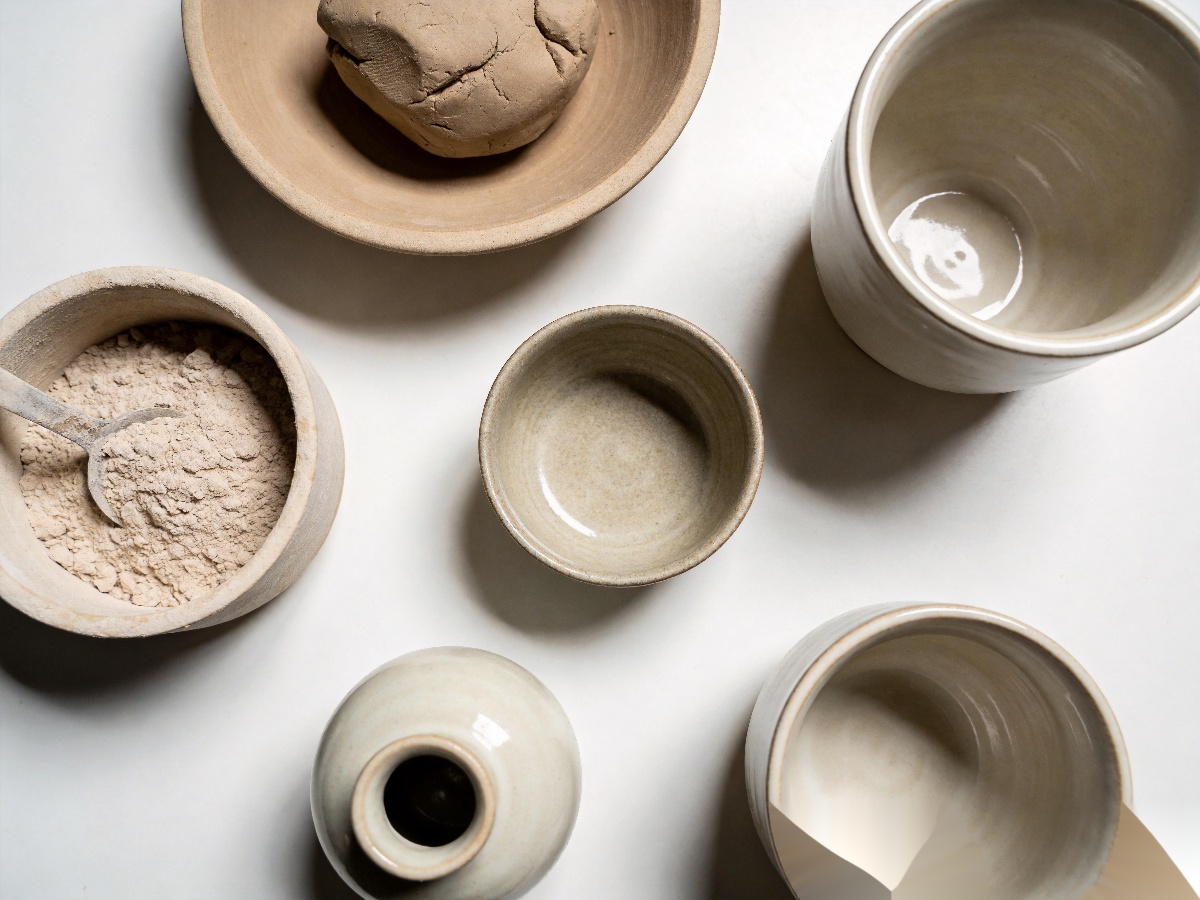
The foundation of every ceramic product is its raw materials—kaolin clay, feldspar, quartz, and glaze chemicals. Most established factories maintain strategic reserves of common materials, but specialty clays (such as imported New Zealand kaolin for bone china) may require 7–15 days of additional procurement time. During peak sourcing seasons, competition for premium raw materials intensifies, adding further delays.
2. Mold and Tooling Preparation
For custom-shaped tableware, new plaster molds must be designed, carved, and dried. A single mold set typically takes 5–10 days to produce. Complex shapes with intricate details or multi-piece molds (for items like teapots with lids) extend this timeline. Factories with in-house CNC mold-making capabilities can reduce this to 3–5 days, but not all suppliers invest in this equipment.
3. Forming Method
The forming technique directly impacts throughput. Slip casting (used for complex hollow shapes like mugs and vases) is slower, producing 50–100 pieces per mold per day. Press forming (for flat items like plates and saucers) is faster, with automated lines producing 2,000–5,000 pieces daily. Isostatic pressing offers the fastest throughput for high-volume standard shapes but requires significant mold investment.
4. Drying and Bisque Firing
After forming, green (unfired) ceramics must be dried slowly to prevent cracking. Natural drying takes 24–48 hours, while controlled drying rooms can reduce this to 12–18 hours. The first firing (bisque firing) typically requires 8–12 hours in the kiln, plus loading and cooling time. This stage alone accounts for 2–3 days in the ceramic production lead time.
5. Glazing and Decoration
Glazing is both an art and a science. Simple single-color glazes can be applied by automated spray lines at high speed. However, multi-layer glazes, hand-painted designs, decals, and underglaze printing add significant time. Custom decal production alone can take 5–7 days. For orders requiring multiple decoration techniques (e.g., screen printing plus reactive glaze), expect an additional 5–10 days in ceramic production lead time.
6. Kiln Scheduling and Glost Firing
The final firing (glost firing) is the most energy-intensive step. Tunnel kilns run continuously and can process large volumes efficiently, but your order must be scheduled into the kiln’s rotation. During peak season, kiln scheduling can add 3–7 days of waiting time. Each firing cycle takes 10–16 hours, including controlled cooling to prevent thermal shock damage. Learn more about ceramic thermal shock resistance standards to understand why controlled cooling is non-negotiable.
7. Quality Control and Sorting
Post-firing quality control is a multi-step process: visual inspection, dimensional checks, lead and cadmium leaching tests, thermal shock testing, and packaging inspection. For export-grade orders, factories typically sort products into A-grade, B-grade, and reject categories. This QC process takes 2–4 days depending on order size and the buyer’s specific acceptance criteria. A thorough quality control checklist helps ensure nothing is missed.
8. Packaging and Pre-Shipment Preparation
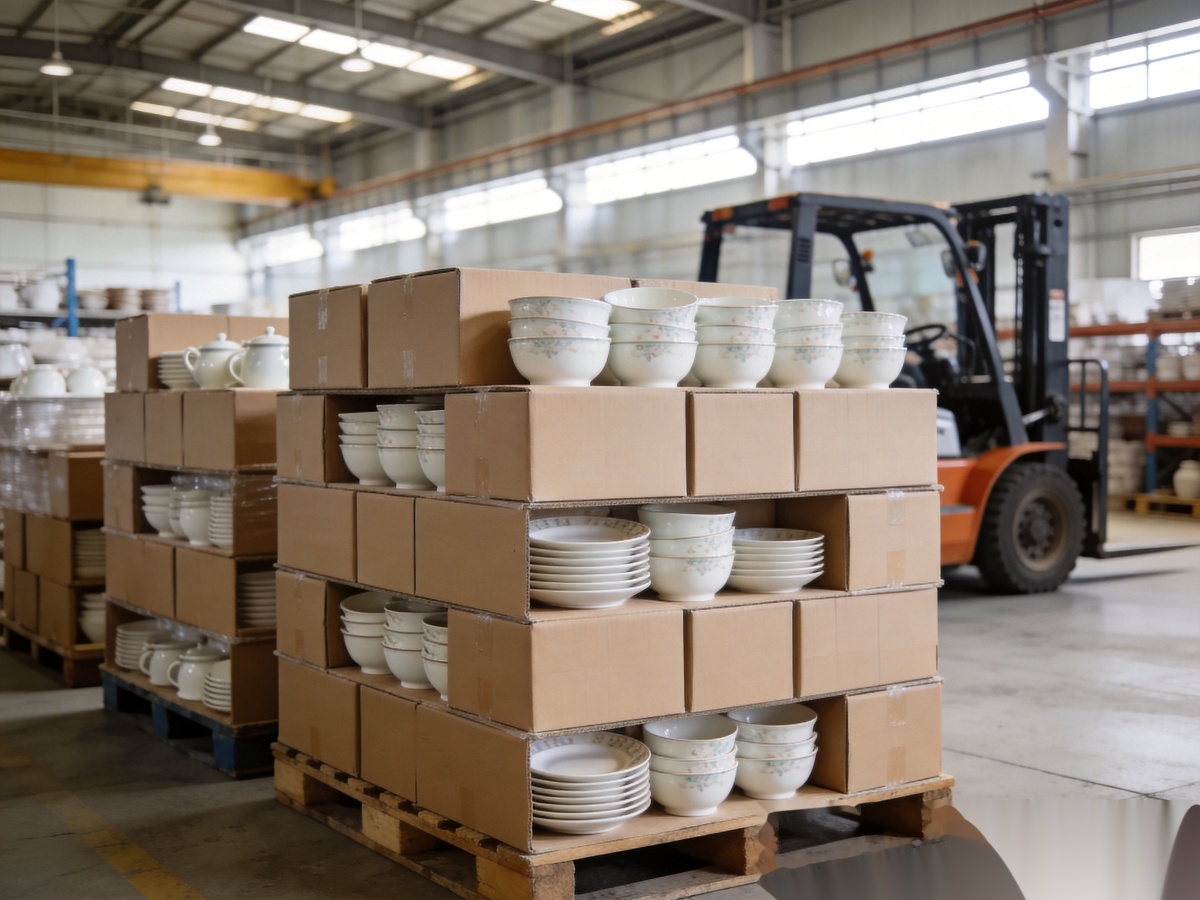
Export packaging for ceramic tableware requires careful attention to breakage prevention. Standard packaging (individual boxes + cartons + pallets) takes 2–3 days for a container load. Custom retail packaging (gift boxes, branded inserts, foam molds) can add 5–10 days if packaging materials need to be produced separately. Container booking and pre-shipment documentation add another 1–3 days to the ceramic production lead time.
Typical Ceramic Production Lead Time by Product Type
Not all ceramic products require the same production time. Here is a practical breakdown of typical ceramic production lead time for common tableware categories.
- Stock/catalog items (no customization): 15–25 days — factory produces from existing molds and standard glazes
- Semi-custom orders (custom color/logo on existing shapes): 25–40 days — requires decal production and color matching
- Full custom orders (new shapes + custom glazes): 45–75 days — includes mold making, sample approval, and full production
- Bone china and fine porcelain: 50–80 days — longer due to higher firing temperatures and stricter quality requirements
- Handmade/artisan ceramics: 60–90 days — labor-intensive forming and decoration with lower daily output
These timelines assume normal factory capacity utilization. During peak sourcing seasons (typically August–November for holiday inventory and January–March for spring collections), add 10–20% buffer time to account for factory congestion and raw material competition.
How to Reduce Ceramic Production Lead Time: 6 Proven Strategies
Smart buyers don’t just accept lead times passively—they actively work with suppliers to compress timelines. Here are six proven strategies to reduce ceramic production lead time without sacrificing quality.
Strategy 1: Pre-Approve Samples Before Peak Season
The sample approval cycle is one of the biggest hidden delays. Each round of sample revision adds 7–15 days. By finalizing designs, shapes, and glaze colors 2–3 months before your target production date, you eliminate this bottleneck entirely. Read our guide on ceramic sample evaluation for a structured assessment framework.
Strategy 2: Use Factory-Standard Shapes with Custom Decoration
Starting from the factory’s existing mold library eliminates the 5–10 day mold-making phase and reduces trial-and-error risk. You can still achieve brand differentiation through custom glazes, decals, and packaging while keeping ceramic production lead time 15–20 days shorter than fully custom orders.
Strategy 3: Place Blanket Orders with Scheduled Releases
Instead of placing individual purchase orders, negotiate a blanket order covering 6–12 months of demand with scheduled monthly or quarterly releases. The factory procures raw materials in bulk and maintains production slots for your releases, reducing per-order ceramic production lead time by 30–40%.
Strategy 4: Consolidate SKUs and Increase Per-SKU Volume
Factories prioritize larger, simpler orders. An order of 10 SKUs × 2,000 pieces each moves faster through production than 50 SKUs × 400 pieces each. Each SKU change requires kiln reconfiguration, glaze line cleaning, and mold changes—all of which add to ceramic production lead time.
Strategy 5: Maintain a Raw Material Buffer Agreement
For recurring orders, negotiate a raw material buffer agreement where the factory maintains a 30-day supply of your specific clay body and glaze materials. This eliminates the 7–15 day procurement delay at the start of each production run.
Strategy 6: Coordinate Packaging Production in Parallel
Custom packaging is often produced sequentially after ceramic production finishes. By approving packaging designs and authorizing the packaging supplier to begin production while ceramics are still in the kiln, you can overlap these timelines and save 5–10 days on overall ceramic production lead time.
Seasonal Planning: How Peak Demand Affects Ceramic Production Lead Time
China’s ceramic industry operates on a predictable seasonal cycle that significantly impacts ceramic production lead time. Smart buyers plan their orders around these patterns to avoid delays and premium pricing.
Q1 (January–March): Post-CNY Ramp-Up
After Chinese New Year (late January to mid-February), factories take 2–4 weeks to return to full capacity as workers return gradually and raw material suppliers restart operations. Orders placed in January may not enter production until late February. Lead times during this period are typically 20–30% longer than average.
Q2 (April–June): Optimal Production Window
This is the sweet spot for ceramic sourcing. Factories are at full capacity, raw materials are readily available, and production schedules are flexible. Ceramic production lead time is shortest during Q2, and factories are more willing to accommodate rush orders and custom requests.
Q3 (July–September): Pre-Holiday Rush
Starting in July, factories begin receiving orders for Christmas, Thanksgiving, and New Year tableware. By August, production slots fill rapidly. Ceramic production lead time extends by 10–25% as factories prioritize larger orders. If you need holiday-season inventory, your order should be confirmed by June at the latest.
Q4 (October–December): Peak Pressure
October is the most congested month in China’s ceramic calendar. National Day holidays (October 1–7) reduce working days, while demand for spring/summer collection samples surges. Ceramic production lead time reaches its annual maximum. Orders placed in October may not ship until January of the following year.
Ceramic Production Lead Time and International Logistics Coordination
Production is only half the equation. The total time from order placement to goods arriving at your warehouse includes international shipping, customs clearance, and inland transportation. Coordinating ceramic production lead time with logistics windows is essential for reliable supply chain planning.
Sea Freight Windows
For most destinations, sea freight from China takes 25–45 days (China to US West Coast: ~25 days, to Europe: ~35 days, to Australia: ~20 days). Container booking should be arranged 7–14 days before the expected production completion date. During peak shipping seasons (September–November), container availability tightens and freight rates increase significantly. For a detailed breakdown of shipping cost structures, see our Incoterms and shipping costs guide.
Customs and Compliance Clearance
Ceramic tableware imports require food-safety documentation (FDA, LFGB, or EU compliance certificates depending on destination). Ensure your supplier provides test reports before shipment to avoid customs holds, which can add 5–15 days of unexpected delay. Learn more about ceramic certification standards and compliance requirements.
Buffer Time Recommendations
For reliable supply chain planning, add a 15–20% buffer to the quoted ceramic production lead time. This accounts for unforeseen delays in raw material supply, kiln scheduling, quality rejections, and logistics disruptions. For time-critical orders (e.g., seasonal promotions with fixed launch dates), a 25% buffer is recommended.
How to Communicate Lead Time Requirements with Your Ceramic Supplier
Clear communication is the simplest way to manage ceramic production lead time effectively. Here are best practices for setting expectations with your supplier from day one.
- Specify your target delivery date, not just lead time. Instead of asking “how long will it take,” tell the factory “I need goods in my warehouse by [date].” This forces the supplier to plan backward from your deadline.
- Request a detailed production schedule. A professional factory should provide a week-by-week breakdown showing mold preparation, forming, firing, glazing, QC, and packaging milestones.
- Build in checkpoint inspections. Schedule mid-production inspections (at forming stage and post-firing) to catch quality issues early—before they cause costly rework delays.
- Define penalty clauses for late delivery. Include liquidated damages in your purchase agreement (typically 0.5–1% per week of delay, capped at 5–10%) to incentivize on-time production.
- Maintain a backup supplier. Even the best factories experience disruptions. Having a qualified second source reduces your risk exposure and gives you negotiating leverage on ceramic production lead time commitments.
For a comprehensive approach to supplier evaluation, review our supplier selection checklist before entering negotiations.
Frequently Asked Questions About Ceramic Production Lead Time
How long does ceramic production lead time typically take for a standard bulk order?
For standard catalog items with no customization, ceramic production lead time is typically 15–25 days. Semi-custom orders (custom colors or logo printing on existing shapes) take 25–40 days, while fully custom orders with new shapes and glazes require 45–75 days. Bone china and fine porcelain products generally add 10–15 days due to higher firing temperatures and stricter quality standards.
Can I rush a ceramic tableware order if I need it faster?
Yes, but with caveats. Rush orders typically incur a 15–30% price premium and may require compromises on customization options. The factory may need to run extra kiln shifts or prioritize your order over others, which costs more. Rush production is most feasible for semi-custom orders using existing molds, where ceramic production lead time can be compressed to 15–20 days. However, certain processes like kiln firing cannot be safely rushed—attempting to shorten firing cycles risks product quality.
What causes the most common delays in ceramic production lead time?
The top five causes of delays are: (1) sample approval cycles taking longer than expected, (2) raw material shortages during peak season, (3) kiln scheduling conflicts when the factory is at full capacity, (4) quality failures requiring rework or reproduction, and (5) Chinese national holidays (Chinese New Year, National Day) reducing available working days. Proactive planning around these variables is the key to predictable ceramic production lead time.
How do Chinese holidays affect ceramic production lead time?
Chinese New Year (typically late January to mid-February) causes the most significant disruption, with factories shutting down for 2–3 weeks and taking an additional 2–3 weeks to return to full capacity. National Day (October 1–7) adds a one-week pause. Labor Day (May 1–5) and Dragon Boat Festival (June, 3 days) have shorter impacts. Always add 3–5 weeks of buffer time around Chinese New Year and 1 week around National Day to your ceramic production lead time calculations.
Should I place one large order or multiple smaller orders to optimize lead time?
For most B2B buyers, a hybrid approach works best: place one large blanket order covering 6–12 months of projected demand to secure raw materials and production slots, then schedule periodic releases (monthly or quarterly) for actual shipment. This strategy gives you the cost advantages of bulk purchasing while maintaining flexibility and shorter per-release ceramic production lead time. It also reduces the risk of overstocking if demand forecasts change.
Ready to Optimize Your Ceramic Sourcing Timeline?
Understanding ceramic production lead time is the foundation of efficient sourcing. By choosing the right supplier, planning around seasonal patterns, and implementing the strategies outlined in this guide, you can reduce lead times by 20–40% while maintaining consistent product quality.
At CeraSupply, we help B2B buyers navigate the complexities of ceramic sourcing with transparent production timelines, real-time order tracking, and a proven network of certified manufacturers. Whether you need stock tableware or fully custom designs, we deliver on schedule.
Get a free quote and production timeline today — Contact us on WhatsApp