Ceramic tableware for Indian restaurants must handle three challenges that most other cuisines do not: extremely hot curries served directly from the tandoor or stove, shared communal platters that get heavy use, and aggressive daily washing cycles with turmeric and oil stains. After sourcing ceramic for dozens of Indian restaurant openings, I have found that material choice, wall thickness, and glaze type matter far more than decorative style. This guide covers the specific sizes, shapes, and durability standards you need to specify when ordering ceramic tableware for Indian restaurants, along with what to expect for MOQ, lead time, and per-piece cost.
Why Standard Restaurant Ceramic Often Fails in Indian Kitchens
Most off-the-shelf commercial ceramic is designed for plated Western service: individual portions, moderate temperatures, and relatively gentle handling. Indian service is different in three ways that break ordinary ceramic.
Thermal shock from hot curries
A butter chicken or vindaloo served straight from a 300C tandoor or stove hits the bowl at 80-90C. Standard porcelain with thin walls (3-4 mm) can crack from the sudden temperature differential, especially if the bowl was stored at room temperature. You need stoneware or thick-walled porcelain rated for thermal shock.
Staining from turmeric and spices
Turmeric contains curcumin, which bonds aggressively with porous or micro-cracked glaze surfaces. Matte glazes and unsealed reactive glazes are the worst offenders. A single week of service can leave permanent yellow stains that make the tableware look dirty even after washing.
Shared-platter wear patterns
Thali service and family-style sharing mean the same plate gets scraped by metal serving spoons dozens of times per service. Standard glazed surfaces develop visible scratch marks within a month. You need a harder, more abrasion-resistant glaze.
Essential Ceramic Pieces for Indian Restaurant Service
A full Indian restaurant setup requires fewer individual SKUs than a fine-dining restaurant, but each piece has specific demands.
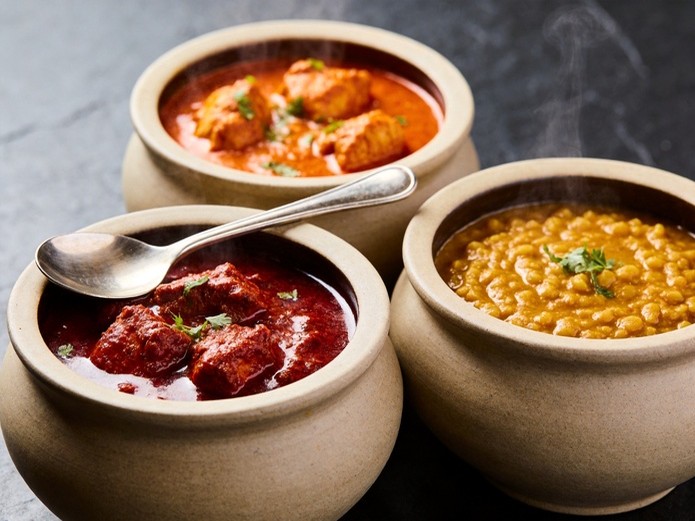
Curry bowls (kadai-style)
400-600 ml capacity, 14-16 cm diameter, with thick walls (5-7 mm) and a foot ring that lifts the hot base off the table. The bowl should retain heat for 15-20 minutes after serving. Round or slightly flared shapes work best for scooping with naan.
Rice bowls
300-400 ml, 12-14 cm diameter. Slightly deeper than standard rice bowls because Indian rice dishes (biryani, pulao) are often served with sauce and need containment.
Chutney and raita bowls
80-120 ml, 7-9 cm diameter. These get the heaviest staining from tamarind, mint, and yogurt-based sauces. Specify a non-porous, high-gloss glaze for these.
Lassi cups
300-450 ml, tall cylindrical or traditional “kulhad” shape. If you want authentic kulhad-style service, specify unglazed terracotta exterior with glazed interior. For dishwasher service, glazed stoneware with a handle is more practical.
Naan bread plates
25-28 cm flat plates or shallow platters. These need to be large enough for a full naan or roti without folding, with a slightly textured surface to prevent slipping.
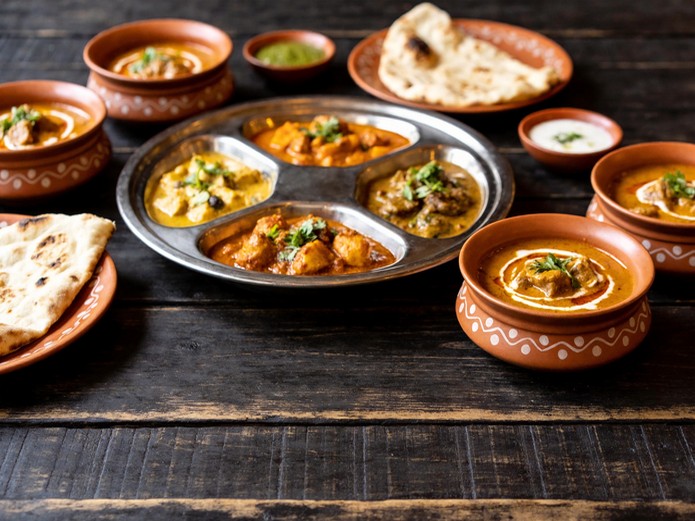
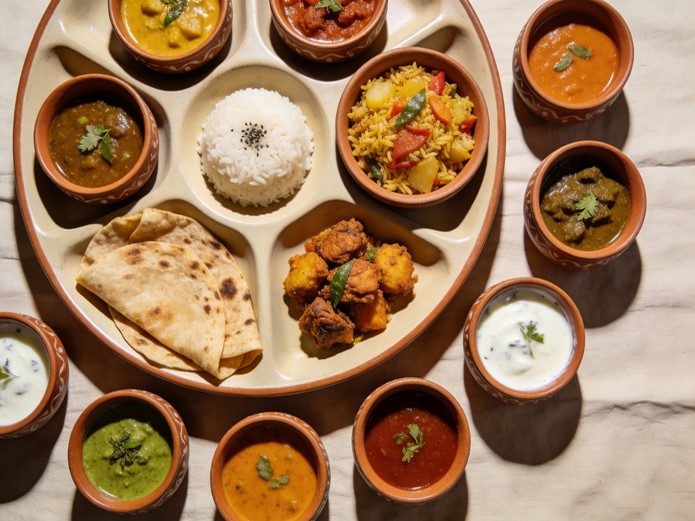
Thali compartment plates
If you serve thali-style meals, specify 30-32 cm round plates with 4-5 shallow compartments (2-3 cm deep). Alternatively, use individual pieces on a large charger plate.
Tea (chai) cups
150-200 ml, small handleless cups or traditional “cutting chai” glasses. Specify thermal shock resistance because chai is served at 70-80C.
Material and Glaze Selection for Indian Cuisine
The material and glaze choice determines whether your ceramic lasts two years or six months in an Indian kitchen.
Stoneware vs porcelain
For most Indian restaurants, high-fired stoneware (1200-1280C) is the better choice than porcelain. Stoneware has: higher thermal shock resistance due to lower thermal expansion; thicker, more durable walls at the same weight; better stain resistance when paired with the right glaze; and lower per-piece cost (typically 15-25% less than comparable porcelain). Porcelain works well for lassi cups, tea cups, and any piece that needs a refined, thin-walled appearance. For curry bowls and thali plates, stoneware is more practical.
Glaze types
Avoid matte and unsealed reactive glazes for curry bowls and chutney bowls. The porous surface traps turmeric and oil. Specify: high-gloss, fully vitrified glaze for curry bowls, chutney bowls, and rice bowls; satin or semi-gloss glaze for naan plates and thali compartments (slip-resistant without being too porous); lead-free and cadmium-free glaze, certified to FDA 21 CFR 175.300 or EU 10/2011 standards. [VERIFY BEFORE PUBLISHING]
Thermal shock rating
Ask your supplier for ceramic rated to withstand a 150C temperature differential (from room temperature to boiling water or hot curry) without cracking. This is typically achieved with specific clay bodies containing grog or chamotte.
Size and Capacity Standards
| Piece | Capacity | Diameter/Width | Wall Thickness | Material Recommendation |
|---|---|---|---|---|
| Curry bowl | 400-600 ml | 14-16 cm | 5-7 mm | Stoneware, high-gloss glaze |
| Rice bowl | 300-400 ml | 12-14 cm | 4-5 mm | Stoneware or porcelain |
| Chutney bowl | 80-120 ml | 7-9 cm | 4-5 mm | Porcelain, high-gloss glaze |
| Lassi cup | 300-450 ml | 8-10 cm (height 12-14 cm) | 5-6 mm | Stoneware or terracotta |
| Naan plate | N/A | 25-28 cm | 4-5 mm | Stoneware, satin glaze |
| Thali plate | N/A | 30-32 cm | 5-6 mm | Stoneware, compartment design |
| Chai cup | 150-200 ml | 7-8 cm | 4-5 mm | Porcelain or stoneware |
Use this table as a specification sheet when requesting quotes. If a supplier cannot meet these dimensions or material requirements, their product is unlikely to survive heavy Indian restaurant use.
Durability Testing: What to Ask Your Supplier
Before placing a bulk order, request these specific tests or documentation:
Thermal shock test
Ask for a test report showing the ceramic survived a 150C temperature change without cracking. The standard test method is ASTM C1525 [VERIFY BEFORE PUBLISHING] or equivalent. If the supplier cannot provide this, request sample pieces and perform your own test: freeze a bowl for 2 hours, then pour boiling water into it. Repeat three times.
Abrasion resistance
Ask for glaze hardness on the Mohs scale. A rating of 5 or higher indicates the glaze will resist scratching from metal serving utensils. Lower ratings will show visible wear within weeks.
Lead and cadmium migration test
Request third-party test reports (SGS, Intertek, or equivalent) showing compliance with FDA or EU food contact limits [VERIFY BEFORE PUBLISHING]. Do not accept a supplier’s self-declaration.
Dishwasher cycle test
Ask how many commercial dishwasher cycles the glaze withstands before showing visible wear. Good commercial ceramic should survive 2,000+ cycles. Anything below 1,000 cycles is unsuitable for daily restaurant use.
Common Sourcing Mistakes When Buying for Indian Restaurants
I have seen these three mistakes repeatedly in Indian restaurant openings:
1. Choosing decorative glaze over functional glaze
Buyers fall in love with reactive or hand-painted glazes that look beautiful in the catalog. Within a month, turmeric stains turn the bowls permanently yellow, and the reactive glaze shows scratch marks from serving spoons. Always prioritize fully vitrified, non-porous glazes over aesthetics.
2. Underestimating bowl wall thickness
Thin-walled porcelain bowls cost less per piece and look elegant. In Indian service, they crack from thermal shock and chip from metal spoon impact. Specify minimum wall thickness in your purchase order, and reject samples that feel light or thin.
3. Ordering identical pieces for every course
A single curry bowl size does not work for all dishes. A dal needs a wider, shallower bowl than a chicken tikka masala. Ordering one size for everything leads to overflow, poor presentation, and higher food waste. Match bowl shape to menu items.
Cost, Quality, and Lead Time Trade-offs
When sourcing ceramic tableware for Indian restaurants, you face three trade-offs:
Low cost + fast lead time = lower durability
Budget ceramic from traders with ready stock can ship in 2-3 weeks but often lacks thermal shock testing and uses thinner walls. Expect 12-18 month replacement cycles.
High quality + custom design = longer lead time
Factory-direct orders with custom glaze colors, embossed logos, or compartment thali designs typically require 45-60 days production plus 20-30 days shipping. The ceramic lasts 3-5 years with proper care.
Middle path: standard shapes, proven glazes
The best balance for most Indian restaurants is to order standard shapes from a supplier who already produces for the Indian market, using their tested glaze formulations. Lead time is 30-45 days, cost is moderate, and durability is proven.
MOQ, Packaging, and Order Planning
MOQ by piece type
Most factories set MOQ at 500-1,000 pieces per SKU for standard shapes. For custom shapes or glazes, expect 2,000-3,000 pieces per SKU. A typical Indian restaurant opening order covers 8-12 SKUs, so total order volume is usually 5,000-10,000 pieces.
Mixed-SKU orders
Ask your supplier if they accept mixed-SKU orders to reach a total volume threshold rather than per-SKU MOQ. Many factories will accept 3,000 total pieces across 6 SKUs if you commit to a reorder within six months.
Packaging for international shipping
Ceramic for Indian restaurants must be packed with extra care because of the thicker, heavier walls. Request: individual piece wrapping in foam or bubble wrap; corrugated dividers between pieces; wooden pallet base for ocean freight; and maximum 15 kg per inner carton to prevent crushing.
Shipping method
For orders under 5 CBM, LCL (Less than Container Load) ocean freight is standard. For 5+ CBM, FCL (Full Container Load) reduces per-piece shipping cost by 20-30%. Air freight is rarely economical for ceramic tableware due to weight.
Your Indian Restaurant Tableware Checklist
Use this checklist when evaluating suppliers or placing orders:
- Wall thickness meets minimum specs (5-7 mm for curry bowls, 4-5 mm for plates)
- Glaze is fully vitrified, non-porous, and high-gloss for sauce-bearing pieces
- Supplier provides thermal shock test documentation (150C differential minimum)
- Lead and cadmium test reports available from third-party lab
- Glaze hardness rated 5+ on Mohs scale
- Dishwasher cycle test shows 2,000+ cycles
- Compartment thali design (if applicable) has smooth, rounded edges for cleaning
- Foot ring design lifts hot base off table surface
- Sample pieces tested with actual menu items before bulk order
- Packaging specification approved for ocean freight with individual wrapping
- Supplier accepts mixed-SKU orders or has reasonable per-SKU MOQ
- Reorder lead time confirmed (should be 30-45 days for standard shapes)
FAQ
Can I use the same ceramic for Indian and non-Indian menu items?
Yes, if the ceramic meets the thermal shock and stain resistance standards outlined above. The requirements for Indian cuisine are stricter, so ceramic that passes for Indian service will work for most other cuisines.
How often should I replace ceramic in an Indian restaurant?
With proper specification, 3-5 years for stoneware and 2-4 years for porcelain. Budget ceramic without thermal shock rating may need replacement within 12-18 months.
Is terracotta safe for serving hot food?
Unglazed terracotta can absorb oils and bacteria. If you want the traditional kulhad look, specify terracotta with a food-safe glaze on the interior. The exterior can remain unglazed for aesthetics.
What is the typical cost per piece for Indian restaurant ceramic?
Stoneware curry bowls: $1.50-3.00 FOB. Rice bowls: $1.20-2.50. Thali compartment plates: $3.50-6.00. Lassi cups: $1.80-3.50. Prices vary by glaze complexity, custom shapes, and order volume.
Should I order samples before placing a bulk order?
Always. Order 2-3 pieces of each SKU, use them in actual service for two weeks, and run the freeze-to-boil thermal shock test. This costs $200-400 in samples and shipping but prevents a $10,000+ mistake.
How do I prevent turmeric stains on ceramic?
Specify fully vitrified, non-porous glaze. Soak stained pieces in a baking soda paste for 30 minutes before washing. Avoid abrasive scrubbers that damage the glaze surface.
Conclusion
Sourcing ceramic tableware for Indian restaurants is not about finding the prettiest pieces. It is about specifying material, glaze, and dimensions that survive the unique demands of Indian cuisine: extreme heat, aggressive staining, and heavy shared-platter use. Use the specification table and checklist in this guide as your purchase order template, test samples before committing to bulk, and prioritize function over form. The right ceramic will last years and cost less per service than replacing budget pieces every 18 months.
If you are planning an Indian restaurant opening or renovation, browse our commercial ceramic tableware collections or contact our sourcing team for a customized quote based on your menu and seating capacity.