Ceramic shared plate tableware is the format most communal dining restaurants overlook until their plates crack under thermal stress or their portions look undersized. After a decade of sourcing dinnerware for family-style concepts across four continents, I have seen the same mistakes repeat: plates too small for shared mains, glazes that craze after three dishwasher cycles, and rim designs that trap sauce in ways no server can clean efficiently.
This guide covers what actually matters when you source ceramic shared plate tableware for high-traffic restaurants. You will find size specifications by course, material comparisons with cost-per-use data, a vendor evaluation checklist, and three errors that add 15-20% to your replacement budget in the first year. Use this as a decision tool, not a product catalogue.
What Counts as Shared Plate Tableware
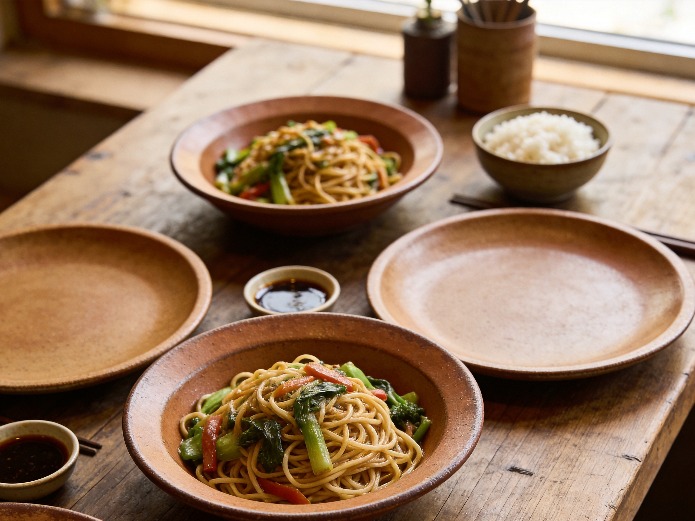
Shared plate tableware spans a wider size range than standard dinner plates. For communal dining, you need pieces that hold food for 2-4 guests while fitting comfortably in the center of a table or across a counter.
| Course | Diameter | Depth | Best Material | Notes |
|---|---|---|---|---|
| Shared starters / dips | 15-20 cm | 2-3 cm | Stoneware | Shallow rims prevent sauce pooling |
| Shared mains / proteins | 28-32 cm | 2.5-4 cm | Porcelain or stoneware | Needs flat base for even heating |
| Family-style sides / rice | 22-26 cm | 3-5 cm | Stoneware | Deeper profile holds volume |
| Shared desserts | 18-22 cm | 2-3 cm | Porcelain | Lighter weight for delicate presentation |
| Large-format platters | 35-45 cm | 1.5-3 cm | Stoneware or porcelain | Requires reinforced base |
Most restaurants I work with use 28-32 cm plates as their workhorse shared main piece. Anything smaller forces guests to pass plates back and forth; anything larger becomes unwieldy for servers and does not fit standard dish racks.
Material Choice: Where Most Buyers Go Wrong
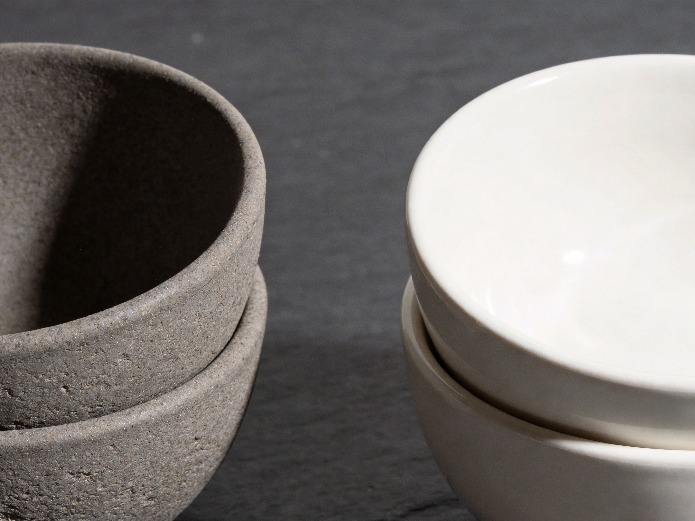
Porcelain and stoneware both work for shared plates, but the wrong choice for your service style multiplies replacement costs.
Porcelain (fired 1,300-1,400°C): Lower water absorption (<0.5%), excellent for saucy shared dishes. Lighter weight reduces server fatigue during large-format service. Higher thermal shock risk if plates go from oven to cold table. Cost-per-use: typically 15-20% higher than stoneware over a 3-year cycle.
Stoneware (fired 1,200-1,280°C): Higher durability against edge chipping from stacking and passing. Better thermal shock resistance for oven-to-table shared service. Heavier weight; some servers complain about wrist strain on large platters. Slightly higher water absorption (1-3%); glaze quality matters more.
For tapas and small-plate concepts where servers carry 4-6 plates per trip, porcelain saves arm strain. For family-style concepts where a single 32 cm plate sits on a burner or hot stone, stoneware handles thermal stress better.
Shared Plate Dimensions That Actually Work in Commercial Kitchens
Restaurant owners often order shared plates based on portion size alone. They forget about dish rack compatibility, oven clearance, and how servers grip a hot plate mid-service.
Critical dimensional checks before ordering samples:
- Base diameter: Must be ≤ 22 cm to fit standard dish racks; otherwise your back-of-house slows down
- Rim width: 1.5-2.5 cm is the functional sweet spot. Narrower rims burn fingers; wider rims waste table space
- Weight per piece: Target 600-900 g for 28-30 cm plates. Under 600 g feels cheap; over 900 g strains servers during peak service
- Stack height: 10 plates should not exceed 18 cm or they become unstable in storage
A shared plate with a 32 cm top diameter but only a 19 cm base will not sit flat on most induction warmers or wood serving boards. Always request the base diameter from your supplier before approving samples.
Glaze and Surface: What Holds Up to Communal Service
Shared plates see harder use than individual dinnerware. They pass between guests, sit on heat sources, and get scraped by serving utensils repeatedly.
Glaze durability hierarchy for shared plates:
- High-fire transparent glaze over white body: Most durable, easiest to inspect for cracks
- Matte glaze: Hides scratches better but stains more easily with turmeric, tomato, and oil-based sauces
- Reactive / artisan glaze: High visual appeal, inconsistent thickness creates weak points
- Colored underglaze: Good color consistency, but verify lead and cadmium levels regardless of supplier claims
For communal dining, I specify a glaze hardness of MOHS 5 or higher. Anything softer shows utensil marks within the first month of service. If your concept uses metal serving spoons or steak knives on shared plates, MOHS 5.5+ is non-negotiable.
MOQ, Lead Time, and Cost Structure
Shared plate tableware does not differ dramatically from standard dinnerware in production economics, but the size range affects mold costs and packing density.
| Parameter | Standard Range | Notes |
|---|---|---|
| MOQ per shape | 500-1,200 pieces | Custom shapes start at 1,500-2,000 |
| Mold fee (custom) | $300-800 per shape | Amortized over MOQ; refundable rarely |
| Unit FOB price (28-30 cm, stoneware) | $2.80-4.50 | Depends on glaze complexity and order volume |
| Unit FOB price (28-30 cm, porcelain) | $3.50-5.80 | Higher material and firing cost |
| Production lead time | 45-65 days | Add 10-15 days for custom glazes |
| Sample lead time | 10-18 days | Express samples: 7-10 days at 2x cost |
Cost-per-use calculation (3-year horizon, 200 covers/night):
- Stoneware shared plate: ~$0.004 per use
- Porcelain shared plate: ~$0.005 per use
- Melamine equivalent: ~$0.002 per use (but 18-month replacement cycle)
The real cost driver is breakage, not unit price. A restaurant that drops breakage from 12% to 4% annually saves more money than negotiating a $0.50 unit discount.
Vendor Evaluation Checklist for Shared Plate Orders
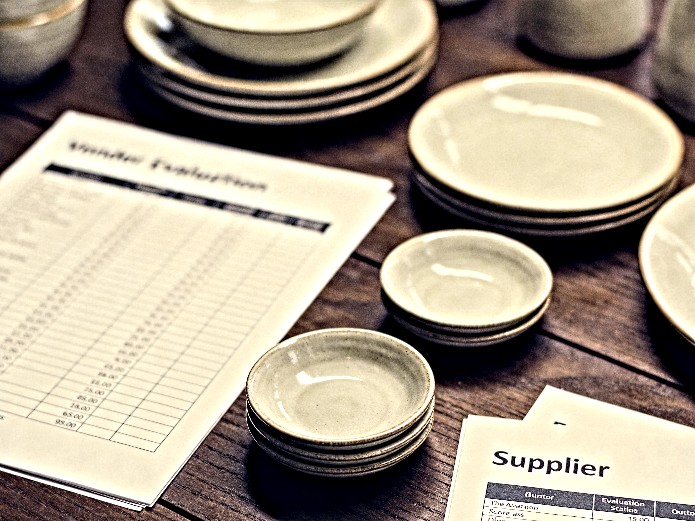
Use this checklist when evaluating suppliers for ceramic shared plate tableware. Score each supplier 1-5; total below 35 is a red flag.
Production capability (15 points)
- Can produce samples in your target size range within 14 days
- Has existing shared plate / platter molds in 28-45 cm range
- Confirms dishwasher-safe glaze firing temperature and absorption rate
- Provides MOHS hardness test data or allows independent testing
- Offers reinforced base option for platters over 38 cm
Quality systems (15 points)
- Has batch testing records for lead and cadmium migration
- Agrees to AQL 2.5 or stricter for commercial orders
- Documents thermal shock testing (typically 180°C to 20°C water)
- Provides edge chipping resistance data or sample testing
- Offers pre-shipment inspection by third party at acceptable cost
Logistics and terms (10 points)
- Packs shared plates with individual divider inserts (not just bulk stack)
- Confirms carton dimensions fit your warehouse racking
- Offers flexible payment terms (30% deposit / 70% against B/L or better)
- Has experience shipping to your target region with acceptable breakage rates
- Provides clear defect replacement policy in writing
Communication (10 points)
- Responds to technical questions within 24 hours during business days
- Provides clear production timeline with milestone checkpoints
- Offers video factory walkthrough or recent audit documentation
- Has English-speaking account manager or dedicated agent
- Understands foodservice standards (NSF, FDA, or EU 1935/2004)
Three Mistakes That Drive Up Replacement Costs
After reviewing hundreds of shared plate orders, these three errors appear most often:
1. Ordering identical sizes for every course
A 30 cm plate works for shared mains but looks empty with a small dip and overcrowded with a family-style rice dish. Restaurants that use 3-4 distinct sizes report 20-25% lower breakage because each plate suits its content, reducing the scraping and overloading that causes chips.
2. Ignoring thermal shock in the sample phase
Buyers test samples for appearance and weight but rarely test thermal shock. A plate that looks perfect at room temperature may crack when placed on a 180°C warming tray. Test every sample: heat to 150°C, place on a cold metal surface, inspect for hairline cracks.
3. Specifying decorative rims for high-volume concepts
Wide decorative rims collect sauce, slow down dishwashing, and chip more easily. One restaurant chain I advised replaced decorative-rim shared plates with simple rolled rims and cut their replacement rate by 30% in the first year.
Packaging and Shipping: Shared Plates Need Different Protection
Large-format shared plates and platters do not fit standard dinnerware packing configurations. A 40 cm platter stacked in a carton designed for 28 cm plates will rattle, crack, or arrive with edge chips.
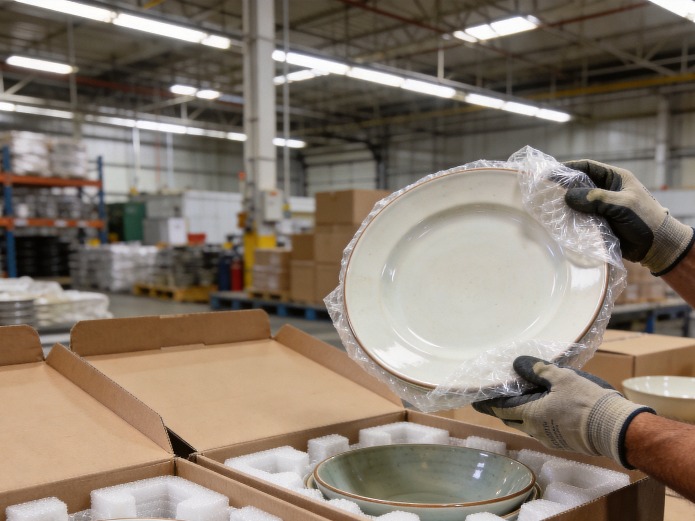
Packing requirements to specify:
- Individual EPE foam or corrugated dividers between each plate
- Corner protectors for platters over 35 cm
- Carton weight not exceeding 18 kg for manual handling
- Pallet configuration: max 6 layers with corner posts, stretch-wrapped
For a typical 1,000-piece order of mixed shared plate sizes, expect 12-18 cartons. Shipping via FOB Shenzhen to Los Angeles runs approximately $280-420 per cubic meter for LCL sea freight. A full 20-foot container holds roughly 4,500-6,000 mixed shared plates depending on size mix.
Before placing your first shared plate order, review our ceramic sample evaluation guide to test samples properly. If you need custom sizing or branding, our custom ceramic tableware service covers mold development and color matching. For packing specifics, see our packaging and shipping guide.
If you are planning a shared plate menu or refreshing your communal dining tableware, start with samples that match your actual service conditions. Request our shared plate specification sheet with size charts, material comparisons, and thermal shock test protocols.
Frequently Asked Questions
What size shared plate works best for family-style dining?
A 28-32 cm diameter plate with a 2.5-4 cm depth handles most shared mains for 2-4 guests. For larger groups or whole-fish service, use a 38-42 cm platter with a reinforced base.
Is porcelain or stoneware better for shared plates?
Stoneware resists thermal shock and edge chipping better, making it ideal for oven-to-table service. Porcelain is lighter and more refined for upscale presentation but requires more careful handling.
What MOQ should I expect for custom shared plate shapes?
Standard shapes: 500-1,200 pieces. Custom molds: 1,500-2,000 pieces. Mold fees range from $300-800 per shape and rarely get refunded.
How do I test ceramic shared plates before placing a bulk order?
Test for thermal shock (heat to 150°C, cool rapidly), edge chipping (simulate stacking and passing), dishwasher durability (50+ cycles), and glaze hardness (MOHS 5+ for metal utensil contact).
Can shared plates go from oven to table safely?
Only if the ceramic is rated for thermal shock. Most high-fire stoneware handles 180°C to room temperature. Always test samples with your actual service temperatures before approving production.
How long does production take for a shared plate order?
Standard shapes: 45-65 days. Custom glazes or shapes: add 10-15 days. Sample production: 10-18 days.