Ceramic tableware for brewery taprooms gives craft breweries a durable, brandable alternative to standard glassware that withstands the heavy daily use of high-traffic tasting rooms. Most taprooms replace glass mugs every 12–18 months due to breakage, while ceramic beer mugs typically last 3–5 years under the same conditions. For a brewery serving 200+ guests daily, that durability difference translates into real cost savings and fewer service interruptions.
This guide covers the specific ceramic pieces brewery taprooms need, how to evaluate branded customization options, what MOQ and lead times look like for beer-specific vessels, and the quality checkpoints that matter most in a high-traffic beer service environment. Whether you are opening a new taproom or replacing worn-out glassware across multiple locations, the decisions below will shape your guest experience and operational costs for years.
Why Craft Breweries Choose Ceramic Over Glass for Taproom Service
Glass dominates beer service because it is cheap to buy and customers expect it. But taproom operators who switch to ceramic typically report three immediate operational improvements: fewer broken vessels per shift, better temperature retention for cellar-temperature ales, and stronger brand presence on the table.
Ceramic beer mugs hold temperature roughly 30% longer than thin glass equivalents because of higher thermal mass and thicker walls. For breweries serving British-style cask ales or Belgian strong ales at cellar temperature (10–13°C / 50–55°F), that extra retention keeps the beer in its ideal serving window for the full duration of a pint. Customers notice, even if they cannot articulate why the last sip tastes as good as the first.
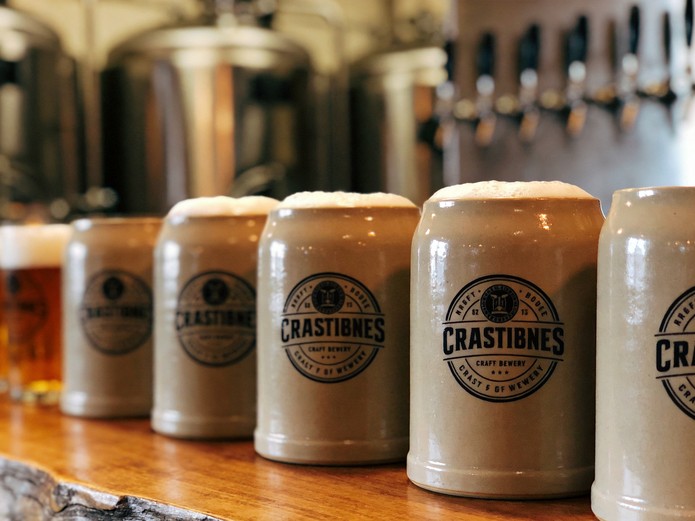
The branding advantage is equally practical. A ceramic mug with your brewery logo debossed or screen-printed on the handle or base travels home with regulars, sits on office desks, and appears in social media posts. That kind of organic marketing is difficult to replicate with disposable glassware.
Key Ceramic Pieces Every Brewery Taproom Needs
Not every ceramic piece fits brewery service. The five categories below cover the functional range most taprooms require, from everyday service to special events and retail:
- Standard beer mugs (400–500 ml / 14–17 oz): The workhorse of taproom service. Look for walls 6–8 mm thick, a handle that fits four fingers comfortably, and a base heavy enough to resist tipping on uneven picnic tables.
- Flight trays with ceramic mini-mugs (100–150 ml / 3.5–5 oz): Four to six vessels per tray, each holding a tasting pour. Ceramic flight vessels reduce breakage during transport from bar to table and give a more premium feel than plastic or thin glass tasters.
- Stemmed ceramic chalices (330–400 ml / 11–14 oz): For Belgian-style, sour, and barrel-aged beers where aromatics matter. The stem prevents hand-warming, and the tulip shape concentrates volatile compounds.
- Nonic-style ceramic pint glasses (570 ml / 20 oz): The bulb near the rim aids grip and stacking. Ceramic versions eliminate the thin rim breakage point that kills standard glass nonics.
- Growler and can-glass sets: Matching ceramic cups or tumblers sold alongside your packaged beer in retail areas. These drive ancillary revenue and extend brand reach beyond the taproom walls.
Most taprooms start with standard mugs and flight trays, then add stemmed pieces and retail sets once daily operations are stable. The order matters because each category has different customization requirements and MOQ thresholds.
Branded Ceramic Beer Mugs: Design, Durability, and MOQ
Branded ceramic beer mugs are where most taprooms start their ceramic program. The customization options break down into three tiers by cost and visual impact:
- Debossed or embossed logos: The logo is pressed into the clay body before glazing. Durable, permanent, and dishwasher-safe. Works best for simple one-color designs. Lead time adds 7–10 days for custom mold creation.
- Underglaze screen printing: The design is printed beneath the protective glaze layer. Allows multi-color logos with finer detail than debossing. Fades gradually over 3–5 years of commercial dishwasher cycling rather than chipping off.
- Overglaze decal or luster: Applied on top of the glaze and fired at lower temperatures. Offers the widest color range and photographic detail. Less durable than underglaze—expect 1–2 years of daily dishwasher use before visible wear. Best for limited-edition or seasonal releases.
MOQ for custom branded ceramic beer mugs typically starts at 500–1,000 pieces for debossed or underglaze designs, and 300–500 pieces for overglaze decals. If your taproom goes through 50 mugs per day and you want a 3-month stock rotation, a 1,000-piece order covers roughly 20 service days—too tight for most operations. Plan for 2,000–3,000 pieces as a practical first order, which gives you 40–60 days of stock plus buffer for breakage and theft.
Ceramic Flight Trays and Tasting Sets: Layout and Customization
Flight service is where ceramic shows its biggest advantage over glass. A server carrying four glass tasters on a wooden paddle is one stumble away from a broken tray and spilled beer. Ceramic mini-mugs on a ceramic or hardwood tray handle the same journey with far less risk.
The standard flight tray layout uses four 120 ml (4 oz) ceramic cups arranged in a line or arc on a 30×10 cm tray. Some breweries prefer a circular layout with a central handle for easier one-handed carrying. Both work; the choice depends on your bar geometry and whether flights travel upstairs or across crowded patios.
Customization for flight sets usually involves the tray rather than each individual cup, since the tray surface area offers more visible branding space. Laser-engraved hardwood trays with ceramic cup inserts are the most common configuration, though all-ceramic tray-and-cup sets are growing in popularity for outdoor service where wood warping is a concern.
MOQ for flight tray sets is typically 200–500 sets, with lead times of 45–60 days including custom tray engraving. If you serve 15–20 flights per day, a 300-set order covers 15–20 service days—again, too lean. Order 500–600 sets for a comfortable 25–40 day supply cycle.
Cost-per-Use Analysis: Ceramic vs Glass vs Stainless Steel
The table below compares lifetime costs for a standard 470 ml (16 oz) beer vessel in a typical taproom serving 200 guests daily. Glass replacement assumes 15% monthly breakage rate; ceramic assumes 3% annual breakage; stainless steel assumes negligible breakage but higher initial cost.
| Material | Unit Cost (FOB) | Lifespan | Annual Replacement | Cost per 1,000 Uses | Branding Options |
|---|---|---|---|---|---|
| Standard glass mug | $1.20–$2.50 | 12–18 months | 15% monthly | $12–$18 | Limited (pad print only) |
| Ceramic beer mug (standard) | $3.50–$6.00 | 3–5 years | 3% annual | $3.50–$6.00 | Deboss, underglaze, overglaze |
| Ceramic beer mug (premium) | $6.50–$10.00 | 5–7 years | 2% annual | $4.50–$7.00 | Full custom shape + glaze |
| Stainless steel tumbler | $4.00–$8.00 | 7–10 years | 1% annual | $2.50–$4.50 | Laser engraving only |
Stainless steel wins on pure cost-per-use, but most taprooms reject it for two reasons: it changes beer temperature too quickly (metal conducts heat away from the beer), and customers associate metal vessels with camping or stadiums, not craft beer culture. Ceramic hits the sweet spot between durability, temperature stability, and perceived quality.
The break-even point for ceramic over standard glass typically occurs at 18–24 months of service, assuming a 15% monthly glass breakage rate. If your glassware breaks less frequently (say, 8–10% monthly), the break-even stretches to 30–36 months but still favors ceramic over a 5-year operational horizon.
Quality Standards for High-Traffic Brewery Environments
Brewery taprooms subject ceramic vessels to stresses that most restaurant tableware never sees: thermal shock from ice-cold beer hitting room-temperature mugs, repeated dishwasher cycles with high-alkaline detergents, and the occasional drop onto concrete floors from counter height.
Three quality specifications matter more than aesthetic finish when sourcing for brewery service:
- Thermal shock resistance: Request ASTM C152 test results or equivalent. A pass means the ceramic survives a 200°C temperature differential without cracking. For brewery use, 180°C is the practical minimum since mugs move from ambient (20°C) to dishwasher (65°C) to ice-water rinsing (0°C) in rapid succession.
- Dishwasher durability: Specify NSF/ANSI 51 food equipment certification for commercial dishwasher compatibility. [VERIFY BEFORE PUBLISHING: Confirm current NSF 51 scope covers ceramic drinkware in commercial settings.] Un-certified glazes may degrade under high-alkaline commercial detergents, leading to surface pitting that traps bacteria and beer residue.
- Impact resistance: No standardized test exists for ceramic drop resistance, but you can perform a simple acceptance test: drop three sample mugs from 80 cm onto a concrete slab. One out of three surviving without visible cracks or chips indicates acceptable impact resistance for taproom use. Request this test from your supplier before placing a bulk order.
Lead and cadmium compliance is non-negotiable for any ceramic in contact with acidic beverages like sour beers and fruit-infused ales. Request FDA 21 CFR 175.300 or Prop 65 compliant test reports from your supplier. [VERIFY BEFORE PUBLISHING: Verify current FDA ceramic lead/cadmium limits for acidic food contact.] Do not accept generic “food safe” claims without supporting documentation.
Common Sourcing Mistakes When Buying Brewery Tableware
After reviewing hundreds of taproom setups, these three mistakes recur most often and cost the most money to fix:
- Ordering too few units to reach viable pricing: A 500-piece order of custom ceramic mugs might cost $5.50 per unit, while 2,000 pieces drops to $4.20. The per-unit savings on the larger order ($2,600 total) often exceed the warehousing cost of storing the extra stock for six months. Calculate your total landed cost across the full product lifecycle, not just the first invoice.
- Ignoring handle ergonomics: A mug that looks beautiful in the sample photo may have a handle too small for four fingers or positioned at an awkward angle for bartenders pulling pints under time pressure. Test samples during actual service shifts, not just in a conference room. The best handle design allows a full grip without the knuckles touching the hot glass of a just-poured stout.
- Choosing overglaze branding for everyday service vessels: Overglaze decals look sharp in photos and at launch events, but they wear visibly within 12–18 months of commercial dishwasher use. For your everyday service mugs—the ones guests use 200 times per day—stick with debossed or underglaze designs. Reserve overglaze for limited releases, anniversary editions, or retail-only products.
7-Day Brewery Tableware Sourcing Checklist
Use this checklist to evaluate any ceramic supplier before placing your first brewery tableware order. Print it, score each item, and do not proceed until you hit at least 80%.
- Day 1 – Supplier capability: Can the factory produce custom shapes, or only standard catalog items? Request photos of their molding workshop. [FACTORY PHOTO REQUIRED]
- Day 2 – Sample quality: Order 3–5 sample mugs in your target size and glaze color. Test thermal shock by moving from freezer to boiling water. Test dishwasher durability with 20 consecutive commercial cycles.
- Day 3 – Branding mockup: Request a digital mockup and a physical prototype of your logo on the mug. Check legibility at 2-meter distance—the distance a guest sits from the mug on a taproom table.
- Day 4 – Compliance documentation: Request FDA or Prop 65 test reports for lead and cadmium. [CERTIFICATE REQUIRED] Verify the report covers the specific glaze and clay body used for your order, not a generic factory certificate.
- Day 5 – MOQ and pricing: Get firm quotes at 500, 1,000, 2,000, and 3,000 pieces. Ask for FOB pricing with Incoterms specified. Confirm whether mold fees are one-time or recurring.
- Day 6 – Lead time and shipping: Confirm production lead time (typically 45–75 days for custom ceramic), shipping method, and whether the supplier handles export documentation. Request a production schedule with milestone checkpoints.
- Day 7 – Defect policy: Ask how the supplier handles breakage during shipping, glaze defects, and color variance between batches. Get the policy in writing, not verbal assurances. A 2–3% defect allowance is standard for ceramic; anything higher signals quality control issues.
FAQ: Ceramic Tableware for Brewery Taprooms
Can ceramic mugs handle ice-cold beer without cracking?
Yes, if they are stoneware or porcelain with adequate thermal shock resistance. Standard earthenware may crack when ice-cold liquid hits a warm mug. Specify thermal shock testing (ASTM C152 or equivalent) in your purchase order.
How long does custom branding last on ceramic beer mugs?
Debossed and underglaze branding lasts the lifetime of the mug. Overglaze decals show visible wear after 12–18 months of daily commercial dishwasher use. Choose the method that matches your replacement cycle.
What is the typical lead time for custom ceramic brewery mugs?
Standard lead time is 45–75 days from approved artwork, depending on complexity and factory capacity. Custom molds add 7–14 days. Plan your first order at least 4 months before opening or before your existing stock runs out.
Is ceramic more expensive than glass for brewery service?
Upfront unit cost is higher, but the cost-per-use over 3–5 years is typically 40–60% lower than standard glass because of reduced breakage. Most taprooms see positive ROI within 18–24 months.
Can I order mixed designs in one production run?
Most suppliers allow 2–3 design variations within a single MOQ if the mug body shape remains the same. Changing the body shape requires separate molds and effectively splits the order into separate production runs. Plan your design variations accordingly.
What packaging prevents breakage during ocean freight?
Individual foam sleeves or corrugated dividers inside 5-ply export cartons are standard. Request a drop-test report (ISTA 3A or equivalent) from your supplier. [VERIFY BEFORE PUBLISHING: Verify current ISTA 3A applicability for ceramic drinkware.] For fragile items, pallet-level strapping and corner protectors reduce in-transit damage by 30–50% compared to loose cartons.
If you are sourcing ceramic tableware for a brewery taproom and need samples, pricing, or a custom branding mockup, request brewery tableware samples with custom branding and we will send specification sheets and a 7-point evaluation checklist within 48 hours.