Ceramic tableware for cooking schools faces a challenge no restaurant plate ever sees: it is used, dropped, scrubbed, and stacked by dozens of inexperienced hands every single day. After ten years of sourcing ceramic for culinary programs across North America and Europe, I have learned that the best training dinnerware is not the most expensive—it is the piece that survives three years of student abuse without chipping, crazing, or losing its glaze.
This guide is written for culinary school administrators and kitchen managers who need to replace or expand their training tableware. You will learn what durability specifications actually matter in a teaching kitchen, how to standardize plate sizes across classes so every student works with identical equipment, and how to budget for a program that runs 200-plus students per term. We will also cover the most common sourcing mistakes that leave programs with mismatched sets and unexpected replacement costs.
What Makes Cooking School Tableware Different from Restaurant Ware
A teaching kitchen handles ceramic at a frequency most restaurants never reach. In a standard restaurant, one plate might see three turns per service. In a culinary school, that same plate could be washed, stacked, unstacked, reheated, and scrubbed fifteen times before noon. Students are learning. They drop plates. They stack wet dishes. They use metal tongs on glazed surfaces. The wear pattern is fundamentally different.
Beyond physical abuse, cooking schools face a standardization problem that restaurants rarely worry about. When thirty students in a fundamentals class all prepare the same dish, the instructor needs every plate to be identical in size, weight, and color. A quarter-inch difference in rim diameter changes how a sauce pools. A fifty-gram weight difference throws off a student’s plating technique. Inconsistency makes grading unfair and slows down instruction.
The budget reality is also different. A fine-dining restaurant might budget $40 per cover for tableware. A cooking school needs to equip two hundred students at roughly one-third that cost per seat—while expecting the pieces to last just as long, if not longer. The sourcing strategy has to balance price against a lifespan measured in industrial-scale wash cycles.
Durability Specs That Actually Matter in Training Kitchens
Not all durability claims mean the same thing. A plate rated for home dishwasher use will not survive a teaching kitchen. Here are the specifications I verify before recommending ceramic for any culinary program.
Rim construction. Rolled rims outperform flat rims in high-impact environments. The rounded edge distributes force when a plate is dropped or knocked against a steel counter. Flat-rimmed plates chip at the edge first because the glaze layer is thinnest there. For teaching kitchens, I specify rolled rims on every plate and bowl.
Glaze hardness. A glaze rated below Mohs 5 will show cut marks from student knives within the first semester. I request glazes rated Mohs 5 or higher, which resist scratching from standard kitchen utensils. If the supplier cannot provide a hardness rating, I treat it as a red flag.
Thermal shock resistance. Cooking demonstrations often involve moving ceramic directly from a 400°F oven to a countertop. Stoneware with poor thermal shock resistance will craze or crack within months. I look for bodies rated to withstand a 200°C temperature differential without failure. [VERIFY BEFORE PUBLISHING: Request factory thermal shock test report for specific body composition.]
Body thickness. Thicker walls absorb impact better, but excessive weight increases fatigue for students who carry full racks of dishes. I target a middle ground: dinner plates at 800–950 grams, soup bowls at 450–550 grams. Anything lighter chips too easily; anything heavier becomes a liability during service practice.
| Specification | Restaurant Standard | Recommended for Cooking Schools | Why It Matters |
|---|---|---|---|
| Rim type | Flat or rolled | Rolled only | Distributes impact; resists edge chipping |
| Glaze hardness | Mohs 4–5 | Mohs 5+ | Resists utensil scratches in high-use training |
| Thermal shock | 150°C differential | 200°C differential | Survives oven-to-table demonstrations |
| Dinner plate weight | 600–800g | 800–950g | Absorbs drops without excessive heft |
| Glaze type | Reactive, matte, glossy | Lead-free glossy or satin | Easier to clean; food-safe certification |
Standardization: Why Every Student Needs the Same Plate
In a teaching environment, uniformity is not a preference—it is a requirement. When an instructor demonstrates a plating technique on a 10.5-inch dinner plate, every student in the room needs the exact same dimensions to replicate the result. A plate that is even 3 millimeters smaller will cause a sauce to read differently. A bowl with a different interior curve will change how a custard sets.
The problem arises when programs order in small batches over multiple semesters. Factory glaze lots vary slightly in tone. Kiln firing across different production runs produces subtle dimensional differences. These variations are invisible to a restaurant guest but immediately obvious to a student comparing their plate to the instructor’s demonstration piece.
The solution is to order the full program set in one production run. If your program serves 200 students and each student needs a six-piece place setting, that is 1,200 pieces minimum. Adding 10 percent for breakage brings the order to 1,320 pieces. Ordering this volume in a single batch guarantees color consistency, dimensional uniformity, and matching glaze chemistry across every piece.
For programs that cannot afford a full upfront order, the alternative is to negotiate a retained mold with the supplier. The factory keeps your specific mold and glaze formula on file, allowing smaller reorder batches that match the original set. This typically requires a higher per-piece price and a minimum annual commitment, but it preserves standardization across years.
Oven-to-Table Requirements for Culinary Demonstrations
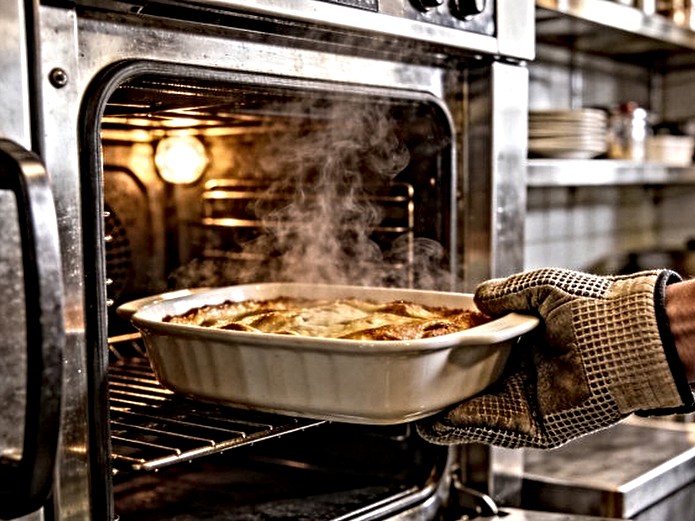
One of the most common uses of ceramic in teaching kitchens is the oven-to-table demonstration. An instructor places a dish in the oven, bakes it, and serves it directly from the same vessel. This is standard practice in professional kitchens, but it places thermal stress on ceramic that home-grade dinnerware cannot handle.
The risk is thermal shock fracture. When a hot ceramic vessel contacts a cold steel countertop—or when a room-temperature plate receives a hot dish straight from the oven—the temperature differential creates internal stress. If the ceramic body is not formulated for rapid temperature change, it will crack or craze.
For teaching kitchens, I recommend stoneware or porcelain bodies with documented thermal shock resistance to at least 200°C. This covers standard baking temperatures up to 425°F (218°C) with a safety margin. I also advise programs to keep a set of dedicated oven-safe pieces separate from general service plates, since repeated thermal cycling degrades even high-quality ceramic over time.
Regarding safety: all ceramic used in food preparation must meet FDA 21 CFR 170.3 and EU Regulation 1935/2004 for food-contact materials. These standards limit lead and cadmium migration from glaze into food. [VERIFY BEFORE PUBLISHING: Request third-party test certificates from the supplier; SGS or Intertek reports are preferred. Source: FDA Food Code 2022, Chapter 4; EU Commission Regulation (EC) No 1935/2004.]
Cost-per-Student Breakdown for 200-Plus Student Programs
Budget planning for cooking school tableware starts with a simple question: what does each student actually need? A typical culinary program requires each student to have access to a standard six-piece place setting for plating and service classes, plus two to three oven-safe vessels for baking and roasting demonstrations.
Here is a practical cost model based on sourcing from mid-tier Chinese ceramic manufacturers with FOB terms. These figures assume a single bulk order of 1,500 pieces to cover a 200-student program with replacement stock.
| Item | Pieces per Student | Unit FOB Cost (USD) | Total per Student |
|---|---|---|---|
| Dinner plate (10.5″) | 2 | $3.20–$4.50 | $6.40–$9.00 |
| Salad plate (8″) | 2 | $2.40–$3.20 | $4.80–$6.40 |
| Soup bowl (16 oz) | 1 | $2.80–$3.80 | $2.80–$3.80 |
| Mug (12 oz) | 1 | $2.00–$2.80 | $2.00–$2.80 |
| Oven dish (1.5 qt) | 1 | $5.50–$7.50 | $5.50–$7.50 |
| Replacement reserve (10%) | — | — | $2.15–$2.95 |
| Total per student | 7+ | — | $23.65–$32.45 |
At this price point, the ceramic will last approximately three academic years under normal teaching-kitchen use. The annual cost per student falls between $7.90 and $10.80—significantly less than renting tableware or buying lower-grade pieces that require annual replacement. [INTERNAL DATA REQUIRED: Replace FOB ranges with verified quotes from current supplier catalog.]
Shipping and import duties add roughly 18–25 percent to the FOB total, depending on your Incoterms and destination port. For a program ordering every three years, amortizing this cost across the full student body keeps the per-student annual expense well below most program supply budgets.
Three Common Mistakes When Sourcing Training Dinnerware
Mistake 1: Buying Restaurant-Grade Instead of Training-Grade
Restaurant-grade ceramic is designed for presentation and guest experience. It is often thinner, lighter, and more delicate because it is handled by trained staff. Teaching-grade ceramic needs to be heavier, thicker, and more forgiving. A plate that looks beautiful on a tasting menu will not survive a semester of student drops.
Mistake 2: Ordering in Small Batches Across Semesters
Programs that order fifty pieces at a time to spread out cash flow end up with mismatched sets. Color drifts between production runs. Dimensions shift slightly when molds are recut. After three semesters, the kitchen has six shades of white and three different rim profiles. The only fix is a complete replacement—wasting the investment in the mismatched pieces.
Mistake 3: Ignoring Stackability and Storage Density
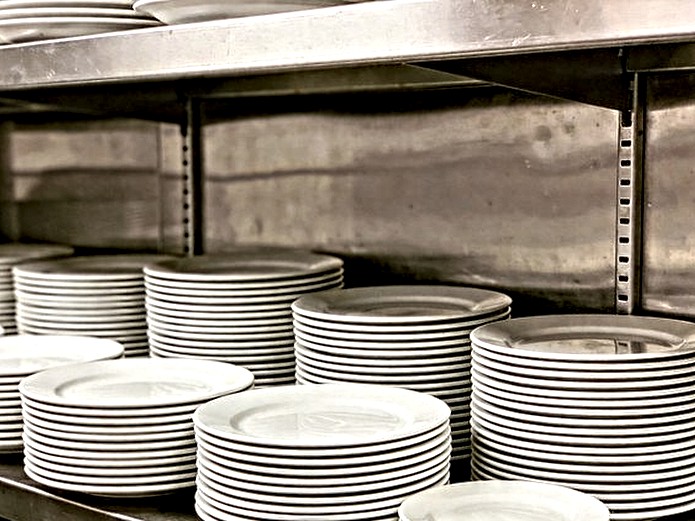
A teaching kitchen has limited dish storage. If your plates do not nest cleanly or your bowls have irregular bases that prevent stable stacking, you will lose shelf space fast. I have seen programs double their storage footprint simply because the chosen dinnerware had poor stack geometry. Always request stackability samples before placing a full order.
Actionable Recommendations for Your Next Order
Based on the sourcing patterns that have worked for programs I have advised, here are three recommendations to implement immediately.
1. Request a production color standard before your first order. Ask the supplier to produce a master color chip—a physical sample that defines the exact glaze tone, gloss level, and body color for your program. All future production runs must match this chip within an acceptable delta-E tolerance (typically ΔE < 2.0 for commercial tableware). [CERTIFICATE REQUIRED: Request supplier’s color-matching protocol and ΔE measurement report.]
2. Build a 10 percent replacement reserve into your initial order. Do not wait for breakage to accumulate before reordering. A 10 percent reserve gives you immediate replacements for chipped plates without rushing a small reorder that will not match your main set. After three years, use the remaining reserve pieces as a benchmark for color-matching your next full order.
3. Plan on a three-year replacement cycle and negotiate accordingly. Tell your supplier upfront that you are ordering for a three-year program cycle. This signals that you are a repeat buyer and gives you leverage to negotiate retained molds, locked pricing, or priority production slots. Suppliers value predictable reorders more than one-time large orders.
On the practical side, most Chinese ceramic suppliers set MOQs at 500–1,000 pieces per item for custom orders. For a cooking school program, this is easily reached. Standard shapes—10.5-inch dinner plates, 8-inch salad plates, 16-ounce soup bowls—are often available at lower MOQs because factories keep these molds in regular production. Lead time from order confirmation to FOB departure is typically 45–60 days for standard shapes and 75–90 days if custom molds are required.
Cooking School Ceramic Order Checklist
Use this checklist before signing any purchase agreement. Print it, fill it out, and keep it with your procurement files.
| Checklist Item | Verified | Notes |
|---|---|---|
| Rolled rims specified on all flatware | ☐ | |
| Glaze hardness rated Mohs 5 or higher | ☐ | Request test data |
| Thermal shock resistance ≥200°C documented | ☐ | [VERIFY BEFORE PUBLISHING] |
| Lead-free and cadmium-free glaze certified | ☐ | Request FDA/EU test report |
| Color master chip approved and retained | ☐ | ΔE tolerance defined |
| Full order placed in single production run | ☐ | Avoid batch-to-batch variation |
| 10% replacement reserve included | ☐ | |
| Stackability verified with physical samples | ☐ | Test in your storage racks |
| Weight per piece confirmed (dinner plate 800–950g) | ☐ | |
| MOQ and lead time confirmed in writing | ☐ | Standard: 45–60 days |
| Packaging spec confirmed for international shipping | ☐ | Corrugated + foam dividers |
| Payment terms and Incoterms agreed | ☐ | FOB/CIF/DDP defined |
Frequently Asked Questions
What is the typical MOQ for cooking school ceramic orders?
Most suppliers set MOQs at 500–1,000 pieces per item for custom specifications. Standard shapes like 10.5-inch dinner plates are often available at lower minimums because factories keep these molds in active rotation. For a full program order covering 200 students, you will typically exceed the MOQ across all item types.
How long does production take for a cooking school tableware order?
Standard shapes ship 45–60 days after order confirmation. Custom molds or proprietary glaze colors extend this to 75–90 days. Add 20–35 days for ocean freight depending on your destination port. Plan your order six months before the semester starts to avoid rush charges.
Can cooking school ceramics be customized with the institution’s logo?
Yes, but logo customization adds mold and setup costs that only make sense at high volumes. For most programs, I recommend keeping the dinnerware plain and investing in custom branding for display or competition pieces instead. If you do want logos, under-glaze decals are the most durable option for high-use training environments.
What glaze types are safest for high-temperature cooking demonstrations?
Lead-free glossy or satin glazes are the safest choice. Avoid reactive or crackle glazes in teaching kitchens; the surface texture traps food particles and makes deep cleaning difficult. A smooth, food-safe glaze rated for temperatures up to 500°F is ideal for both oven use and daily service. [VERIFY BEFORE PUBLISHING: Confirm specific glaze temperature ratings with your supplier’s technical data sheet.]
How do I prevent color variation between reorder batches?
The only reliable method is to negotiate a retained mold and glaze formula with your supplier. The factory keeps your specifications on file and produces reorder batches using the same raw materials and firing parameters. This service usually requires a higher per-piece price or an annual minimum commitment, but it eliminates the color-matching headache entirely.
What packaging is recommended for international shipping of ceramic training sets?
Corrugated master cartons with individual foam dividers are the standard for commercial ceramic shipments. For teaching kitchen orders, I recommend double-walled cartons and corner protectors on each piece. Breakage rates on well-packed ceramic typically stay below 2 percent even on long ocean routes.
Request a production schedule estimate for your cooking school’s next tableware order. We can review your student numbers, equipment needs, and budget timeline to build a sourcing plan that matches your academic calendar.