Ceramic baking dishes sourcing for restaurants starts with understanding which pieces can actually survive daily oven-to-table cycles without cracking. Most commercial buyers assume all stoneware or porcelain is oven-safe, but temperature ratings vary by clay body, glaze formula, and wall thickness. A dish rated to 350°F will fail in a 450°F pizza oven. This guide explains the specs, tests, and supplier questions that separate reliable ovenware from kitchen liabilities.
By the end, you will know how to verify thermal shock claims, what glaze labels to request, how to structure a pre-shipment inspection for ovenware, and what MOQ and lead time range to expect for common piece types.
What Makes Ceramic Dishes Truly Oven-Safe?
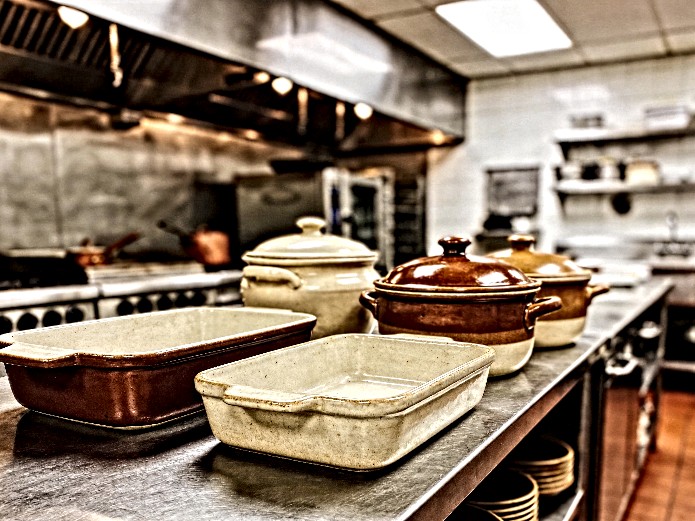
Oven-safe ceramic is not a single material category. It is a performance claim that depends on three variables working together:
- Clay body thermal expansion coefficient — Low-expansion bodies (certain stoneware formulas, cordierite, some porcelain blends) expand less when heated, reducing internal stress.
- Glaze fit — The glaze must expand and contract at a rate close to the body. A mismatch causes crazing (fine surface cracks) or shivering (glaze flakes off).
- Wall thickness and edge design — Thicker walls distribute heat more evenly. Rolled or reinforced rims resist the thermal stress that concentrates at edges.
Most restaurant-grade ovenware is made from high-fired stoneware (cone 6 to cone 10, approximately 2,200°F to 2,350°F firing temperature) or cordierite-based ceramic. These bodies handle repeated thermal cycling better than earthenware or low-fire stoneware. If a supplier cannot state the firing cone or the thermal expansion coefficient, that is a signal to dig deeper before placing an order.
Key Specs to Verify Before Ordering
Request the following from any supplier before you approve a sample or issue a purchase order:
| Spec | What to Ask For | Red Flag |
|---|---|---|
| Max oven temp | Written rating in °F or °C, not just “oven-safe” | Vague claims like “suitable for ovens” |
| Glaze lead/cadmium | Test report to FDA 21 CFR 175.300 or equivalent | “Our glaze is safe” without documentation |
| Thermal shock test | ASTM C1525 or internal rapid temp change result | No test data, or only room-temp to boiling water |
| Clay body type | Stoneware, cordierite, or porcelain blend; firing cone | “Regular ceramic” or unspecified body |
| Edge reinforcement | Rolled rim, thickened edge, or foot ring design | Sharp, thin edges with no structural support |
| Dishwasher safe claim | Verified for commercial dishwasher cycles | Home-use only, no commercial validation |
[VERIFY BEFORE PUBLISHING] The FDA reference above is based on publicly available regulation text. Always request the current version of 21 CFR 175.300 from the FDA website before relying on it for compliance decisions.
Common Ceramic Defects in Oven Use
Even well-made ceramic can fail in a commercial kitchen if the wrong piece is used in the wrong environment. Here are the four defects buyers see most often with ovenware:
Crazing
Fine surface cracks in the glaze that appear after repeated heating and cooling. Crazing is usually a glaze-fit problem — the glaze contracts more than the body when cooling. Once crazing starts, it accelerates because moisture and food acids penetrate the cracks, weakening the body underneath. Crazed dishes should be discarded in foodservice settings because bacteria can colonize the cracks.
Thermal Fracture
A sudden crack that splits the dish, usually when a cold dish is placed in a hot oven or when a hot dish contacts a cold surface. The risk is highest with thin-walled pieces, sharp internal corners, and dishes with no foot ring (flat-bottomed dishes trap heat at the contact point).
Glaze Pop-Off
Small chips of glaze detach from the surface, often near edges or on the bottom. This happens when glaze adhesion is weak or when the glaze layer is too thick. In commercial use, pop-off creates a food safety hazard because ceramic fragments can end up in food.
Edge Chipping
The most common defect in restaurant kitchens. Thin, unrolled rims chip when dishes are stacked, scraped against metal racks, or bumped during service. Reinforced or rolled edges cost more to produce but last significantly longer in high-turnover environments.
MOQ, Lead Time, and Pricing by Piece Type
Use this table to budget and plan your first order. Figures are typical ranges for high-fired stoneware or cordierite ovenware sourced from Chinese manufacturers. Actual quotes vary by glaze complexity, decoration, and order volume.
| Piece Type | Typical MOQ | Lead Time | FOB Unit Price Range | Best For |
|---|---|---|---|---|
| Ramekins (4-6 oz) | 3,000–5,000 pcs | 45–60 days | $0.45–$0.85 | Desserts, sauces, individual bakes |
| Casserole dishes (1-2 qt) | 1,000–2,000 pcs | 50–65 days | $2.50–$5.00 | Family-style service, catering |
| Roasting dishes (3-5 qt) | 800–1,500 pcs | 55–70 days | $4.50–$9.00 | Large-format roasting, buffet |
| Gratin pans / shallow bakers | 1,500–3,000 pcs | 45–60 days | $1.80–$3.50 | Individual entrees, broiler finish |
| Pizza stones / flat bakers | 1,000–2,000 pcs | 50–70 days | $3.00–$7.00 | Pizza ovens, flatbread service |
Cost-quality trade-off: Cordierite pizza stones and high-alumina stoneware command higher unit prices but resist thermal shock better than standard stoneware. For dishes that see daily oven use, the higher upfront cost usually pays back within 6–12 months through lower replacement rates. For occasional-use pieces (holiday casseroles, seasonal menu items), standard high-fire stoneware at the lower end of the price range is usually sufficient.
[INTERNAL DATA REQUIRED] — Insert actual MOQ and pricing from CeraSupply’s current catalog for each piece type to replace the estimated ranges above.
A Pre-Shipment Inspection Checklist for Ovenware
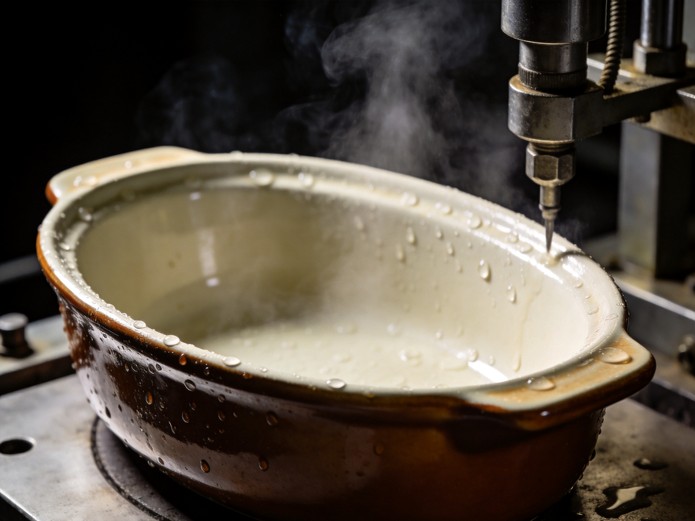
Copy this checklist and send it to your third-party inspector or use it during your own factory visit. Every item should be checked on a random sample (AQL 2.5, General Level II) before the container leaves the factory.
- □ Temperature rating label — Is the max oven temperature printed or stamped on the bottom? Does it match the PO specification?
- □ Thermal shock sample test — Heat one piece to the stated max temp, then place in room-temperature water. No cracks after 3 cycles?
- □ Glaze coverage check — Inspect 100% of sample pieces for thin spots, bubbles, or pinholes on the cooking surface.
- □ Edge inspection — Run a finger along all rims. No sharp edges, no chips, no glaze gaps at the rim line?
- □ Foot ring / base flatness — Place piece on a flat surface. Does it sit stable without rocking? Base flatness prevents hot-spot cracking.
- □ Lead/cadmium test certificate — Is a current test report (within 12 months) available for the exact glaze batch?
- □ Weight consistency — Weigh 5 random pieces of the same SKU. Variance should be under ±5%.
- □ Packaging drop test — Drop a packed carton from 80 cm onto concrete. Inner pieces intact?
Three Sourcing Mistakes That Cost Restaurants Money
Mistake 1: Ordering Based on Photos Instead of Samples
A glossy product photo does not tell you if the dish can survive your oven. We have seen buyers place 5,000-unit orders based on Alibaba listings, only to discover the glaze crazes after three weeks of service. Always request a production sample from the exact kiln and glaze batch, then run your own thermal shock test before approving mass production.
Mistake 2: Ignoring the Dishwasher-Oven Compatibility Gap
Some glazes that pass oven tests degrade faster in commercial dishwashers with aggressive alkaline detergents. If your workflow is oven-to-table-to-dishwasher, verify both claims on the same sample piece. A dish that is oven-safe but not commercial-dishwasher-safe will need hand washing, which adds labor cost that most operators do not budget for.
Mistake 3: Choosing Price Over Wall Thickness
The cheapest quote often comes from a supplier using thinner walls to save clay and kiln space. Thin-walled dishes heat faster, which sounds efficient, but they also cool faster and develop thermal gradients that cause cracking. For pieces over 2 quarts, wall thickness should be at least 6 mm at the base and 4 mm at the walls. Ask for a cross-section photo or a broken sample to verify.
How to Test Oven-Safe Claims with Your First Sample
You do not need a lab to catch most ovenware problems. Run these three tests on your sample before you commit to mass production:
- Test 1: Gradual heat test — Place the sample in a cold oven. Heat to the supplier’s stated max temperature over 30 minutes. Hold for 30 minutes. Turn off and let cool inside the oven. Repeat 10 times. Inspect for crazing, warping, or color shift.
- Test 2: Thermal shock test — Heat the sample to 400°F (204°C). Remove and immediately submerge in room-temperature water (68–72°F). A well-made piece should survive at least one cycle. Cordierite or high-alumina stoneware often survives three to five cycles.
- Test 3: Stacking abrasion test — Stack 10 identical pieces, wrap the stack in cling film, and place a 5 kg weight on top. Leave for 48 hours. Unstack and inspect for glaze scratches or rim damage. This simulates warehouse stacking and transit vibration.
If a sample fails any of these tests, request a revised sample before approving the order. Do not accept verbal assurances that “the production batch will be better.”
Packaging and Shipping Considerations for Ovenware
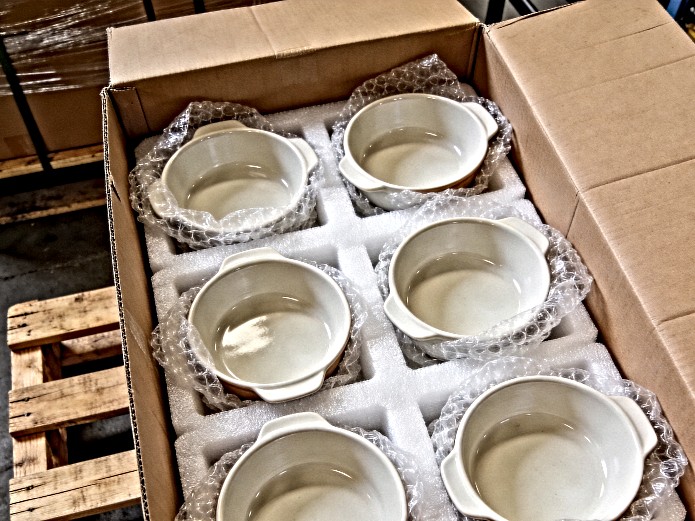
Ovenware is heavier and more brittle than standard dinner plates. A 1-quart casserole dish weighs 1.2–1.8 kg, and the walls are thicker, so impacts transmit more force. Packaging requirements are stricter than for flatware:
- Inner packing: Each piece needs individual wrapping in bubble wrap or EPE foam. Nested pieces (ramekins, identical casseroles) should have foam separators, not just paper.
- Carton strength: Use double-wall 5-ply corrugated cartons rated for 15 kg stack load. Single-wall cartons deform under the weight of dense ceramic.
- Pallet pattern: Stack cartons in an interlocking brick pattern, not column stacks. The weight distribution prevents corner crushing.
- Moisture barrier: Include silica gel packets (5 g per piece for small items, 20 g per carton for large casseroles) to prevent moisture absorption that weakens clay bodies during ocean transit.
Damage rates for poorly packed ovenware can reach 8–12% on ocean shipments. Well-packed orders should stay under 2%. Build a 3% damage allowance into your first order quantity until you confirm your supplier’s packaging quality.
FAQ
Can all stoneware go in the oven?
No. Only high-fire stoneware (cone 6 or higher) with a matched glaze is reliably oven-safe. Low-fire earthenware and some decorative stoneware will crack at temperatures above 300°F. Always request the firing temperature and thermal expansion coefficient from your supplier.
What is the difference between oven-safe and broiler-safe?
Oven-safe means the dish can withstand gradual heating in an enclosed oven, usually up to 400–500°F. Broiler-safe means it can handle direct radiant heat from above, which creates intense localized temperatures. Most ceramic is oven-safe. Few ceramic pieces are truly broiler-safe unless specifically engineered with high-alumina or cordierite bodies.
How long does a ceramic baking dish last in a commercial kitchen?
A well-made, high-fire stoneware casserole or roasting dish typically lasts 2–4 years in daily commercial use. Ramekins and small bakers see higher turnover (12–24 months) because they are handled more frequently and stacked more aggressively. Cordierite pizza stones last 3–5 years if not subjected to thermal shock.
Should I order custom shapes or stick to standard sizes?
For your first order, stick to standard shapes. Custom molds add 30–60 days to lead time and $2,000–$5,000 in mold costs. Once you have confirmed sales volume and know which shapes turn fastest, custom shapes become cost-effective at MOQs above 3,000 pieces per SKU.
Do I need FDA testing for every glaze color?
Yes. Different glaze colors use different metal oxide pigments, and lead/cadmium content varies by pigment. A clear glaze test does not cover a cobalt blue or cadmium red glaze. Request a separate test report for each glaze color you plan to order, or specify that all colors must use the same base glaze with ceramic stain additives that do not introduce heavy metals. [VERIFY BEFORE PUBLISHING]
Ready to source oven-safe ceramic for your restaurant? Request our oven-safe ceramic specification sheet with thermal shock ratings, glaze test requirements, and MOQ by piece type.