Ceramic tableware for fine dining must strike a precise balance between visual refinement and the durability demands of a commercial kitchen. After sourcing ceramics for dozens of upscale restaurants over the past decade, I have seen $40-per-plate bone china collections crack within three months of dishwasher service, and $8 porcelain sets that outlasted two menu cycles. The difference is rarely the material alone. It is whether the supplier understands how fine dining front-of-house aesthetics interact with back-of-house handling.
This article breaks down the specifications that actually matter when you are sourcing ceramics for a white-tablecloth operation: rim styles that frame your plating, glaze finishes that survive 2,000+ dishwasher cycles, and the weight-to-thickness ratio that separates premium serveware from standard restaurant stock. You will also get a supplier evaluation checklist you can use on your next factory visit or video audit.
What Separates Fine Dining Ceramics from Standard Restaurant Grade
Fine dining ceramics are not simply “nicer looking” versions of cafe-grade plates. The specifications diverge in three measurable ways:
Wall thickness and weight. Standard restaurant porcelain runs 4.5–6 mm thick and weighs 400–550 g for a 10-inch dinner plate. Fine dining bone china or high-grade porcelain typically measures 3.5–5 mm and weighs 280–400 g. The lighter weight is deliberate — it signals refinement to the guest — but it also means the body must be fired at higher temperatures or use purer clay formulations to maintain structural integrity. [INTERNAL DATA REQUIRED: specific supplier weight ranges]
Glaze quality and surface finish. Commercial-grade ceramics often use single-fire glazes that are functional but prone to micro-abrasion. Fine dining collections use triple-layer or sprayed glaze systems that maintain gloss through industrial dishwasher cycles. The surface roughness (Ra value) of a premium dining glaze is typically below 0.4 μm, compared to 0.8–1.2 μm for standard restaurant ware. [VERIFY BEFORE PUBLISHING: Ra values from ASTM or ISO surface roughness standards]
Rim precision and shape consistency. A fine dining plate must sit flat on a charger without wobbling, and the rim must be uniform enough that sauce drizzles behave predictably. Runout tolerance (radial wobble) for fine dining ceramics is typically held to under 0.5 mm, versus 1–2 mm accepted in casual dining. [FACTORY SPEC REQUIRED]
Rim Styles and Plate Shapes That Elevate Presentation
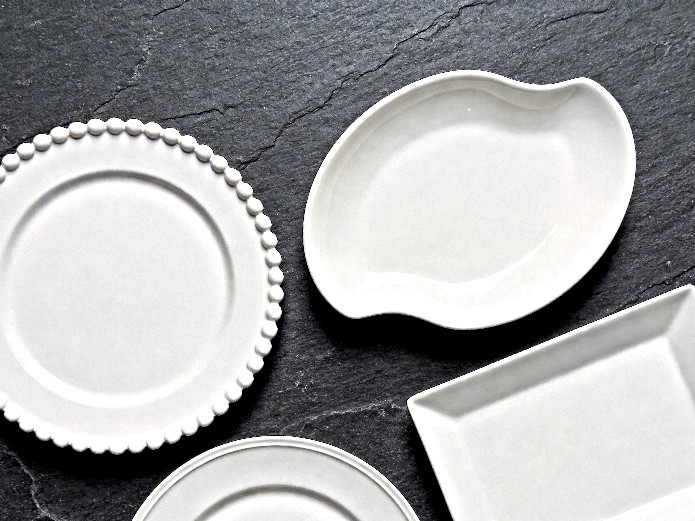
The rim is where food meets plate, and different styles create different visual effects. Here is how I guide chefs and F&B managers through the decision:
Rolled rim. The edge is slightly raised and rounded. This is the most forgiving style for saucy dishes — the rim acts as a dam — but it can make minimalist plating look heavy. Best for French and American fine dining with sauce-forward menus.
Coupe rim. The plate curves smoothly from base to edge with no distinct rim at all. This creates an uninterrupted canvas that makes food appear to float. It is stunning for Japanese kaiseki or modernist presentations, but sauce can migrate toward the edge quickly. Your kitchen team needs precise portion control.
Flat rim (or “library” rim). A sharp, flat edge with a 90-degree shoulder. This style frames food like a picture frame. It is popular in Nordic and contemporary fine dining. The downside: the sharp edge chips more easily if staff stack plates roughly.
Wide rim / presentation rim. The eating surface is recessed 2–3 cm from the outer edge, creating a border that catches drips and gives the plate visual weight. This is my default recommendation for tasting menus where each course needs to look substantial despite small portions.
Glaze Types: Glossy vs. Matte vs. Reactive for Fine Dining
Glaze choice affects not only aesthetics but also maintenance costs. I have tracked replacement rates across different glaze types for restaurant clients. The pattern is consistent.
Glossy glaze. The easiest to keep looking clean. Food residue and water spots wipe off readily, and the surface hides minor scratches better than matte. Most fine dining restaurants default to high-gloss white or ivory. The trade-off: glossy surfaces show fingerprints under candlelight, and very high-gloss glazes can create glare that interferes with food photography.
Matte glaze. Increasingly popular in Nordic and farm-to-table concepts. It absorbs light rather than reflecting it, which makes food colors pop. The problem: matte surfaces stain more easily from oils and pigments (beetroot, turmeric, red wine reduction). A matte-glazed plate in commercial service may need replacement 30–40% sooner than glossy equivalents, depending on your menu. [CASE STUDY REQUIRED]
Reactive glaze. Each piece has unique color variation due to kiln atmosphere interaction. Guests perceive reactive glaze as artisanal and high-value. For fine dining, reactive glaze works best on accent pieces — bread plates, amuse-bouche dishes, or dessert ware — rather than full place settings, because the color variation makes it harder to replace individual broken pieces with a visual match. [INTERNAL DATA REQUIRED: replacement cost analysis]
Bone China vs. Porcelain vs. Stoneware: Weight and Durability Comparison
This is the table I use in nearly every sourcing consultation. The numbers are ranges I have observed across Chinese, European, and Japanese suppliers. Treat them as benchmarks, not absolutes.
| Material | Wall Thickness | Weight (10″ plate) | Translucency | Dishwasher Cycles (est.) | Price Range (FOB China) | Best For |
|---|---|---|---|---|---|---|
| Bone China | 3.0–4.5 mm | 250–380 g | High | 1,500–2,500 | $6–$14 | Ultra-premium, tasting menus |
| High-Alumina Porcelain | 4.0–5.5 mm | 350–480 g | Low–Medium | 2,500–4,000 | $4–$9 | Mainstream fine dining |
| Stoneware | 5.5–8.0 mm | 550–850 g | None | 3,000–5,000+ | $3–$7 | Rustic fine dining, brasseries |
The trade-offs: Bone china gives you the most impressive guest experience — the translucency signals luxury — but it chips more easily and costs nearly double. High-alumina porcelain is the workhorse of fine dining: strong enough for daily service, refined enough for white-tablecloth presentation. Stoneware is durable and handles thermal shock well, but the weight and earthy aesthetic limit it to rustic or bistro-concept fine dining.
For a new fine dining opening with a $80–$120 per-person check average, I typically recommend high-alumina porcelain for the core collection, bone china for tasting-menu service, and stoneware only if the design concept is explicitly rustic.
Commercial Dishwasher Safety: The Hidden Deal-Breaker
I have seen more ceramic collections fail due to dishwasher incompatibility than due to guest breakage. The chemistry is straightforward: commercial dishwasher detergents are highly alkaline (pH 11–13), and repeated exposure degrades glazes that are not formulated for it.
Here is what to verify before you commit to a supplier:
Ask for dishwasher-cycle test data. A reputable supplier should have data from accelerated dishwasher testing. Look for 2,000+ cycle results with no visible glaze degradation, no edge chipping beyond 1 mm, and no staining. If the supplier cannot provide this, request a sample set and run your own 100-cycle test in-house. [CERTIFICATE REQUIRED]
Check thermal shock resistance. Fine dining plates move from hot pass-through cabinets (65–75°C) to cold plating stations (18–22°C) repeatedly. The ASTM C1525 standard test for thermal shock resistance subjects ceramics to rapid temperature changes. [VERIFY BEFORE PUBLISHING: specific ASTM test parameters] Ask your supplier if their glaze-body combination passes a 140°C differential test. Most high-alumina porcelain does; not all bone china does.
Verify cadmium and lead compliance. For food-contact ceramics sold in the U.S., FDA Compliance Policy Guide 7117.06 and 7117.07 set leachable lead and cadmium limits. For EU markets, Regulation (EC) No 1935/2004 and the relevant ceramic directives apply. [VERIFY BEFORE PUBLISHING: current regulation references and limits] Do not accept a generic “food safe” claim. Request third-party test reports (SGS, Intertek, or equivalent) with batch-specific data.
How to Evaluate a Supplier’s Fine Dining Portfolio
Not every ceramic factory that makes restaurant-grade plates understands fine dining requirements. Here is a checklist I use when auditing a new supplier for fine dining clients. You can adapt this for video audits if travel is not feasible.
Supplier Evaluation Checklist for Fine Dining Ceramics
- Can the supplier show you samples from at least three current fine dining clients? (Look for plating complexity, not just logo printing.)
- Is there a dedicated QC station for checking rim runout, flatness, and glaze uniformity — or is inspection done by eye?
- Does the factory have a dishwasher-test protocol, or do they rely on client feedback?
- Can they produce samples with your specified rim style within 14–21 days?
- Do they offer glaze color matching from a physical swatch, or only from digital Pantone references?
- Is breakage replacement available for the first 90 days of service?
- Can they hold dimensional tolerance within ±1.5 mm across a 500-piece production run?
If a supplier answers “no” to more than two of these questions, they are likely a generalist factory. That is fine for casual dining, but for fine dining you need a partner who understands why a 0.5 mm rim variation matters.
MOQ, Lead Time, and Customization for Small-Batch Fine Dining Orders
Fine dining restaurants rarely need 5,000-piece runs. A typical 80-seat restaurant opening needs 200–350 covers, which translates to roughly 800–1,200 pieces total across all SKUs. Here is how suppliers typically structure their programs:
MOQ Realities
- Standard shapes (round plates in white): 500–1,000 pieces per SKU from most Chinese suppliers. Some will accept 300-piece orders at a 15–25% price premium.
- Custom shapes or reactive glazes: 1,000–2,000 pieces minimum. The mold cost for a custom shape runs $800–$2,500 depending on complexity. [PRICING VERIFY REQUIRED]
- Color matching from a physical swatch: Often possible at 500-piece MOQ, but true custom glaze development requires 2,000+ pieces.
Lead Time Breakdown
- Sample production: 14–21 days (confirm this at inquiry stage — some factories quote 7 days but deliver half-finished samples)
- Tooling for custom shapes: 25–35 days
- Production: 45–60 days after sample approval
- Shipping (FOB to U.S. West Coast): 18–25 days
- Total from first contact to delivery: 90–120 days for standard shapes; 130–160 days for custom work
Customization Worth Investing In
- Custom rim profile (mold change): High impact on presentation, one-time tooling cost
- Logo underglaze printing: Adds $0.30–$0.80 per piece, permanent and dishwasher-safe
- Custom box packaging with your brand: Adds $0.50–$1.20 per piece, protects transit and impresses on unboxing
Customization to Skip
- Gold or platinum rim lining: Beautiful but wears off in commercial dishwashers within 6–12 months. Not worth the cost for daily service.
- Hand-painted elements: Inconsistent across batches, impossible to replace matched pieces.
If you are planning a fine dining opening or refreshing your current collection, start with a sample evaluation before committing to production. Request a curated sample set that includes two rim styles and two glaze finishes so your chef can test plating behavior directly.
Frequently Asked Questions
What is the typical lifespan of fine dining ceramic plates in commercial use?
With proper handling, high-alumina porcelain plates last 3–5 years in fine dining service. Bone china typically lasts 2–3 years due to its thinner walls. Replacement rates spike after the glaze loses its gloss or edges begin to show chips that are visible to guests.
Can I mix bone china and porcelain in the same place setting?
Yes, but be intentional about it. Many fine dining restaurants use bone china for bread plates and amuse-bouche dishes while using porcelain for mains. The key is ensuring the white tones match — bone china has a warmer ivory cast, while porcelain is cooler white. Request samples side by side before ordering.
How many plates do I need per seat in a fine dining restaurant?
Plan for 2.5–3.0 covers per seat. An 80-seat restaurant needs approximately 200–240 dinner plates. This accounts for service rotation, breakage reserve, and the lag time between dishwasher cycles during peak service.
Is matte glaze really that much harder to maintain?
Matte glaze requires more attentive pre-wash scraping and is more susceptible to oil staining. If your menu is heavy on butter, oil, or deeply pigmented sauces, budget for 30–40% higher replacement rates with matte versus glossy glazes.
What is the most common mistake when ordering ceramics for a new fine dining opening?
Ordering based on sample photos without testing dishwasher compatibility. A plate that looks stunning in hand can become dull and stained within two months of commercial service. Always run a 100-cycle dishwasher test on samples before placing your production order.
Do I need FDA test reports if I am buying from a Chinese supplier?
Yes. Even if your supplier claims their ceramics are “FDA compliant,” you should request a third-party test report (SGS, Intertek, Bureau Veritas) specific to the glaze and clay body you are ordering. Regulations can change, and generic claims do not protect your business. [VERIFY BEFORE PUBLISHING: current FDA CPG requirements]
Related reading: For broader restaurant ceramic sourcing guidance, see our hotel and restaurant tableware buying guide. If you are also sourcing for a cafe concept, our cafe tableware guide covers different durability and pricing considerations. For technical background on glaze chemistry, read our ceramic glaze types guide.