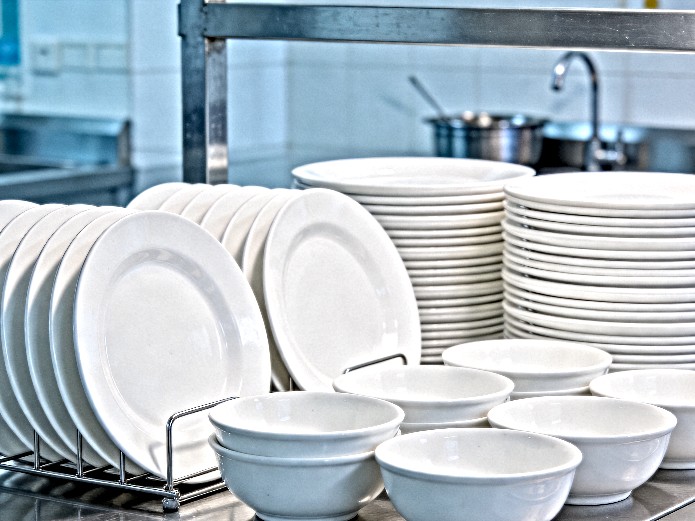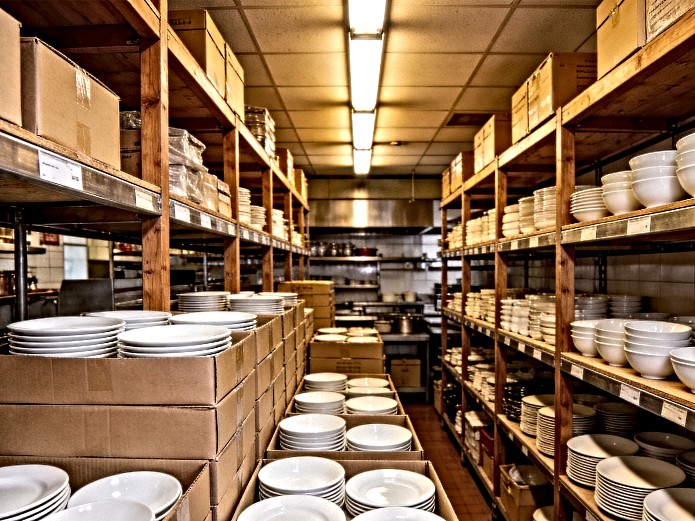
A well-executed ceramic tableware reorder strategy prevents the two most expensive mistakes in hospitality procurement: running out of plates during a Friday night rush and tying up cash in a warehouse full of bowls you will not need for six months. This guide gives you a practical system for calculating when to restock, how much to order, and how to adjust for seasonal demand — complete with a downloadable planning tool you can use today.
After fifteen years of supplying ceramic dinnerware to hotels, restaurant chains, and catering operations, we have seen the same pattern repeat: buyers place orders based on gut feel, panic when stock drops, then overcorrect and end up with a year’s worth of inventory sitting in storage. The fix is not more frequent ordering. It is a predictable reorder system.
Why Most Restaurants Run Out of Plates at the Worst Time
Stockouts do not happen because buyers forget to order. They happen because the reorder signal arrives too late. By the time a kitchen manager notices they are down to their last two dozen dinner plates, production lead time from a ceramic factory in China is already 45–60 days. Add ocean freight, customs clearance, and inland delivery, and you are looking at 75–90 days before new stock hits your shelf.
The hidden cost is bigger than the inconvenience. When a 120-seat restaurant runs short on 10.5-inch dinner plates, the workaround is usually one of three expensive options:
- Emergency local purchase at 2–3x the import price, often with mismatched styles
- Air freight for a partial shipment, which can add $4–6 per piece depending on weight
- Reduced table settings, which directly limits revenue during peak hours
None of these are sustainable. The root cause is almost always a reactive ordering habit instead of a proactive reorder strategy.
The Par Level Formula: How Much Stock You Actually Need
Par level is the minimum quantity of each item you need on hand to operate smoothly until the next delivery arrives. It is not your total inventory. It is your safety cushion.
Here is the formula we use with procurement managers:
Par Level = (Daily Usage × Lead Time in Days) + Safety Stock
Let us break this down with a real example. A mid-sized hotel with 80 rooms and a breakfast restaurant uses approximately 60 dinner plates per day across room service, the restaurant, and banquet prep. Their ceramic supplier has a 60-day production lead time plus 25 days for shipping and customs.
| Component | Calculation | Result |
|---|---|---|
| Daily usage | 60 plates/day | 60 |
| Lead time | 60 days production + 25 days shipping | 85 days |
| Base stock needed | 60 × 85 | 5,100 plates |
| Safety stock (15% buffer) | 5,100 × 0.15 | 765 plates |
| Par Level | 5,100 + 765 | 5,865 plates |
The hotel should place a reorder when their on-hand inventory drops to roughly 5,900 dinner plates. That gives them enough runway to receive the next shipment before they hit a critical shortage.
For safety stock, we typically recommend 10–20% above base needs. A 10% buffer works for stable operations with reliable suppliers. A 20% buffer is safer if your supplier has inconsistent lead times or if you operate in a seasonal market where demand can spike unexpectedly.

Calculating Your Reorder Point (With Real Numbers)
The reorder point tells you exactly when to trigger a new purchase order. It is simpler than it sounds:
Reorder Point = Daily Usage × Lead Time + Safety Stock
Notice this is essentially the same as your par level. The difference is conceptual: par level is your target minimum inventory. Reorder point is the trigger that tells you to act. In practice, most buyers use the same number for both.
Here is a quick-reference table for common hospitality operations:
| Operation Type | Typical Daily Plate Usage | Lead Time (Days) | Recommended Safety Stock | Reorder Point (Plates) |
|---|---|---|---|---|
| Small cafe (30 seats) | 20–30 | 70–90 | 15% | 1,600–3,100 |
| Mid-size restaurant (80 seats) | 50–80 | 70–90 | 15% | 4,000–8,300 |
| Hotel F&B (80–120 rooms) | 60–120 | 75–90 | 15–20% | 5,200–13,000 |
| Catering company | 100–300 | 60–75 | 20% | 7,200–27,000 |
| Restaurant chain (5 locations) | 250–400 | 60–75 | 20% | 18,000–36,000 |
These numbers assume you are sourcing from overseas manufacturers with standard production and shipping timelines. If you are working with a domestic wholesaler with 2-week delivery, your reorder point drops dramatically — but so does your margin.
Seasonal Surge Planning: Adjusting Cycles for Peak Periods
Static reorder points fail when demand shifts. A beachfront hotel in Miami sees plate breakage and loss rates jump 40% during spring break season. A ski resort restaurant needs 30% more stock before the December holidays. If your reorder point does not account for these swings, you will either overstock in slow months or stock out when it matters most.
We recommend a two-tier system:
- Baseline reorder point for normal operations (uses average daily usage)
- Peak season reorder point for high-demand periods (uses projected daily usage)
To calculate your peak season adjustment, look at your historical data. If you served 150 covers per day last December versus 100 covers in a typical month, your daily plate usage likely increased by a similar ratio. Apply that ratio to your reorder point.
Timing is equally important. Place peak-season orders at least one full lead time before the surge begins. If your total lead time is 85 days and your busy season starts November 15, your order should be confirmed with the factory by late August. Many buyers wait until October, then discover factory slots are already full and expedited production carries a 15–25% surcharge.
Three Common Reorder Mistakes That Waste Money
These are the errors we see most often when reviewing procurement practices with new clients:
Mistake 1: Ordering the same quantity every time
Fixed-quantity ordering ignores usage changes. If your restaurant grew from 60 to 90 seats but you are still ordering the same 3,000 plates every quarter, you will run short. If you downsized your banquet operation but kept the same order size, you are paying warehouse rent for plates that sit untouched.
Mistake 2: Ignoring breakage and loss rates
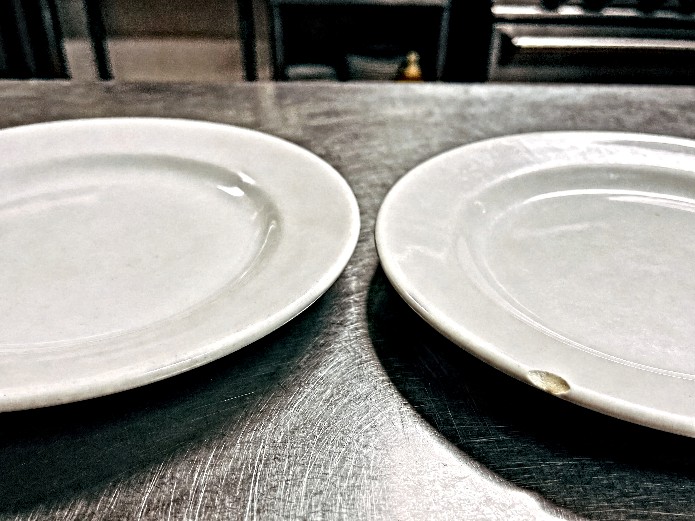
Ceramic plates in commercial kitchens do not last forever. A typical restaurant loses 15–25% of its dinnerware annually to chips, cracks, and walk-off. If your reorder calculation only covers guest turnover and ignores replacement needs, your inventory will shrink month by month until you hit a crisis.
Mistake 3: Reordering when stock hits zero
Waiting until you are almost out of stock to place an order guarantees a stockout. By the time you notice the shortage, place the PO, and the factory schedules production, you have already crossed the line. The reorder point exists precisely to create a buffer — use it.
A Downloadable Reorder Planning Tool
Use this checklist to build your own reorder system. Print it, fill it out, and pin it to your procurement board:
- Step 1: Count current on-hand inventory for each item (plates, bowls, cups, saucers)
- Step 2: Calculate average daily usage over the past 90 days (total plates used ÷ 90)
- Step 3: Confirm your supplier’s total lead time (production + shipping + customs)
- Step 4: Set safety stock at 15% (stable operations) or 20% (seasonal or unreliable supply)
- Step 5: Calculate par level: (Daily Usage × Lead Time) + Safety Stock
- Step 6: Set your reorder point equal to your par level
- Step 7: Schedule a weekly inventory count and compare against your reorder point
- Step 8: Adjust for peak seasons at least one lead time in advance
For buyers managing multiple SKUs across several locations, we recommend creating a simple spreadsheet with columns for item name, current stock, daily usage, lead time, par level, and reorder status. Update it weekly. Five minutes of discipline prevents weeks of shortages.
Cost, Quality, and Lead Time Trade-offs
Your reorder strategy also depends on where you source. Here is how the three main options compare:
| Source Type | Lead Time | Unit Cost | MOQ | Best For |
|---|---|---|---|---|
| Domestic wholesaler | 1–2 weeks | Highest | Low (1–2 cases) | Emergency restocking, testing new styles |
| Direct overseas factory | 60–90 days | Lowest | High (1,000+ pieces) | Standard stock, cost-sensitive operations |
| Mixed approach | Varies | Medium | Flexible | Balancing cost and flexibility |
Most established hospitality buyers use a mixed approach: they maintain a baseline inventory sourced directly from factories at lower cost, and keep a domestic backup channel for emergency top-ups. The key is knowing which items need the factory price (your high-volume staples) and which can absorb the wholesaler markup (specialty items or test orders).
FAQ
How often should I count my ceramic tableware inventory?
For most restaurants and hotels, a weekly spot-check of high-usage items (dinner plates, coffee cups) plus a full monthly count is sufficient. If you operate multiple locations, consider cycle counting — counting a portion of your inventory each week so every item gets verified at least once per month.
What if my supplier lead time changes?
Update your reorder point immediately. A 10-day delay in production or shipping can push you into a shortage if your reorder point was calculated with the old timeline. Build a 10–15% buffer into your lead time assumptions to absorb minor delays without recalculating.
Should I order everything at once or stagger my reorders?
Stagger if your cash flow is tight or your storage space is limited. Ordering everything together may get you a better freight rate, but it also means a large cash outlay and a full warehouse all at once. Many buyers stagger by item category — plates one month, bowls the next — to smooth out both cash flow and delivery volume.
How do I account for breakage in my reorder calculations?
Track your actual breakage rate for 90 days. Divide the number of plates replaced by your average on-hand inventory. Most commercial kitchens see 15–25% annual loss. Add that percentage to your daily usage figure before calculating your par level. If you lose 20% annually, increase your daily usage input by roughly 0.5% to cover the gradual drain.
Can I negotiate shorter lead times with my ceramic supplier?
Sometimes, but not reliably. Factories can sometimes expedite production by 10–15 days for an additional fee, typically 10–20% of the order value. A better approach is to negotiate a rolling forecast agreement, where you commit to quarterly volumes in exchange for reserved production slots. This does not shorten lead time, but it locks in your place in the queue.
What is the typical MOQ for a ceramic tableware reorder?
For direct factory orders, MOQs typically start at 1,000–3,000 pieces per item, depending on the factory and the complexity of the design. If you are reordering an existing design from a previous production run, some suppliers will accept 500-piece minimums. For custom colors or shapes, expect 3,000+ pieces. Wholesalers typically have no MOQ but charge 40–60% more per unit.
Ready to Lock In Your Production Schedule?
The difference between restaurants that never run out of plates and those that scramble every quarter is not luck. It is a reorder system built on actual numbers rather than guesswork. If you are ready to put a reliable schedule in place, we can help you confirm lead times, plan your seasonal peaks, and lock in production slots before your competitors do.
Get a production schedule estimate based on your operation size, usage patterns, and seasonal calendar. We will map out a 12-month reorder plan with exact timing, quantities, and lead time buffers — so you never have to explain to a guest why their table is missing a salad fork.