Ceramic plate sizes for restaurants typically range from 6 inches for bread and butter plates to 12 inches for dinner plates and up to 16 inches for sharing platters. Choosing the wrong size leads to portions that look skimpy or overwhelming, while ordering too many sizes strains storage and increases per-piece costs. This guide gives you the standard dimensions used across the foodservice industry, shows how to match each size to your menu, and includes a practical checklist and quantity calculator for your next order.
Standard Ceramic Plate Sizes for Restaurants
Most commercial kitchens operate with five to seven core plate sizes. Going beyond that creates storage headaches and slows down service. Below is the industry standard table that maps diameter to typical use case, course, and the quantity range most restaurants order per 100 seats.
| Plate Type | Diameter | Typical Use | Recommended Qty per 100 Seats | Common MOQ from Factory |
|---|---|---|---|---|
| Bread & Butter | 6″ – 6.5″ (15-17 cm) | Pre-meal bread, amuse-bouche | 80 – 100 pieces | 500 – 1,000 pcs |
| Appetizer / Salad | 7.5″ – 8.5″ (19-22 cm) | Starters, side salads, desserts | 120 – 150 pieces | 500 – 1,000 pcs |
| Entree / Lunch | 9″ – 10″ (23-25 cm) | Lunch mains, pasta, brunch dishes | 150 – 180 pieces | 500 – 1,000 pcs |
| Dinner Plate | 10.5″ – 11″ (27-28 cm) | Dinner mains, composed plates | 150 – 180 pieces | 500 – 1,000 pcs |
| Platter / Sharing | 12″ – 16″ (30-41 cm) | Shared appetizers, family-style, roasts | 20 – 40 pieces | 300 – 500 pcs |
| Deep Plate / Pasta Bowl | 9″ – 10″ diameter, 1.5″ – 2″ depth | Soups, pasta, grain bowls | 80 – 100 pieces | 500 – 1,000 pcs |
Key sourcing note: Factories in Chaozhou and Dehua typically group plate sizes by mold family. A 10-inch dinner plate and a 10.5-inch variant may require separate molds, which doubles your mold fee. If your concept allows, standardizing on 10 inches for both lunch and dinner reduces mold costs by roughly 30-40 percent. [INTERNAL DATA REQUIRED: specific mold fee ranges by factory]
How to Match Plate Size to Menu Portions
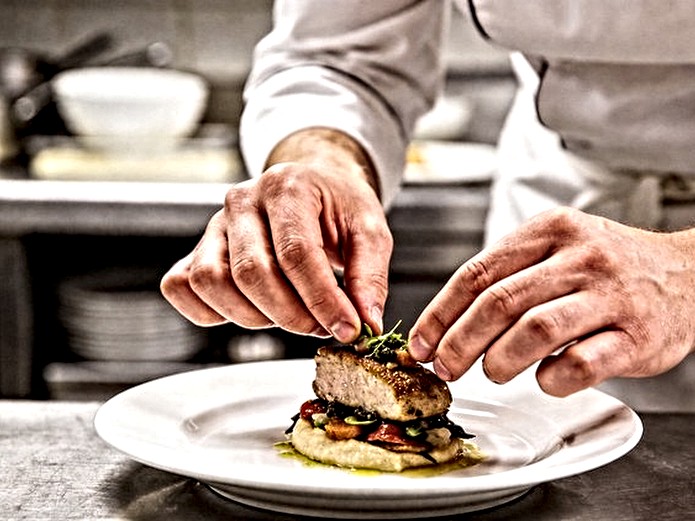
The plate should frame the food, not swallow it. A general rule in commercial foodservice is that the protein or main item should occupy roughly 60-70 percent of the plate surface, with garnish and sauce filling the remaining space. Here is how that translates to real menu items.
Appetizer plates (7.5″ – 8.5″): Ideal for 4-6 ounce portions. Think seared scallops (3 pieces), a compressed salad, or a tartare portion. If you serve larger shared appetizers, move up to the 9-inch entree size or risk the dish looking sparse.
Entree plates (9″ – 10″): The workhorse size. A 6-8 ounce protein with two sides sits comfortably here. For lunch service where portions run lighter, the 9-inch plate prevents the dish from looking lost. For dinner service with larger protein cuts or composed presentations, the 10-inch plate gives the kitchen more canvas.
Dinner plates (10.5″ – 11″): Use these when your menu features premium proteins (10+ ounce steaks, whole fish preparations) or when plating style emphasizes negative space. Fine-dining concepts often prefer 11 inches for visual drama. Casual concepts rarely need plates this large unless family-style sharing is part of the concept.
Platters (12″ – 16″): Order these only if your menu includes shared items. A 12-inch platter holds two full entree portions side by side. A 16-inch platter works for whole roasted fish or large charcuterie spreads. Most fast-casual and casual concepts can skip platters entirely and use the entree plate size for all mains.
Common Sizing Mistakes That Cost Restaurants Money
After ten years of sourcing ceramic tableware for restaurant groups, I see the same errors repeat across openings. Avoid these three mistakes and you will save both money and storage space.
Mistake 1: Ordering One Size for Everything
Some operators order only 10.5-inch dinner plates to simplify inventory. The result? Desserts look abandoned on oversized plates, appetizers feel unsubstantial, and food costs appear higher to guests because the portion looks small relative to the dish. Use at least three distinct sizes: appetizer, entree, and dinner.
Mistake 2: Ignoring Stack Height and Storage
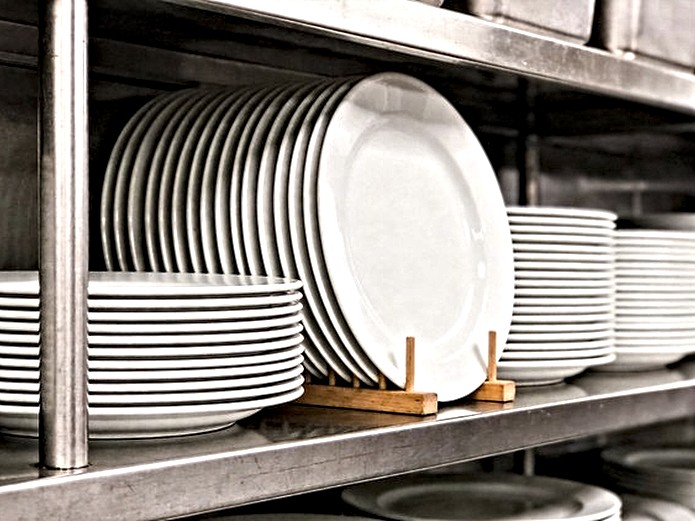
A 12-inch platter does not stack efficiently with 10-inch dinner plates. If your shelving has 8-inch vertical clearance, platters require a separate shelf or sideways storage, which slows down retrieval during service. Measure your existing shelving before finalizing platter quantities. Standard dinner plates stack roughly 12-15 pieces per vertical inch. Platters with wide rims may only stack 4-6 pieces per inch.
Mistake 3: Buying for Peak Capacity Instead of Turnover
Restaurants often calculate plate quantities based on every seat being full simultaneously. In reality, plates turnover 2-3 times per service. A 100-seat restaurant with two turns does not need 200 dinner plates. It needs roughly 150-160, assuming a 15-minute wash cycle and a small buffer for breakage. Over-ordering by 30 percent ties up working capital and storage space for months.
Ceramic Plate Size Checklist for New Restaurant Openings
Use this checklist before placing your opening order. Print it, fill it out with your chef and general manager, and attach it to your purchase order.
- [ ] Menu reviewed: every item assigned to a specific plate or bowl size
- [ ] Plate count calculated per 100 seats, adjusted for expected table turns (lunch ___ turns, dinner ___ turns)
- [ ] Breakage buffer added: 10% for indoor dining, 15% for outdoor or high-traffic concepts
- [ ] Storage measured: shelf height confirmed for all plate sizes including platters
- [ ] Dishwasher rack compatibility checked: plates fit standard commercial racks without overhang
- [ ] Portion-to-plate visual check completed: chef has plated sample dishes on proposed sizes
- [ ] Lead time confirmed with supplier: standard items ___ weeks, custom sizes ___ weeks
- [ ] Mold fees confirmed: separate molds required for sizes outside factory standard range ___
- [ ] Sample order placed and approved before full production
- [ ] Replacement timeline agreed: how quickly can you reorder single sizes without rebuying the full set
MOQ, Lead Time, and Customization by Size
Understanding how factories treat different plate sizes helps you negotiate smarter. Here is what to expect when sourcing from ceramic manufacturing clusters in Chaozhou or Dehua.
Standard sizes (6″, 8″, 10″): These are high-runner sizes with existing molds at nearly every factory. MOQs start at 500 pieces per size per design. Lead time for white-body stock glazes is typically 4-6 weeks. Custom colors add 1-2 weeks for glaze matching.
Mid sizes (9″, 10.5″): Slightly less common but still widely available. MOQs remain around 500-1,000 pieces. Lead time extends to 5-7 weeks if the factory needs to adjust kiln stacking patterns for non-standard diameters.
Large platters (12″ – 16″): These require dedicated molds and lower kiln density, which raises both mold fees and per-piece cost. MOQs may drop to 300-500 pieces, but the unit price is typically 40-60 percent higher than a 10-inch plate of the same design. Lead time runs 6-8 weeks due to slower firing and higher breakage risk during production.
Custom rim profiles or depths: If you want a specific rolled rim, coupe shape, or pasta-bowl depth, expect a mold development fee of [INTERNAL DATA REQUIRED: typical mold fee range] and a sample lead time of 3-4 weeks before full production. These custom elements are not size-dependent but they do lock you to a single factory for reordering.
Cost-per-Use: When Larger Plates Cost Less
At first glance, a 10.5-inch dinner plate costs more than a 9-inch entree plate. But the total cost of ownership depends on how you use the inventory.
Scenario A: Two-size system (appetizer + dinner only)
You eliminate the 9-inch entree size and serve lunch mains on the dinner plate. Storage is simpler, reordering is faster, and you hit higher volume per SKU which improves your unit price negotiation. The trade-off? Lunch portions may look slightly small on a larger plate unless your kitchen adjusts plating style.
Scenario B: Three-size system (appetizer + entree + dinner)
More storage bins, more SKUs to track, and slightly higher per-piece cost because each size ships in lower volume. The benefit is precise portion presentation and the ability to run different concepts (casual lunch vs. fine-dining dinner) with the same base glaze and design.
My recommendation for new openings: start with Scenario A if your concept is casual or fast-casual. Add the third size only after six months of operation when you have actual breakage data and service-pattern clarity.
Three Actionable Sourcing Recommendations
Based on what I have seen work across dozens of restaurant openings, here are three decisions that consistently reduce cost and headaches.
1. Standardize on Even Inch Marks When Possible
Factories optimize kiln loading around even-inch diameters (8, 10, 12 inches). A 9.5-inch plate forces custom kiln furniture and reduces yield per firing. If your chef can work with 10 inches instead of 9.5, you will typically see a 10-15 percent unit price reduction and faster lead times.
2. Order Samples in Your Actual Portion Quantities
Do not evaluate a sample plate empty. Have your kitchen prepare the heaviest and lightest menu items on the sample and test stackability, dishwasher rack fit, and guest perception. One hour of real-world testing prevents a $5,000 reorder six months later.
3. Negotiate Size-Split MOQs, Not Total Order MOQs
A factory may quote 3,000 pieces total across all sizes. Negotiate instead for per-size MOQs of 500-1,000 pieces. This protects you from being forced to over-order platters just to hit the total minimum. Most factories accept this split if your total order exceeds $8,000-10,000. [INTERNAL DATA REQUIRED: typical factory flexibility thresholds]
Frequently Asked Questions
What is the most common dinner plate size for restaurants?
The 10-inch plate is the most common dinner plate size for casual and fast-casual restaurants. Fine-dining concepts often prefer 10.5 to 11 inches for visual impact and larger protein presentations.
How many plates should a restaurant order per seat?
Order 1.2 to 1.5 dinner plates per seat, 1.0 to 1.2 appetizer plates per seat, and 0.2 to 0.4 platters per seat. Multiply by your expected table turns and add a 10-15 percent breakage buffer.
Do larger ceramic plates break more easily?
Platters above 12 inches have higher breakage rates during production and transit because they span more kiln furniture and have less structural support during firing. In service, breakage depends more on rim thickness and glaze toughness than on diameter alone.
Can I mix plate sizes from different suppliers?
You can, but expect slight color and glaze variation between factories even when both claim the same white tone. For a cohesive table setting, source all sizes from the same factory and glaze batch. If you must split suppliers, keep different sizes in separate dining rooms or dayparts where guests will not compare them side by side.
What is the typical lead time for custom plate sizes?
Custom diameters outside standard factory molds require new mold development, which typically takes 3-4 weeks for samples and an additional 5-7 weeks for production. Total lead time from design approval to delivery is usually 10-12 weeks. [VERIFY BEFORE PUBLISHING: lead time ranges vary by factory capacity]
How do I calculate total ceramic plate quantity for a new restaurant?
Multiply seats by turns by plate type, then add a breakage buffer. For example: 80 seats x 2 dinner turns = 160 dinner plates needed in circulation. Add 15 percent buffer = 184. Round up to the nearest factory pack size, which is typically 24 or 36 pieces. Your order becomes 192 dinner plates.
Ready to Order the Right Sizes?
Getting plate sizes wrong is expensive to fix after opening. Send us your menu and seating plan and we will recommend the exact sizes, quantities, and configuration for your concept. We produce standard restaurant plate sizes from 6 inches to 16 inches with white-body porcelain and stoneware options, and we can match custom glaze colors from a provided reference sample.
Get a restaurant tableware quote with quantity recommendations