Sustainable ceramic tableware has moved from a niche marketing angle to a core procurement requirement for B2B buyers worldwide. As environmental regulations tighten across the EU, North America, and Australia, importers and wholesalers must understand what “sustainable” actually means in ceramic manufacturing — and how to verify it. This guide breaks down the environmental impact of ceramic production, key eco-certifications, practical sourcing strategies, and cost considerations for buyers who want to source sustainable ceramic tableware without sacrificing quality or margins.
Why Sustainable Ceramic Tableware Matters for B2B Buyers
The global ceramic tableware market is projected to exceed $25 billion by 2028, and sustainability is the single fastest-growing factor influencing purchasing decisions. Retailers, hospitality chains, and e-commerce brands are under pressure from consumers and regulators alike to prove that their supply chains are environmentally responsible.
For B2B buyers, sourcing sustainable ceramic tableware is no longer optional. Major markets now require compliance with carbon reporting standards, restricted substance lists, and extended producer responsibility (EPR) regulations. Buyers who proactively build sustainable supply chains gain a competitive edge in tender processes, brand positioning, and long-term risk management.
The key drivers include:
- Regulatory compliance — EU CBAM (Carbon Border Adjustment Mechanism), REACH restrictions on heavy metals, and US EPA lead/cadmium limits
- Retailer requirements — Amazon Climate Pledge Friendly, Walmart Project Gigaton, and EU Eco-Label eligibility
- Consumer demand — 73% of global consumers say they would change consumption habits to reduce environmental impact (Nielsen)
- Cost optimization — Energy-efficient factories typically offer 5-12% lower production costs over time
Understanding Sustainable Ceramic Tableware Manufacturing
Ceramic manufacturing is inherently energy-intensive. Traditional kilns operate at temperatures between 1,200°C and 1,400°C, consuming significant amounts of natural gas or electricity. However, modern sustainable ceramic tableware factories have adopted several innovations to reduce their environmental footprint.
Energy Efficiency and Renewable Power
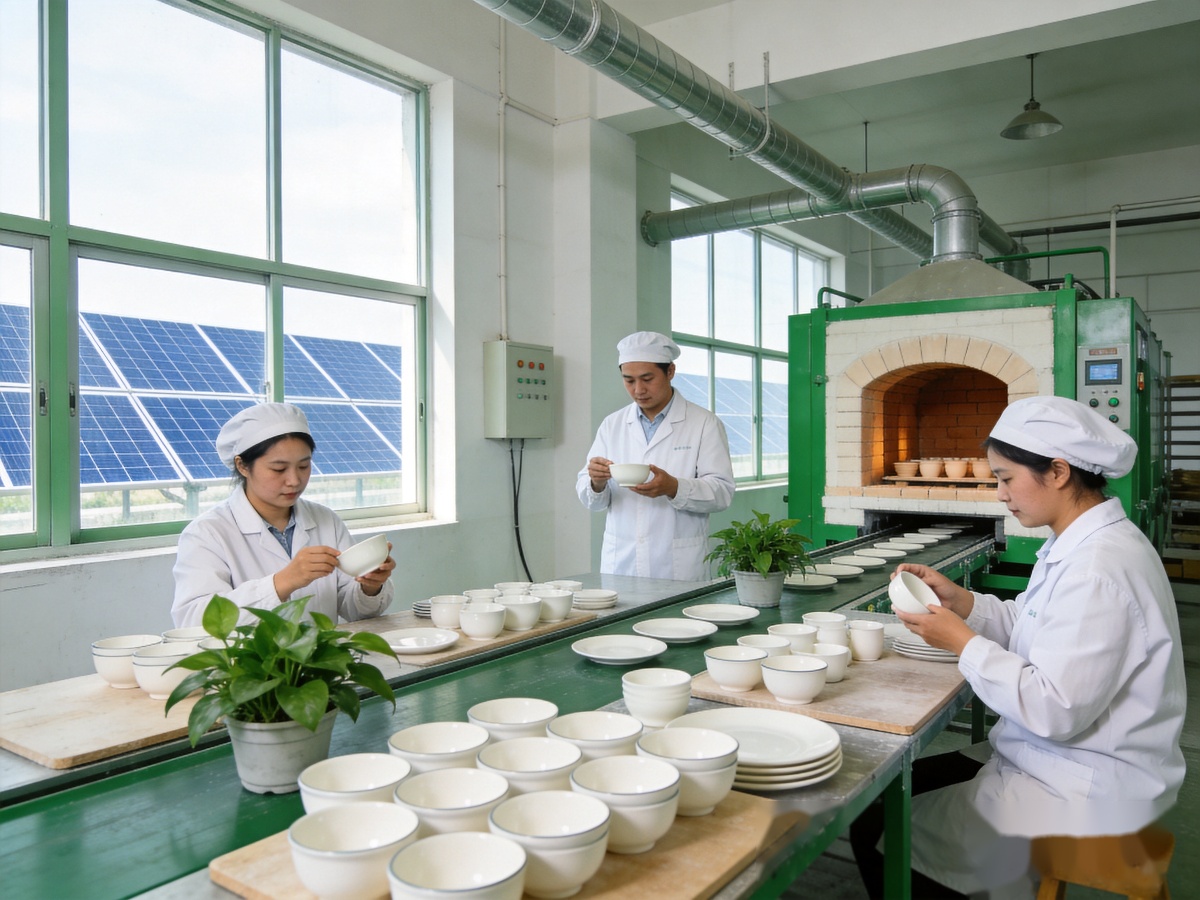
Leading sustainable ceramic manufacturers have transitioned to high-efficiency roller kilns that reduce energy consumption by 20-35% compared to traditional tunnel kilns. Some factories in Chaozhou and Dehua have installed rooftop solar arrays that offset 15-30% of their electricity usage. Kiln heat recovery systems capture waste heat for drying and pre-heating, further cutting fuel costs.
Raw Material Sourcing
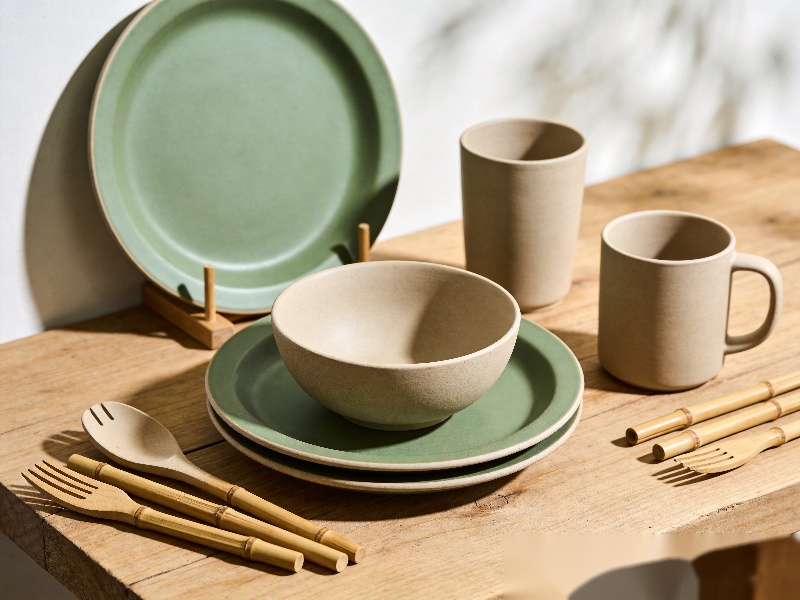
Sustainable ceramic tableware starts with responsibly sourced clay and minerals. Eco-conscious manufacturers use locally sourced clay to reduce transportation emissions, recycled ceramic aggregate (grog) to reduce virgin material extraction, and lead-free, cadmium-free glazes that meet or exceed FDA and LFGB standards. Some factories have also adopted water-recycling systems that reduce freshwater consumption by up to 60%.
Waste Reduction and Circular Production
Top-tier sustainable ceramic factories operate near-zero-waste production lines. Unfired ceramic scraps are recycled back into the production cycle, fired waste is crushed into aggregate for construction materials, and wastewater is treated and recirculated. Packaging has shifted from polystyrene to molded pulp, honeycomb cardboard, and biodegradable cornstarch peanuts.
Eco-Certifications for Sustainable Ceramic Tableware
Certifications are the most reliable way to verify that a supplier’s sustainability claims are genuine. Here are the key certifications B2B buyers should look for when sourcing sustainable ceramic tableware:
- ISO 14001 (Environmental Management System) — The gold standard for environmental management. Factories with ISO 14001 certification have documented environmental policies, measurable targets, and regular third-party audits.
- ISO 50001 (Energy Management System) — Demonstrates systematic energy reduction programs. Particularly relevant for ceramic factories where kiln energy accounts for 60-80% of total consumption.
- EU Ecolabel — A voluntary label that certifies reduced environmental impact across the entire product lifecycle, from raw material extraction to disposal.
- Cradle to Cradle (C2C) — Assesses products across five categories: material health, material reutilization, renewable energy use, water stewardship, and social fairness.
- Carbon Trust Certification — Independently verified carbon footprint measurement and reduction plans.
- FSC/PEFC Packaging Certification — Ensures that paper and cardboard packaging materials come from responsibly managed forests.
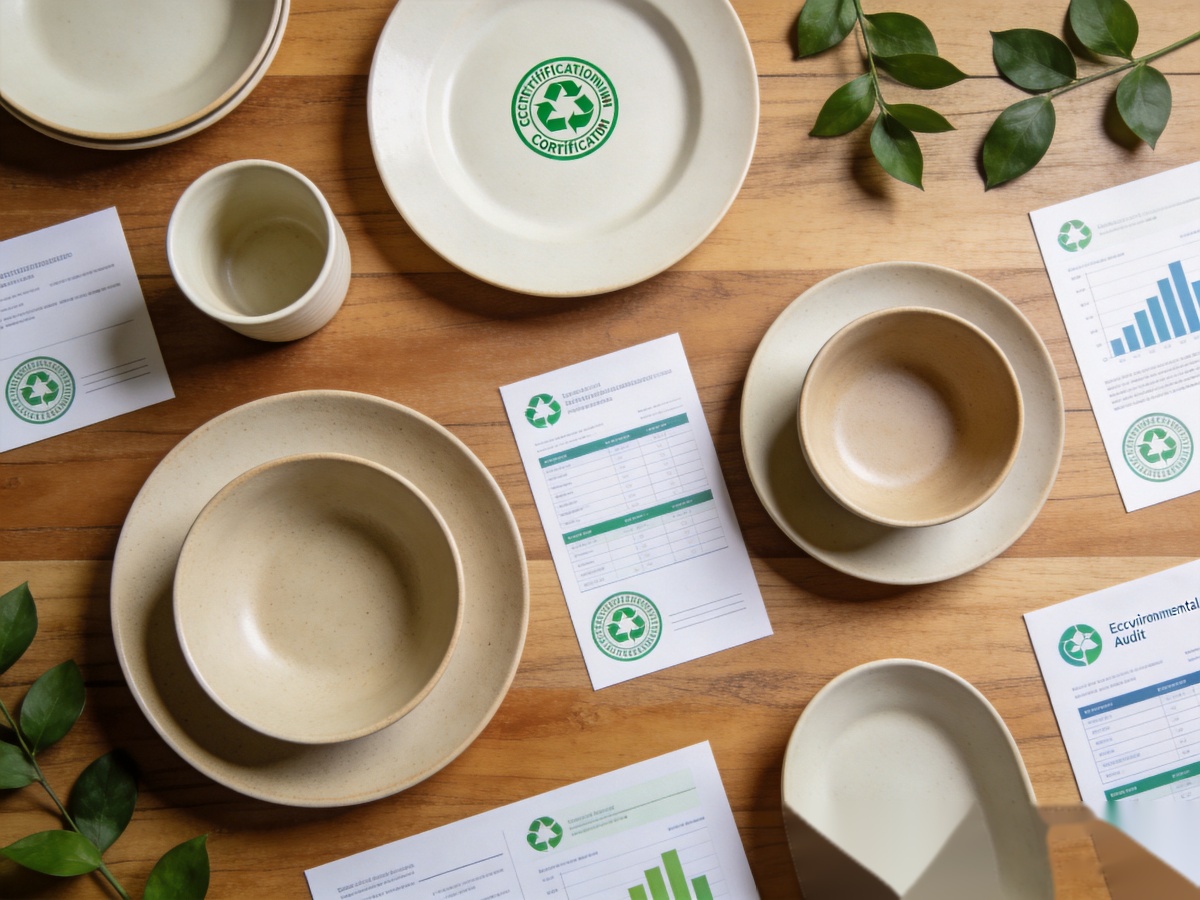
When evaluating suppliers, always request original certificates (not photocopies) and verify them through the issuing body’s online database. Many Chinese ceramic factories have obtained ISO 14001 certification through accredited bodies like SGS, TÜV, or Bureau Veritas. You can explore more about ceramic certification standards in our comprehensive guide.
How to Source Sustainable Ceramic Tableware: A Step-by-Step Framework
Sourcing sustainable ceramic tableware requires a structured evaluation process. Here is a practical framework that B2B buyers can implement immediately:
Step 1: Pre-Qualification Screening
Before engaging with a supplier, check their public sustainability profile. Do they publish an annual sustainability report? Are they listed on recognized eco-certification databases? Do they have a documented environmental policy on their website? This initial screening eliminates factories that treat sustainability as an afterthought.
Step 2: Environmental Audit Checklist
During factory visits or third-party audits, evaluate the following areas:
- Energy source mix (percentage of renewable vs. fossil fuel)
- Kiln type and energy efficiency rating
- Water recycling and treatment systems
- Waste segregation and recycling rates
- Glaze composition and heavy metal testing records
- Packaging material sourcing and recyclability
- Worker safety and environmental training programs
- Carbon footprint measurement and reduction targets
Our ceramic factory audit checklist provides a complete evaluation framework you can adapt for sustainability-focused inspections.
Step 3: Supply Chain Transparency
True sustainability extends beyond the factory floor. Ask suppliers to disclose their clay and mineral sources, sub-contractor environmental practices, logistics partners’ carbon offset programs, and packaging suppliers’ certifications. A transparent supply chain is a strong indicator of genuine environmental commitment.
Step 4: Product Testing and Verification
Request third-party lab testing for every product line. Key tests include lead and cadmium leaching (ASTM C738 / ISO 6486), thermal shock resistance, water absorption rates, and microwave and dishwasher safety. Sustainable ceramic tableware must perform as well as or better than conventional alternatives — environmental credentials should never come at the cost of functionality.

Cost Considerations for Sustainable Ceramic Tableware Sourcing
A common concern among B2B buyers is whether sustainable ceramic tableware costs more. The answer is nuanced. Here is a realistic cost breakdown:
Where costs may be higher:
- Eco-certification maintenance adds approximately 2-4% to production overhead
- Lead-free and cadmium-free glazes can cost 5-10% more than conventional alternatives
- Sustainable packaging materials (molded pulp vs. polystyrene) add $0.03-$0.08 per unit
- Third-party environmental audits cost $2,000-$5,000 per factory per year
Where costs are lower:
- Energy-efficient kilns reduce fuel costs by 15-30% annually
- Water recycling systems cut utility bills by 20-40%
- Waste recycling generates revenue from scrap material sales
- Solar power installations pay for themselves within 4-6 years
In most cases, the net cost difference for sustainable ceramic tableware is within ±3% of conventional production. For buyers targeting premium retail channels or EU markets with strict environmental regulations, the investment typically pays for itself through better market access and reduced compliance risk. For a deeper analysis of ceramic pricing, see our ceramic tableware pricing breakdown.
Sustainable Ceramic Tableware Compliance by Market
Different export markets have different environmental requirements for ceramic tableware. Understanding these regulations is essential for sourcing sustainable ceramic tableware that meets destination market standards:
European Union: The EU leads global environmental regulation with REACH (chemical restrictions), CBAM (carbon border tax), the Circular Economy Action Plan, and the upcoming Eco-Design for Sustainable Products Regulation (ESPR). Importers must provide digital product passports starting 2027.
United States: The FDA regulates lead and cadmium in ceramic tableware under 21 CFR. California Proposition 65 requires warning labels for products containing listed chemicals. Major retailers like Target and Walmart have their own restricted substance lists that exceed federal requirements.
Australia and New Zealand: Food Standards Australia New Zealand (FSANZ) sets limits for lead and cadmium migration. The Australian Packaging Covenant Organisation (APCO) requires sustainable packaging commitments from importers.
Middle East: GCC Standardization Organization (GSO) requirements are evolving to include environmental testing alongside traditional food safety parameters. Sustainable ceramic tableware with ISO 14001 certification has a competitive advantage in government tenders.
Market Trends: The Future of Sustainable Ceramic Tableware
Several emerging trends are shaping the future of sustainable ceramic tableware sourcing:
- Carbon-neutral production — Pioneering factories are targeting net-zero emissions by 2030 through electric kilns powered by renewable energy, carbon offset programs, and supply chain optimization
- Bio-based glazes — Research into plant-derived glaze components that eliminate heavy metals entirely while maintaining food-safe performance
- Digital product passports — Blockchain-verified traceability from raw clay to finished product, enabling buyers to prove sustainability claims to end consumers
- Circular design — Products designed for easy recycling at end-of-life, with mono-material construction and separable components
- Regional production shifts — Nearshoring trends are driving demand for sustainable ceramic production closer to end markets, particularly in Eastern Europe and Mexico
Buyers who invest in understanding these trends and building relationships with forward-thinking sustainable ceramic tableware suppliers will be best positioned to capture growing eco-conscious market segments. Explore more about current ceramic tableware design trends in our 2026 forecast.
Frequently Asked Questions About Sustainable Ceramic Tableware
Is ceramic tableware inherently sustainable compared to plastic or melamine?
Ceramic tableware has several inherent sustainability advantages: it is made from abundant natural materials (clay, feldspar, quartz), has a lifespan of 10-50+ years, is fully recyclable at end-of-life, and does not leach microplastics. However, the high-temperature firing process is energy-intensive. The net sustainability profile depends heavily on the factory’s energy source and efficiency practices.
How can I verify a Chinese ceramic factory’s environmental claims?
Request ISO 14001 certificates from accredited bodies (SGS, TÜV, Bureau Veritas), verify them on the issuing body’s online database, commission a third-party environmental audit, and review the factory’s utility bills and waste disposal records. On-site visits should confirm visible practices like waste segregation, water treatment systems, and air quality controls. Check out our factory audit guide for a detailed checklist.
Does sustainable ceramic tableware cost significantly more for bulk orders?
For most product lines, the price difference is within ±3%. Energy-efficient factories often have lower operating costs that offset the investment in sustainable practices. The main cost premium comes from eco-certification maintenance (2-4%) and sustainable packaging ($0.03-$0.08 per unit). For large orders, many sustainable factories offer competitive FOB pricing that matches or beats conventional suppliers.
What packaging options are available for sustainable ceramic tableware shipments?
Sustainable packaging alternatives include molded pulp inserts (replacing polystyrene), honeycomb cardboard dividers, biodegradable cornstarch packing peanuts, FSC-certified corrugated boxes, and soy-based inks for printing. Many factories in China’s major ceramic production regions have established supply chains for these materials, with minimal impact on lead times.
What is the minimum order quantity for sustainable ceramic tableware?
MOQ for sustainable ceramic tableware varies by factory and product complexity, typically ranging from 500 to 3,000 pieces per SKU. Factories with existing eco-certifications usually have streamlined production that supports lower MOQs. For strategies on managing order volumes, see our ceramic MOQ negotiation guide.
Ready to Source Sustainable Ceramic Tableware?
Sustainable ceramic tableware sourcing is a strategic investment that delivers returns through market access, brand positioning, and long-term supply chain resilience. The factories that lead in sustainability today will be the most reliable and compliant partners tomorrow.
At CeraSupply, we work exclusively with verified manufacturers that meet international environmental standards. Whether you need ISO 14001-certified production, lead-free glazes, or sustainable packaging solutions, our team can connect you with the right factory for your market requirements.
Get a free quote today: Contact us on WhatsApp — we typically respond within 2 hours with pricing, MOQ details, and certification documentation.