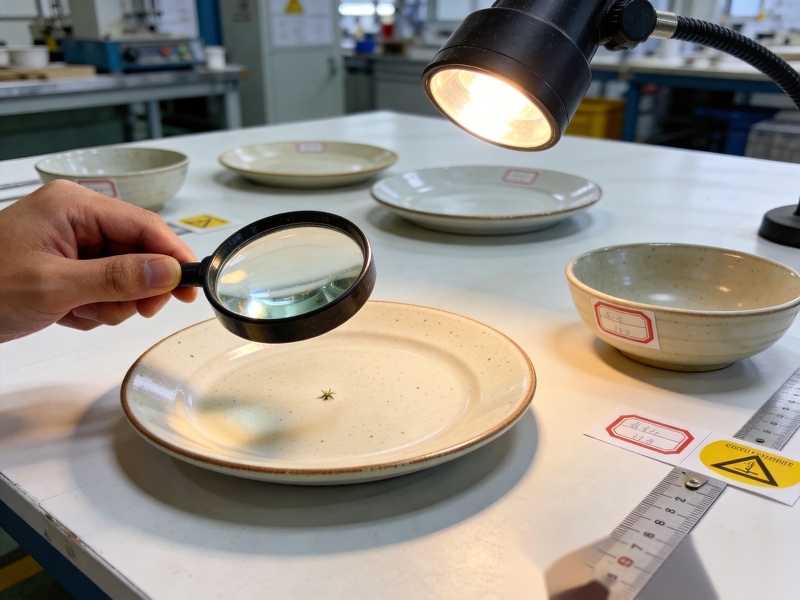
Ceramic defect classification is one of the most critical yet frequently misunderstood aspects of bulk tableware sourcing. When importing ceramic products at scale — whether you’re a distributor, hospitality chain, or e-commerce brand — the ability to systematically identify, classify, and negotiate around product defects directly impacts your bottom line, customer satisfaction, and supplier relationships. Without a standardized ceramic defect classification framework, buyers often face inconsistent quality, disputed inspection results, and costly return shipments.
This comprehensive guide provides B2B buyers with a practical ceramic defect classification system, clear acceptance criteria, and actionable strategies for implementing quality standards across your supply chain. Whether you’re evaluating samples from a new supplier or conducting pre-shipment inspections on a 50,000-piece order, this framework will help you make objective, data-driven quality decisions.
Understanding Ceramic Defect Classification: Why It Matters for B2B Buyers
In ceramic tableware manufacturing, no production run is completely free of defects. Even the most advanced factories in China’s major ceramic production regions produce items with minor imperfections. The question is not whether defects exist, but how they are classified, measured, and managed.
A robust ceramic defect classification system serves three essential purposes for B2B buyers:
- Objective evaluation: Replaces subjective opinions (“this looks bad”) with measurable criteria (“this is a Level 2 surface defect exceeding AQL limits”)
- Supplier communication: Creates a shared language between buyer and manufacturer, reducing disputes and misunderstandings
- Cost control: Enables risk-based pricing where buyers can accept lower grades for less critical applications while demanding premium quality for flagship product lines
Industry data suggests that ceramic tableware defect rates typically range from 3% to 15% depending on the product type, manufacturing process, and factory capability. Without a clear classification system, buyers either overpay for unnecessary perfection or unknowingly accept substandard goods that generate customer complaints.
The Complete Ceramic Defect Classification: Common Defect Types Explained
Before implementing acceptance criteria, buyers must understand the full spectrum of ceramic defects. The following ceramic defect classification covers the most common imperfections encountered in bulk tableware orders, organized by category.
Surface and Glaze Defects
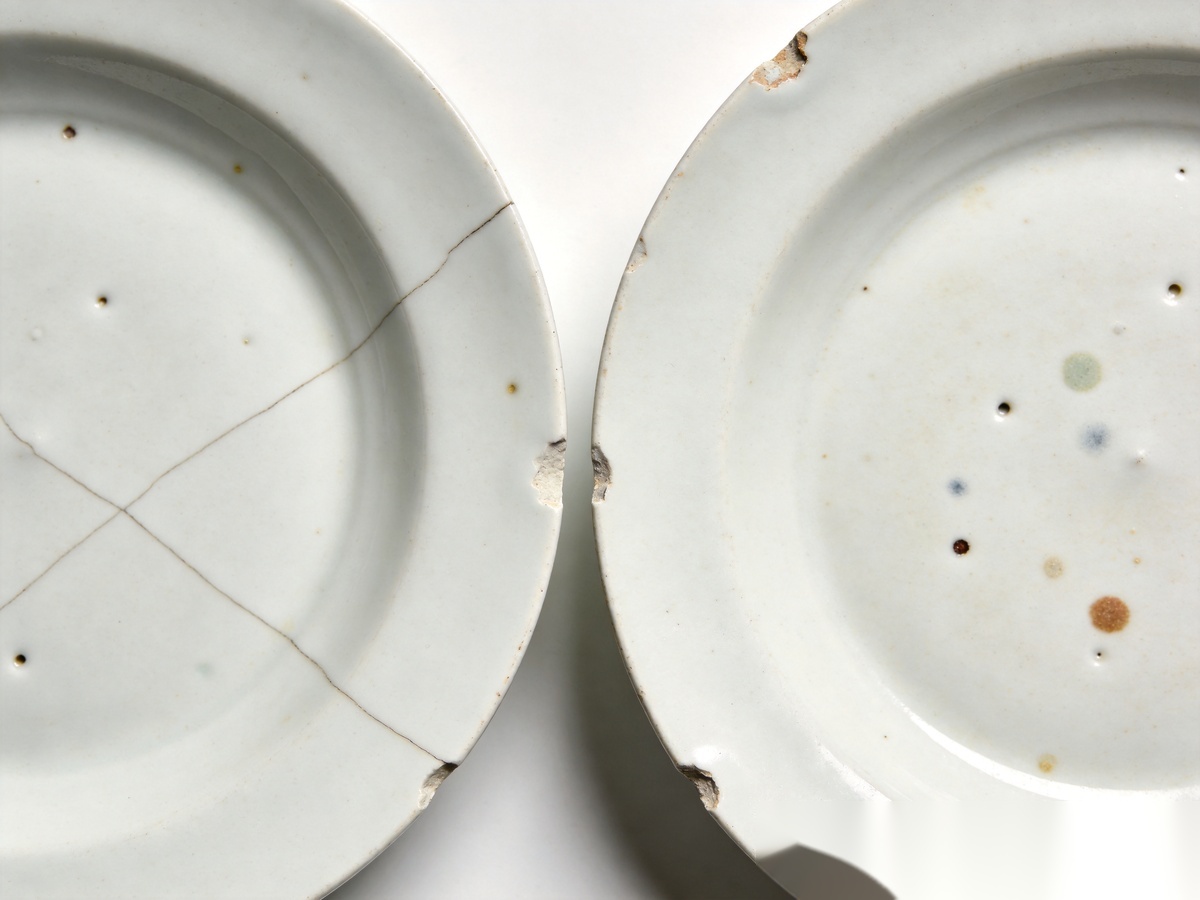
- Pinholes: Tiny holes in the glaze surface caused by trapped gases during firing. Typically 0.1–0.5mm in diameter. Acceptable in small numbers on non-food-contact surfaces.
- Crazing: A network of fine cracks in the glaze, often invisible to the naked eye initially but developing over time. This is a serious functional defect that compromises food safety and must be rejected.
- Glaze crawling: Areas where glaze has pulled away from the body during firing, exposing bare ceramic. Unacceptable on food-contact surfaces.
- Blisters: Bubble-like protrusions on the glaze surface caused by over-firing or contaminated raw materials. Visible and tactile — always rejected on premium grades.
- Color inconsistency: Variations in glaze color between pieces within the same batch. Measured using Delta-E color difference values; typically <2.0 is acceptable for standard grade.
Structural and Body Defects
- Hairline cracks: Fine fractures in the ceramic body, often originating from stress points. Always a critical defect — these propagate under thermal cycling and lead to breakage.
- Warpage: Deviation from flat geometry, measured by placing the piece on a flat surface and measuring the maximum gap. Acceptable limits vary: plates typically allow ≤1.5mm, while bowls allow ≤2.0mm.
- Chipping: Missing material along edges or rims. Any chip on the rim or lip (food-contact edge) is a critical defect. Minor chips on the foot ring may be acceptable in lower grades.
- Warping/deformation: Oval-shaped plates or bowls that deviate from circular geometry. Measured as the difference between maximum and minimum diameter; typically ≤2% is acceptable.
Dimensional and Functional Defects
- Size deviation: Actual dimensions exceeding ±3% of specification. Critical for pieces that must fit standardized racks, dispensers, or packaging.
- Weight deviation: Variations exceeding ±5% of target weight, indicating inconsistent material density or wall thickness.
- Stacking failure: Pieces that do not stack properly due to foot ring or rim geometry issues. Particularly critical for hospitality customers using automated dishwashing systems.
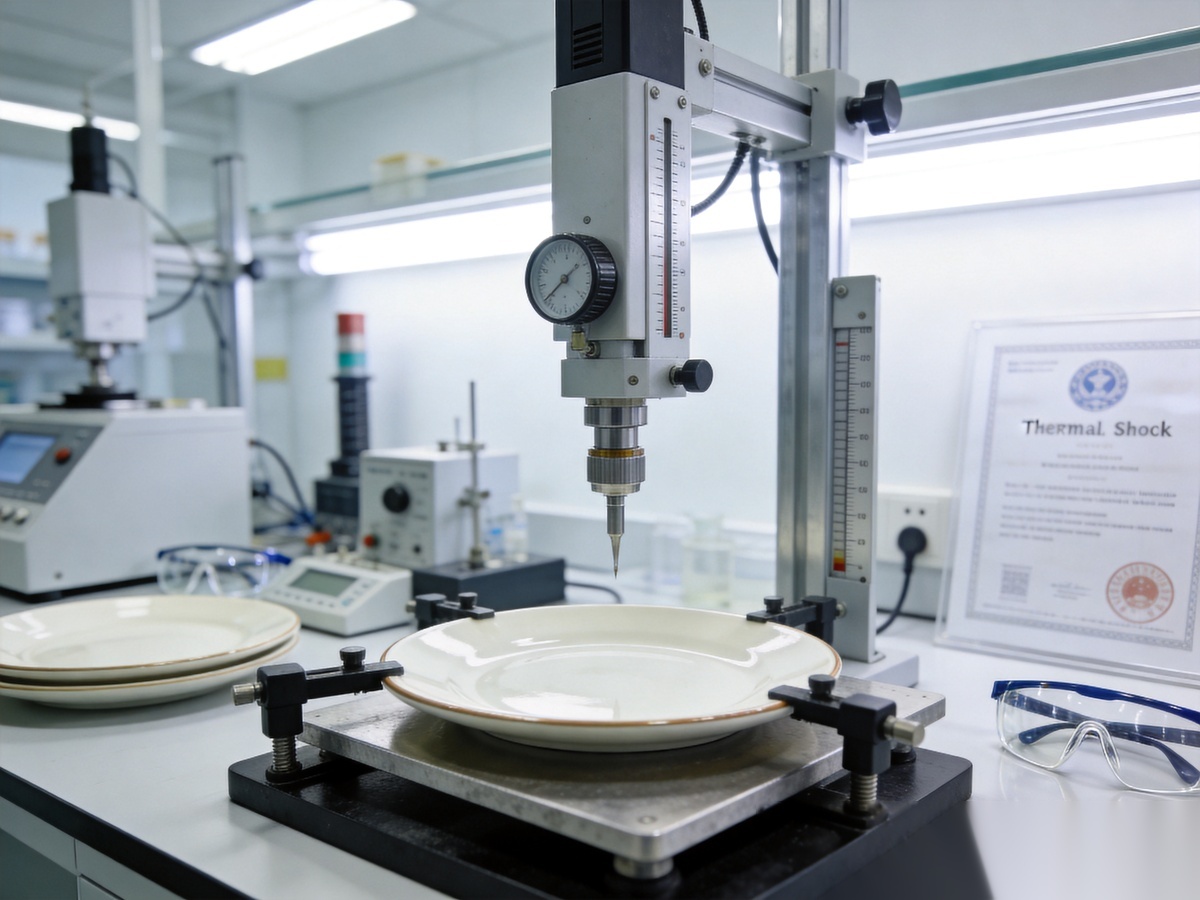
- Thermal shock failure: Pieces that crack when exposed to rapid temperature changes. Tested by cycling between 20°C and 150°C water — a mandatory test for commercial dishwasher-safe products.
The Three-Level Ceramic Defect Classification System
The most effective ceramic defect classification system uses a three-tier severity framework that maps each defect to its actual impact on product usability and customer satisfaction. This system, adapted from international quality standards like ISO 2859-1 (AQL sampling), provides clear pass/fail criteria for each severity level.
Level 1: Critical Defects (Must Reject — 0% Tolerance)
Critical defects pose safety risks, violate regulatory requirements, or render the product completely unusable. These defects have zero tolerance in any quality grade.
- Crazing on food-contact surfaces (bacterial harboring risk)
- Lead or cadmium leaching exceeding FDA/LFGB limits (learn more about ceramic certification standards)
- Hairline cracks in the ceramic body
- Chips on rims, lips, or food-contact edges
- Glaze crawling exposing bare ceramic on food-contact surfaces
- Thermal shock failure during testing
Level 2: Major Defects (Limited Tolerance — AQL 1.0–2.5)
Major defects significantly reduce usability or aesthetic appeal but do not pose safety risks. These are controlled through AQL (Acceptable Quality Level) sampling.
- Warpage exceeding specified limits
- Visible blisters or large pinholes (>0.5mm) on prominent surfaces
- Color inconsistency with Delta-E >3.0
- Stacking failures
- Size deviation exceeding ±3%
- Foot ring chips or uneven foot ring grinding
Level 3: Minor Defects (Higher Tolerance — AQL 4.0–6.5)
Minor defects are cosmetic imperfections that most end consumers would not notice under normal use conditions. Higher tolerance levels are economically justified.
- Small pinholes (<0.5mm) on non-prominent surfaces (bottom, foot ring area)
- Slight color variation with Delta-E 2.0–3.0
- Minor glaze texture irregularities
- Slight weight deviation within ±5%
- Faint tool marks from the manufacturing process
- Minor decoration misalignment (<1mm off-center for logos)
Setting Ceramic Defect Classification Acceptance Criteria for Your Orders
With the three-level ceramic defect classification framework in place, the next step is defining acceptance criteria that match your specific market position and end-use requirements. A one-size-fits-all approach wastes money — premium hospitality buyers need tighter standards than promotional product importers.
Here’s a practical framework for setting your acceptance criteria:
Premium Grade (Hospitality & High-End Retail)
- Critical defects: 0% tolerance (AQL 0)
- Major defects: AQL 1.0 (reject lot if >1% major defects in sample)
- Minor defects: AQL 2.5
- Overall reject rate target: ≤3%
- Typical price premium: 15–25% over standard grade
Standard Grade (General Retail & E-commerce)
- Critical defects: 0% tolerance (AQL 0)
- Major defects: AQL 2.5
- Minor defects: AQL 4.0
- Overall reject rate target: ≤5%
- Most common grade for bulk tableware imports
Economy Grade (Promotional & Budget Channels)
- Critical defects: 0% tolerance (AQL 0)
- Major defects: AQL 4.0
- Minor defects: AQL 6.5
- Overall reject rate target: ≤8%
- Suitable for single-use events, giveaways, or secondary product lines
How to Implement Ceramic Defect Classification in Your Supply Chain
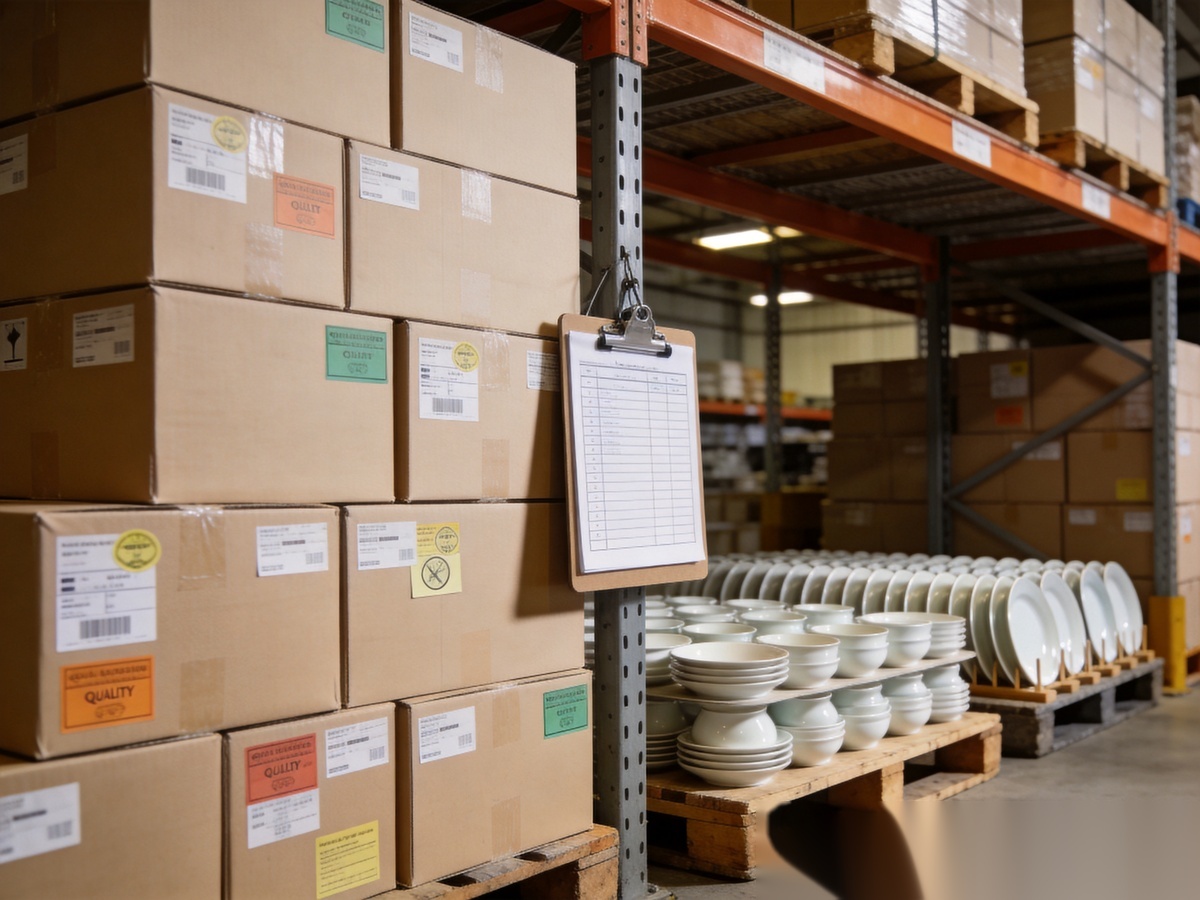
A classification system is only valuable if it’s consistently applied. Here’s a step-by-step implementation guide for integrating ceramic defect classification into your sourcing workflow.
Step 1: Define Standards in the Purchase Contract
Include the defect classification table, AQL levels, and sampling plan directly in your purchase contract or quality agreement. Reference international standards (ISO 2859-1 or ANSI/ASQ Z1.4) to provide a legally enforceable framework. Specify the inspection stage — inline, pre-shipment, or both — and who bears the cost of rejected lots.
Step 2: Provide Visual Reference Boards to the Factory
Written descriptions alone are insufficient. Create physical or digital reference boards showing examples of acceptable and unacceptable defects at each level. Ship sample boards to the factory and keep identical sets at your inspection site. This eliminates ambiguity during production and pre-shipment inspection.
Step 3: Train Your Inspection Team
Whether you employ a third-party inspection company (like SGS, Bureau Veritas, or Intertek) or maintain your own QC team, ensure inspectors are trained on your specific ceramic defect classification criteria. Conduct calibration sessions where multiple inspectors evaluate the same sample set and compare results to minimize subjective variation.
Step 4: Track Defect Data and Supplier Performance
Record every defect found during inspection with its classification level, location on the piece, and frequency. Over time, this data reveals patterns — if a factory consistently produces pinhole defects on a particular glaze type, you can address the root cause rather than just rejecting finished goods. For more on supplier evaluation, see our supplier selection checklist.
Cost Implications of Ceramic Defect Classification Standards
Understanding the financial impact of different ceramic defect classification levels helps buyers make smarter sourcing decisions. Tighter standards cost more — but the relationship is not linear, and the optimal grade depends on your business model.
Key cost factors to consider:
- Factory sorting costs: Factories charge 5–15% more for premium-grade sorting, as they must inspect each piece individually and discard or downgrade a higher percentage of production.
- Inspection costs: Full inspection (100% sorting) costs $150–300 per container load, while AQL sampling inspection costs $200–400 per inspection day.
- Return and replacement costs: Defective goods discovered after shipment cost 3–5× the original unit price when accounting for return shipping, customs, replacement production, and delayed revenue.
- Brand reputation costs: For hospitality brands and premium retailers, a single batch of defective tableware reaching end customers can damage reputation far beyond the product cost.
The most cost-effective approach is to match your ceramic defect classification standards to the product’s market positioning. Premium product lines justify tighter tolerances, while promotional items benefit from relaxed cosmetic standards — as long as critical safety defects are always excluded.
Ceramic Defect Classification FAQ
Q1: What is the most common ceramic defect found in bulk tableware orders?
The most common defect is minor surface pinholes in the glaze, which appear as tiny holes (0.1–0.5mm) on the ceramic surface. These are caused by trapped gases during the firing process and are generally acceptable in limited quantities on non-prominent surfaces. However, large pinholes (>0.5mm) or clusters of pinholes on food-contact surfaces should be classified as major defects and rejected.
Q2: How should buyers handle disagreements with suppliers about ceramic defect classification?
The best approach is to establish visual reference standards before production begins. Create physical sample boards showing acceptable and unacceptable defects at each classification level, signed off by both parties. When disputes arise during inspection, refer to these agreed-upon reference boards rather than subjective opinions. If disagreements persist, engage a neutral third-party inspection company to make the final determination.
Q3: Can ceramic defect classification standards be different for different product lines from the same supplier?
Absolutely. In fact, this is recommended. A single factory can produce different quality grades simultaneously — premium grade for your flagship hotel dinnerware line, standard grade for retail channels, and economy grade for promotional items. Each grade has its own ceramic defect classification acceptance criteria, allowing you to optimize costs while maintaining appropriate quality for each market segment.
Q4: What international standards apply to ceramic defect classification?
The most widely referenced standards are ISO 2859-1 (also known as ANSI/ASQ Z1.4 or MIL-STD-1916), which provides AQL-based sampling plans for attribute inspection. For specific ceramic product standards, ISO 6486 covers lead and cadmium release limits, while regional standards like EU Regulation 1935/2004 and US FDA 21 CFR provide food-contact safety requirements. Your ceramic defect classification system should incorporate these regulatory requirements as non-negotiable critical defect criteria.
Q5: How often should ceramic defect classification standards be reviewed and updated?
Review your classification standards at least annually, or whenever you experience a significant quality incident, change suppliers, enter a new market with different regulatory requirements, or receive consistent customer feedback about a specific defect type. Regular review ensures your standards remain aligned with market expectations and manufacturing capabilities. Browse our sourcing guides for more insights on ceramic quality management.
Get Expert Support for Your Ceramic Quality Standards
Implementing a robust ceramic defect classification system requires deep knowledge of both manufacturing capabilities and international quality standards. At CeraSupply, we help B2B buyers establish customized quality criteria that match their market positioning, reduce defect-related costs, and build stronger supplier relationships.
Whether you need help defining acceptance criteria for a new product line, conducting factory audits, or managing pre-shipment inspections, our team has decades of experience in ceramic tableware quality management.
Contact us today for a free consultation on ceramic quality standards and get a customized defect classification framework for your specific sourcing needs.