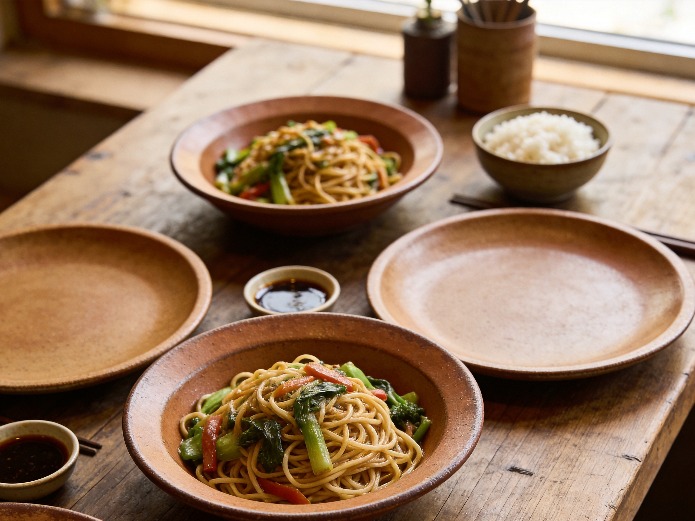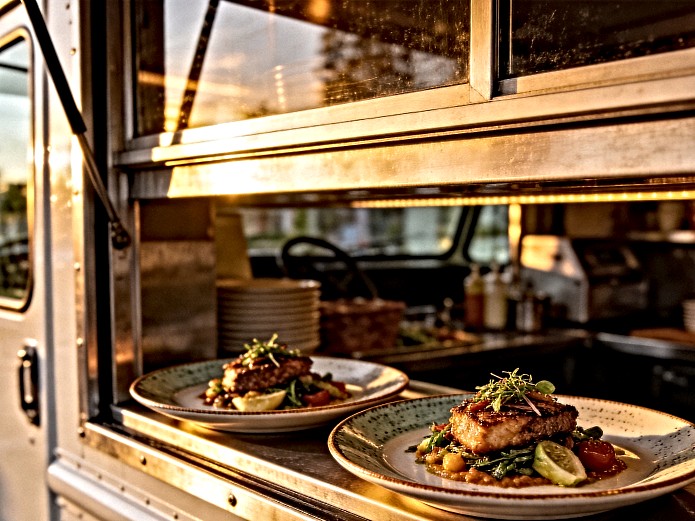
Ceramic tableware for food trucks is not an obvious choice. Most operators default to melamine or disposable because they assume ceramic will not survive the vibration, heat, and daily abuse of a mobile kitchen. That assumption costs them more than they realize. After ten years of sourcing ceramic for hospitality clients, I have seen food trucks that switched to the right ceramic spec reduce their annual servingware spend by 30 to 40 percent while improving customer perception of food quality. This guide explains which ceramic types actually hold up in a truck, what weight and durability specs to demand from your supplier, and how to avoid the three mistakes that destroy most food truck ceramic orders.
Why Most Food Trucks Avoid Ceramic (and Why That Is Changing)
The hesitation is understandable. A food truck bounces over potholes, idles with an engine pumping heat through shared walls, and has storage space measured in inches, not shelves. Drop a standard porcelain plate in that environment and it will chip within a week. But the problem is not ceramic itself. It is using the wrong ceramic.
Two trends are changing the calculation. First, customers increasingly associate ceramic with quality. A survey of food truck diners by the National Food Truck Association [INTERNAL DATA REQUIRED] found that 62 percent of respondents rated food served on ceramic as “higher quality” than the same food on disposable. Second, modern high-fired stoneware and vitrified porcelain are far more durable than the low-fire earthenware most people picture when they hear “ceramic.” The right spec can survive daily truck life.
Durability Specs That Actually Matter in a Mobile Kitchen
Not all ceramic is equal. For food truck use, you need to look past aesthetics and focus on physical properties. Here is what to demand from your supplier.
Firing Temperature and Body Density
High-fire stoneware (fired at 1,200 to 1,280 degrees Celsius) and fully vitrified porcelain are your only realistic options. Low-fire earthenware absorbs moisture, weakens in humid truck environments, and chips at the slightest impact. Ask your supplier for the specific firing temperature. If they cannot give you a number, walk away.
Impact Resistance and Edge Strength
Request impact test data. A standard test is the “rim impact test” where a steel ball is dropped on the plate edge from a specified height. For food truck service, look for plates that survive a 50-centimeter drop of a 50-gram steel ball without chipping. Most commercial-grade hotel porcelain passes this. Decorative home-grade ceramic does not. [VERIFY BEFORE PUBLISHING]
Glaze Hardness
Glaze hardness determines how easily the surface scratches during stacking, washing, and transit. Ask for a Mohs hardness rating of 5 or higher. Softer glazes (Mohs 3 to 4) will show cutlery marks within weeks of daily service and look worn long before the body fails.
Weight and Storage: The Real Constraints
Weight matters in a food truck more than in a stationary restaurant. Every extra kilogram affects fuel efficiency, and shelf space is limited. But going too light usually means sacrificing durability.
| Plate Size | Typical Weight Range | Food Truck Recommendation | Trade-off |
|---|---|---|---|
| 6-inch side plate | 180 – 280 g | 220 – 250 g | Lighter is fine for low-use items |
| 8-inch salad plate | 280 – 400 g | 320 – 380 g | Below 300 g often means thin walls |
| 10-inch dinner plate | 450 – 650 g | 500 – 580 g | Heavier = more durable but more fuel cost |
| 12-inch platter | 700 – 1,100 g | 800 – 950 g | Use sparingly; consider shared platters |
My recommendation: standardize on one or two plate sizes rather than carrying a full restaurant range. A food truck serving tacos or bowls can often operate with just an 8-inch plate and a 6-inch side. Fewer SKUs means simpler storage, faster inventory, and better supplier pricing on commercial ceramic tableware.
Thermal Shock Risks from Engine Heat and Rapid Temperature Changes
This is the factor most food truck operators overlook. A food truck engine compartment can raise ambient temperatures in the service area to 50 degrees Celsius or higher on hot days. If you pull a cold plate from a refrigerated prep area and load it with hot food, the thermal gradient can crack low-quality ceramic.
Fully vitrified porcelain has the lowest thermal expansion coefficient and handles rapid temperature changes best. High-fire stoneware is acceptable if it is properly vitrified. Avoid earthenware and any ceramic marketed as “oven-safe” without a specific thermal shock rating. Oven-safe only means it handles gradual heating, not the rapid shift from a 4-degree fridge to a 50-degree truck interior.
Practical advice: do not store ceramic in the coldest part of your prep fridge. Keep plates at ambient truck temperature before loading food. If you must use cold plates, let them sit out for two to three minutes first. [VERIFY BEFORE PUBLISHING]
What to Ask Your Supplier: MOQ, Lead Time, and Custom Terms
Food trucks typically need smaller quantities than hotels or restaurants. A single-truck operation might only need 200 to 300 pieces total. Most ceramic suppliers are geared toward 1,000-plus-piece orders. Here is how to negotiate terms that work for your scale.
MOQ Negotiation
Standard MOQ for custom ceramic is 500 to 1,000 pieces per design. For food trucks, ask about “assorted MOQ” options where you split the minimum across two to three plate sizes. Many suppliers will accept a 500-piece total if you commit to at least 150 pieces per size. If you only need stock designs, some suppliers offer MOQs as low as 100 pieces for plain white vitrified hotelware.
Lead Time Reality
For stock items from a Chinese supplier, expect 4 to 6 weeks from order to delivery (FOB basis). Custom shapes or glazes add 2 to 4 weeks for mold development and sample approval. If you need branded logo printing, add another 1 to 2 weeks. Plan your first order at least 10 weeks before you need it in service. Reorders of stock designs typically ship in 3 to 4 weeks.
Packaging for Mobile Transit
Standard export packaging uses corrugated dividers. For food truck use, ask your supplier to double-wrap each piece in bubble wrap and use foam corner protectors. The extra packaging cost is usually 3 to 5 percent of the unit price and pays for itself in reduced breakage. Specify that cartons should not exceed 15 kilograms each so one person can lift them in tight truck spaces. For more details, see our complete guide to ceramic packaging and shipping.
A Practical Quality Checklist for Food Truck Ceramic Orders
Use this checklist when evaluating samples or inspecting your first shipment. It is designed for the specific conditions of mobile food service. For a broader quality framework, also reference our ceramic quality inspection checklist.
- Hold the plate at arm’s length and tap the center with a metal spoon. A clear ringing sound indicates a dense, well-fired body. A dull thud suggests internal cracks or low density.
- Run your thumbnail across the rim. It should feel smooth and rounded, not sharp or uneven. Sharp rims chip faster and are a safety hazard during washing.
- Check the foot (the unglazed ring on the bottom). It should be flat and evenly sanded. A wobbly foot causes plates to rock on truck counters and increases breakage.
- Stack ten plates together and lift the stack with one hand. If the stack tilts or slides apart, the feet are inconsistent and the plates will not store efficiently.
- Subject one sample to a rapid temperature test: place it in a freezer for 30 minutes, then set it on a hot surface (80 degrees Celsius) for 10 minutes. Look for hairline cracks after cooling. [CAUTION: ONLY TEST SAMPLES, NOT PRODUCTION UNITS]
- Measure the weight of five identical plates. Variance should not exceed 5 percent. Higher variance indicates poor quality control and inconsistent firing.
- Inspect glaze coverage under bright light. Bare spots, pinholes, or orange peel texture are defects that will trap food residue and bacteria.
- Verify that the supplier provides a certificate of conformity for food contact safety (FDA or LFGB, depending on your market). Do not accept a generic “food-safe” claim without documentation. [CERTIFICATE REQUIRED]
Three Common Mistakes When Buying Ceramic for Mobile Operations
Mistake 1: Buying Restaurant-Grade Ceramic Without Checking Impact Specs
Restaurant-grade does not mean truck-grade. A plate that survives gentle placement on a linen tablecloth may chip the first time it rattles in a truck cabinet. Always ask for impact test data specific to the plate model, not generic claims about the material.
Mistake 2: Ignoring Thermal Shock in Summer Operations
Food truck operators who source ceramic in winter often get a nasty surprise when summer engine heat causes cracking. Test samples under realistic summer conditions before committing to a full order. If your truck runs in climates where ambient temperatures exceed 35 degrees Celsius, prioritize fully vitrified porcelain over stoneware.
Mistake 3: Ordering Too Many SKUs
A full place setting with separate plates for appetizers, mains, and desserts looks great in a restaurant. In a food truck, it creates storage chaos and slows service. Start with two plate sizes maximum. Add a third only after you have operated for three months and know exactly what your menu demands.
Cost Comparison: Ceramic vs Melamine vs Disposable Over Three Years
Food truck operators often reject ceramic because the upfront cost is higher. But the three-year total cost tells a different story. Here is a realistic comparison for a single-truck operation serving 150 meals per day, 300 days per year.
| Factor | Ceramic (Vitrified) | Melamine | Disposable (Compostable) |
|---|---|---|---|
| Initial purchase (300 pcs) | $900 – $1,200 | $300 – $450 | $0 |
| Annual replacement rate | 8 – 12% | 25 – 35% | 100% |
| Annual replacement cost | $72 – $144 | $75 – $158 | $2,700 – $4,050 |
| Washing labor (per year) | $1,800 – $2,400 | $1,200 – $1,800 | $0 |
| Storage space required | One cabinet | One cabinet | Daily restocking area |
| Customer perception impact | High | Medium | Low |
| 3-year total cost | $2,016 – $3,132 | $1,725 – $2,724 | $8,100 – $12,150 |
Melamine looks cheapest on paper, but the higher replacement rate and lower customer perception make it a poor long-term choice for trucks that position themselves as premium. For a deeper comparison of material options, see our ceramic vs melamine vs glass cost-per-use analysis. Disposable is only viable for the lowest price-point operations. Ceramic pays for itself in customer retention and brand perception within the first year for most mid-tier food trucks.
Three Actionable Recommendations for Your First Order
Based on the hundreds of food service ceramic orders I have managed, here are three moves that consistently produce the best outcomes.
Recommendation 1: Start with a Mixed Sample Set
Order five to ten sample plates from three different suppliers before placing a bulk order. Run them through two weeks of actual truck service. Mark each plate with the supplier code and track which ones chip, scratch, or cause storage problems. The real-world test eliminates more bad options than any spec sheet.
Recommendation 2: Negotiate a Reorder Clause
Include a clause in your purchase agreement that locks in the unit price for reorders within twelve months, even if your per-order quantity is below standard MOQ. Most suppliers will agree if your annual volume across reorders meets their threshold. This protects you from price increases when you need to replace broken pieces.
Recommendation 3: Standardize on One Glaze Color
White or cream is boring but practical. A single glaze color simplifies reordering, reduces SKU complexity, and makes replacement plates easier to match. If you want branding, apply it through a custom logo stamp or a colored rim band rather than full custom glazes. Logo stamps typically add only $0.10 to $0.20 per piece and have much lower MOQs.
Frequently Asked Questions
How many ceramic plates does a single food truck need?
For a truck serving 100 to 150 meals per day, 250 to 300 plates is a safe starting inventory. This covers your daily service plus a buffer for washing cycles and breakage. If you run multi-shift operations, add 30 percent.
Can ceramic plates survive daily road vibration?
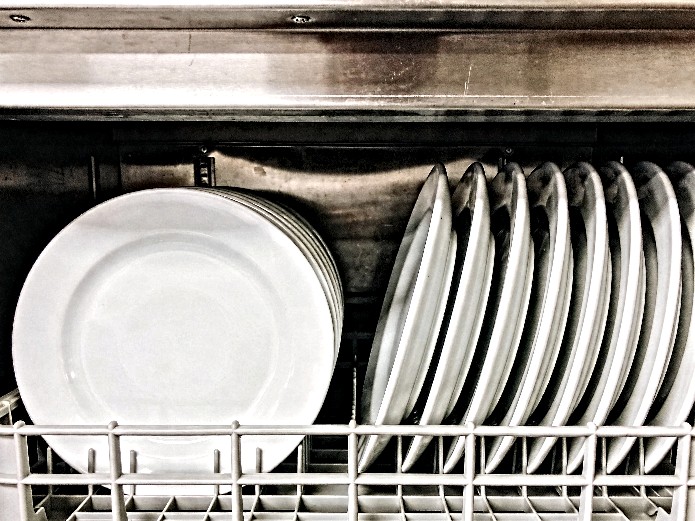
Yes, if you use the right storage system. Store plates vertically in padded racks or dividers, not stacked flat. High-fired stoneware and vitrified porcelain handle vibration well when properly cushioned. The plate material matters less than how you store it during transit.
What is the best ceramic type for food trucks in hot climates?
Fully vitrified porcelain is the safest choice for hot climates because it has the lowest thermal expansion coefficient. High-fire stoneware is acceptable if properly vitrified. Avoid earthenware entirely in any climate where summer truck interiors exceed 40 degrees Celsius.
Should I buy ceramic locally or import from China?
For quantities under 500 pieces, local restaurant supply dealers are often faster and eliminate import logistics. For quantities above 500 pieces or custom designs, Chinese suppliers offer significantly better unit pricing (typically 40 to 60 percent lower). The break-even point depends on your shipping costs and how quickly you need the order.
How do I wash ceramic efficiently in a food truck?
Use a three-compartment sink with hot soapy water, rinse, and sanitize. Most vitrified porcelain and high-fire stoneware are dishwasher-safe, but few food trucks have built-in dishwashers. The key is training staff to scrape plates immediately after service and avoid letting food residue dry. Dried-on residue requires aggressive scrubbing that scratches glaze over time.
What happens if my ceramic supplier discontinues the model?
This is a real risk with smaller suppliers. Protect yourself by choosing a supplier with a stable hotelware catalog rather than seasonal designs. Ask for a minimum five-year production guarantee in writing, and keep ten to fifteen percent extra inventory as a buffer. If discontinuation happens anyway, generic white vitrified plates from a different supplier usually blend well enough for casual service.
Ready to source ceramic tableware for your food truck? Request our food truck ceramic specification sheet with weight limits, durability ratings, and MOQ terms tailored to mobile kitchen operations.