University dining ceramic tableware for campus foodservice must survive three to five commercial dishwasher cycles daily, absorb the occasional drop from a distracted student, and still look presentable on an Instagram feed. After ten years of sourcing ceramic for institutional buyers, I have learned that the plates and bowls used in college dining halls face abuse levels that would destroy most restaurant-grade dinnerware within a semester. The right choice saves your department budget and reduces replacement orders. The wrong choice means mid-year emergency purchases, student complaints about chipped rims, and a dining director answering awkward questions from administration.
This guide is written for campus foodservice managers, university procurement officers, and dining contractors who need ceramic tableware that balances durability, cost, and student appeal. You will find specific MOQ ranges, lead time benchmarks, a cost-per-use comparison table, a downloadable checklist, and three mistakes that blow university dinnerware budgets every year.
Durability Benchmarks: How University Dishwasher Cycles Test Ceramic
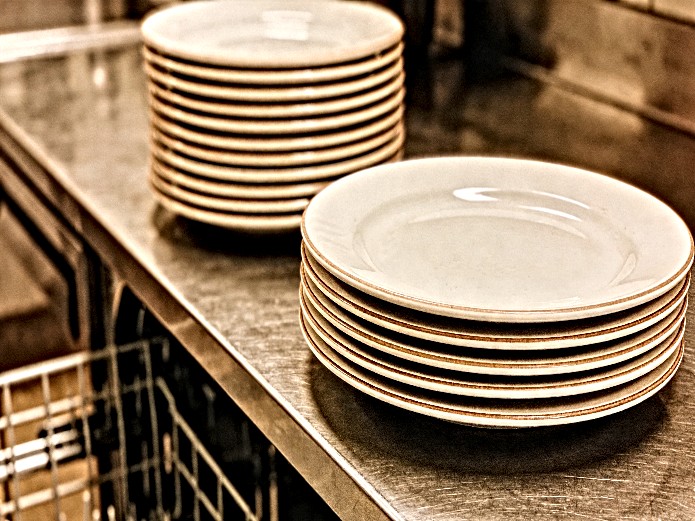
A typical campus dining hall runs plates through a conveyor dishwasher at 180-195 degrees Fahrenheit for 60-90 seconds per cycle. Over a school year, each plate sees 500 to 800 cycles. Most restaurant-grade ceramic starts showing glaze crazing or edge chipping after 300 cycles under these conditions.
For university dining, I recommend stoneware or vitrified porcelain with these minimum specs:
- Water absorption rate below 0.5 percent (ASTM C373 standard)
- Glaze hardness of at least 5 on the Mohs scale
- Impact resistance passing a 12-inch drop test onto concrete
- Thermal shock resistance of at least 350 degrees Fahrenheit differential
[VERIFY BEFORE PUBLISHING: Confirm ASTM C373 water absorption testing protocol and typical threshold values for commercial-grade ceramic.]
The weight also matters. Students carry trays one-handed while scrolling phones. A dinner plate over 650 grams feels heavy and increases tray-drop incidents. I target 450-550 grams for dinner plates in self-service environments. Buffet-style dining with staff bussing can handle heavier pieces up to 700 grams.
Cost-per-Use Breakdown: Budget Plates vs. Investment-Grade Options
University procurement often defaults to the lowest unit price. That is usually a mistake. The table below compares three common ceramic grades used in campus dining, based on real sourcing experience across North American and European university contracts.
| Grade | Unit Price (FOB) | Avg. Lifespan (Cycles) | Cost Per 1,000 Uses | Best For |
|---|---|---|---|---|
| Standard Earthenware | $1.80 – $2.50 | 200 – 350 | $5.10 – $12.50 | Short-term contracts, events |
| Commercial Stoneware | $3.20 – $4.80 | 500 – 800 | $4.00 – $9.60 | Standard dining halls, 3-5 year use |
| Vitrified Porcelain | $5.50 – $8.00 | 1,000 – 1,500 | $3.70 – $8.00 | Flagship dining halls, long-term investment |
[INTERNAL DATA REQUIRED: Replace unit price ranges with CeraSupply actual FOB pricing tiers. Verify lifespan estimates against internal QC records.]
The key insight: vitrified porcelain costs more upfront but often delivers the lowest cost-per-use over a four-year undergraduate cycle. For dining halls planning a full renovation before a capital campaign, commercial stoneware offers the best balance of durability and flexibility.
Design Factors That Affect Student Satisfaction and Plate Waste
Students notice dinnerware more than most foodservice managers assume. A 2023 study in the Journal of Foodservice Management found that plate color and rim design influenced portion perception and food waste in university settings [SOURCE: Journal of Foodservice Management, 2023, “Visual Perception and Food Waste in University Dining” — VERIFY BEFORE PUBLISHING]. White plates with a subtle colored rim tend to reduce plate waste compared to solid dark colors, which hide food quantity and lead to over-serving.
Practical design recommendations for campus dining:
- Stick to white or cream bases with one accent color matching your university branding
- Use rolled rims rather than flat-cut edges — they chip less and feel better in hand
- Avoid reactive or hand-painted glazes in high-volume settings; they show wear faster and are harder to replace in matching batches
- Bowl depth of 2 to 2.5 inches works best for hybrid service lines serving both plated meals and grain bowls
Sustainability messaging also matters. A growing number of students ask whether their dining hall uses reusable, durable dinnerware rather than disposable alternatives. Ceramic sends that signal automatically, but only if it looks maintained. Scratched, chipped plates undermine the message.
MOQ, Pricing Tiers, and Volume Discounts for Institutional Orders
Most Chinese ceramic manufacturers set MOQs by mold rather than by total order value. For university dining, this creates both opportunities and constraints.
Typical MOQ structures for campus dining orders:
- Standard shapes (round plates, basic bowls): 1,000 to 3,000 pieces per item
- Custom sizes or rim profiles: 3,000 to 5,000 pieces per mold
- Custom glaze colors matching university branding: 5,000+ pieces, plus a one-time color-matching fee of $300-$800
- Logo debossing or imprinting: 2,000+ pieces, with a mold fee of $500-$1,500 depending on complexity
[INTERNAL DATA REQUIRED: Replace MOQ and fee ranges with CeraSupply actual terms.]
For a typical 2,000-seat dining hall serving three meals daily with a 2.5x plate-to-seat ratio, you need roughly 5,000 dinner plates, 4,000 salad plates, and 3,000 bowls. That volume usually qualifies for tier-two or tier-three pricing, which can reduce unit costs by 12 to 18 percent compared to small-batch orders.
Three actionable recommendations for negotiating university orders:
- Consolidate orders across multiple campus dining halls to hit higher volume tiers — even if delivery is staggered by location
- Negotiate price holds for 12 months if you commit to a second reorder within the academic year
- Ask for sample production runs of 200-500 pieces at prototype pricing before committing to full MOQ — this lets your kitchen staff test durability under real conditions
Lead Times and Academic Calendar Planning
University procurement runs on academic calendars, not factory schedules. A dining hall that opens in late August needs dinnerware delivered by mid-July to allow for inventory checks, washing, and any replacements. Missing that window means paying air freight premiums or running the first month with mismatched temporary stock.
Realistic lead time benchmarks from Chinese manufacturers:
- Standard shapes, existing molds: 45 to 60 days production + 25 to 35 days sea freight
- Custom shapes or sizes: 75 to 90 days (includes mold fabrication and sample approval)
- Custom glaze colors: 60 to 75 days (includes color-matching and stability testing)
- Peak season surcharge applies May through August — factories prioritize repeat orders during this period
The math is simple. If you need stock by July 15 for a late-August opening, place standard-shape orders by late March. Custom orders need to be confirmed by early February. I have seen too many dining directors assume six weeks is enough and end up with a $15,000 air freight bill — or worse, a delayed opening.
Quality Testing: What to Verify Before Signing a Campus-Wide Contract
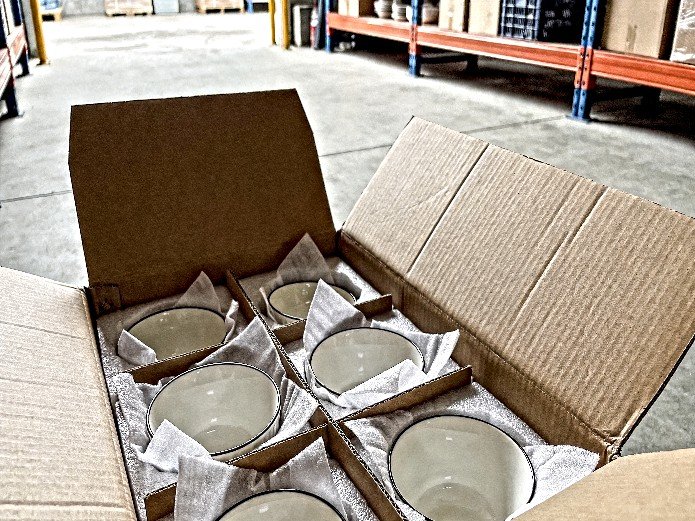
Before committing to a full order, request samples and run your own tests. Manufacturers should provide third-party test reports, but I always recommend verifying independently for institutional contracts.
Minimum test requirements for university dining ceramic tableware:
- FDA 21 CFR 175.300 compliance for glaze lead and cadmium migration [VERIFY BEFORE PUBLISHING]
- LFGB food contact safety certification for European-sourced raw materials or EU-exporting campuses
- ASTM C1505 or equivalent impact resistance testing
- Dishwasher durability test: 200 cycles in your actual dishwasher model, inspecting for glaze crazing, edge chipping, and color fade
[VERIFY BEFORE PUBLISHING: Confirm current FDA regulation reference for ceramic food contact materials. Verify ASTM C1505 is the correct standard for ceramic impact resistance.]
One critical point: dishwasher chemistry varies. A plate that survives 500 cycles in a low-alkalinity machine may fail in 200 cycles with an aggressive chlorinated compound. If possible, test samples in the actual dishwasher model and chemical regimen your campus uses.
The Campus Dining Ceramic Checklist
Use this checklist when evaluating samples or drafting an RFP for university dining ceramic tableware. Save it, modify it for your specific campus needs, and share it with your procurement team.
- Water absorption rate confirmed below 0.5% with test report attached
- Unit weight within target range (450-550g for self-service, up to 700g for staff-bussed)
- Glaze passes 200-cycle dishwasher test with no crazing or discoloration
- Edge passes 12-inch drop test onto hard surface without chipping or cracking
- Thermal shock resistance confirmed for temperature differential of 350F+
- Third-party food safety certification provided (FDA, LFGB, or Prop 65 compliant)
- MOQ and pricing tier confirmed in writing with 12-month price hold option
- Lead time confirmed with penalty clause for late delivery
- Replacement stock availability guaranteed for 24-36 months post-delivery
- Packaging specified: individual foam wrapping, 5-layer cartons, corner protectors
- Defect rate allowance negotiated: typically 2-3% AQL for institutional orders
- Sample approval process defined with sign-off from dining operations manager
[CASE STUDY REQUIRED: Add a brief real-world example of a university that used a similar checklist to avoid a bad supplier choice.]
Three Mistakes That Blow University Dinnerware Budgets
Mistake 1: Buying Based on Unit Price Alone
A procurement team at a midwestern university I worked with chose a $1.95 earthenware plate over a $3.80 stoneware option to save $18,500 on a 10,000-piece order. Within eight months, 34 percent of the earthenware plates had chips, cracks, or glaze failure. The replacement order cost $22,000 — and the dining hall ran two months with mismatched temporary stock. The “cheaper” option cost 40 percent more over the first year.
Mistake 2: Ignoring the Replacement Stock Problem
Universities often order once and assume the manufacturer will hold the mold indefinitely. Most factories archive molds after 18 to 24 months of inactivity. If you need 500 replacement plates in year three and the mold is gone, you face two bad choices: order a new mold at $1,500-$3,000, or switch to a visually different replacement that makes your dining hall look inconsistent. Negotiate a mold retention clause in your original contract.
Mistake 3: Ordering Too Late for the Academic Calendar
A dining director at a private university placed an order in mid-May for an August opening, assuming eight weeks was sufficient. The factory was at peak capacity, production slipped three weeks, and the shipment missed the July vessel. The plates arrived by air freight in mid-August at 4x the ocean rate — a $28,000 unplanned expense that came out of the food budget. Order by March for August delivery. Always.
When to Choose Custom vs. Stock Designs
Custom university branding on dinnerware looks impressive during campus tours and alumni events. But it comes with tradeoffs that most dining directors do not discover until after delivery.
Custom shapes or debossed logos add 4 to 6 weeks to lead time and require mold fees. They also lock you into that supplier for replacements — no other factory can replicate a custom mold without significant reverse-engineering cost. If your university refreshes branding every five to seven years, custom dinnerware may be obsolete before it wears out.
My recommendation: use stock shapes in a glaze color that matches your university palette, and reserve custom branding for serving pieces, platters, and display ware that see lighter use and longer replacement cycles. This gives you 80 percent of the visual impact at 40 percent of the risk.
FAQ
How long should university dining ceramic tableware last?
Commercial stoneware should last 3 to 5 years in a typical university dining hall with proper handling. Vitrified porcelain can last 5 to 8 years. Earthenware rarely exceeds 2 years under high-volume institutional use.
Can ceramic plates survive industrial dishwashers?
Yes, if you choose vitrified or high-fired stoneware with water absorption below 0.5 percent. Standard earthenware absorbs water into the body, which expands during rapid heating in conveyor dishwashers and leads to cracking within months.
What is the typical defect allowance for a campus dining order?
Most manufacturers accept a 2 to 3 percent defect rate under AQL Level II inspection for institutional orders. For a 5,000-piece order, that means up to 100-150 pieces may have minor cosmetic flaws. Negotiate replacement rather than credit for defective pieces — credits do not help when you are short on stock during move-in week.
Should we order extra stock for breakage?
Order 8 to 12 percent above your calculated need to cover first-year breakage, loss, and inventory shrinkage. For a dining hall needing 5,000 plates, order 5,400 to 5,600. Store the surplus in original packaging in a climate-controlled space.
How do we handle student complaints about heavy plates?
Switch to lighter-weight vitrified porcelain or thinner stoneware in the 450-500 gram range. Students carrying trays one-handed prefer plates under 550 grams. Heavier plates also increase tray-drop incidents, which drives up breakage rates.
What packaging prevents breakage during international shipping?
Demand individual foam or bubble wrapping for each piece, 5-layer corrugated cartons with burst strength above 275 psi, and corner protectors on palletized shipments. [VERIFY BEFORE PUBLISHING: Confirm typical burst strength standards for ceramic export packaging.] Insist on pre-shipment inspection with photographic documentation of loading.
Ready to source university dining ceramic tableware for your campus? Request our university dining catalog and volume pricing to get started with a quote tailored to your institution’s needs. You can also browse our product range to see standard shapes and glaze options available for institutional orders.