CERAMIC TABLEWARE FOR ITALIAN RESTAURANTS needs to do more than look good on a table. The wrong pasta bowl cools the sauce too fast. The wrong pizza plate cracks under a 450°F oven. And the wrong bread basket stains after three washes. If you are sourcing dinnerware for a trattoria, osteria, or fine-dining Italian concept, the specifications matter as much as the aesthetics. This guide breaks down exactly what to order, what to avoid, and how to structure your purchase so the pieces perform in a real kitchen, not just in a supplier catalog.
What Italian Restaurant Dinnerware Actually Needs
Italian menus are built around temperature and texture. A cacio e pepe needs a bowl that holds heat. A Neapolitan pizza needs a plate that can survive a blazing oven. A proper espresso service needs cups with the right wall thickness. Generic stoneware vs porcelain vs bone china restaurant dinnerware often misses these details because it is designed for all-purpose use, not for the specific demands of Italian service.
Before you request samples, clarify your service style. A rustic trattoria serving family-style platters needs different specs than a fine-dining restaurant plating individual courses. The same supplier can produce both, but you have to specify the parameters.
Pasta Bowl Specs: Depth, Rim Width, and Thermal Retention
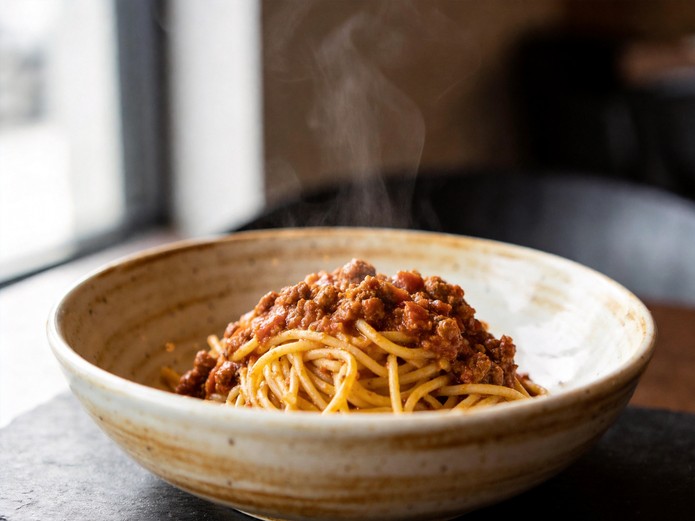
Pasta is the centerpiece of most Italian menus, and the bowl is where the dish lives or dies. A shallow pasta plate looks elegant but cools the sauce in under three minutes. A bowl that is too deep traps steam and turns al dente noodles mushy. The sweet spot for most Italian restaurants is a bowl with a 7.5 to 9-inch diameter, a depth of 2 to 2.5 inches, and a weight between 350 and 500 grams.
Rim width matters for presentation and for the diner. A 1.5 to 2-inch rim gives the guest a place to rest utensils without dragging sauce onto the table. It also creates a visual frame for the dish. For sauced pastas like Bolognese or amatriciana, stoneware with a slightly porous interior glaze holds the sauce better than a fully vitrified porcelain surface. For oil-based pastas like aglio e olio, a smoother interior is easier to clean.
Thermal retention is the hidden spec most buyers overlook. A bowl that loses heat fast means cold pasta by the time it reaches the table. Look for wall thickness of 6 to 8 millimeters. If you are ordering from a Chinese supplier, request a thermal shock test report showing resistance to at least 180°C temperature differential. [VERIFY BEFORE PUBLISHING]
Pizza Plate Requirements: Size, Heat Resistance, and Serving Style
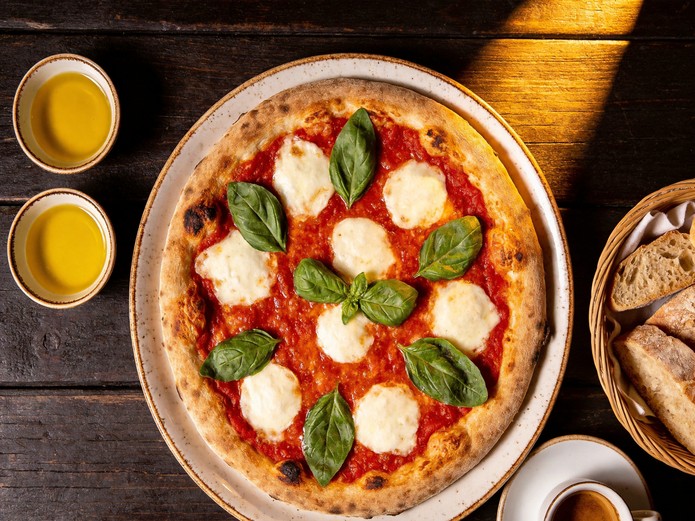
Neapolitan pizza comes out of a wood-fired oven at 900°F. Roman-style pizza al taglio sits on a sheet pan and is served at room temperature. These two dishes need completely different plates. If you are running a pizzeria with a wood-fired oven, your plates need to handle thermal shock. If you are serving pizza al taglio, you need large rectangular platters with a flat surface.
For individual Neapolitan pizzas, a 12 to 13-inch diameter plate with a raised rim works best. The rim keeps the pizza centered and prevents sauce from dripping onto the table. The plate should be at least 8 millimeters thick to retain heat without cracking when a hot pie lands on it. For Roman-style service, rectangular platters measuring 16 by 12 inches are standard. These are usually served at room temperature, so thermal shock is less of a concern, but the glaze must resist knife scratches from customers cutting their slices.
Glaze selection for pizza plates is critical. A matte or reactive glaze looks beautiful but can show oil stains after repeated use. A high-gloss, fully vitrified glaze is easier to keep clean in a high-volume setting. If you want the rustic look, consider a two-tone glaze: matte on the exterior for aesthetics, glossy on the interior for function.
Small Dishes and Accessories: Olive Oil Bowls, Bread Baskets, and Espresso Cups
The small pieces are where many buyers cut corners and later regret it. An olive oil dipping dish that is too shallow spills when the guest tears bread. A bread basket with an unglazed interior absorbs oil and stains permanently. An espresso cup with walls that are too thin loses heat before the coffee is finished.
For olive oil service, use small round bowls with a 3 to 4-inch diameter and a depth of at least 1 inch. The interior should be glazed to resist oil absorption. For bread service, consider ceramic baskets with a perforated or slatted design that allows air circulation, or solid bowls with a food-safe interior glaze. Avoid unglazed terracotta for bread unless you plan to replace it every six months.
Espresso cups for Italian service should hold 60 to 80 milliliters, with walls 5 to 6 millimeters thick. Thicker walls retain heat better but feel heavier in the hand. Most Italian restaurants prefer a mid-weight cup that feels substantial without being clunky. The interior glaze should be fully vitrified to resist coffee staining, especially if you serve dark roasts.
Style Direction: Rustic Trattoria vs. Refined Fine Dining
The visual language of your dinnerware should match your concept. A rustic trattoria can get away with uneven glazes, visible throwing rings, and hand-applied decoration. A fine-dining Italian restaurant needs consistency: identical shapes, uniform glaze types and food safety coverage, and precise dimensions across every piece in the set.
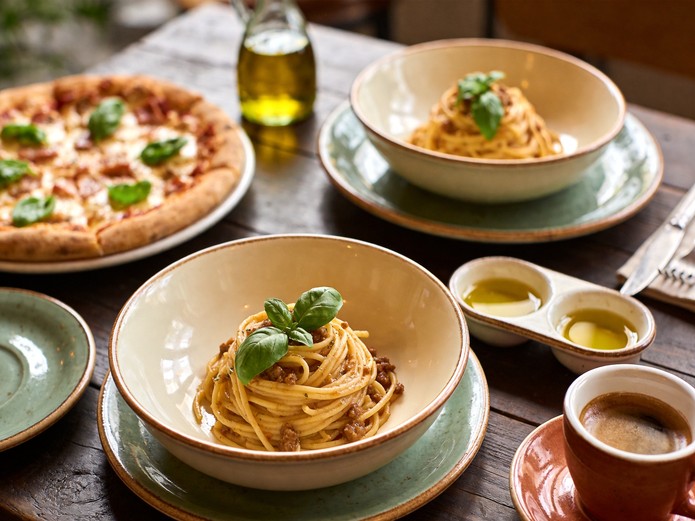
For trattorias, earth-tone glazes in cream, terracotta, sage green, and navy blue work well. Reactive glazes that produce organic color variation add character without looking mass-produced. For fine-dining concepts, white or ivory porcelain with a thin, even glaze is the standard. If you want color, use it sparingly: a single accent piece per place setting, or a colored rim on an otherwise white plate.
Be specific with your supplier about glaze consistency. Reactive glazes vary from batch to batch, which is fine for rustic concepts but unacceptable for fine dining. Request a glaze sample approval process where you sign off on the color range before production starts. [FACTORY PHOTO REQUIRED]
Sourcing from China: MOQ, Lead Time, and Customization
Most Italian restaurant dinnerware for the North American and European markets is produced in China’s ceramic manufacturing regions. Chaozhou, Jingdezhen, and Dehua each offer different strengths. Chaozhou specializes in hotel and restaurant tableware at scale. Dehua produces high-white porcelain with excellent glaze quality. Jingdezhen handles smaller-batch artisan and custom work.
For a full Italian restaurant place setting, expect the following typical parameters when sourcing from China:
| Item | Typical MOQ | Production Lead Time | Customization Options |
|---|---|---|---|
| Pasta bowls (7.5-9″) | 500-1,000 pcs | 45-60 days | Glaze color, shape, logo |
| Pizza plates (12-13″) | 300-800 pcs | 45-60 days | Glaze, rim style, logo |
| Olive oil dipping dishes | 1,000-2,000 pcs | 30-45 days | Glaze color, shape |
| Bread baskets / bowls | 500-1,000 pcs | 45-60 days | Perforation pattern, glaze |
| Espresso cups (60-80ml) | 1,000-3,000 pcs | 45-60 days | Glaze, handle shape, logo |
| Complete place setting set | 200-500 sets | 60-75 days | Full custom design |
These numbers are starting points, not guarantees. A supplier with existing molds may offer lower MOQs. A fully custom design with new mold development adds 15 to 25 days and a mold fee of [INTERNAL DATA REQUIRED]. If you need FDA or LFGB certification, factor in 10 to 15 additional days for testing and documentation. [CERTIFICATE REQUIRED]
Customization costs break down into three categories. Glaze color changes are usually free if you choose from the supplier’s existing color library. Shape modifications require mold adjustments and typically add $200 to $800 per SKU. Logo application via decal or underglaze printing adds $0.10 to $0.50 per piece depending on size and color count. [VERIFY BEFORE PUBLISHING]
Common Mistakes When Buying Italian Restaurant Dinnerware
After ten years of helping restaurants source ceramic tableware, these are the three mistakes I see most often with Italian concepts:
1. Ordering Pasta Bowls That Are Too Shallow
A shallow pasta plate looks refined in a catalog photo but fails in service. The pasta cools in two minutes, the sauce spreads across the plate instead of clinging to the noodles, and the dish looks skimpy. Always test sample bowls with your actual menu items before placing a bulk order. Cook your sauciest pasta, plate it in the sample, and time how long it stays at serving temperature.
2. Ignoring Thermal Shock on Pizza Plates
A pizza plate that cracks after two weeks of service is a disaster. This happens when buyers choose standard restaurant plates for wood-fired pizza service without checking thermal shock ratings. Ask your supplier for the thermal shock differential rating in degrees Celsius. For wood-fired service, you need a minimum of 180°C. For standard oven service, 120°C is sufficient. Do not take the supplier’s word for it; request a test report from a recognized lab. [VERIFY BEFORE PUBLISHING]
3. Mixing Glaze Types Without Testing Compatibility
If you are sourcing multiple pieces from different suppliers or even different production lines within the same factory, the glazes may not match. A cream-colored pasta bowl from one line and a cream-colored bread basket from another can look like two different colors under restaurant lighting. Always request glaze samples for every piece in your set and compare them side by side under your actual dining room lighting before approving production.
Cost, Quality, and Delivery Trade-offs
No buyer gets everything. If you want the lowest price, you sacrifice glaze consistency and wall thickness. If you want the fastest delivery, you accept limited customization. If you want the highest quality, you pay more and wait longer. The key is knowing which trade-offs matter for your concept.
| Priority | Best Choice | Trade-off |
|---|---|---|
| Lowest cost per piece | Standard stoneware from Chaozhou, off-the-shelf molds | Limited glaze colors, higher defect rate (3-5%) |
| Fastest delivery | Existing inventory from supplier warehouse | Limited to available colors and shapes |
| Best glaze quality | Dehua high-white porcelain or Jingdezhen artisan production | Higher price, longer lead time, higher MOQ |
| Most customization | New mold development with Chaozhou or Jingdezhen | 60-90 day lead time, mold fees, higher MOQ |
| Best durability | Thick-wall stoneware with high-gloss vitrified glaze | Heavier pieces, higher shipping cost per unit |
For most independent Italian restaurants, the practical balance is standard stoneware from a Chaozhou supplier with custom glaze selection. You get reasonable quality at a workable price, with enough customization to differentiate your table setting. For upscale concepts or small chains, investing in Dehua porcelain with custom shapes pays off in longevity and guest perception.
Italian Restaurant Ceramic Tableware Ordering Checklist
Use this checklist before you place your first order. Print it, fill it out, and send it to your supplier as part of your technical requirements document.
- Define your service style: family-style, individual plating, or mixed
- Specify pasta bowl diameter, depth, and wall thickness
- Specify pizza plate diameter and thermal shock rating
- Choose glaze type: matte, glossy, reactive, or two-tone
- Request glaze samples for color approval under your lighting
- Confirm MOQ for each SKU and total order minimum
- Confirm production lead time and shipping method (FOB/CIF/DDP)
- Request test reports: FDA, LFGB, or EU food contact compliance
- Request thermal shock test data for pizza plates and pasta bowls
- Specify packaging: individual foam wrap, master carton qty, pallet config
- Plan for 5-10% overs to cover breakage during shipping and service
- Request pre-shipment inspection report or photos
FAQ
What is the best material for Italian restaurant pasta bowls?
Stoneware is the most practical choice for pasta bowls in Italian restaurants. It retains heat better than porcelain, costs less than bone china, and withstands daily dishwasher cycles. Look for vitrified stoneware with a fully glazed interior to resist sauce staining.
Can I mix different glaze colors in the same order?
Yes, most suppliers allow color mixing within the same MOQ as long as you meet the minimum per SKU. For example, you can order 500 pasta bowls split between cream and sage green, as long as each color hits the supplier’s minimum, typically 200 to 300 pieces per color.
How long does ceramic dinnerware last in a restaurant setting?
High-quality stoneware or porcelain dinnerware lasts 3 to 5 years in normal restaurant service with daily dishwasher use. Pieces with matte or reactive glazes may show wear faster at contact points. Pizza plates and pasta bowls typically wear out first due to higher thermal stress and mechanical impact.
Should I order samples before placing a bulk order?
Always. Order at least two samples of each piece and test them with your actual menu. Cook your signature dishes, plate them in the samples, run them through your dishwasher fifty times, and check for staining, chipping, and glaze wear. Two to three weeks of real testing reveals problems that a catalog photo never will.
What certifications do I need for importing ceramic tableware?
For the United States, FDA compliance for food contact materials is required. For the European Union, Regulation (EC) No 1935/2004 and specific ceramic lead and cadmium limits under Directive 84/500/EEC apply. [VERIFY BEFORE PUBLISHING] Many buyers also request LFGB certification for the German market or California Proposition 65 compliance. Ask your supplier for the specific test reports that match your target market before production.
How much should I budget for a complete Italian restaurant tableware set?
A complete place setting for an Italian restaurant typically costs $8 to $18 per seat depending on material, customization, and order volume. This includes a pasta bowl, pizza plate, olive oil dish, bread basket, and espresso cup. Standard stoneware at volume lands at the lower end. Custom porcelain with logo application lands at the higher end. Shipping and import duties add 15 to 25% on top of the product cost. [VERIFY BEFORE PUBLISHING]
If you are planning an Italian restaurant concept and need dinnerware specifications tailored to your menu, contact our sourcing team for a customized quote. We can match your concept to the right material, glaze, and production region.