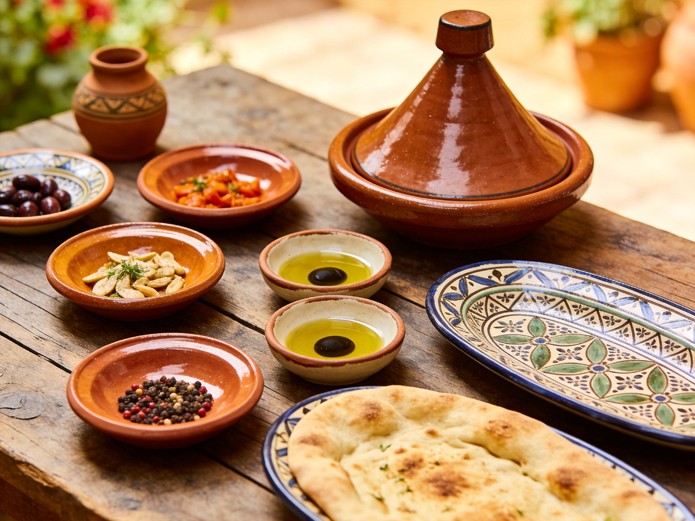
Mediterranean restaurant ceramic tableware requires a different approach than standard dinnerware sourcing. A mezze-focused menu demands small shared plates in multiples, tagine service needs oven-to-table vessels with conical lids, and olive oil dishes must resist staining from daily use. Most buyers who source generic restaurant ceramics end up piecing together mismatched collections from three or four suppliers, inflating freight costs and creating inconsistent table presentations.
This guide breaks down the exact ceramic shapes, materials, and sizes you need for a cohesive Mediterranean table setting. You will also get a printable sourcing checklist and a material comparison table you can send directly to suppliers.
What Makes Mediterranean Restaurant Ceramic Tableware Different?
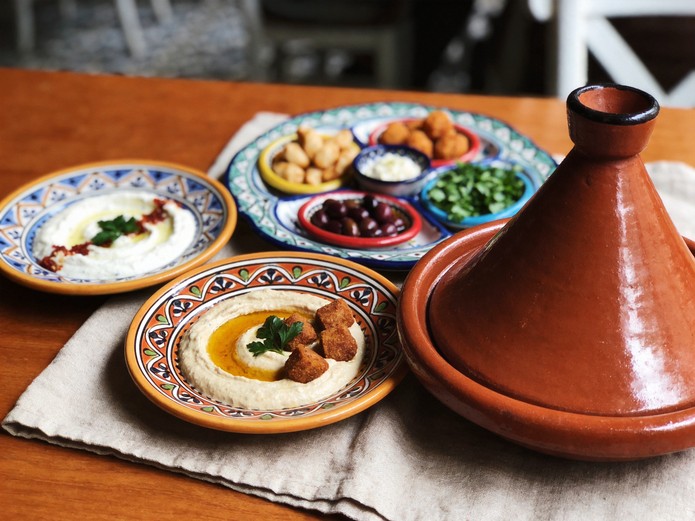
Mediterranean dining is built on shared plates, warm colors, and rustic textures. The ceramic needs do not map neatly onto a standard Western place setting. Here is what changes:
- Volume of small plates: A table of four at a mezze restaurant might use twelve to sixteen small dishes simultaneously. You need deep inventory of 12–16 cm plates, not just dinner and salad sizes.
- Oven-to-table requirements: Tagines, baked feta dishes, and shakshuka pans go from oven directly to the table. The ceramic must withstand thermal shock from 250°C+ to room temperature without cracking.
- Stain resistance: Olive oil, tomato-based sauces, and pomegranate molasses are daily realities. Unglazed terracotta or low-quality glaze will discolor permanently within weeks of service.
- Stackability in odd shapes: Conical tagine lids and wide-rimmed platters do not stack like standard plates. Storage and dishwasher rack planning must happen during sourcing, not after delivery.
The result: a generic “white porcelain dinner set” from a standard commercial ceramic tableware supplier will leave you buying fillers from secondary sources, erasing any bulk-order savings.
Essential Ceramic Pieces Every Mediterranean Kitchen Needs
Based on typical Mediterranean menu construction, here is the core collection a 60-seat restaurant should plan for:
| Piece | Size Range | Qty per 60 Seats | Material |
|---|---|---|---|
| Mezze / dipping plates | 12–16 cm | 80–120 pcs | Stoneware, reactive glaze |
| Flatbread / pide platters | 30–35 cm oval | 40–50 pcs | Stoneware or porcelain |
| Tagine pots with lids | 20–26 cm base | 15–25 pcs | Thermal-shock stoneware |
| Shared serving bowls | 22–28 cm | 30–40 pcs | Stoneware, vitrified glaze |
| Olive oil / dipping dishes | 8–10 cm | 60–80 pcs | Porcelain, high-gloss glaze |
| Dinner plates | 26–28 cm | 80–100 pcs | Stoneware or porcelain |
| Ramekins (baked feta, dips) | 10–12 cm | 40–60 pcs | Thermal-shock stoneware |
| Pitchers / water jugs | 1–1.5 L | 15–20 pcs | Stoneware, food-safe glaze |
Practical tip: Order mezze plates in multiples of the table count, not the seat count. A four-top typically receives six to eight small dishes. Running short on 14 cm plates during Friday service is a common failure point.
Material Choices: Stoneware, Porcelain, or Terracotta?
Material selection drives cost, durability, and visual identity. Here is how the three main options compare for Mediterranean service:
| Factor | Stoneware | Porcelain | Terracotta |
|---|---|---|---|
| Unit cost (FOB) | $1.80–$3.50 | $2.50–$5.00 | $1.20–$2.80 |
| Chip resistance | High | Moderate–High | Low |
| Thermal shock | Good (200°C delta) | Excellent (300°C delta) | Poor |
| Stain resistance | Depends on glaze | Excellent | Poor unless fully glazed |
| Dishwasher safe | Yes | Yes | Risk of moisture absorption |
| Weight | Medium–Heavy | Light–Medium | Heavy |
| Aesthetic fit | Rustic, warm tones | Clean, modern | Authentic, earthy |
| Best use case | All-rounder, high turnover | Fine dining, modern concepts | Display / limited service |
Our recommendation for most Mediterranean restaurants: Lead with stoneware for durability and cost efficiency, use porcelain selectively for olive oil dishes and modern presentations, and limit terracotta to display pieces or concepts where authentic aesthetics justify the replacement cycle. If you are also sourcing ceramic tableware for fine dining, porcelain may play a larger role in your collection.
Sizing Guide for Mezze, Tagine, and Shared Plates
Mediterranean portions run smaller and more numerous than American or Northern European standards. The wrong plate size makes a $14 mezze spread look sparse or forces the kitchen to over-portion to fill the plate.
- Mezze plates (12–16 cm): Designed for 60–100 g portions. Hummus, baba ganoush, and marinated olives should fill roughly 60% of the surface. A 14 cm plate is the most versatile size.
- Flatbread platters (30–35 cm oval): Must accommodate a whole pide, manakish, or lavash without folding. Oval shapes fit table geometry better than rounds when multiple dishes share the surface.
- Tagine bases (20–26 cm): A 22 cm base serves two to three guests. Larger 26 cm bases work for four but create portioning challenges for smaller parties. Request sample lids to verify steam venting.
- Shared bowls (22–28 cm): Ideal for grain salads, grilled vegetable platters, and family-style mains. A 24 cm bowl with 6 cm depth handles most shared items without spillage during service.
- Dipping dishes (8–10 cm): These see the highest replacement rate due to chipping in racks. Budget 20% annual replacement for this SKU alone.
Three actionable sizing rules:
- Order 10% more small plates than your seat count calculation suggests — they break and walk away at higher rates.
- Request nested samples before confirming a full order. A 26 cm platter that does not stack inside a 28 cm platter wastes 40% more shelf space.
- For tagines, confirm the interior glaze depth. A lid that looks conical on the outside but has a flat interior profile loses the self-basting function buyers expect.
A 7-Point Quality Checklist for Mediterranean Ceramic Orders
Use this checklist when evaluating samples or conducting pre-shipment inspection. Copy it into your email to suppliers as a requirement list.
- Glaze coverage: Check the interior of tagines and ramekins for thin spots at corners and ridges. Unglazed patches absorb oil and harbor bacteria.
- Rim durability: Tap the rim of dinner plates with a metal utensil. A dull thud indicates adequate density; a ringing sound suggests under-firing and higher chip risk.
- Thermal shock test: Heat a tagine sample to 200°C in an oven, then place it on a room-temperature steel surface. No hairline cracks after three cycles is the minimum standard.
- Stain resistance: Apply tomato sauce and olive oil to a sample plate, leave for 24 hours, then run through a commercial dishwasher. Zero discoloration should remain.
- Stack stability: Stack ten identical plates. The stack should not lean, and the base of the top plate should sit fully on the rim of the one below it.
- Foot ring finish: The unglazed foot ring must be smooth enough to slide across table surfaces without scratching. Rough feet damage laminate and wood tables.
- Lid fit: For tagines, the lid should seat securely with a 2–3 mm gap for steam escape. A loose lid loses moisture; a tight seal builds pressure and can crack the base during service.
Three Sourcing Mistakes That Cost Mediterranean Restaurants Money
After reviewing hundreds of restaurant ceramic orders, three errors appear repeatedly in Mediterranean concepts:
Mistake 1: Buying Tagines Without Confirming Oven Safety
Decorative tagines sold for home use often cannot withstand commercial oven temperatures. A supplier may show you a beautiful catalog image, but if the piece is only rated to 150°C, it will crack under restaurant conditions. Always request a thermal shock test report — [VERIFY BEFORE PUBLISHING: specific temperature standards vary by region] — or conduct your own sample test before placing a bulk order. If you need guidance on ceramic tableware durability testing, refer to our detailed guide.
Mistake 2: Mixing Glaze Types Across the Collection
A reactive glaze on your mezze plates paired with a high-gloss glaze on your dinner plates creates a disjointed table appearance. Worse, different glaze coefficients can cause differential thermal expansion, increasing crack risk when pieces are stacked hot from the dishwasher. Specify a single glaze family for the entire collection, with finish variations (matte vs. gloss) within the same thermal expansion range.
Mistake 3: Underestimating MOQ for Custom Colors
Most factories set MOQ at 500–1,000 pieces per SKU for custom glaze colors. If you want a signature cobalt rim across eight different plate sizes, that is 4,000–8,000 total pieces. Smaller restaurants often accept stock colors to avoid this commitment, then regret the lack of brand differentiation. A practical compromise: choose a stock body color and add custom decals or embossed rims at lower MOQ (typically 300–500 pcs per SKU). For color-matching examples, see our custom color matching ceramic mugs guide.
Customization Options for Private Label Mediterranean Collections
Building a private label Mediterranean collection is achievable at moderate volumes if you plan the customization layers correctly:
- Body color selection: Stock earth tones (sand, terracotta, slate gray) are usually available without custom MOQ. True custom body colors require 1,000+ pieces per SKU.
- Embossed patterns: Geometric borders, olive branch motifs, or wave patterns add brand identity at 300–500 pcs MOQ. The mold cost is typically $800–$1,500 per design, amortized across the order.
- Decal application: Logo decals on the base or rim run 200–300 pcs MOQ. The decal itself costs $0.05–$0.15 per piece depending on color count and size.
- Packaging: Custom printed boxes with your brand run at 1,000+ box MOQ. For smaller runs, request plain brown boxes with a branded sticker — this drops the MOQ to 200–300.
Lead time impact: Stock shapes with custom decals add 2–3 weeks to production. Custom molds for embossed patterns add 4–6 weeks for mold making plus 6–8 weeks for production. Plan accordingly if you have a hard opening date.
Packaging note: Mediterranean ceramics with conical lids and wide rims require more protective packaging than standard round plates. Verify that your supplier uses molded pulp dividers between nested pieces, not just bubble wrap. [FACTORY PHOTO REQUIRED]
Ready to source your Mediterranean collection? Explore our custom ceramic tableware manufacturing capabilities or contact CeraSupply to request our Mediterranean serveware specification sheet.
FAQ
What is the typical MOQ for Mediterranean restaurant ceramic tableware?
Standard stock shapes run 200–500 pieces per SKU. Custom colors or embossed patterns raise the MOQ to 500–1,000 pieces per SKU. For a full Mediterranean collection of eight to ten SKUs, budget a total opening order of 3,000–6,000 pieces.
How long does production take for a Mediterranean ceramic collection?
Stock shapes with standard glaze: 6–8 weeks. Custom decals on stock shapes: 8–10 weeks. Fully custom molded pieces: 14–18 weeks including mold development. Add 3–5 weeks for sea freight from China to US or EU ports.
Can tagines go from oven to table in a commercial kitchen?
Only if the ceramic is rated for thermal shock of at least 200°C temperature differential. Verify this with your supplier before ordering. Decorative tagines without thermal shock rating will crack under commercial use. Request test documentation or conduct your own sample test.
What glaze finish resists olive oil and tomato stains best?
A fully vitrified high-gloss glaze offers the best stain resistance. Matte glazes can stain if the surface porosity is above 0.5%. Request glaze absorption test data from your supplier — the figure should be below 0.1% for commercial restaurant use.
Should I order from one supplier or split across specialists?
A single supplier is preferable for consistency in glaze color, body density, and thermal properties. Splitting orders across three suppliers to save $0.20 per plate typically costs more in freight, quality variance, and management time than it saves.
What replacement rate should I budget for?
Plan for 15–20% annual replacement across the full collection, with small dipping dishes and mezze plates running closer to 25% due to higher handling frequency. Tagines and serving bowls see lower replacement rates at 8–12% if properly handled.