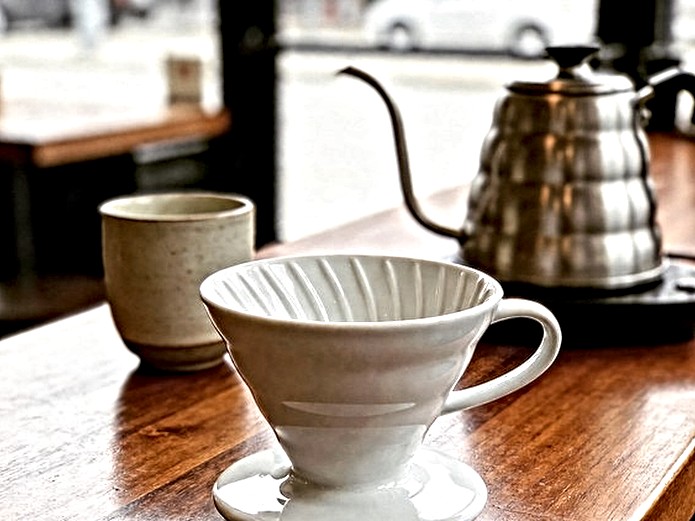
Ceramic coffee dripper sourcing requires a different lens than general tableware procurement because the product’s performance directly affects extraction quality and customer satisfaction. A poorly designed dripper with inconsistent wall thickness or the wrong rib pattern can produce uneven extraction, which baristas notice immediately. This guide explains what separates a display-worthy ceramic cone from one that holds up in a busy cafe environment, how to evaluate samples, and what to negotiate before you sign a purchase order.
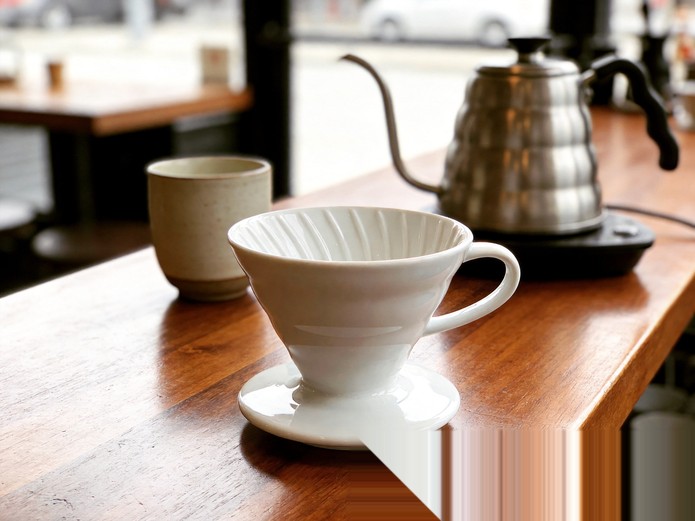
What Makes a Ceramic Coffee Dripper “Commercial-Grade”?
Not every ceramic cone labeled “pour over” performs the same. In a home setting, minor inconsistencies in wall thickness or rib height go unnoticed. In a cafe, those same flaws slow down service and create unpredictable brews.
Commercial-grade ceramic coffee drippers share four functional traits:
- Consistent flow rate — The internal rib pattern and hole diameter must produce a predictable drain time across every unit. Variation of more than 10 seconds between units of the same SKU signals mold wear or poor quality control.
- Thermal stability — The walls need enough mass to retain heat during pre-infusion without cracking when boiling water hits a room-temperature dripper. [INTERNAL DATA REQUIRED: typical wall thickness range for commercial drippers]
- Stable base design — A flat-bottomed dripper needs a wide enough foot to sit securely on standard scales and carafes. A conical V60-style dripper needs a compatible holder or stand.
- Food-safe glaze — The interior glaze must be non-porous, lead-free, and rated for repeated contact with water above 90°C. [CERTIFICATE REQUIRED: glaze composition documentation for CeraSupply dripper line]
Cosmetic perfection matters less than functional consistency. A small glaze variation on the exterior is acceptable; a 0.5 mm difference in hole diameter is not.
Material Comparison: Porcelain vs Stoneware vs Ceramic-Coated
The material you choose affects thermal behavior, durability, unit cost, and minimum order quantities. Here is how the three main options compare for commercial coffee dripper sourcing.
| Factor | Porcelain | Stoneware | Ceramic-Coated |
|---|---|---|---|
| Thermal conductivity | High — heats fast, cools fast | Low — retains heat longer | Variable — depends on base material |
| Wall thickness typical | 3–4 mm | 5–7 mm | 4–6 mm |
| Durability in cafe use | Good — chip-resistant but can crack under thermal shock | Excellent — dense body handles thermal shock well | Moderate — coating can wear at contact points |
| Unit cost (FOB estimate) | $[INTERNAL DATA REQUIRED] | $[INTERNAL DATA REQUIRED] | $[INTERNAL DATA REQUIRED] |
| MOQ typical | 1,000–2,000 units | 800–1,500 units | 1,500–3,000 units |
| Best for | Specialty cafes prioritizing heat response | High-volume operations needing durability | Budget lines or promotional items |
| Customization ease | High — glazes and colors hold well | High — reactive glazes popular | Moderate — limited to coating color |
Cost-quality-speed trade-off: Stoneware offers the best durability but adds 1–2 weeks to the production timeline because of the higher firing temperature and longer cooling cycle. Porcelain ships faster and costs less per unit but requires more careful handling during service. Ceramic-coated options reach the lowest price point but may need replacement sooner in a high-use environment.
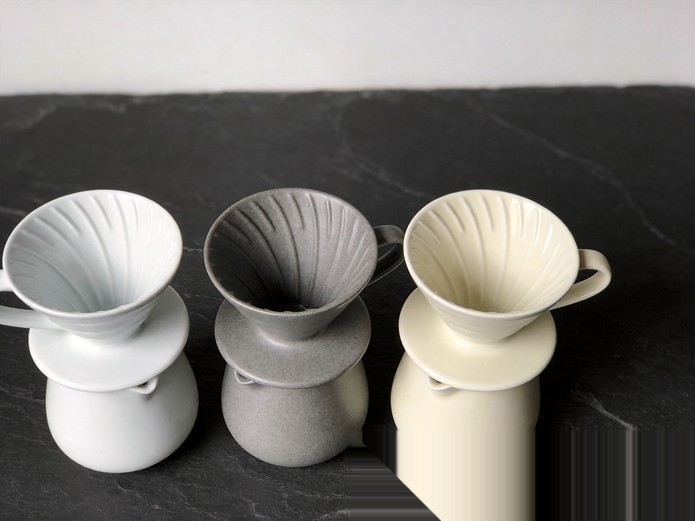
Sample Evaluation: The 5-Point Checklist for Coffee Drippers
Before you approve a sample for bulk production, run through this checklist. Each item addresses a failure mode that becomes expensive to fix after tooling is cut.
- Flow rate consistency — Time how long 250 ml of water takes to pass through the dripper with a standard paper filter and medium grind coffee. Test three samples. The drain time should fall within a 10-second range. [VERIFY BEFORE PUBLISHING: industry standard tolerance for pour-over drain time]
- Rim thickness and filter fit — The top rim should be smooth enough to seal a paper filter without tearing it. Insert a standard filter and check for gaps. A loose fit causes bypass water and weak extraction.
- Glaze safety for hot water contact — Request a glaze migration test report. The interior glaze must meet FDA 21 CFR 175.300 or EU 1935/2004 for articles in contact with food at high temperatures. [VERIFY BEFORE PUBLISHING: confirm applicable FDA regulation for ceramic articles in contact with hot beverages]
- Thermal shock resistance — Pour 95°C water into a room-temperature dripper. Repeat 10 times. Check for hairline cracks or glaze crazing. [FACTORY PHOTO REQUIRED: thermal shock test setup image]
- Handle and stability design — Place the dripper on a flat scale and a carafe rim. It should sit level without rocking. If the design includes a handle, check that it stays cool enough to touch after a full brew cycle.
Procurement tool: Download our Coffee Dripper Specification Comparison Sheet to record sample measurements side by side. Use one row per supplier and one column per checkpoint.
MOQ, Pricing, and Lead Time: What to Expect at Different Volumes
Coffee dripper orders follow a different scale than dinnerware. A single dripper is small and light, but the mold cost is disproportionately high relative to the unit price because of the precision required for the internal geometry.
Typical order structure:
- Sample phase: 2–5 units, 2–3 weeks, $[INTERNAL DATA REQUIRED] per sample including shipping
- Trial order: 500–1,000 units, 4–6 weeks, unit price highest at this volume
- Standard MOQ: 1,000–3,000 units depending on material and glaze complexity, 6–8 weeks
- Volume order: 5,000+ units, 8–12 weeks, unit price drops 15–25% from trial order level
Mold cost: Expect $[INTERNAL DATA REQUIRED] for a new plaster mold and $[INTERNAL DATA REQUIRED] for a resin mold if you need faster turnaround on reorders. Metal molds are rarely used for ceramic drippers because of the thermal expansion mismatch during firing.
Lead time breakdown:
- Mold preparation: 5–10 days
- Sample firing and adjustment: 7–14 days
- Bisque firing: 3–5 days
- Glaze application and glaze firing: 5–7 days
- Quality inspection and packing: 3–5 days
Customization — such as a branded base stamp or a custom glaze color — adds 1–2 weeks to the first order but does not affect reorders once the color recipe is locked.
3 Common Mistakes Buyers Make When Sourcing Coffee Drippers
Mistake 1: Ignoring Flow Rate Consistency Across Units
Many buyers test one sample, love the design, and place a bulk order. The problem: mold wear changes the internal rib depth and hole diameter over a production run. By unit 500, the drain time can shift by 20 seconds. Always request flow rate data from samples pulled at the beginning, middle, and end of a pilot batch.
Mistake 2: Ordering Without Testing Glaze Safety for Hot Water Contact
A glaze that passes a room-temperature food contact test may fail when subjected to daily boiling water exposure. Coffee drippers see thermal cycling that plates and bowls do not. Request a test report specifically for high-temperature food contact, not just a general ceramic safety certificate. [VERIFY BEFORE PUBLISHING: confirm whether LFGB testing for hot water contact requires a separate test protocol from room-temperature contact]
Mistake 3: Choosing Aesthetics Over Functional Rib Design
A spiral rib pattern looks beautiful in product photos but may channel water unevenly compared to straight vertical ribs. The rib geometry controls how water flows down the filter walls and how evenly the coffee bed saturates. Before committing to a mold, brew three cups with the sample and taste for even extraction.
Quality Gates: Flow Rate, Thermal Shock, and Glaze Safety
Setting clear quality gates before production starts protects both parties. Here are the three non-negotiable tests every coffee dripper batch should pass.
Flow rate gate: Measure drain time for 250 ml water with a standard paper filter. Acceptable range: [INTERNAL DATA REQUIRED] seconds. Reject units outside ±10% of the target. Test method: time from first pour to last drip using a gooseneck kettle at 92°C.
Thermal shock gate: Subject the dripper to 10 cycles of 95°C water poured into a 20°C dripper. No visible cracks, crazing, or glaze separation allowed. [VERIFY BEFORE PUBLISHING: ASTM C1525 or equivalent standard for thermal shock testing of ceramic ware]
Glaze safety gate: Interior glaze must show compliance with FDA 21 CFR 175.300 or EU Regulation 1935/2004 for articles in contact with food. For the European market, LFGB compliance (Section 30 and 31) is typically required by distributors. [VERIFY BEFORE PUBLISHING: confirm exact EU regulation number and section for ceramic food contact materials at high temperature]
Packaging requirement: Each dripper should ship in a die-cut pulp tray or molded paper insert. Nestable designs can stack without insert, but non-nestable shapes need individual protection. Standard export carton: [INTERNAL DATA REQUIRED] pieces per carton, [INTERNAL DATA REQUIRED] kg gross weight.
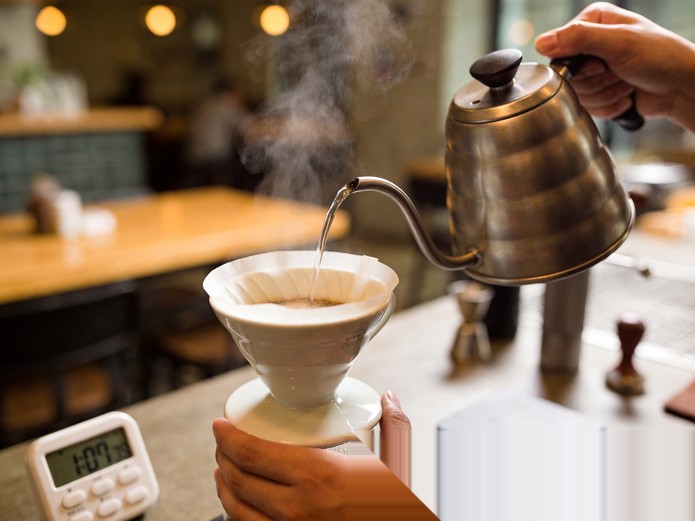
Customization Options: Logo, Color, and Packaging
Coffee drippers offer several customization paths that matter for branding.
- Base stamp or embossing: A recessed logo on the base adds no per-unit cost after the mold is modified. Raised embossing requires a two-part mold and adds $[INTERNAL DATA REQUIRED] to tooling.
- Custom glaze colors: Most suppliers work from a standard palette of 8–12 reactive and solid glazes. Matching a Pantone or existing brand color requires sending a physical reference sample. Color matching adds 1–2 weeks and $[INTERNAL DATA REQUIRED] to the first order.
- Packaging customization: Kraft paper boxes with custom printing, hang tags, and QR codes are standard for retail-focused orders. MOQ for custom packaging typically starts at 3,000 units. [CASE STUDY REQUIRED: packaging specification for a branded coffee dripper order]
- Dripper sets: Bundling a dripper with a matching ceramic cup or server increases average order value. Ask your supplier about pre-designed sets before requesting a fully custom pairing.
If you are developing a private-label line, request a barista coffee dripper sample pack to evaluate existing shapes before investing in custom molds.
Cost-Quality-Speed Trade-offs in Coffee Dripper Sourcing
Every sourcing decision involves trade-offs. Here is how the three main variables interact for ceramic coffee drippers.
Cost vs. Quality: The cheapest option — a thin porcelain dripper with a basic glaze — saves 20–30% on unit cost but may crack within six months of commercial use. Stoneware costs more upfront but reduces replacement frequency and negative reviews. For a retail brand, the durability difference directly affects return rates.
Cost vs. Speed: Rush orders compress the sample-adjustment phase, which is where most quality issues get caught. A standard 8-week timeline allows two rounds of sample revisions. A 4-week rush typically skips the second revision, increasing the risk of mold defects in the bulk batch.
Quality vs. Speed: Custom glaze colors and branded base stamps add time but rarely affect functional quality. If you need product fast, start with a standard glaze and add customization on the reorder. This gets inventory moving while you refine the brand details.
Actionable recommendation: For a first order, choose stoneware in a standard glaze with a base stamp. This hits the best balance of durability, reasonable MOQ, and brand identity without extending the timeline.
Frequently Asked Questions
What is the typical MOQ for custom ceramic coffee drippers?
Most factories set MOQ at 1,000–3,000 units for standard shapes and glazes. Custom colors or base stamps may raise the MOQ to 3,000–5,000 units because the factory needs to justify the glaze recipe adjustment and mold modification costs.
How long does it take to develop a new ceramic coffee dripper from sample to shipment?
Expect 8–12 weeks for the first order, including mold making, sample approval, two firing cycles, and packing. Reorders typically ship in 5–7 weeks because the mold and glaze recipe are already locked.
Can I order a mixed set with different glaze colors?
Yes, but the factory may require each color to meet a minimum of 500–1,000 units. A four-color assortment with 1,000 units per color is easier to negotiate than 250 units each. Plan your SKU mix before placing the order.
What certifications should I request for coffee drippers sold in the EU?
Request LFGB Section 30 and 31 compliance for the German market, and EU Regulation 1935/2004 overall food contact safety. If you are selling to France, DGCCRF compliance may also be required. [VERIFY BEFORE PUBLISHING: confirm current DGCCRF requirements for ceramic articles in contact with hot beverages]
Should I order individual boxes or bulk packaging for coffee drippers?
If you are selling direct to consumers or through retail, individual kraft boxes with a barcode label are standard. If you are supplying cafes or roasteries, bulk packaging in die-cut trays reduces unit cost by 8–12%. Match the packaging to your distribution channel.
How do I verify that a supplier’s glaze is safe for boiling water?
Ask for a test report that specifically lists “hot water extraction” or “high-temperature food contact” in the test conditions, not just a general ceramic safety certificate. The test temperature should be at or above 95°C to match actual brewing conditions.
Ready to Source Ceramic Coffee Drippers?
If you are planning a coffee dripper line for your cafe, roastery, or retail brand, start with the right specifications. Request the barista coffee dripper catalogue to see available shapes, glaze options, and MOQ details. We can also send a sample pack so you can test flow rate and thermal performance before committing to a bulk order.