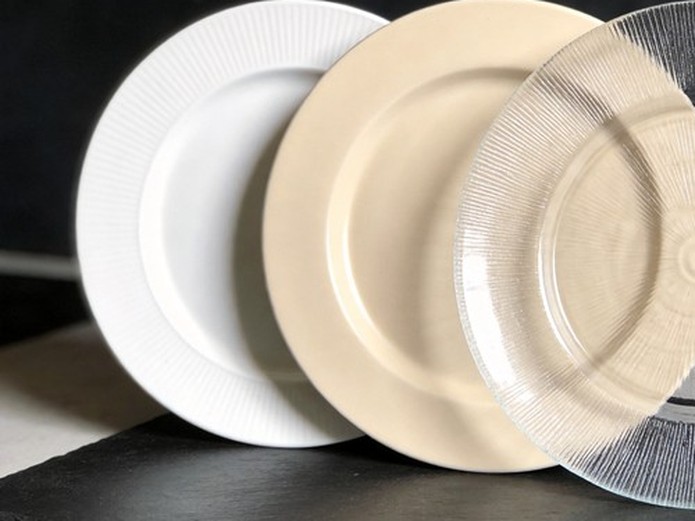
When you compare ceramic vs melamine vs glass tableware for commercial use, the decision comes down to cost-per-use over a 24-to-36-month cycle, not the upfront price per piece. Ceramic wins on presentation and heat tolerance but carries higher replacement costs. Melamine survives drops and costs less to replace, yet it scratches, stains, and limits menu temperature. Glass looks premium but breaks fast in high-turnover service. This article gives you a side-by-side cost breakdown, durability data, and a practical checklist you can use the next time you evaluate samples.
The Real Numbers: What Each Material Costs Per Year
Most buyers look at the unit price and stop there. That is a mistake. A $4.50 ceramic plate that lasts 18 months before chipping costs less per use than a $1.80 melamine plate that cracks in 8 months under steam-table heat. Here is how the math breaks down for a 100-seat restaurant running 250 covers per day.
Ceramic (stoneware / porcelain): Unit cost $3.50–$6.00 per piece. Average commercial lifespan 18–30 months depending on foot-ring design and glaze hardness. Annual replacement rate 8–15% for full-service restaurants, 18–25% for high-turnover casual dining. Annual cost per 100 covers: approximately $1,200–$2,800.
Melamine: Unit cost $1.20–$2.50 per piece. Lifespan 6–14 months in commercial heat exposure. Annual replacement rate 25–40% because of surface scratching, knife marks, and thermal fatigue. Annual cost per 100 covers: approximately $1,500–$3,200. [VERIFY BEFORE PUBLISHING: Data based on hospitality industry averages; actual rates vary by supplier grade.]
Glass (tempered / soda-lime): Unit cost $2.00–$4.50 per piece. Lifespan 3–10 months in foodservice due to rim chips and thermal shock. Annual replacement rate 35–60%. Annual cost per 100 covers: approximately $2,800–$5,500. Tempered glass performs better but still trails ceramic for longevity.
The takeaway: ceramic is not always the cheapest upfront, but it typically delivers the lowest cost-per-use in full-service environments where plates are hand-washed or use commercial dish racks with proper spacing.
Breakage Rate and Replacement Cycle by Material
Breakage is not random. It follows patterns tied to how each material fails under real kitchen conditions.
Ceramic fails from edge impact. A plate dropped from counter height (36 inches) onto quarry tile usually chips at the rim or foot ring. High-alumina bodies and reinforced foot rings reduce this, but no ceramic is drop-proof. The key variable is whether your kitchen uses open shelving, which doubles edge-chip risk compared to enclosed storage.
Melamine fails from thermal cycling and surface abrasion. Repeated exposure to 200°F+ holding cabinets causes micro-cracking. Knife cuts accumulate bacteria and create staining channels. Once the surface gloss is gone, health inspectors may flag the piece even if it is structurally intact.
Glass fails from thermal shock and rim impact. Moving a hot glass plate from a salamander to a cold pass rail can shatter it. Rim chips propagate quickly, and tempered glass, while safer when it breaks, still requires immediate replacement.
For buyers running food court or food truck operations, these failure modes matter more than for fine dining because staff turnover is higher and handling discipline is harder to enforce.
Durability Testing: What Survives a Commercial Kitchen
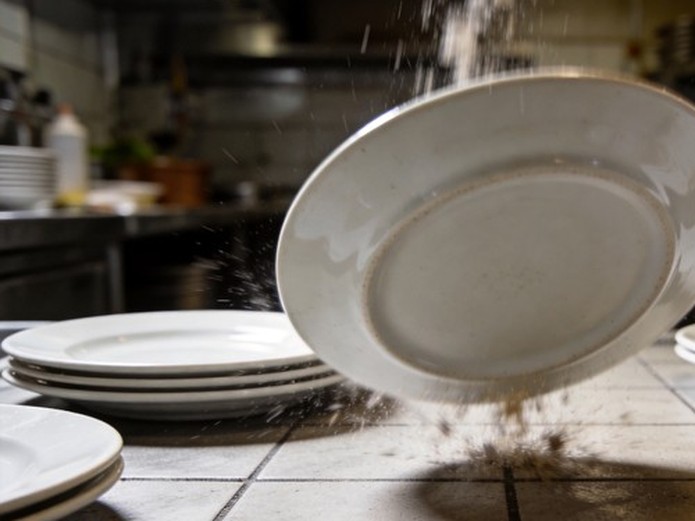
Before you place a bulk order, run samples through the same abuse they will see in your kitchen. Here is what experienced buyers test, and what the results mean.
Drop Test from Pass-Through Height
Drop each sample from 40 inches onto quarry tile or concrete. Ceramic will chip or crack. Melamine may bounce with no visible damage. Tempered glass may survive or shatter into cubes. Record the height at which each material fails. This tells you whether your kitchen layout—with open shelving, narrow aisles, or line-cook rush periods—creates unavoidable drop risk.
Thermal Shock Test
Move the sample from a 350°F oven directly to a room-temperature metal surface. Quality ceramic with good thermal shock resistance survives this. Standard soda-lime glass cracks. Melamine warps above 250°F. If your menu includes oven-to-table service, this test eliminates melamine and low-grade glass immediately.
Knife-Scratch and Stain Resistance
Cut a medium-rare steak on each plate surface, then run it through a commercial dishwasher cycle. Ceramic with a hard glaze shows minimal marking. Melamine develops visible cuts within weeks of this abuse. Glass resists scratching but shows metal marking that requires polish removal. This matters for steakhouse and BBQ concepts where guests cut directly on the plate.
Need a structured approach to sample inspection? See our ceramic quality inspection checklist for the full protocol.
Cost-Per-Use Comparison Table
| Factor | Ceramic | Melamine | Glass |
|---|---|---|---|
| Unit cost (per plate) | $3.50–$6.00 | $1.20–$2.50 | $2.00–$4.50 |
| Commercial lifespan | 18–30 months | 6–14 months | 3–10 months |
| Annual replacement rate | 8–25% | 25–40% | 35–60% |
| Heat tolerance | Up to 500°F+ | Up to 250°F | Up to 350°F (tempered) |
| Dishwasher safe | Yes | Top rack only | Yes |
| Drop survival | Low | High | Very low |
| Estimated cost per 100 covers/year | $1,200–$2,800 | $1,500–$3,200 | $2,800–$5,500 |
| Best fit | Full-service, fine dining, hotels | Outdoor, cafeteria, casual | Bars, dessert, display |
[VERIFY BEFORE PUBLISHING: Cost ranges are industry estimates based on mid-volume B2B pricing. Actual quotes vary by supplier, glaze complexity, and order volume.]
When Ceramic Makes Sense (and When It Does Not)
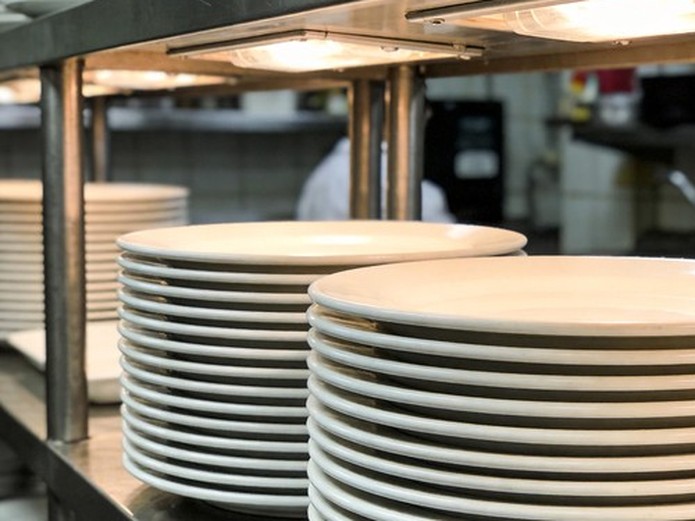
Ceramic is the default choice for most independent restaurants and hotels because it balances aesthetics, durability, and guest perception. But it is not the right answer for every concept.
Choose ceramic when: your average check is above $25, you serve hot food directly from the kitchen, you want plates that photograph well for social media, and your staff is trained to handle dinnerware carefully. Ceramic also wins when you need stackable storage that does not warp over time.
Avoid ceramic when: you run a poolside bar, a college cafeteria with tray-return systems, or any operation where plates are thrown into bus tubs by untrained staff. The replacement cost will eat your margin. In those cases, melamine or a hybrid approach—ceramic for dining room, melamine for patio—saves money.
Choose melamine when: your primary concerns are weight, drop survival, and price per piece. It works for outdoor dining, fast-casual concepts, and institutional feeding where presentation is secondary to function.
Choose glass when: you need display-grade presentation for desserts, appetizers, or bar service where breakage risk is controlled and thermal exposure is minimal. Tempered glass dessert plates in a tasting-menu format make sense. Glass dinner plates in a family-style concept do not.
Hidden Costs Buyers Forget to Calculate
The per-piece price is only the start. Here are three hidden costs that change the total cost of ownership.
1. Storage and Transportation Weight
Ceramic weighs roughly 3–4 times more than melamine per piece. If you run a catering operation or move inventory between locations, freight costs scale with weight. A 500-piece ceramic restock adds shipping expense that a melamine restock avoids. Glass sits between the two but requires heavier protective packaging.
2. Dishwasher Chemical and Energy Use
Melamine cannot tolerate the high-alkaline chemicals and 180°F rinse cycles used in institutional dish machines. You either downgrade your wash process—risking health code issues—or replace melamine faster. Ceramic and glass tolerate standard commercial dish chemicals without surface degradation.
3. Menu Temperature Limits
If your kitchen serves food straight from a 400°F oven, melamine is not an option. You will either burn the plate, warp it, or serve lukewarm food. That constraint forces a mid-stream material switch or limits your menu engineering. Factor this in before you commit to a material.
Procurement Checklist: Evaluating Samples Before You Order
Use this checklist when samples arrive. Do not approve a supplier until every box is checked.
- □ Weigh three samples of the same SKU. Variance should not exceed 5%. Heavier variance signals poor mold consistency.
- □ Check the foot ring for flatness on a level surface. A wobbling plate chips faster and annoys guests.
- □ Run a thermal shock test: oven to room-temperature surface. No cracks allowed.
- □ Drop from 40 inches onto quarry tile. Record damage type and height of failure.
- □ Scratch the surface with a steak knife under moderate pressure. Assess visible marking.
- □ Run through 10 commercial dishwasher cycles. Check for glaze clouding, edge softening, or color shift.
- □ Stack 12 pieces high. Measure total height and check for sticking or scratching between pieces.
- □ Verify the glaze is smooth to the touch, with no pinholes or bubbles at the rim.
- □ Request the supplier’s FDA or LFGB compliance documentation for the specific glaze batch.
- □ Compare the sample color to a Pantone or RAL reference under daylight and warm LED. Record deviation.
[CERTIFICATE REQUIRED: Attach actual FDA/LFGB test reports for the product line before publishing this section as definitive guidance.]
Common Mistakes When Choosing Tableware Material
Mistake 1: Buying Only on Unit Price
A $2.00 melamine plate that gets replaced every 6 months costs more over 3 years than a $5.00 ceramic plate that lasts 24 months. Buyers who fixate on the PO total instead of the annual replacement budget end up reordering more frequently, paying more freight, and dealing with inconsistent table settings as old and new batches mix.
Mistake 2: Ignoring the Serving Temperature of Your Menu
If your signature dish is served sizzling, melamine is not a material option—it is a liability. Buyers who choose material before finalizing the menu end up with plates that constrain their culinary team. Lock your hottest menu items first, then spec the material.
Mistake 3: Ordering One Material for Every Station
Your patio, dining room, and private event space do not need the same plate. Smart operators use ceramic indoors, melamine outdoors, and glass for dessert or amuse-bouche service. Buying one material for every use case maximizes waste. Match material to environment.
Three Actionable Tips for Your Next Order
- Run a 90-day sample trial before committing to a full container. Order 50–100 pieces per material and track breakage, guest complaints, and dishwasher throughput. Real data beats supplier promises.
- Negotiate replacement terms in your purchase contract. Ask for a 12-month replacement credit for breakage above an agreed threshold. Most ceramic suppliers will agree to 5–8% if your annual volume justifies it. Document this in your purchase contract.
- Plan a 15% oversupply on your first order. New tableware lines always have higher breakage in the first 90 days as staff adjust to weight and handling. The extra pieces prevent you from mixing old and new styles while you dial in par levels.
Saveable Tool: Annual Tableware Cost Calculator
Copy this formula into a spreadsheet. Input your own numbers to compare materials for your specific operation.
Annual Cost = (Unit Price × Pieces Needed × Replacement Rate) + (Freight Cost per Order × Orders per Year) + (Dishwasher Chemical Cost Difference)
Cost Per Use = Annual Cost ÷ (Covers per Day × 365)
Example for a 100-seat restaurant, 250 covers/day, ceramic at $4.50/unit, 12% replacement, 2 reorders/year, $400 freight per reorder:
Annual Cost = ($4.50 × 500 × 0.12) + ($400 × 2) = $270 + $800 = $1,070
Cost Per Use = $1,070 ÷ (250 × 365) = $0.0117 per cover
Run the same math for melamine and glass. The result usually surprises buyers who assumed the cheapest unit price was the cheapest operation.
MOQ, Lead Time, and Customization Considerations
Material choice directly affects your minimum order quantities and production timelines.
Ceramic MOQ: Typically 500–2,000 pieces per SKU for standard shapes, 3,000+ for custom molds. Lead time 45–75 days for in-stock glazes, 75–120 days for custom color matching. Custom embossing or logo placement adds 2–3 weeks.
Melamine MOQ: Lower barriers—often 300–1,000 pieces per SKU. Lead time 30–60 days. Custom colors are faster because melamine uses compression molding with pre-colored resin rather than fired glaze. However, the range of surface finishes is narrower.
Glass MOQ: Highly variable. Machine-pressed glass starts at 1,000 pieces. Hand-blown or tempered specialty shapes require 3,000–5,000. Lead time 45–90 days. Custom tinting is possible but expensive at low volumes.
If you are building a private-label collection, ceramic offers the widest surface customization—logo underglaze, reactive glazes, edge colors, and textured bodies. Melamine limits you to decal printing and molded-in color. Glass offers etching and tinting but not the same tactile range.
Need a full overview of ceramic production timelines? See our guide to reorder strategy and lead time planning.
FAQ
Is melamine safe for hot food service?
Melamine is FDA-approved for food contact but should not be used with food above 160°F for extended periods. High temperatures can cause surface breakdown and potential chemical migration. For hot entrées, ceramic or tempered glass is the safer choice. [VERIFY BEFORE PUBLISHING: Reference FDA Compliance Policy Guide Sec. 545.400.]
Can I mix ceramic and melamine in the same restaurant?
Yes, and many operators do. Use ceramic for dining room service where presentation matters, and melamine for patio, pool, or high-risk areas where breakage is unavoidable. Just ensure guests receive consistent quality where they dine.
How do I know if a ceramic glaze is food-safe?
Request third-party test reports from your supplier. Look for FDA 21 CFR 175.300 or LFGB compliance for lead and cadmium migration limits. Do not accept a generic “food-safe” claim without documentation. For more details, read our food safety guide.
What is the minimum viable order for testing a new material?
Order enough to cover 2–3 days of service at one location. For a 60-seat restaurant, that is roughly 150 pieces per SKU. This gives you real breakage data, dishwasher cycle feedback, and guest reactions without committing to a full container load.
Does tempered glass really save money over regular glass?
Tempered glass is 4–5 times stronger than soda-lime glass and breaks into safer cubes. In commercial use, it typically lasts 2–3 times longer. The higher unit price usually pays back within 6–9 months if your breakage rate justifies it.
Should I order all pieces from one supplier or split by material?
If your primary volume is ceramic, order ceramic from a ceramic specialist and source melamine or glass separately. Few suppliers excel across all three materials. Splitting also gives you leverage in negotiations and reduces single-source risk.
Get MOQ by product category and compare ceramic, melamine, and glass specs side by side before your next order.