
Ceramic quality claims happen when a delivered batch does not match the approved sample or stated specifications. Buyers who document defects systematically, reference clear acceptance criteria from the purchase contract, and present evidence within the agreed timeframe recover substantially more in remedies than those who rely on verbal complaints alone. This guide gives you a field-tested process for building a claim file that suppliers take seriously, negotiating remedies that protect your margins, and preventing the same problems on your next order.
When to File a Ceramic Quality Claim (and When to Hold Back)
Not every imperfection justifies a claim. Filing too aggressively damages supplier relationships; filing too late or without evidence wastes leverage. Use the criteria below to decide before you open the container.
| Issue Type | File Claim? | Typical Remedy |
|---|---|---|
| Defect rate exceeds AQL limit (e.g., 2.5% Major, 4.0% Minor) | Yes | Replacement lot or proportional discount |
| Critical safety defect (cracks, lead/cadmium exceedance [VERIFY BEFORE PUBLISHING]) | Yes, immediately | Full rejection + refund or replacement at supplier cost |
| Color/shape deviation outside agreed tolerance | Yes | Discount or rework |
| Kiln variation within disclosed range (reactive glaze, hand-finished edges) | No | Accept as process characteristic |
| Minor cosmetic flaw within tolerance (pinhole, slight glaze drip) | No | Sort and sell as seconds |
| Shipping damage (broken pieces from transit) | No | File with freight forwarder/insurer |
Key rule: The purchase order or contract must define acceptance limits before the shipment leaves the factory. If you have not agreed on AQL levels, defect classifications, or color tolerance ranges in writing, your claim rests on goodwill rather than enforceable terms.
The 5-Step Documentation Process
A claim is only as strong as the evidence behind it. Suppliers receive dozens of complaints monthly; the buyers who win concessions are the ones who make the supplier’s quality manager want to solve the problem rather than argue about it.
Step 1: Stop Unpacking and Photograph the Sealed Container
Before you remove a single piece, take photos of the container seals, packing list, and exterior damage. This proves the condition of the goods upon arrival and rules out “your warehouse damaged it” pushback.
Step 2: Count and Classify Defects Using AQL Tables
Use MIL-STD-105E or ISO 2859-1 sampling plans. For a typical ceramic tableware order of 5,000–20,000 pieces, inspect a sample of 200–315 units. Classify each defect as Critical, Major, or Minor, then compare the defect count against the acceptance number for your agreed AQL.
Step 3: Photograph Each Defect Category with Scale Reference
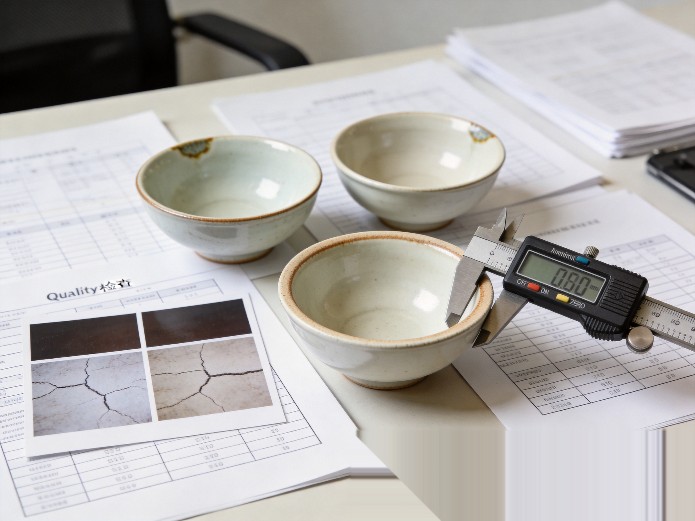
Place a ruler or coin next to the defect for scale. Capture three angles: close-up of the defect, the whole piece showing location, and the batch label or carton mark. Name each file with the defect code, date, and batch number.
Step 4: Write the Inspection Report
Include: PO number, batch ID, inspection date, inspector name, sample size, defect counts by category, photos referenced, and a clear statement of non-conformance against the agreed specification.
Step 5: Send Within 48 Hours with a Remedy Request
Email the report to your supplier’s quality contact and sales manager simultaneously. State the defect rate, reference the contract clause, propose a specific remedy, and set a response deadline (typically 5–7 business days).
Three Costly Mistakes Buyers Make During Claims
Even experienced procurement teams trip over these recurring errors. Each one weakens your position and extends resolution time.
Mistake 1: Accepting the Full Shipment Before Inspection
Once you unpack, sort, and move goods into your warehouse, the supplier can argue that handling caused the damage. Hold the container at the port or in a bonded area until inspection is complete. If you must receive into your own facility, designate a quarantine zone and do not process the inventory into sellable stock until the claim is resolved.
Mistake 2: Using Phone Photos Without Scale or Batch Labels
A photo of a cracked plate tells the supplier nothing about severity, quantity, or which production run it came from. Suppliers routinely dismiss vague photo evidence. Every image must include a scale reference and a visible batch or carton label.
Mistake 3: Waiting More Than a Week to Report
Most purchase contracts specify a claim window (commonly 7–14 days after arrival). Beyond that window, the supplier is within their rights to refuse responsibility. Set up a calendar alert for 48 hours after each container’s ETA so you never miss the deadline.
Negotiating Remedies: Replacement, Discount, or Partial Refund
The remedy you ask for should match the severity of the problem and the supplier’s capacity to fix it. Here is how buyers typically structure resolutions.
| Remedy | Best For | Buyer Cost | Timeline Impact |
|---|---|---|---|
| Full replacement lot | Critical defects, safety issues, entire batch unusable | Zero product cost; pays only for second inspection | +4–8 weeks (reproduction + shipping) |
| Proportional discount | Defect rate 5–15%, batch still sellable with sorting | Reduced unit cost; labor for sorting | No delay; immediate sell-through |
| Partial refund + keep goods | Minor defects, seasonal deadline already missed | Refund covers margin loss on discounted sales | No delay |
| Credit against next order | Long-term supplier relationship, minor repeat issue | No cash recovery; future order discount | No immediate delay |
Negotiation tip: Start by asking for one remedy level higher than you expect. If the defect rate is 8%, ask for replacement. The supplier will likely counter with a discount. You then settle on a deeper discount or a mixed remedy (discount + credit), which is usually better than your opening fallback.

Cost, Quality, and Timeline Trade-offs in Dispute Resolution
Every remedy choice carries trade-offs. A full replacement gives you perfect goods but costs you 4–8 weeks of sales. A discount lets you ship immediately but requires labor to sort and may leave you with stock you can only sell at clearance prices.
Consider these factors before you enter negotiation:
- Seasonal deadlines: If the shipment is for a holiday or event season, timeline usually outweighs perfect quality. Take the discount and source a small replacement rush order locally.
- Customer commitments: If you have pre-sold the batch to a hotel chain or retailer with strict specs, replacement may be the only viable path.
- Supplier track record: A first-time issue with an otherwise reliable supplier warrants a collaborative approach (credit or discount). A repeat offender needs stricter terms or replacement to force process improvement.
- Cash flow: If you paid 30% deposit and 70% against B/L, a refund requires the supplier to return cash they may have already spent on materials. Credit against next order is often easier for them to approve.
Three Actionable Recommendations for Stronger Claims
These three practices separate buyers who resolve claims quickly from those who spend months in email chains.
1. Attach Your Approved Sample Photo to Every PO
When the purchase order includes a photo of the sealed approval sample with the date and your signature, the supplier cannot argue about what “good enough” looks like. Store the physical sample in a labeled box and photograph it from three angles before you ship it to the factory.
2. Build a Defect Photo Library by Supplier
Each supplier has a distinct failure pattern. One factory consistently produces glaze pinholes; another struggles with rim flatness. Maintain a shared folder of defect photos organized by supplier and defect type. When you file a claim, reference previous occurrences to show this is a recurring process issue, not a one-off mistake.
3. Schedule a Video Call Within 72 Hours of Filing
Email creates distance; video forces accountability. Ask the supplier’s quality manager to join a screen-share call where you walk through the inspection report and photos live. Most suppliers move faster when they see the evidence presented professionally and realize you understand their production process well enough to pinpoint root causes.
A Reusable Ceramic Quality Claim Template
Copy this checklist into your workflow. Completing every item before you contact the supplier gives you the strongest possible position.
- Container exterior photographed upon arrival
- Packing list cross-checked against PO quantity and SKU
- Random sample selected per AQL table (minimum 200 pieces for lots under 10,000)
- Each defect classified as Critical / Major / Minor with count recorded
- Photographs taken with scale reference and batch/carton label visible
- Approved sample or spec sheet located for comparison
- Contract claim window verified (date of arrival + allowed days)
- Inspection report written with PO number, batch ID, sample size, and defect summary
- Remedy requested with specific quantity or percentage
- Supplier quality contact and sales manager both notified within 48 hours
- Response deadline stated (5–7 business days)
- Follow-up calendar reminder set for 1 day before deadline
MOQ and reproduction note: If your supplier agrees to a replacement lot, confirm whether the reproduction MOQ matches your original order or if they will produce only the shortfall quantity. Most factories require the same MOQ for a replacement run, which may leave you with excess inventory. Negotiate partial production or credit for the overage.
Testing and compliance reminder: For replacement lots involving food-contact ceramics, request updated test reports (FDA, LFGB, or EU 1935/2004 as applicable) [VERIFY BEFORE PUBLISHING] before the new shipment departs. Do not assume the replacement batch carries the same certification as the original.
Frequently Asked Questions
How long do suppliers typically take to resolve a ceramic quality claim?
Suppliers usually respond within 5–7 business days for straightforward claims with clear evidence. Complex disputes involving third-party inspection or large dollar amounts may take 2–4 weeks. Set a firm response deadline in your initial claim email and follow up once before escalating.
Should I hire a third-party inspection company for the claim?
For claims exceeding $10,000 or involving safety defects, a third-party report from SGS, Bureau Veritas, or Intertek adds credibility [INTERNAL DATA REQUIRED]. For smaller claims, your own documented inspection with photos and AQL counts is usually sufficient if the evidence is thorough.
Can I refuse a partial shipment and claim the entire order?
You can only reject the entire order if the defect rate exceeds the contract’s rejection threshold or if critical safety defects are present. Rejecting a batch with minor defects above tolerance but below rejection limits may lead the supplier to dispute the claim or delay future orders.
What packaging information should I include in the claim?
Photograph the inner and outer packaging. If breakage occurred because cartons were undersized, lacked dividers, or used insufficient cushioning, include those images. Packaging failures shift responsibility from production quality to shipping preparation and may justify a different remedy discussion.
How do I prevent ceramic quality claims on future orders?
Add a pre-shipment inspection clause to your purchase contract, require sealed approval samples before mass production, and specify AQL levels for each defect category. For high-value orders, book an inline inspection during production rather than relying solely on final random inspection.
Is customization more prone to quality claims than standard designs?
Custom shapes, colors, and decals carry higher claim risk because the supplier has less production history to predict failure modes. Reduce risk by ordering a larger pre-production sample run (50–100 pieces instead of 3–5), specifying color tolerance with Pantone codes or physical swatches, and allowing a longer first-order lead time for process calibration.
Need a structured checklist for your next incoming inspection? Request our ceramic QC checklist and use it to catch defects before they become claims.