Dropshipping ceramic tableware promises low startup costs, but most B2B buyers discover quality inconsistencies and fulfillment delays within the first 90 days. After a decade of sourcing ceramics from Chaozhou, Jingdezhen, and Dehua, I have seen dropshipping work exactly twice — and fail more than fifty times. The problem is not the model itself. It is that ceramic tableware has three traits — fragility, weight, and inconsistent glaze batches — that make it fundamentally different from apparel, jewelry, or phone accessories. This article breaks down where the real costs hide, what red flags to watch for, and the rare situations where dropshipping ceramics actually makes sense.
What Makes Ceramic Different in a Dropshipping Model
Most dropshipping guides assume you are selling lightweight, non-fragile items. Ceramic breaks that assumption in three ways:
- Weight drives shipping costs. A single 10-inch dinner plate weighs 450–650 grams. A four-piece place setting can push 2 kg. That is 3–5x the weight of a typical dropshipped product. Your shipping cost per unit is not $2.50. It is $7–$14 to the US or EU, depending on the courier and zone.
- Fragility means returns are expensive. Industry data on ceramic breakage in single-unit shipping runs 3–8% for unvetted suppliers and 1–3% for suppliers with custom foam inserts. Every broken piece requires a replacement shipment — at your cost — plus a refund or discount to retain the customer.
- Glaze and color vary between batches. Unlike printed items where a digital file guarantees consistency, ceramic glazes are mixed by hand or in small batches. A mug ordered in January and the same SKU in March can look visibly different. Your customer notices.
These three factors mean the “no inventory” advantage of dropshipping is offset by higher per-unit costs and customer service overhead that most margin calculators ignore.
The Hidden Cost Structure Nobody Talks About
Let us compare two models side by side for a 12-piece dinnerware set retailing at $89:
| Cost Factor | Dropship Model (per unit) | Bulk Import (per unit, 500+ MOQ) |
|---|---|---|
| Product cost | $22–$28 | $9–$14 |
| Packaging | $2–$4 (basic) | $1.50–$2.50 (custom foam) |
| Shipping to end customer | $9–$16 | $0 (absorbed in bulk freight) |
| Platform / payment fees | $4–$6 | $3–$5 |
| Breakage / return rate | $3–$8 (3–8% at dropship rates) | $0.50–$1.50 (bulk QC + custom pack) |
| Total landed cost | $40–$62 | $14–$23 |
| Your margin at $89 retail | $27–$49 (30–55%) | $66–$75 (74–84%) |
The dropship model looks viable on paper. But here is what the table does not show: when a customer receives a chipped plate, you absorb the full replacement cost — product, packaging, and shipping — with zero chance of recovering it from the supplier unless you negotiated a specific breakage clause. Most dropshipping agreements do not include one.
Three cost traps catch buyers every time:
- Chargebacks from quality disputes. If a customer disputes glaze discoloration or a hairline crack, payment processors side with the buyer. Chargeback fees run $15–$25 per incident, and your processor rating drops.
- Platform storage of returns. Some platforms charge daily storage for returned items you cannot resell. A $12 monthly fee per SKU adds up fast when you carry 30–50 SKUs.
- Currency fluctuation. Your supplier quotes in RMB. If the yuan strengthens 3% against your currency between order and delivery, your margin evaporates. Bulk buyers hedge this with forward contracts. Dropshippers eat it.
Quality Control: Your Biggest Blind Spot
In a bulk import model, you or your QC agent inspects a random sample before the container seals. In dropshipping, the supplier ships directly to your customer. You never touch the product. That creates three specific risks:
- Sample-to-order variance. The sample you approved in April came from a dedicated sample kiln with tighter temperature control. The production batch in June ran through a different tunnel kiln. The glaze finish shifts. Your customer sees it. You do not.
- No pre-shipment photos. Most ceramic dropship suppliers offer product photos only — not photos of the actual unit being packed. You have no way to catch a glaze run, a pinhole, or an off-center decal before it reaches your buyer.
- Substitution risk. When a supplier runs low on your SKU, they may substitute a visually similar item from a different factory to meet the SLA. The weight, glaze, and foot ring differ. Your customer notices.
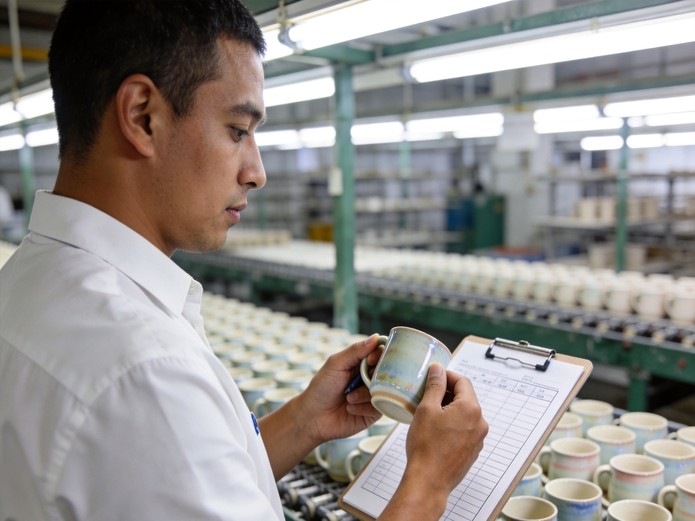
My recommendation: if you are committed to dropshipping ceramics, require your supplier to send you photos of every outgoing order for the first 30 days. Not a generic product photo — photos of the actual units, packed, with the shipping label visible. Most suppliers refuse. That refusal tells you everything.
Packaging and Shipping: Where Margins Die
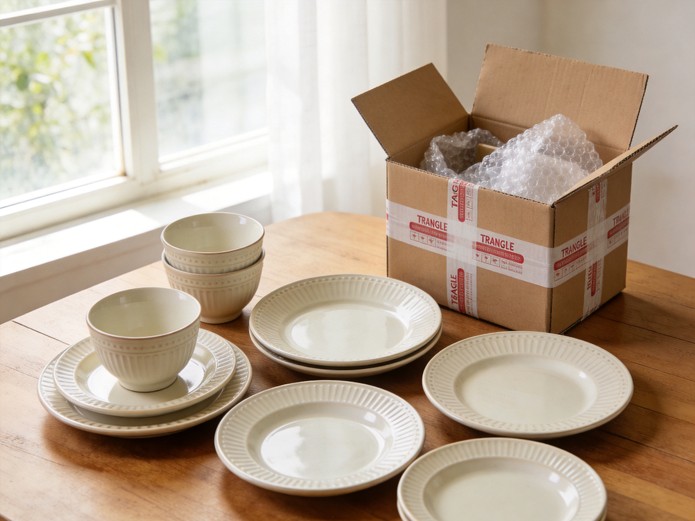
Ceramic packaging for bulk export uses custom EPS foam inserts, corner protectors, and double-wall cartons tested to ISTA 3A drop standards. Dropship packaging is usually a single bubble-wrap layer inside a generic cardboard box. The difference in breakage rates is not marginal — it is 5–10x.
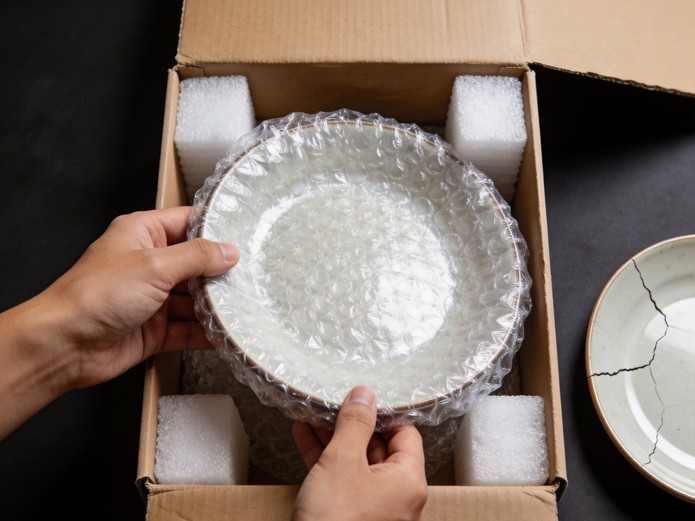
Here is what I have observed across shipments from different suppliers:
- Basic bubble wrap + thin carton: 6–12% breakage on single-unit shipments
- Custom foam insert + double-wall carton: 1–3% breakage
- Molded pulp tray + corner foam + outer carton: 0.5–1.5% breakage
Most dropship suppliers default to option one because it is cheapest and fastest. You can negotiate option two or three, but the supplier will pass the cost to you — typically $2–$5 extra per unit — which directly eats your margin.
Shipping timelines are another issue. A bulk shipment from Chaozhou to Los Angeles takes 25–35 days by sea. A dropshipped unit via ePacket or standard courier takes 14–25 days — sometimes faster, but with less tracking reliability and no consolidated customs clearance. If customs holds the package for inspection, your customer waits another 7–14 days with no transparency.
Supplier Vetting for Dropshipping
Before you sign any dropship agreement for ceramic tableware, verify these seven points. Print this checklist and use it on every supplier call:
| Check | What to Ask | Red Flag |
|---|---|---|
| 1. Own factory or trader? | Do you own the kilns, or do you subcontract? | Refuses factory video; only sends trading company license |
| 2. Packaging standard | What is your breakage rate for single-unit ceramic shipments? | Claims “almost zero” with no data |
| 3. Replacement policy | Who pays for replacements on breakage or defects? | Puts 100% cost on you |
| 4. Photo verification | Can you send a photo of the actual unit before shipping? | Says “we only have product photos” |
| 5. Batch consistency | How do you ensure glaze color matches across production runs? | No glaze mixing records or batch tracking |
| 6. Shipping method | Which courier? What is the average delivery time to [your market]? | Vague answer or “depends on the season” |
| 7. Customs handling | Do you handle customs documentation? Who pays duties? | Passes all customs risk to your customer |
If a supplier scores red flags on three or more of these checks, walk away. The time you save on inventory will be eaten tenfold by customer complaints and chargebacks.
When Dropshipping Ceramic Tableware Actually Makes Sense
Dropshipping ceramics is not universally bad. It works in three specific scenarios:
- Testing a new market or design. You want to launch a limited collection of 5–10 SKUs to gauge demand before committing to a 500-piece MOQ. Dropshipping lets you validate color preferences and price sensitivity with real buyers. Plan to switch to bulk import within 60–90 days if demand proves out. For buyers ready to scale, our MOQ negotiation guide covers how to reduce minimum orders once you have sales data.
- Supplementing a bulk-import core range. You already import 20 SKUs in bulk and want to add 3–5 slow-moving variants (e.g., oversized serving platters, specialty tea sets) without tying up warehouse space. The dropship SKUs are a small percentage of total revenue, so the risk is contained. If you are new to bulk sourcing, start with our sample evaluation process before committing to full production.
- Private-label mugs with simple decals. Mugs are the most dropship-friendly ceramic item because they are smaller, lighter, and easier to pack than plates or serving bowls. If your design is a single-color screen print on a standard white mug, breakage rates drop and quality variance is minimal. Even then, insist on custom foam packaging. For larger collections, proper ceramic packaging is non-negotiable.
In every other scenario — full dinnerware sets, reactive glaze collections, hotel-grade tableware, or large-format serving pieces — bulk import with pre-shipment QC is the only model that protects your margin and your brand reputation. Our QC checklist for bulk ceramic orders shows exactly what to inspect before a container seals.
Dropshipping Ceramic Profit Calculator
Use this simple framework to evaluate whether a specific SKU makes sense for dropshipping. Fill in your numbers:
- Retail price: $_______
- Supplier unit cost: $_______
- Shipping to customer: $_______
- Packaging upgrade (if negotiated): $_______
- Platform + payment fees (%): _______%
- Estimated breakage/return rate (%): _______%
- Average replacement cost (product + ship): $_______
Net margin formula:
Retail Price − [Supplier Cost + Shipping + Packaging + (Retail × Platform Fee %) + (Breakage Rate × Replacement Cost)] = Net Margin
If your net margin is below 25% after accounting for breakage, switch to bulk import or raise your retail price. Below 15%, the model is unsustainable. For buyers ready to explore bulk ceramic tableware options, the unit economics improve dramatically at volume.
FAQ
Can I private-label ceramic tableware through dropshipping?
Private labeling through dropshipping is possible but limited. Most suppliers offer logo decals or simple screen prints only. Custom shapes, reactive glazes, or embossed branding require mold development and a 500–1,000 piece MOQ — incompatible with the no-inventory dropship model. [CASE STUDY REQUIRED]
What is the typical MOQ for ceramic dropshipping?
Dropshipping by definition has no MOQ — you pay per unit. However, many ceramic suppliers set a minimum order value of $150–$300 per dropship batch to justify the packing labor. Others require a monthly commitment of 20–50 units to access dropship pricing. Always confirm the exact terms before listing their products.
How long does ceramic dropshipping take to deliver?
Delivery times vary by courier and destination. Standard shipping from China to the US or EU typically takes 14–25 days. Express courier (DHL, FedEx) reduces this to 5–10 days but doubles or triples the shipping cost. For comparison, bulk sea freight takes 25–35 days but the per-unit shipping cost is 60–80% lower.
Who pays for broken items in ceramic dropshipping?
In most dropshipping agreements, you — the seller — pay for replacements. The supplier ships what you ordered; transit damage is your risk unless you negotiate a specific breakage clause into the contract. Some suppliers offer a 50/50 split on breakage claims above 5%, but this is rare and usually requires a monthly volume commitment.
Is there a way to reduce ceramic breakage in dropshipping?
Yes, but it costs money. The three most effective methods are: (1) custom molded pulp trays instead of bubble wrap, (2) “fragile” handling labels on every carton, and (3) limiting dropshipping to smaller items like mugs and bowls rather than large platters or serving pieces. These upgrades add $2–$5 per unit but can cut breakage from 8% to under 2%.
Bottom Line
Dropshipping ceramic tableware is not impossible, but it is far harder than the e-commerce gurus suggest. The combination of weight, fragility, and batch-to-batch variance creates cost and quality risks that most margin calculators ignore. Use dropshipping only for market testing, slow-moving SKU supplements, or lightweight items like mugs. For core dinnerware collections, bulk import with pre-shipment inspection remains the only model that protects your brand and your profitability.
If you are evaluating a specific ceramic product for dropshipping or bulk import, submit your design for a feasibility review. We will assess packaging requirements, shipping costs, and whether your target margin is achievable before you commit to a supplier.