

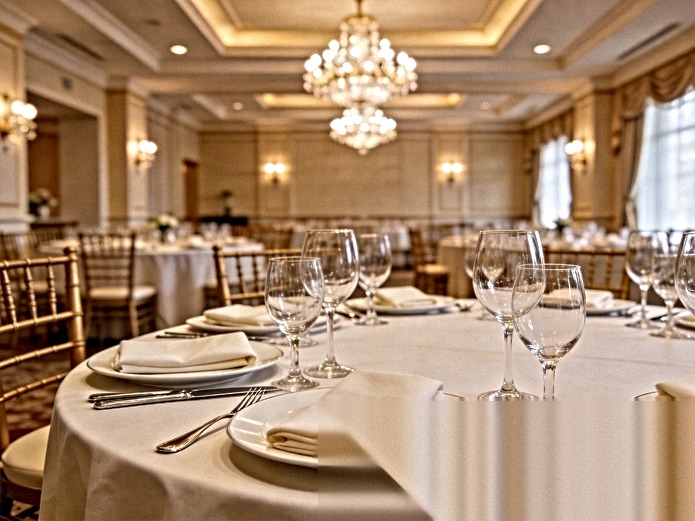
Ceramic banquet tableware must survive hundreds of setup-breakdown cycles, transport between event rooms, and aggressive commercial dishwashing—often at volumes that dwarf a typical restaurant. Facilities managers running banquet halls and convention centers face a unique procurement challenge: you need dinnerware that looks refined enough for weddings and corporate galas, yet tough enough to survive the logistics of a 2,000-cover event followed by a same-day turnaround. This guide breaks down the specifications, sourcing strategies, and cost tradeoffs that separate banquet-grade ceramics from standard commercial tableware. If you are evaluating options, browse our ceramic tableware product catalog to see standard banquet shapes and sizes.
What Makes Banquet Hall Ceramic Tableware Different from Restaurant Dinnerware
Restaurant ceramics stay in one dining room. Banquet ceramics move. A single plate might see a breakfast seminar, a lunch buffet, a wedding reception, and a corporate dinner within the same week. Each transition involves stacking, cart transport, unstacking, washing, and re-stacking. The wear pattern is fundamentally different from restaurant service.
Here is what changes when you move from restaurant to banquet operations:
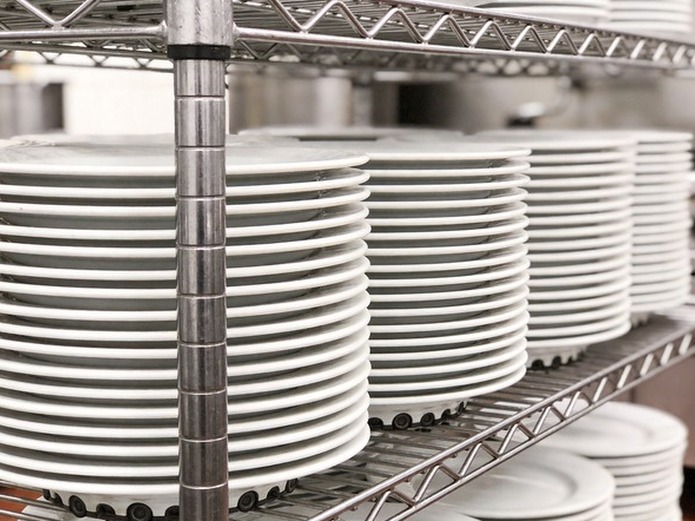
- Stacking frequency: Restaurant plates stack 10-15 high between service. Banquet plates stack 30-50 high on transport carts, multiplying edge-contact pressure.
- Transport distance: Restaurant dishware travels from kitchen to table and back. Banquet dishware travels from storage to ballroom A, then to ballroom B, then to a satellite kitchen—sometimes across a convention center campus.
- Turnaround pressure: A restaurant closes at midnight and reopens at noon. A convention center might flip a room from a 500-person lunch to a 500-person dinner in 90 minutes, pushing dishwashers to maximum throughput with shorter drying time.
- Presentation variance: The same plate must look appropriate for a black-tie gala and a casual lunch buffet. Neutral, versatile designs reduce the need for multiple inventory sets.
- Seasonal storage: Event venues often store excess inventory for months during off-peak seasons. Ceramic stored in humid basements or unheated warehouses can develop crazing or discoloration if the glaze is not fully vitrified.
These differences mean banquet-grade ceramics need thicker walls, fully vitrified bodies, reinforced foot rings, and glazes rated for thermal shock resistance beyond standard commercial dishware standards. For detailed test methods, see our ceramic tableware durability testing guide.
Key Specifications Facilities Managers Should Demand
When you write a specification sheet for your ceramic banquet tableware order, these are the non-negotiables that separate venue-grade pieces from restaurant-grade:
Body Thickness and Weight
Dinner plates should weigh between 650g and 900g for banquet service. Lighter plates chip faster under stack pressure. Heavier plates increase transport labor and breakage risk from drops. A 10.5-inch dinner plate at 750g offers the best balance for most venues.
Fully Vitrified Body
Demand porcelain or vitrified stoneware with water absorption below 0.5 percent. Fully vitrified ceramics do not absorb moisture during dishwashing or storage, which prevents the cracking and crazing that plagues venues in humid climates. Ask your supplier for a water absorption test report—most reputable factories can provide this from their in-house lab or a third-party testing partner.
Foot Ring Design
The foot ring is where most banquet ceramics fail. A wide, flat foot ring distributes stack weight evenly and reduces the point-load pressure that causes rim chips. Avoid narrow or decorative foot rings. Specify a foot ring width of at least 8mm with a flat, unglazed contact surface.
Glaze Hardness
Banquet ceramics face metal flatware abrasion at volumes restaurants rarely see. Specify a glaze with Mohs hardness of 5 or higher. If your supplier cannot confirm glaze hardness, request a flatware abrasion test or conduct your own with a fork-scratch sample test on evaluation pieces.
Thermal Shock Resistance
Commercial dishwashers and rapid room-temperature changes stress ceramic bodies. Specify ceramics rated for thermal shock resistance of at least 150°C differential. This matters most for venues that serve hot plated meals directly from heated carts or salamanders.
Procurement Decision Table: Comparing Ceramic Grades for Event Venues
Use this table to compare ceramic grades across the metrics that matter most for banquet operations. The right choice depends on your event mix, budget cycle, and tolerance for replacement frequency.
| Grade | Material | Weight (10.5″ plate) | Typical Lifespan | Best For | Tradeoff |
|---|---|---|---|---|---|
| Standard Commercial | Stoneware | 550-700g | 12-18 months | Budget venues, high-churn casual events | Lower upfront cost; higher replacement rate |
| Mid-Grade Banquet | Vitrified Stoneware | 700-850g | 2-3 years | Multi-use venues with mixed event types | Balanced cost and durability |
| Premium Banquet | Hard-Paste Porcelain | 750-950g | 4-6 years | High-end hotels, wedding venues, corporate centers | Higher upfront cost; lowest total cost of ownership |
| Ultra-Duty | Alumina-Reinforced Porcelain | 800-1000g | 5-7 years | Convention centers with 10,000+ covers monthly | Highest upfront cost; requires confirmed supplier capability |
The lifespan estimates above assume commercial dishwashing, daily use, and proper storage. If your venue stores ceramics in unheated or high-humidity conditions, reduce lifespan estimates by 20-30 percent for non-vitrified grades.
MOQ, Lead Time, and Pricing Structure for Bulk Banquet Orders
Banquet orders differ from restaurant orders in volume and mix. A single restaurant might order 200 covers. A banquet hall might order 2,000 covers plus backup inventory for breakage and growth. Here is what to expect when negotiating bulk banquet orders:
Minimum Order Quantities
Most Chinese ceramic factories set MOQs at 1,000-3,000 pieces per shape for custom designs. For stock designs with your logo, MOQs typically drop to 500-1,000 pieces per shape. If you need a full service for 1,000 covers—including dinner plates, salad plates, bowls, cups, and saucers—expect a total order of 5,000-7,000 pieces. For strategies on negotiating lower minimums, read our ceramic MOQ negotiation guide.
If your total volume falls below factory MOQs, consider pooling orders with other venues in your group or working with a trading company that aggregates orders. The per-piece cost will increase 15-25 percent, but you avoid over-purchasing inventory you cannot rotate.
Lead Time Breakdown
Standard lead times for banquet ceramic orders from China:
- Stock shapes, no customization: 4-6 weeks production + 3-4 weeks ocean freight
- Stock shapes, logo decal: 6-8 weeks production + 3-4 weeks ocean freight
- Custom shapes, new molds: 10-14 weeks (includes mold development, sample approval, production, and freight)
- Custom glaze colors: Add 2-3 weeks for color matching and sample approval
Plan your procurement cycle at least six months ahead of peak season. October through December is the busiest period for Chinese ceramic factories due to holiday orders. Lead times can extend by 30-50 percent during this window. For a complete planning framework, see our ceramic production lead time guide.
Pricing Structure
Banquet ceramic pricing follows a tiered volume model. Here is a realistic range for mid-grade vitrified stoneware in standard white or ivory:
- 1,000-2,999 pieces: $1.80-2.40 per dinner plate (FOB)
- 3,000-5,999 pieces: $1.50-2.00 per dinner plate (FOB)
- 6,000-9,999 pieces: $1.30-1.70 per dinner plate (FOB)
- 10,000+ pieces: $1.10-1.50 per dinner plate (FOB)
These are FOB China prices. Add ocean freight ($0.15-0.35 per piece depending on destination and container utilization), customs duties, and inland transport to calculate your landed cost. [VERIFY BEFORE PUBLISHING: Current freight rates and tariff schedules change frequently.]
The Pre-Order Inspection Checklist for Banquet Ceramics
Before you approve a production batch, run every sample through this checklist. Print it, laminate it, and give it to whoever handles your incoming quality control.
- Measure wall thickness at three points on each sample piece. Variation should not exceed 1.5mm.
- Weigh ten samples of the same shape. Weight variation should not exceed 5 percent.
- Stack samples 30 high on a transport cart. Roll the cart 20 meters over tile flooring. Inspect edges and feet for chips or cracks.
- Run samples through your commercial dishwasher for 50 consecutive cycles. Check for glaze dulling, crazing, or body staining.
- Drop a sample from 80cm onto a rubber kitchen mat. Record whether it chips, cracks, or survives.
- Heat a sample to 150°C in an oven, then plunge into room-temperature water. No cracks should form.
- Scratch the glaze surface with a stainless steel fork using moderate pressure. No visible scratch marks should remain.
- Check the foot ring for glaze coverage. Unglazed foot rings stack more securely and resist sticking.
- Verify that the glaze color matches your approved sample under both warm and cool lighting. Banquet venues use mixed lighting that can make ivory look yellow.
- Request a copy of the factory’s lead and cadmium test report. Verify it covers the specific glaze batch, not just a generic certificate. Our ceramic certification standards guide explains what to look for in FDA, LFGB, and EU compliance documents. [CERTIFICATE REQUIRED]
If a sample fails any of these tests, reject the batch and request corrected samples. Do not accept verbal assurances or promises that “the production batch will be better.”
Common Mistakes When Sourcing Ceramic Tableware for Event Venues
After working with dozens of banquet halls and convention centers, I see the same procurement errors repeat across the industry. Avoid these three:
Mistake 1: Buying Restaurant-Grade Ceramics for Banquet Volume
Restaurant ceramics are engineered for lower stack heights and gentler handling. A dinner plate rated for 200 covers per week in a fine-dining restaurant will not survive 800 covers per week in a banquet rotation. The cost savings on restaurant-grade ceramics disappear within six months when replacement rates triple.
Mistake 2: Ignoring the Foot Ring
Most buyers focus on rim design and glaze color. They forget that the foot ring determines stack stability and edge-chip resistance. I have seen venues replace 30 percent of their inventory annually because they selected plates with decorative but narrow foot rings. Understanding ceramic defect classification standards helps you specify exactly what is acceptable before production begins. Specify foot ring geometry in your purchase order. Include a diagram if necessary. For a full overview of customization options, see our custom ceramic tableware guide.
Mistake 3: Ordering Exact Cover Count Without Backup
If your maximum event capacity is 1,000 covers, do not order exactly 1,000 dinner plates. Order 1,200-1,300. Banquet ceramics experience higher breakage rates than restaurant ceramics, and you need spare inventory for same-event replacements, training损耗, and gradual wear. Running out of plates mid-season forces you to buy emergency stock at premium prices or mix mismatched designs.

Cost, Quality, and Lead Time: How to Balance the Three
You cannot optimize all three variables simultaneously. Here is how to make tradeoffs based on your venue’s situation:
If budget is tight but you have time: Order mid-grade vitrified stoneware with stock shapes and a simple logo decal. Skip custom molds. Lead time stays reasonable at 8-10 weeks, cost stays moderate, and durability is sufficient for most venues. Accept that you will replace 15-20 percent of inventory annually.
If you need durability above all else: Invest in premium hard-paste porcelain with reinforced foot rings. The upfront cost is 40-60 percent higher, but the lifespan doubles or triples. Over a five-year period, total cost of ownership often works out lower than replacing cheaper ceramics every 18 months. The tradeoff is lead time: custom premium orders can take 14-16 weeks.
If you have an urgent deadline: Buy stock shapes from a domestic wholesaler or a trading company with warehouse inventory in your region. You will pay 30-50 percent more per piece, and design options will be limited. But you can receive inventory in 2-4 weeks instead of 12-14. Use this as a bridge strategy while you plan your next direct factory order.
Get a production schedule estimate based on your event calendar and inventory needs. We map typical lead times against your peak season so you know exactly when to place orders.
FAQ
How many backup pieces should a banquet hall keep in inventory?
Order 20-30 percent above your maximum cover count. A 1,000-cover venue should maintain 1,200-1,300 dinner plates. This covers breakage, training损耗, and gradual wear without forcing emergency reorders.
Can banquet ceramics go in a commercial dishwasher?
Yes, if they are fully vitrified with glazes rated for commercial dishwasher chemicals. Non-vitrified ceramics absorb detergent and water over time, which causes staining and weakening. Always confirm dishwasher compatibility with your supplier before ordering.
What is the difference between banquet ceramics and hotel restaurant ceramics?
Hotel restaurant ceramics typically stay in one dining room with consistent service style. Banquet ceramics must adapt to multiple room setups, transport distances, and event types. Banquet-grade pieces are generally thicker, heavier, and more standardized in design than hotel restaurant pieces.
How do I store banquet ceramics during off-peak seasons?
Store ceramics in a climate-controlled environment with humidity below 60 percent. Stack plates with felt or foam separators to prevent edge contact. Avoid storing ceramics directly on concrete floors, which can transfer moisture. Rotate stock so the same pieces are not always on the bottom of the stack.
Should I buy all pieces from one supplier or mix suppliers?
For color consistency and stack compatibility, buy your core service pieces—dinner plates, salad plates, and bowls—from one supplier. You can mix suppliers for specialty items like charger plates or serving platters where exact color matching is less critical. Buying core pieces from one source also simplifies warranty claims and reordering.
What glaze colors work best for multi-event venues?
Classic white and warm ivory are the most versatile choices. They work for formal galas, casual lunches, and themed events with colored linens. Avoid trendy colors or reactive glazes unless your venue specializes in a specific aesthetic. Neutral ceramics give your event design team maximum flexibility.


