Ceramic buffet tableware faces demands that standard restaurant plates never see: constant stacking, self-service handling, and high-speed dishwashing cycles that test every edge and glaze surface. After ten years of sourcing ceramic serving pieces for hotels, catering companies, and buffet chains, I have learned that the difference between a profitable buffet operation and one that bleeds money on breakage often comes down to specifications that buyers forget to include in their RFQ. This guide covers what to specify, what to avoid, and how to evaluate samples before you commit to a full container load.
What Makes Buffet Tableware Different from Standard Restaurant Dinnerware
Buffet service creates a unique wear pattern. Guests serve themselves, which means plates and bowls get lifted, tilted, and scraped against chafing dish frames hundreds of times per service. Staff stack dirty dishes in bus tubs without the careful handling that table-service settings allow. Dishwashers run continuous cycles with aggressive spray pressure. The result? Edge chipping, glaze abrasion, and thermal shock from hot food-to-cold-rinse transitions happen faster than in any other dining format.
Standard restaurant dinnerware is designed for presentation first and durability second. Buffet tableware needs the opposite priority. You want thicker bodies, rolled edges, and glaze formulations that resist the micro-abrasion caused by metal utensils and repeated stacking. The shape matters too: wide rims and flat profiles stack more securely than deep coupe shapes that can rock and crack under pressure.
Durability Standards for High-Turnover Buffet Operations
When I evaluate ceramic buffet tableware for clients, I look at four durability metrics that suppliers rarely advertise unless you ask:
- Edge impact resistance: A 10-inch plate dropped from 40 inches onto a steel surface should not chip. Ask for drop-test data or conduct your own sample test.
- Glaze hardness (Mohs scale): Buffet serving pieces should score 5.5 or higher. Softer glazes show utensil marks within weeks of service.
- Thermal shock resistance: Pieces should survive a 200°C temperature differential without cracking. This matters when hot food goes straight from the kitchen to the buffet line, then into a high-temperature dishwasher.
- Stacking load tolerance: A stack of 20 identical plates should not stress-crack the bottom piece within 48 hours.
Most Chinese ceramic factories can produce to these standards, but only if you specify them. Default production often targets lower thresholds because most buyers do not ask. Learn more about commercial-grade ceramic durability testing before you negotiate.
Stackability and Storage: The Hidden Cost Driver
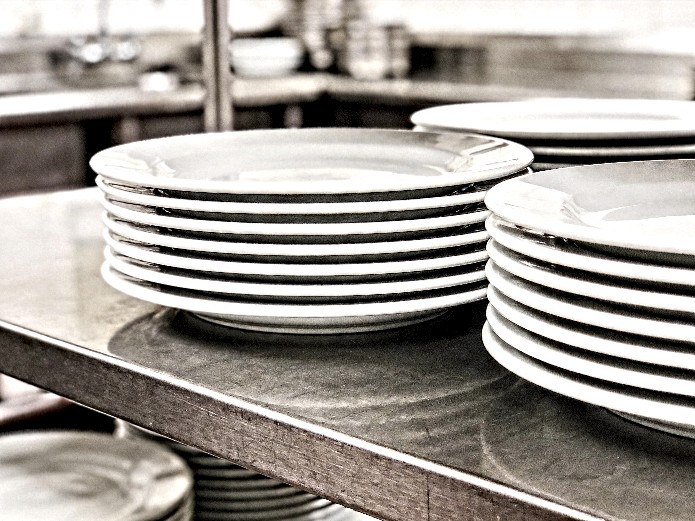
Storage space in buffet kitchens is always tight. I have seen operations lose 15-20% of their back-of-house efficiency because serving pieces do not nest well. Here is what to look for:
- Uniform rim diameter: Plates with consistent outer dimensions stack straighter and safer than shapes with decorative irregular edges.
- Foot ring design: A recessed foot ring prevents the base of one plate from grinding against the glaze surface of the plate below it.
- Weight distribution: Heavier pieces at the bottom of a stack create less vibration during transport. Specify a minimum body thickness of 5mm for large serving platters.
- Standardized sizing: Using three sizes across your entire buffet line (e.g., 8-inch, 10-inch, 12-inch) reduces the number of storage slots and bus-tub configurations your staff must manage.
One client reduced their dish storage footprint by 30% simply by switching from mixed shapes to a uniform rim profile across all serving pieces. The upfront mold cost paid for itself in labor savings within the first quarter.
Key Specifications to Include in Your RFQ
Buyers who send generic RFQs get generic products. When sourcing ceramic buffet tableware, specificity protects you. Here is a decision table I use with clients to align their operational needs with factory capabilities:
| Operational Need | Specification to Request | Why It Matters |
|---|---|---|
| High breakage rate | Body thickness ≥ 5mm, rolled edge, vitrified stoneware | Thicker walls absorb impact; rolled edges resist chipping |
| Metal utensil marks | Glaze hardness ≥ Mohs 5.5, matte or satin finish | Harder glazes resist scratching; matte hides minor marks |
| Space constraints | Uniform rim profile, recessed foot ring | Maximizes stack count per shelf and reduces damage |
| Thermal stress | Thermal shock test: 200°C differential | Prevents cracking from hot-to-cold transitions |
| Brand consistency | Pantone color match ± 2%, consistent glaze lot | Ensures reorder batches match existing inventory |
| Regulatory compliance | FDA 21 CFR 175.300 or LFGB compliance certificate | Required for food-contact sales in US and EU |
Include this table as an attachment to your RFQ. Factories that cannot or will not respond to each line item are signaling that they may not be the right partner for commercial-grade buffet supply. Review certification requirements before finalizing your specification sheet.
Common Mistakes When Sourcing Ceramic Buffet Pieces
Over the past decade, I have watched buyers make the same errors repeatedly. Here are the three costliest:
1. Choosing Presentation Over Practicality
Beautiful coupe plates with irregular rims photograph well for marketing, but they chip faster and stack poorly in real buffet operations. One hotel chain I advised replaced their trendy coupe collection within eight months because breakage rates exceeded 12% per quarter. Flat profiles with moderate rim heights outperform decorative shapes in every metric that matters for buffet service.
2. Ignoring the Glaze-Lot Consistency Problem
Buffet operators reorder the same SKUs for years. If your second container load arrives with a visibly different glaze shade from the first, you now have a mixed table that looks unprofessional. Always specify a master sample with signed approval, and require the factory to keep a retained sample for color matching on all reorders. The cost of this step is negligible compared to replacing a mismatched set.
3. Skipping the Stacking Test During Sample Evaluation
Most buyers evaluate samples by looking at them. For buffet tableware, you need to use them. Stack 20 samples in a bus tub, transport them across a kitchen floor, run them through a commercial dishwasher for 50 cycles, and inspect for edge damage and glaze wear. I have rejected samples that looked perfect on the conference table but failed this practical test within a week. Use our ceramic QC checklist to structure your sample evaluation.
Cost-Quality Tradeoffs: Where to Spend and Where to Save
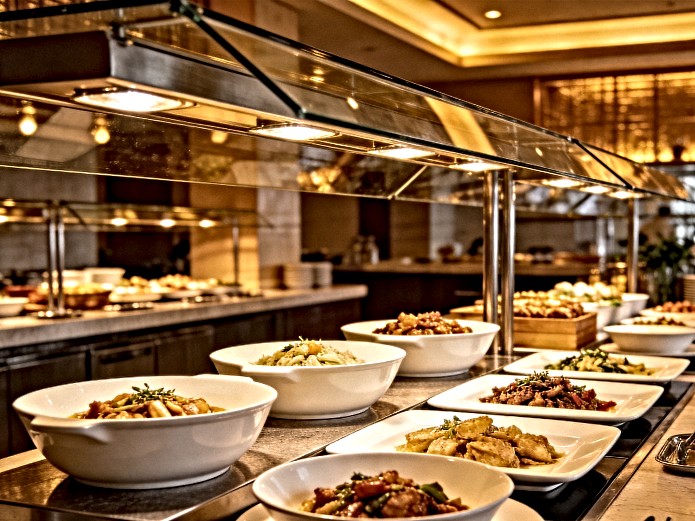
Not every buffet piece needs the same investment level. Here is how I advise clients to allocate their budget:
- Spend on: Large serving platters and chafing dish inserts. These see the most handling, highest thermal stress, and greatest visibility. A broken 16-inch platter stops service. A chipped bread plate does not.
- Spend on: Glaze quality for pieces that face direct utensil contact. Bowls and deep dishes get scraped more than flat plates. Harder glaze here pays for itself in reduced replacement frequency.
- Save on: Decorative accent pieces that guests rarely touch. Small sauce boats, garnish dishes, and display risers can use simpler bodies and standard glazes without affecting operational durability.
- Save on: Color complexity. Custom reactive glazes look stunning but increase defect rates and lead times. A well-chosen solid color with a satin finish delivers 90% of the visual impact at 70% of the risk.
The key is matching investment to operational impact. I typically recommend allocating 60% of the ceramic budget to high-use serving pieces and 40% to secondary items. Understand how MOQ structures affect your per-piece cost when planning this split.
Practical Buffet Tableware Checklist
Copy this checklist into your RFQ or sample evaluation process. Every item should have a clear yes/no before you approve production:
- Body thickness measured at center and rim (minimum 5mm for platters, 4mm for plates)
- Edge profile documented: rolled, flat, or beveled
- Glaze hardness confirmed ≥ Mohs 5.5 (test with sample or certificate)
- Thermal shock test passed: 200°C differential, no cracking
- Stacking test completed: 20-piece stack, 48 hours, no stress cracks
- Foot ring design verified: recessed, no glaze contact between stacked pieces
- Uniform rim diameter confirmed across all sizes in the order
- Master sample approved and retained by factory for reorder matching
- Food-contact compliance: FDA or LFGB certificate provided
- Dishwasher-safe claim verified with 50-cycle test on sample
- Packaging specification: corrugated divider between pieces, corner protection for platters
- Defect rate acceptance: AQL 2.5 for major defects, AQL 4.0 for minor [VERIFY BEFORE PUBLISHING]
Send this checklist to your supplier and request written confirmation on each point. Any factory that refuses to document these specifications is telling you they cannot guarantee consistency at the level buffet operations require.
FAQ
What is the typical MOQ for custom ceramic buffet tableware?
Most factories require 500-1,000 pieces per SKU for custom shapes or colors. For standard catalog items with your logo, MOQs can drop to 300 pieces. If you need multiple sizes in the same glaze, negotiate a combined MOQ across the product family rather than per-SKU minimums.
How long does production take for a first order of buffet serving pieces?
First orders typically require 45-60 days from sample approval to ex-factory delivery. This includes mold making (7-10 days for new shapes), production (20-30 days), and quality inspection (3-5 days). Reorders of approved SKUs usually ship in 30-35 days. Add 15-25 days for ocean freight depending on your port.
Can I mix buffet serving pieces with standard dinnerware in one container?
Yes, and you should. Combining SKUs in one shipment reduces your per-piece freight cost and lets you test the full product range before committing to larger reorders. Just ensure packaging separates fragile serving platters from smaller pieces, and that the factory uses load-bearing pallets for the container.
What glaze finish works best for buffet service?
Satin or matte glazes outperform high-gloss finishes in buffet settings. They hide minor utensil marks better, reduce visible fingerprints from guest handling, and typically have higher hardness ratings. High-gloss glazes look elegant but require more frequent replacement in high-traffic buffet lines.
How do I handle color matching across reorder batches?
Require your supplier to retain an approved master sample and provide a glaze batch report with each shipment. Specify a Delta E tolerance of 2.0 or less for color consistency. For critical brand colors, consider ordering 20% extra inventory on the first run to buffer against future batch variation.
Should I request dishwasher-safe certification for buffet pieces?
Commercial dishwashers run hotter and longer than residential units, so residential dishwasher-safe labels do not guarantee commercial performance. Ask for a 50-cycle commercial dishwasher test report on your sample, or conduct the test yourself. Look for edge integrity and glaze adhesion after the test cycle.
Ready to Source Durable Buffet Tableware?
The right ceramic buffet tableware reduces your replacement costs, improves kitchen efficiency, and maintains a consistent presentation that guests notice. Start by defining your durability requirements with the checklist above, then request a specification review to align factory capabilities with your operational needs. If you are planning a first container load, browse our commercial serving piece catalog to see standard shapes that can be customized to your brand.
Request our buffet tableware specification sheet — a one-page RFQ template that includes every specification mentioned in this guide, ready to send to your supplier.